
Serra da Leba and Cumbira Segundo, New Routes
Angola, Namibe and Cuanza Sul Provinces
A perfect mix of adventure, African culture, huge walls for opening new routes, and the social component of the Climb Angola project had kept Angola on my radar for two years. In September 2024, I received a message from American climber Nathan Cahill, the founder of Climb Angola, after some friends connected us to work on building the first climbing gym in Luanda, the capital of this southwest African nation. Unfortunately, the project didn’t move forward due to bureaucratic problems, but it became the final excuse I needed to go and discover this wonderful country.
The logistics for the trip were easy, thanks to Nathan’s help. The incredible work he has carried out over the past three years to build the climbing scene across the country—including the creation of the annual Climb Angola festival in Serra da Leba and the development of a climbing community in Cumbira Segundo—makes the entire local community warmly welcome you and feel excited that you’re climbing on their walls. This makes the destination very comfortable and pleasant to visit, especially when compared with other places on the continent, where social, cultural, and logistical aspects make things much more complex. In addition, Climb Angola has created an excellent PDF guide compiling all climbing information and offering very valuable logistics details.
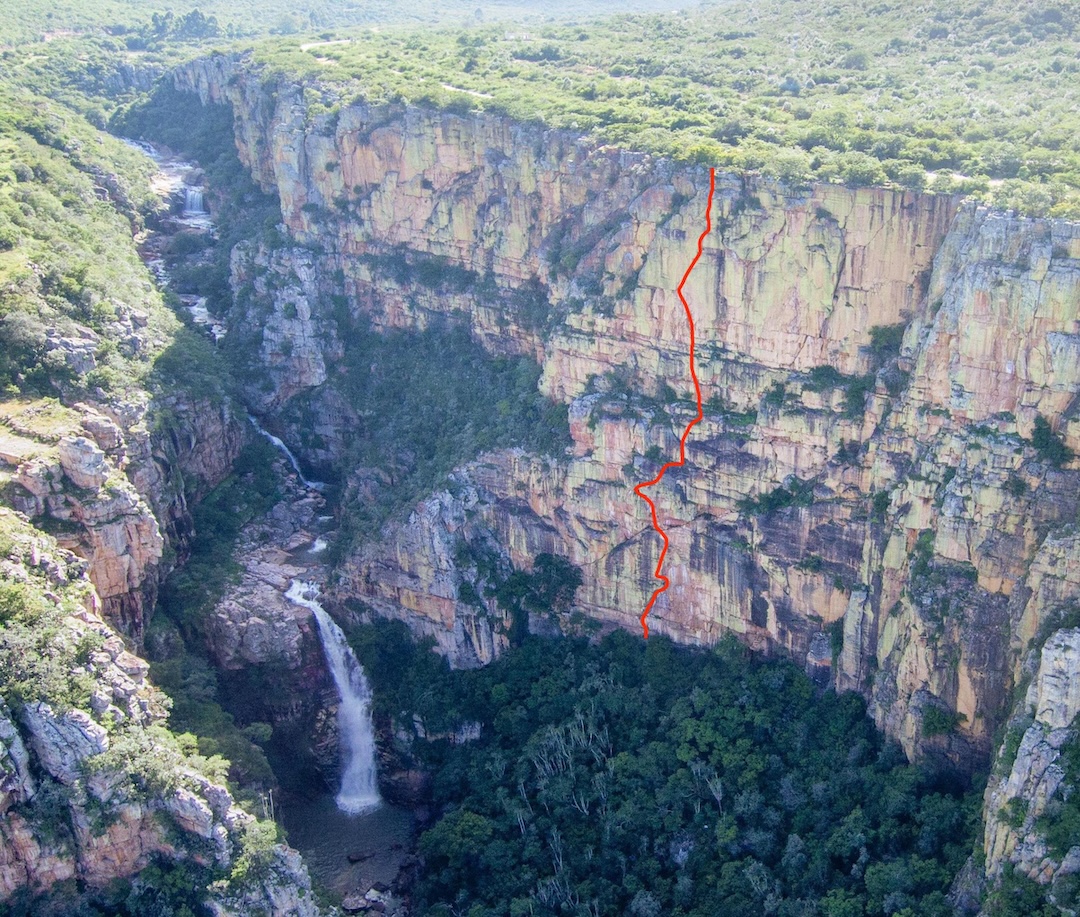
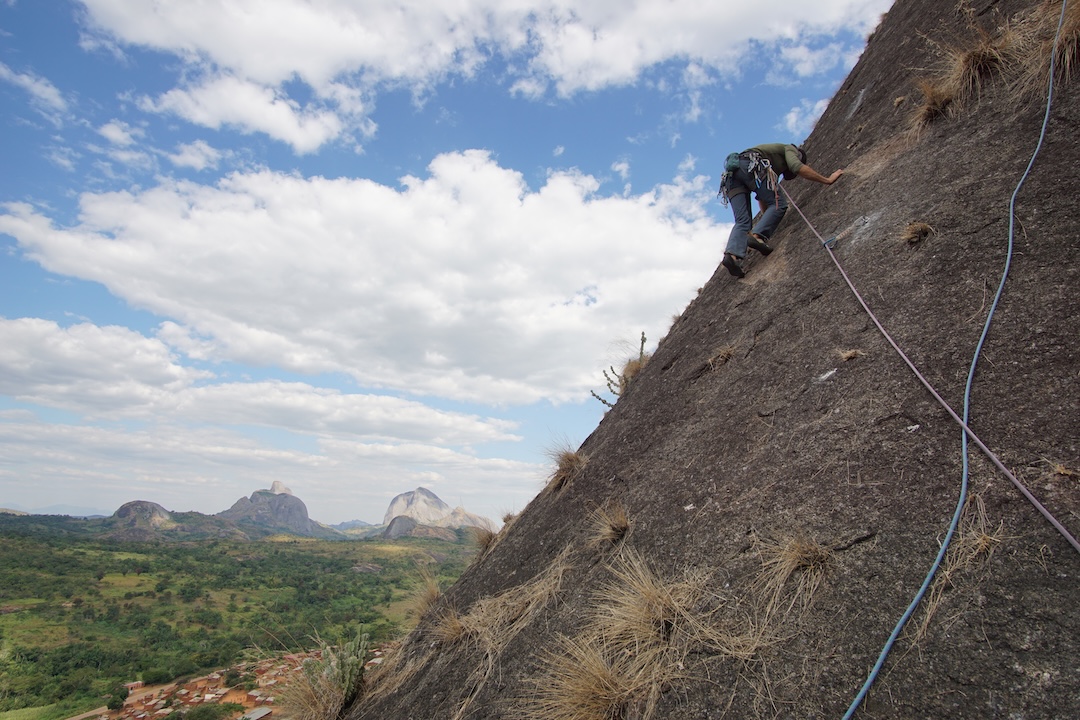
We first headed by bus to Cabo Ledo, a small seaside sport climbing area two hours from Luanda, and spent two days there surfing and climbing with Nathan. Next, we flew to Lubango, a city in the south of the country, just one hour from Serra da Leba in Namibe province. The highlight here is an impressive, yellow-orange quartzite cliff, where in recent years high-quality sport climbs have been developed. The area also offers countless opportunities for traditional multi-pitch climbing, although this has barely been explored (see AAJ 2024).
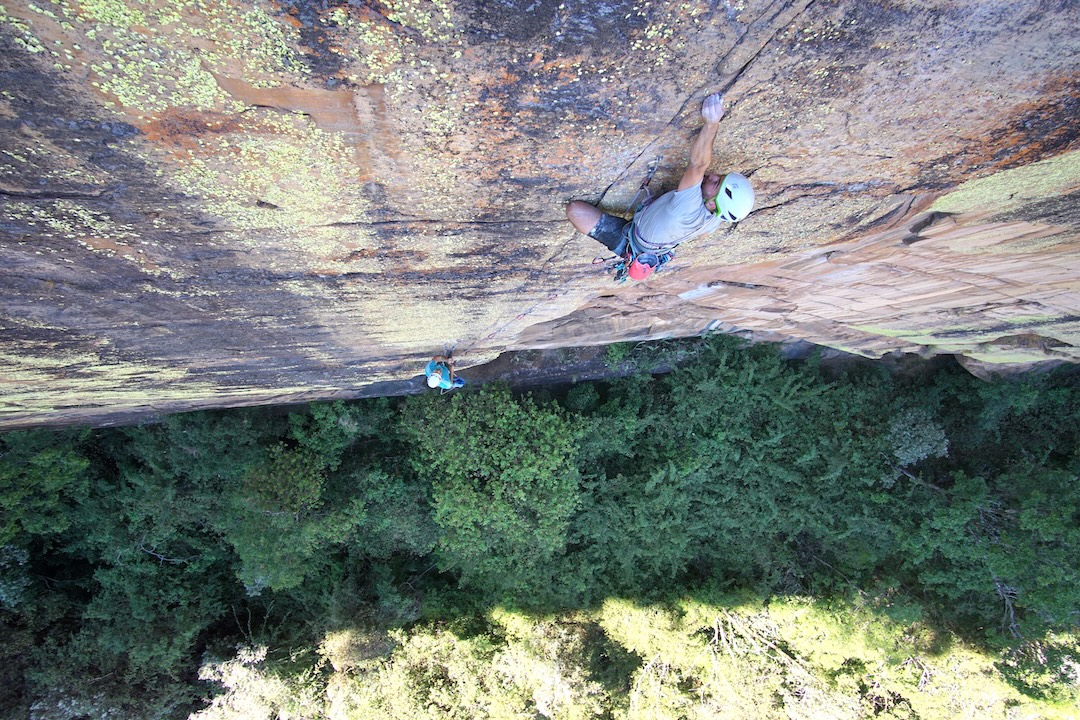
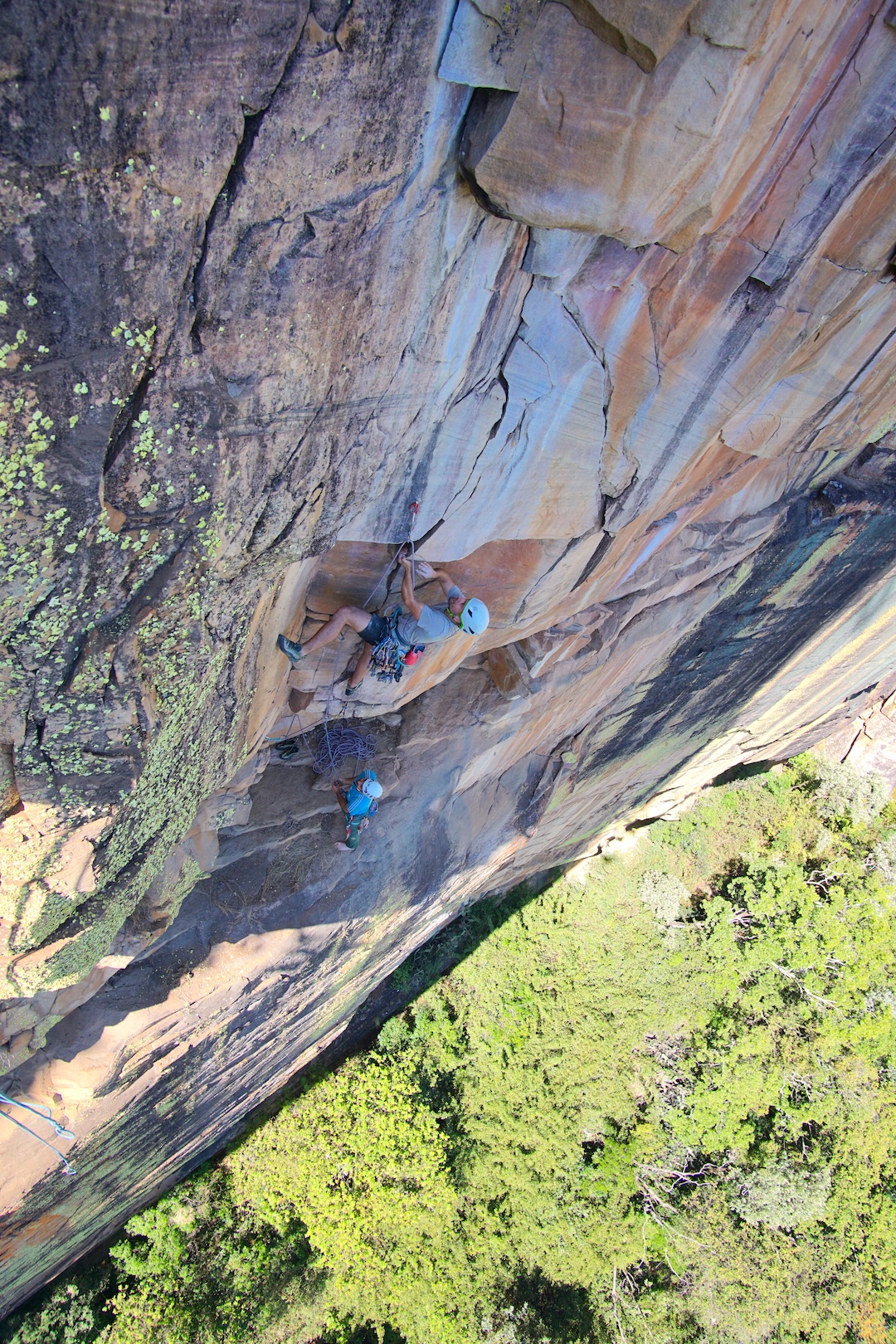
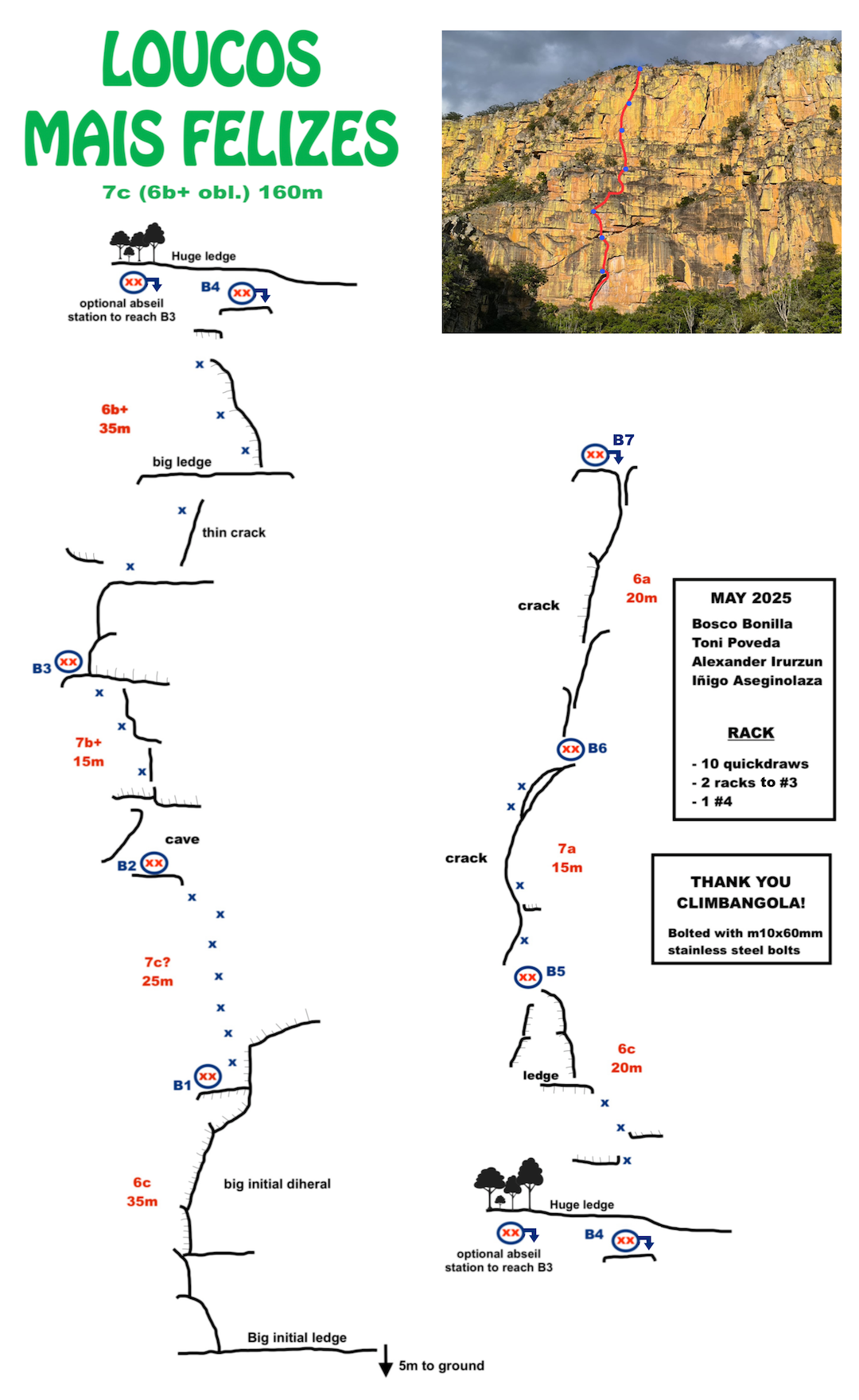
While my friends climbed some sport routes, I rappelled the entire face along an aesthetic line and was amazed by the quality of the rock. For the next several days, all four of us worked on the route, opening it from the top. Our seven-pitch line, Loucos Mais Felizes (160m, 6b+ C1), goes mostly on traditional gear, but we added a few bolts where gear placements were not feasible. We were unable to free the second pitch, estimated at 7c.
After five days at Serra da Leba, we set a course for Cumbira Segundo in Cuanza Sul province. We arrived after a ten-hour bus ride, followed by a taxi to the village. In hindsight, May was not the best time to climb, since winter had not yet arrived and every day was sunny. During the winter months (July and August), the sky is usually overcast, making for a much more pleasant temperature.
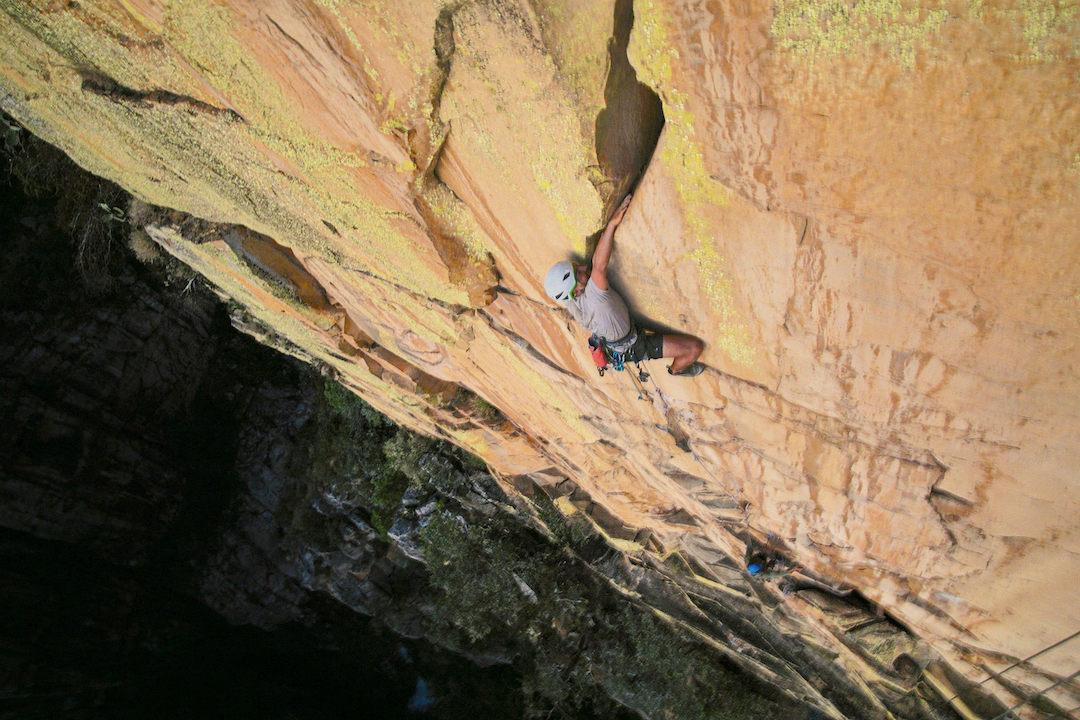
The east face of Cunduvile (11°1233.3S, 14°2004.5E), where we planned to open a new route, was shaded from 2 p.m. onward, so our strategy was to climb from midafternoon until 6 p.m. Over three days, during these limited windows, we worked on opening a new route ground-up. [The new route is to the left of the 2024 route Vuelta al Armario por Festivos (350m, 6b+); another new route, John Frango, was climbed farther left on the east face in July 2025—see the next report.] We aimed to leave a safe, well-bolted line that could be repeated both by the local children learning to climb under the Climb Angola and Climbing for a Reason projects and also by international climbers visiting this amazing place.
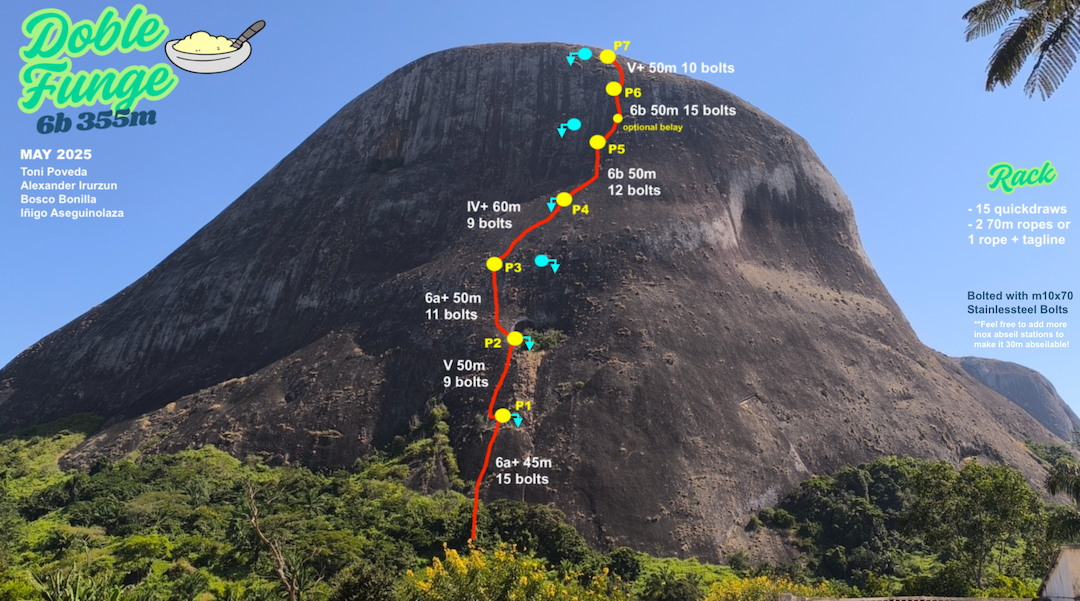
After the first ascent, we invited two young local climbers, Francisco and Menezes, to repeat the route with us. As a gesture of gratitude, they both invited us to have the traditional dish funge at home with their families—hence the name of our route, Doble Funge (355m of climbing, 7 pitches, 6b).
—Bosco Bonilla, Spain
Media Gallery