
Kaikiawila and Ngoku, First Ascents
Angola, Cuanza Sul
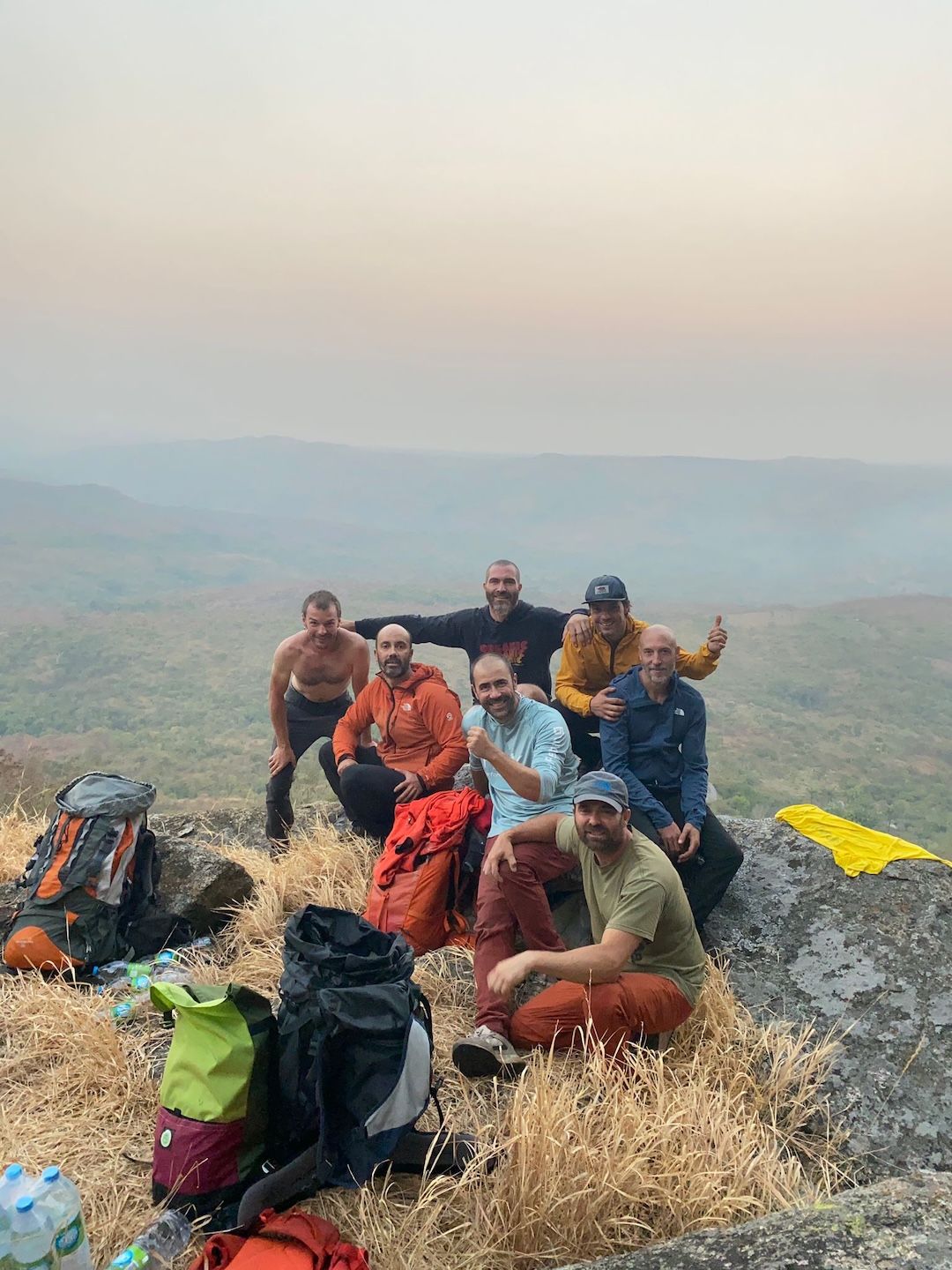
After an expedition to Angola in 2024 (AAJ 2025), we knew the best was yet to come and that we wouldn’t be long in returning. Without much effort, we assembled a team of seven friends—Miguel A. Díaz, Álvaro García, Indi Gutiérrez, David Matos, Juanjo Medina, Gonzalo Torres, and me—all from Spain.
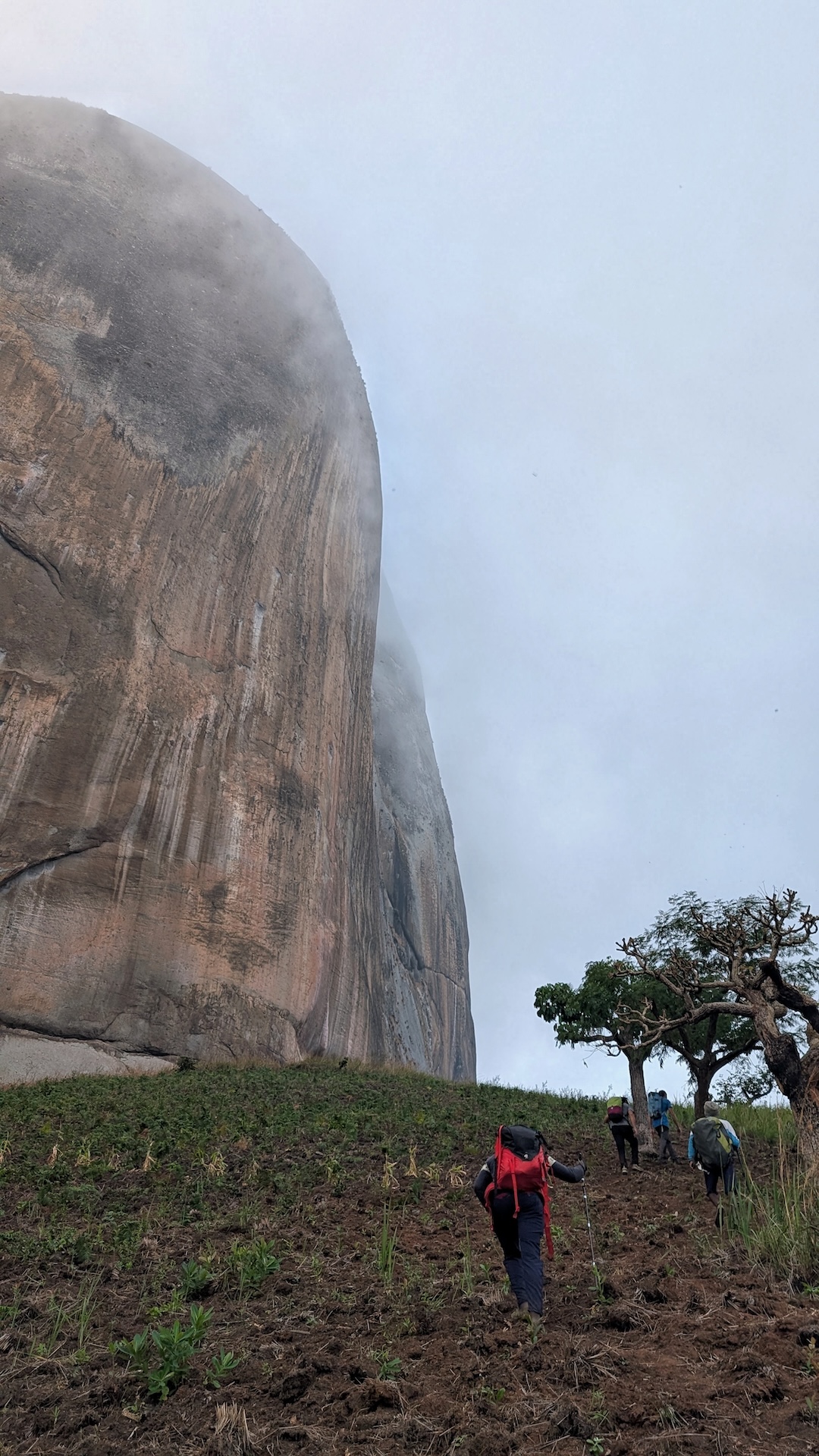
We chose July for our trip because, although hot, it coincides with the dry season. The main objective was to attempt new routes on the large granite mountains south of the village of Cumbira Segundo, which we hadn’t had time to check out the previous year. Among these formations, Kaikiawila (11°15’04.9”S, 14°22’47.6”E) and Ngoku (11°15’46.8”S, 14°22’19.7”E) stand out—granite behemoths with walls between 400 and 700 meters high.
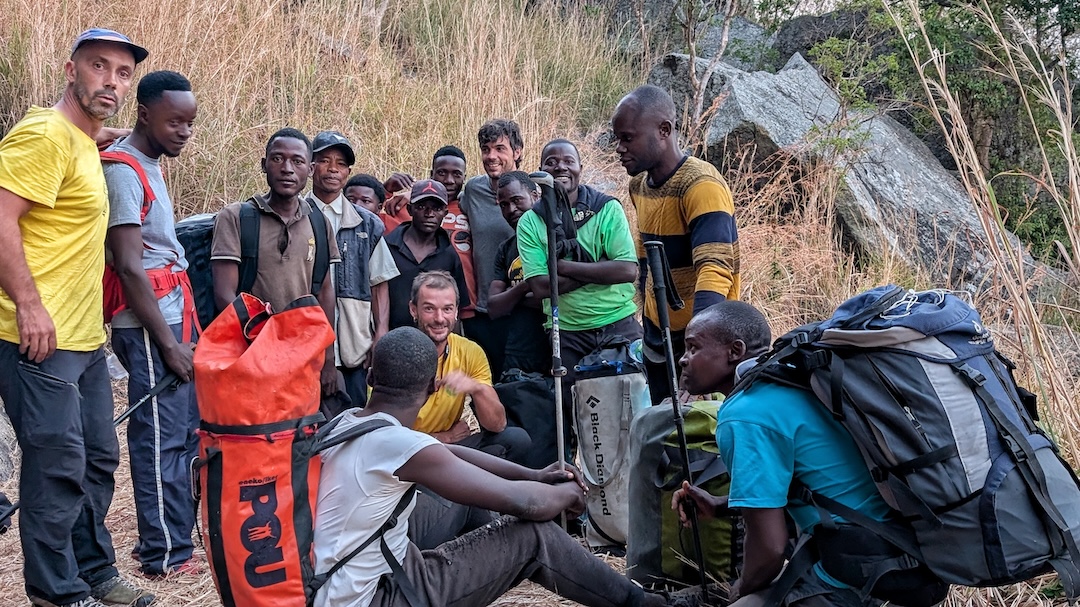
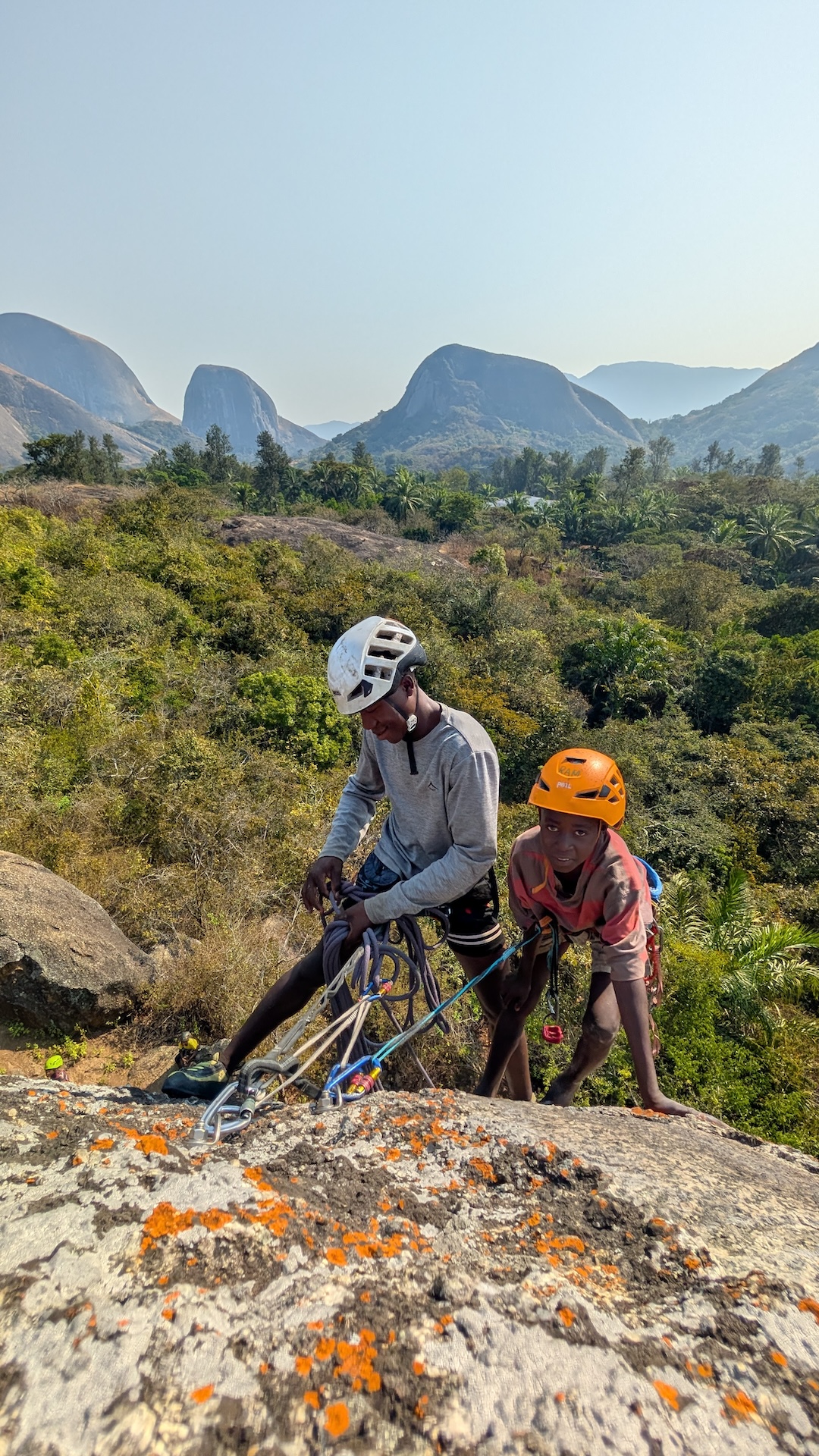
In places like this, where visitors from outside the village are rare, the “climb” begins with explaining to the community leaders, sobas, what we want to do on their land. After several meetings in Itumbu village—showing them photos and explaining our work with Climbing for a Reason—and with the help of friends from Cumbira Segundo, they agreed to let us climb their mountains. We kept the villagers involved in our work at all times.
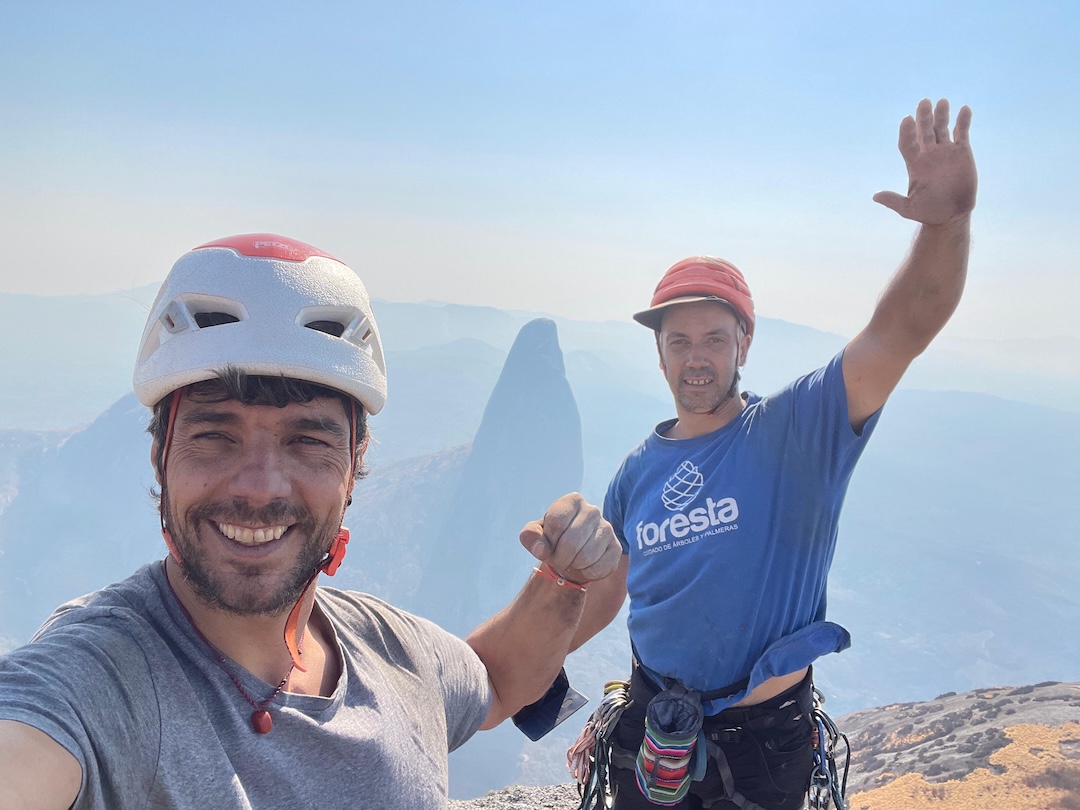
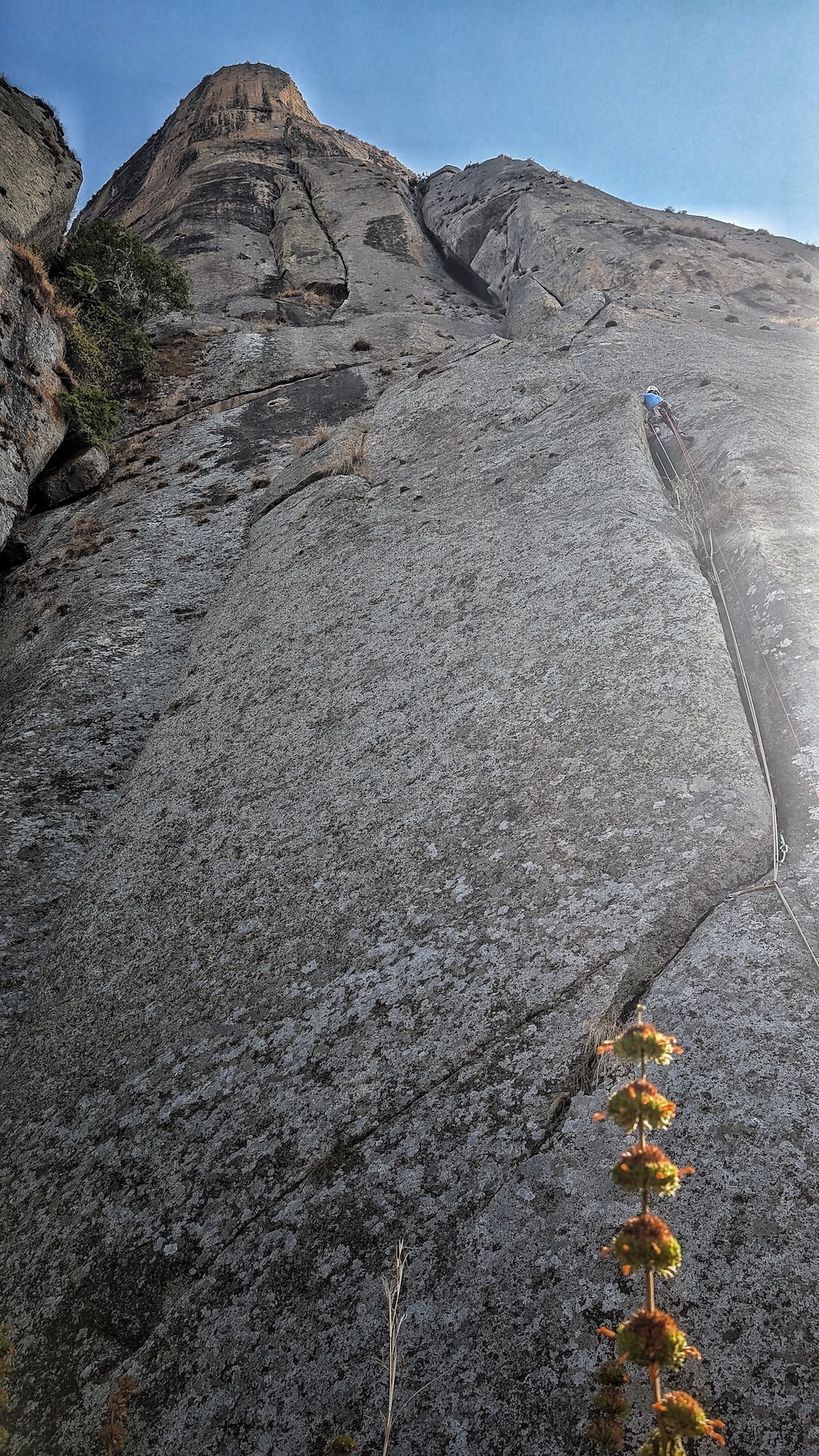
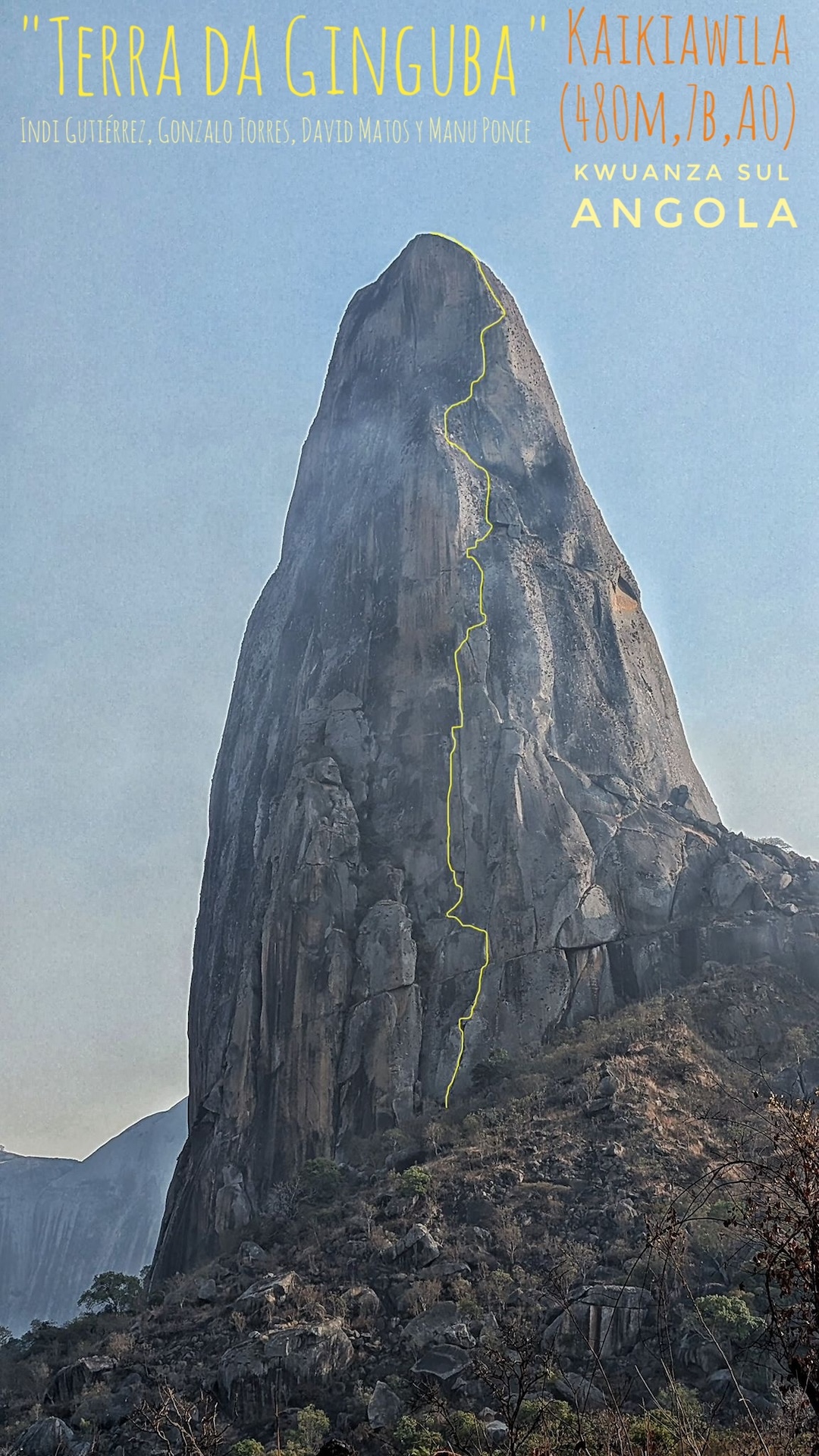
The first objective—for David, Gonzalo, Indi, and me—was Kaikiawila, a granite fang about 500 meters high that you can see from many places in the area. After walking much of its base, we realized there weren’t many options for routes, and we decided on a line of wide cracks on the east face that seemed to lead close to the summit. We started with great anticipation, as many villagers had gathered at the base. We opted for short, two-day pushes, but ended up sleeping two nights on a small ledge, about 300 meters above the ground, where three of us could sit.
During six very intense days of climbing, and with two nights spent on a small ledge about 300 meters above the ground, we overcame difficult pitches in wide cracks and a chimney, protecting ourselves primarily with cams, adding bolts when necessary. The final two pitches—technical slab at 7b, which we bolted as sparingly as possible—were the crux of the route. Temperatures reaching 30°C required us to make the most of the first and last hours of the day. Our route, Terra da Ginguba (480m, 7b A0), is named for the farmers who watched us from their fields of ginguba (peanuts) and cassava, and who cheered us on as we climbed.
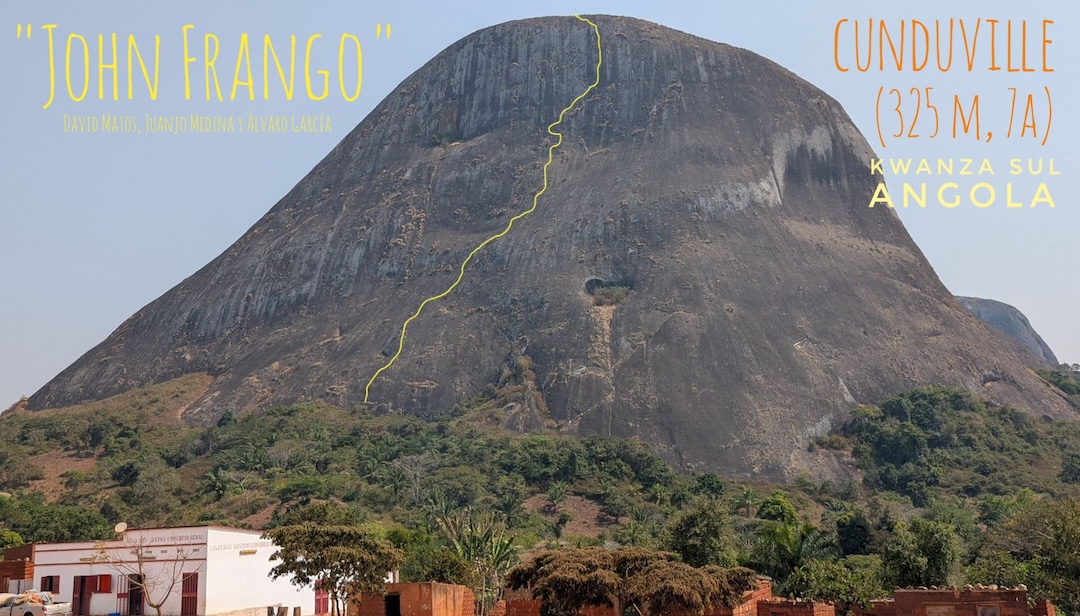
Meanwhile, Álvaro, David, and Juanjo began a new line on Cunduvile, a popular formation with several routes, just minutes from Cumbira Segundo. Four days of climbing in the shade led to the route John Frango (325m, 7a), left of our 2024 route, Vuelta al Armario por Vacaciones. The new route traverses the central part of the east face, with demanding pitches in the final vertical section.
We next focused on the largest formation in the area, Ngoku, which is roughly a kilometer wide and has twin summits, north and south. The inhabitants of Itumbu warned us of its sacred nature and that there were ancient tombs up there that we shouldn’t touch. They also told us there were lakes inhabited by mermaids amid vast jungles. With all this information, we had no choice but to go see what was happening up there.
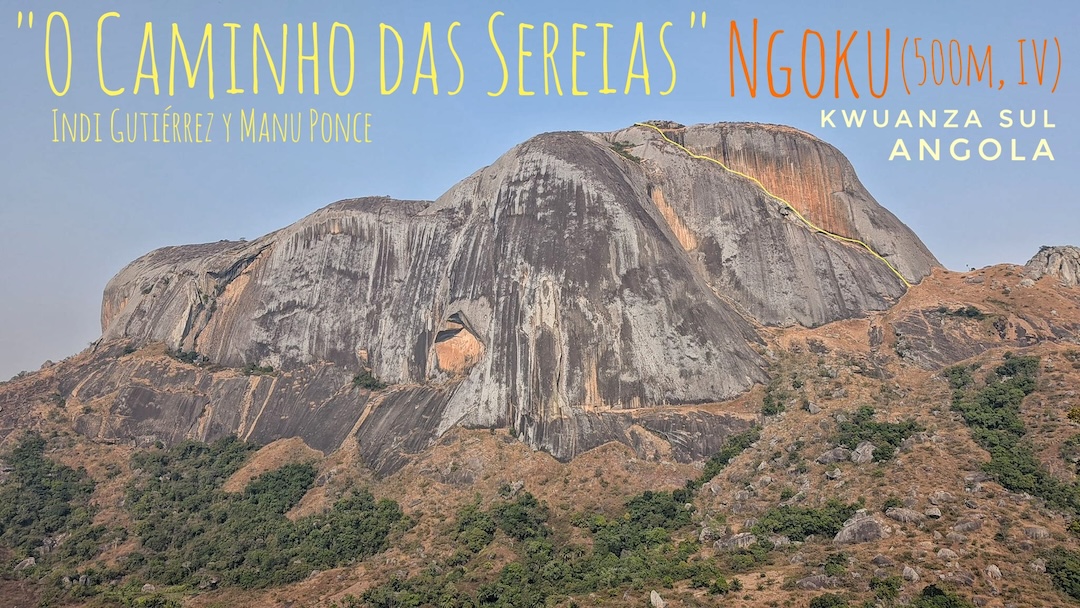
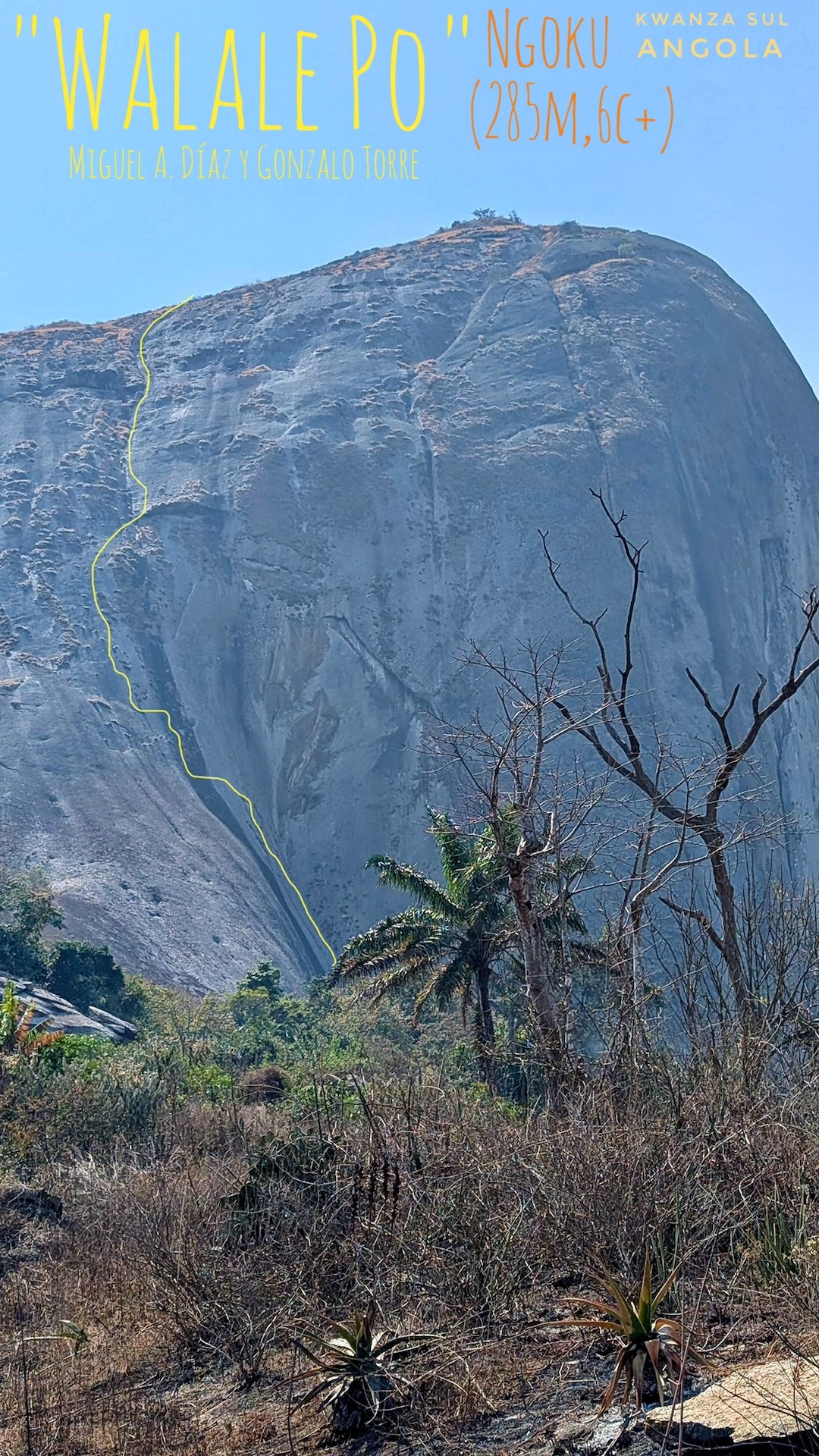
Two days were enough for Gonzalo and Miguel to establish six slabby pitches on the shaded face leading to the south top of Ngoku, by a route they called Walale Po (285m, 6c+). Indi and I, after sleeping at the base, climbed about 500 meters up a large northeast-facing dihedral in a few hours and reached the main summit. This straightforward climb is called O Caminho das Sereias (500m, IV). The descent was tedious, perhaps because we were trying to follow a mermaid trail that we ultimately failed to see.
There are already several sport climbing sectors in part of Angola, and we added two new ones, one at the base of Cawanji and the other on a shaded wall in Itumbu, with seven new routes, ranging from 4a to 6c. In addition, there are numerous established boulders and endless possibilities.
On this expedition, we forged a very good relationship with the inhabitants of Itumbu. The seed planted last year by Climbing for a Reason is already taking root in the surrounding villages. We’re told that climbers of many nationalities have come this year, both as volunteers for Climbing for a Reason and independently. Climbing in the area is gradually developing, with more than a dozen adventure routes to the region’s most iconic peaks.
Thanks to contributions from friends and family in Spain, we have been able to provide school supplies to more than 1,000 children in the villages of Itumbu and Cumbira Segundo, and to replaster and paint the preschools in the latter. We encourage everyone to come and explore, climb, and help develop this corner of the world where adventure is guaranteed.
—Manu Ponce, Spain
Media Gallery