
Light and Fast
The First Ascents of Anidesh Chuli and Jannu East in Nepal
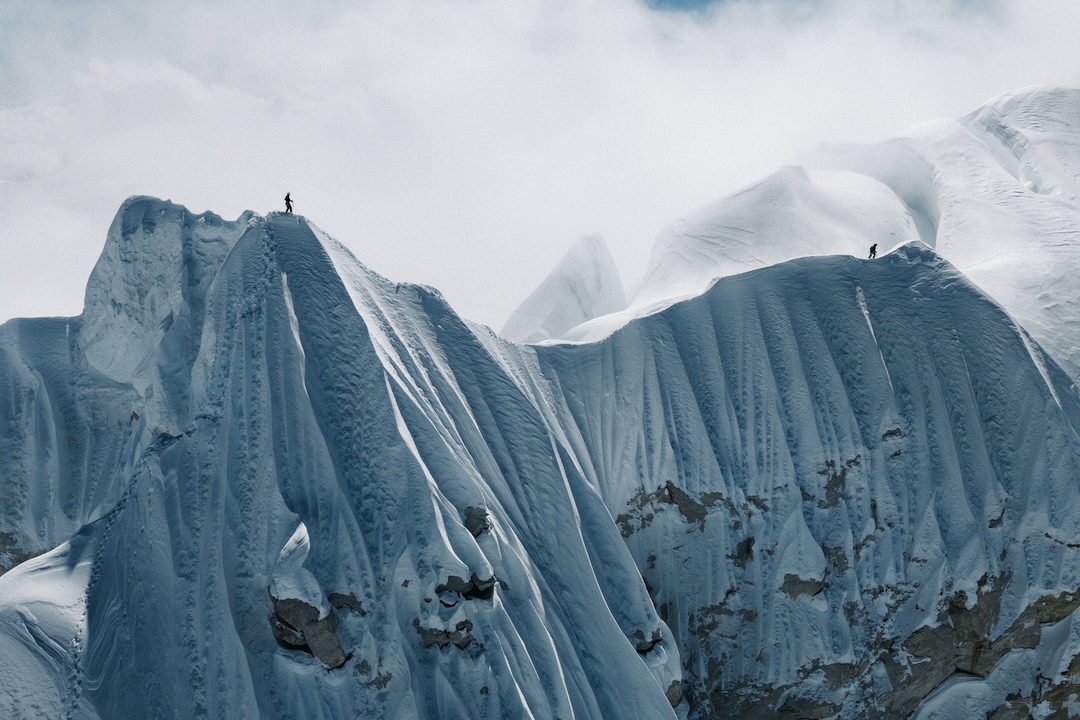
When Nicolas Jean and Benjamin Védrines snaked their way to the summit of Anidesh Chuli on September 26, they didn’t stick around to celebrate.
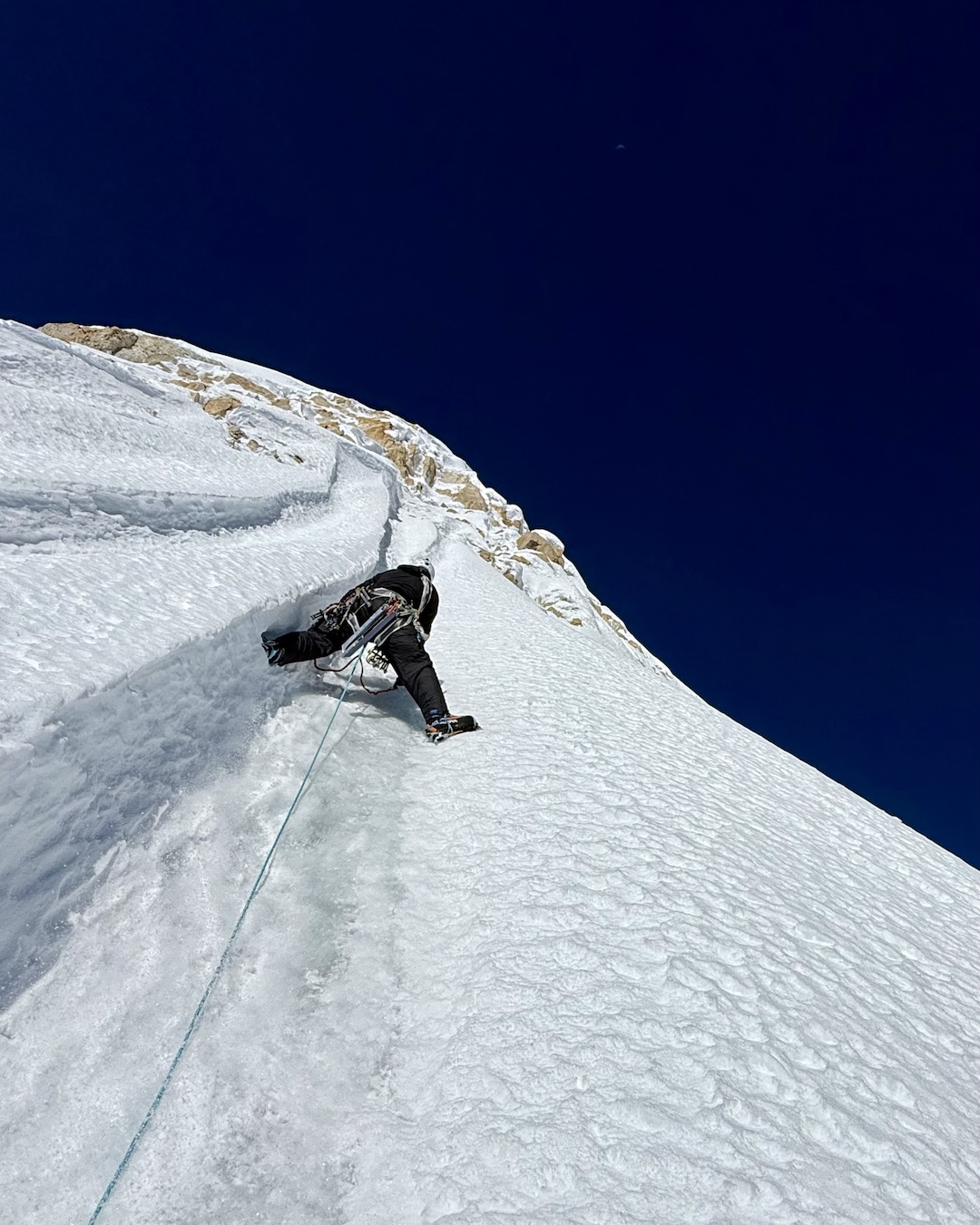
They had just completed the first ascent of the 6,808-meter Nepalese peak, which had stymied several attempts. Climbing first up the west face to 6,100 meters, then along the north ridge through deep, loose snow, Jean and Védrines reached the summit at around 10:15 a.m.
On top, they unfurled paragliders and launched into the crystalline Himalayan sky, floating down to the valley. Their ascent, from a 5,500-meter bivy at the base of the west face, had taken them just over seven hours. Their descent? Less than 30 minutes.
For any team, the first ascent of a 6,800-meter peak in half a day would have been a coup. For Jean and Védrines, Anidesh Chuli was the warm-up. Back at base camp, they resumed studying their main objective, the 2,400-meter north face of unclimbed Jannu East (7,460m).
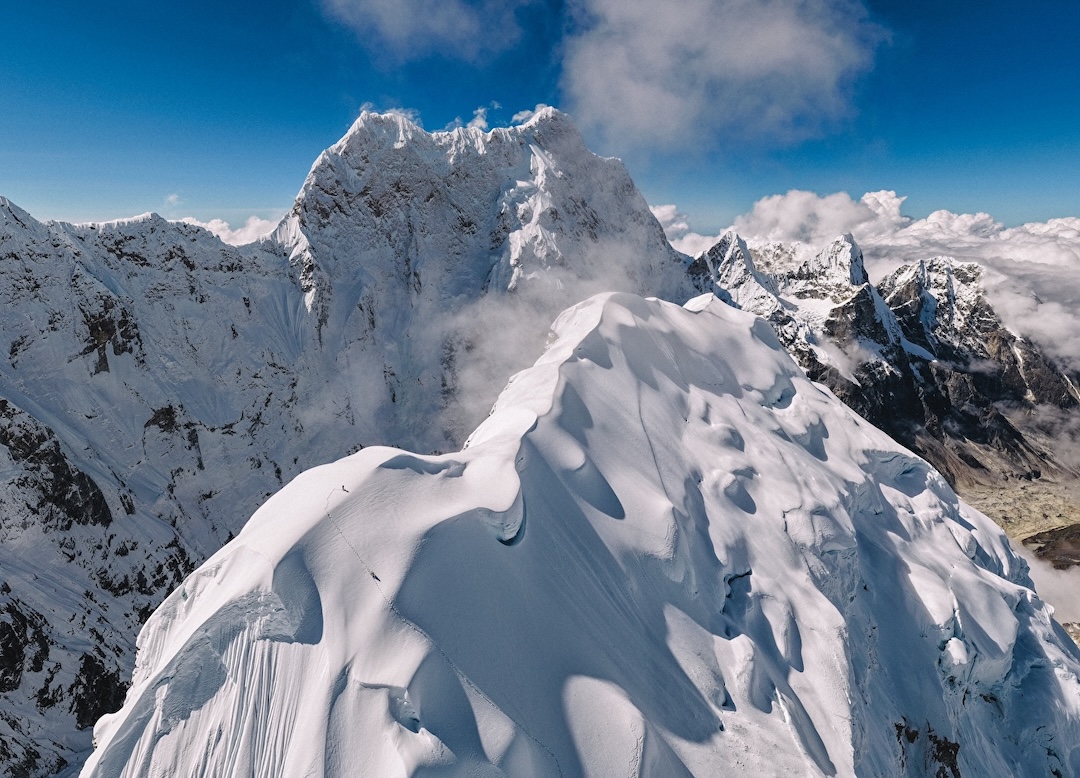
Jannu East is connected to the main summit of Jannu (Kumbhakarna, 7,710m) by a spindly, nearly two-kilometer-long ridge, forming a massive north-facing stronghold just west of the world’s third-highest peak, Kangchenjunga (8,586m). Jannu’s main summit tower was first climbed in 1962, from the southeast, by a French team led by Lionel Terray, and its east face, west pillar, and north face all have seen cutting-edge climbs and attempts, most recently the new route up the north face established in alpine style in 2023 by Americans Matt Cornell, Jackson Marvell, and Alan Rousseau (AAJ 2024).
Although it has little prominence above the col with Kumbhakarna, Jannu East also has towering east and north faces and has been a coveted objective for more than three decades. In 1991, Slovenians Vanja Furlan and Bojan Počkar reached 7,050 meters on the east face. Furlan and Počkar returned the following spring and pushed slightly higher, to 7,100 meters. Attempts continued throughout the decade, but none were as successful. Tomaž Humar from Slovenia attempted a solo ascent of the peak from the east in 2004 but retreated at 7,000 meters, shortly before the southeast ridge.
Until recently, the story of the north face had been written by American climbers, chiefly Mike Gardner and Sam Hennessey. The pair made their first attempt on the peak in 2019, on the east face, with Rob Smith, but bailed after two pitches when Smith came down with altitude sickness. Hennessey returned to the east face in 2021 with Seth Timpano; they aborted this attempt after two meters of snow fell on the mountain.
Gardner and Hennessey made another attempt on Jannu East in 2022, this time trying an ambitious, highly technical direct line up the peak’s north face. They turned back at 6,600 meters after ripping their portaledge fly and battling cold, windy conditions. On their second north face attempt, in 2023, they pushed the route to 6,800 meters but retreated in bad weather and with Gardner falling ill from the altitude. The pair came back yet again in the fall of 2024. This expedition ended in disaster when, at 6,800 meters, the 32-year-old Gardner fell to his death from a bivouac site.
The year 2024 also marked the first time Jean and Védrines attempted the north face, but Védrines had a long infatuation with Jannu East. He first spied the mountain in 2017, when he and two partners, Mathieu Détrie and Pierre Labbre, made the second ascent of Pandra (6,850m), 20 kilometers to the north of Jannu East, via a new route on its northeast face (AAJ 2018). “When we reached the top, we saw the incredible north face of Jannu East,” Védrines said on the Cutting Edge podcast, produced by the American Alpine Club. He recalls the older, more experienced Labbre calling that face “the next great challenge.”
At the time, Védrines knew Jannu East was beyond his reach. “It looked so scary,” he said on the podcast, laughing. “I was too young to imagine going there.” Still, the mountain never left his mind. “I thought about Jannu East every year,” he said. “I just waited for the good moment.”
In the years that followed, Védrines, frequently partnered with Nicolas Jean, racked up a staggering list of accomplishments in ultrafast, ultralight alpinism. In 2022, Védrines scaled Broad Peak (8,051m) in a blistering seven and a half hours without supplemental oxygen, then flew from the summit with a paraglider. In 2024, he set a speed record on K2 (8,611m), ascending the peak in just under 11 hours, also without oxygen and paragliding back down. Back home in Chamonix, in the summer of 2025, Védrines set a round-trip speed record on Mont Blanc and, with Jean, climbed and skied that peak’s “four faces,” with about 25,000 feet of vertical, in 21 hours.
Experiences like this honed Védrines and Jean’s edge, not just in a mental or physical sense, but also a stylistic one. Both began to understand exactly how they wanted to move in the mountains, not necessarily through pushing the limits of technical difficulty at altitude, but through pushing the clock. “I know where I’m good,” Védrines said. “It’s climbing fast.”
Jean and Védrines made their first attempt on the north face of Jannu East in 2024, along with Léo Billon. The French trio arrived at base camp to find Gardner and Hennessey already there for their third north face mission. “Of course it was uncomfortable for them and for us,” Védrines acknowledged. But the two teams made it work. “We were just three passionate guys meeting Sam and Mike, who were also passionate,” Védrines said.
Hennessey concurred. “Nobody owns the mountains,” he said in a recent interview, noting that “it was definitely a bit weird the way the whole thing happened, but there wasn’t any bad blood. We all got along well.”
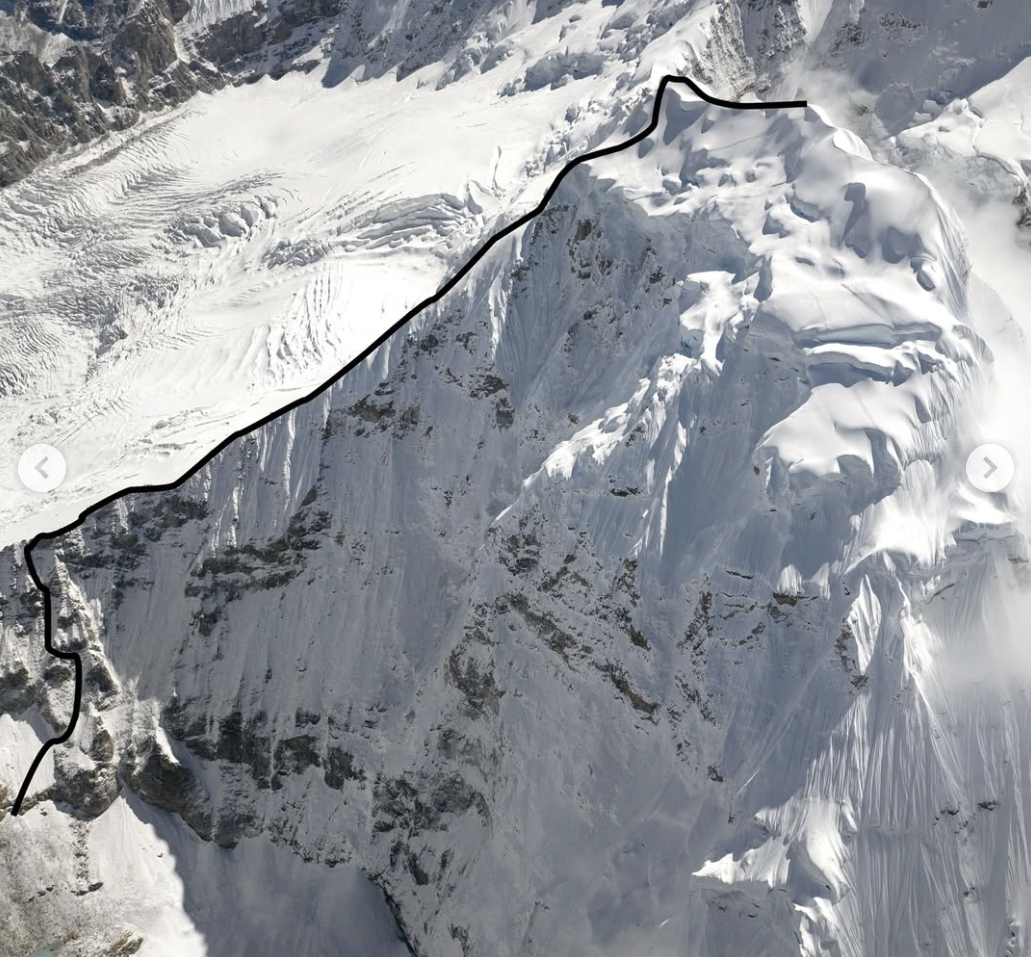
Gardner and Hennessey were trying the same line they’d tried in 2022 and 2023, the direct route up the center of the face. Billon, Jean, and Védrines—who let the Americans climb ahead—chose to follow that same line up to around 6,000 meters, then angle left, tracking up less vertiginous terrain toward the east ridge.
About 500 meters above their first bivouac, Billon fell ill at around 6,700 meters, and the group descended. While rappelling, they encountered a distraught Hennessey, coming down alone. He informed them of Gardner’s death, and the four rappelled the lower 700 meters together. The French trio joined Hennessey in a search for Gardner’s body, which was never found.
The encounter left an indelible mark. “It was hard to imagine coming back,” Védrines said, “but, on the other hand, a link had been created with the mountain.”
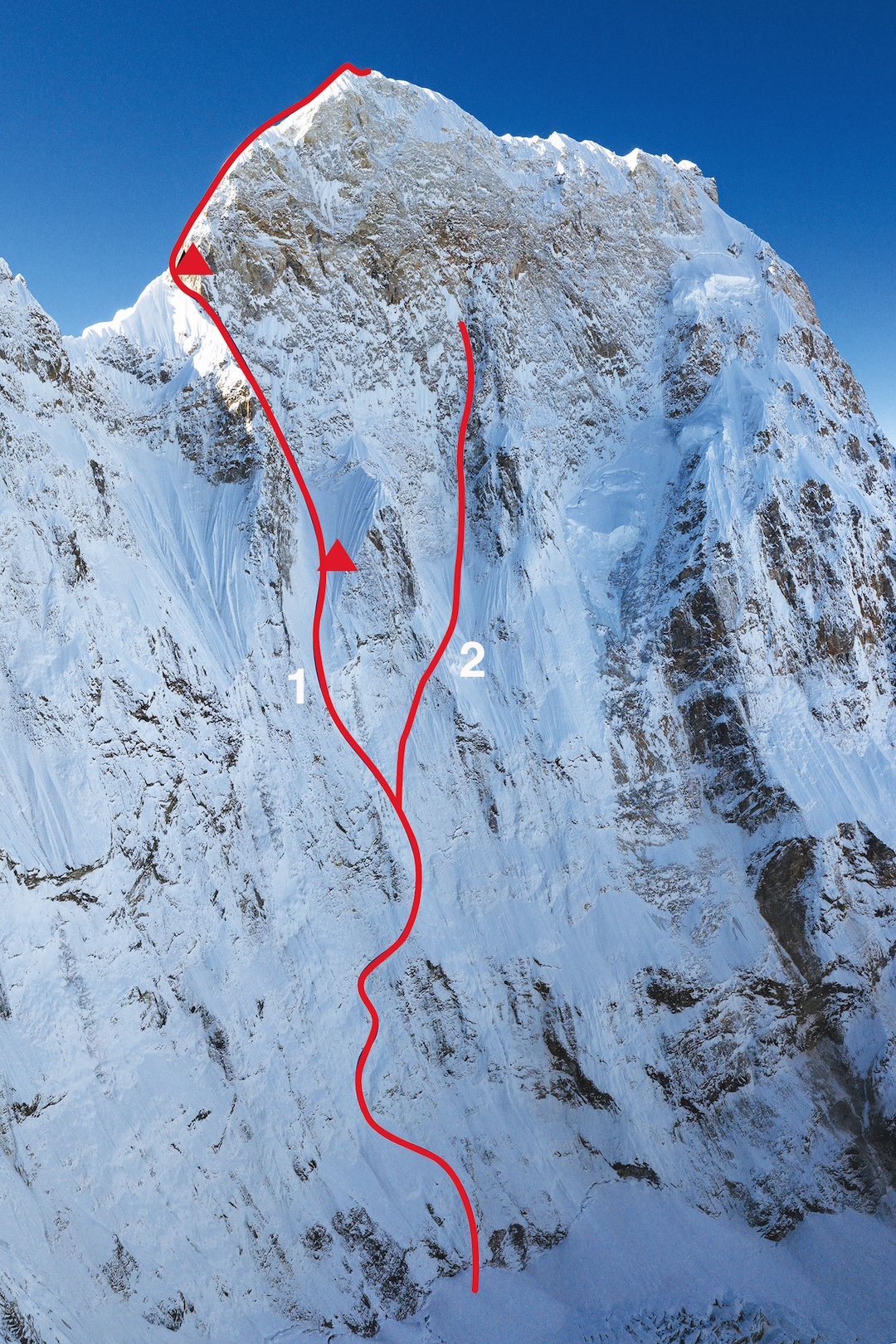
When he and Jean returned in the autumn of 2025, they decided to stick with their 2024 route, both because it allowed them to avoid Gardner and Hennessey’s line, and because it was safer and more conducive to the fast, ultralight climbing they enjoy. Their route had “a little bit of technique, but a lot of endurance and mental strength,” Védrines explained. They didn’t need to bring a portaledge or loads of hardware, and could instead focus on getting up and down as fast as possible. They invited Hennessey to return with them. He declined. “I think he was still healing,” Védrines said. “I would have done the same.”
Approaching from the village of Ghunsa, Jean and Védrines set up a base camp at 4,700 meters in the valley below Jannu East’s north face on September 6. In the month that followed, they were chased by incessant rain, but managed to acclimatize on the northeastern subsummit of Merra (6,227m), ascend an unnamed 5,830-meter peak, and, on September 26, blitz Anidesh Chuli. The latter was good acclimatization and also a proof of concept. The peak’s ridgeline, blanketed by deep, loose snow, required a similar approach to what they expected to find high on Jannu East. “It was a test to see how we would manage this strange terrain,” Védrines said.
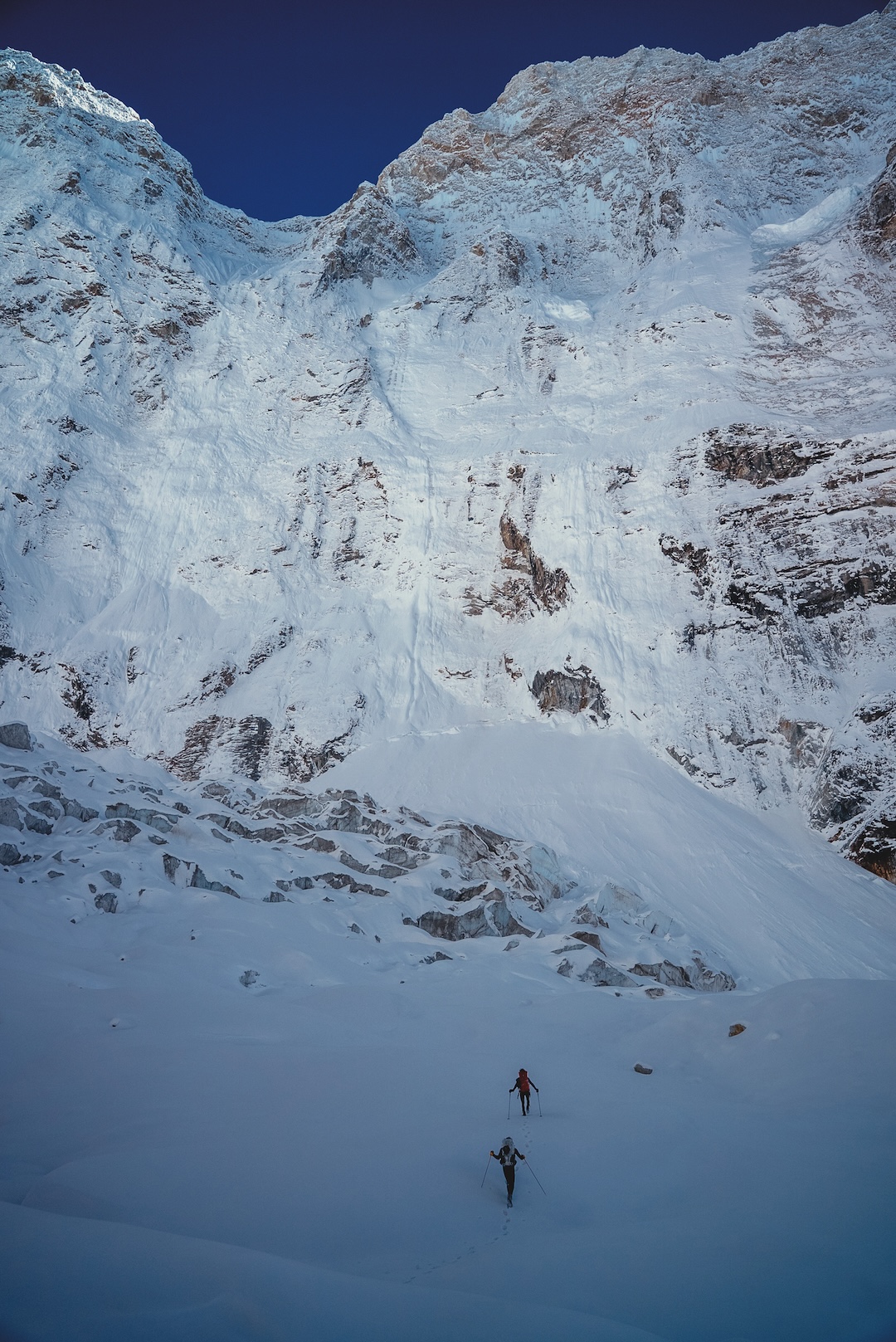
On October 12, a little more than two weeks after they soared off Anidesh Chuli’s summit, Védrines and Jean trekked up into the shadow of Jannu East’s north face.
The two men carried an ultralight kit, shaved to the bone. They brought a single 60m, 7.3mm rope, a small set of cams with a few doubles, two pitons, eight ice screws, and three homemade, ultralight pickets. Taking more would have helped in some ways—two ropes, for example, would have ensured a faster descent—but also would have slowed and tired the pair. “Our security is the lightness,” Védrines explained.
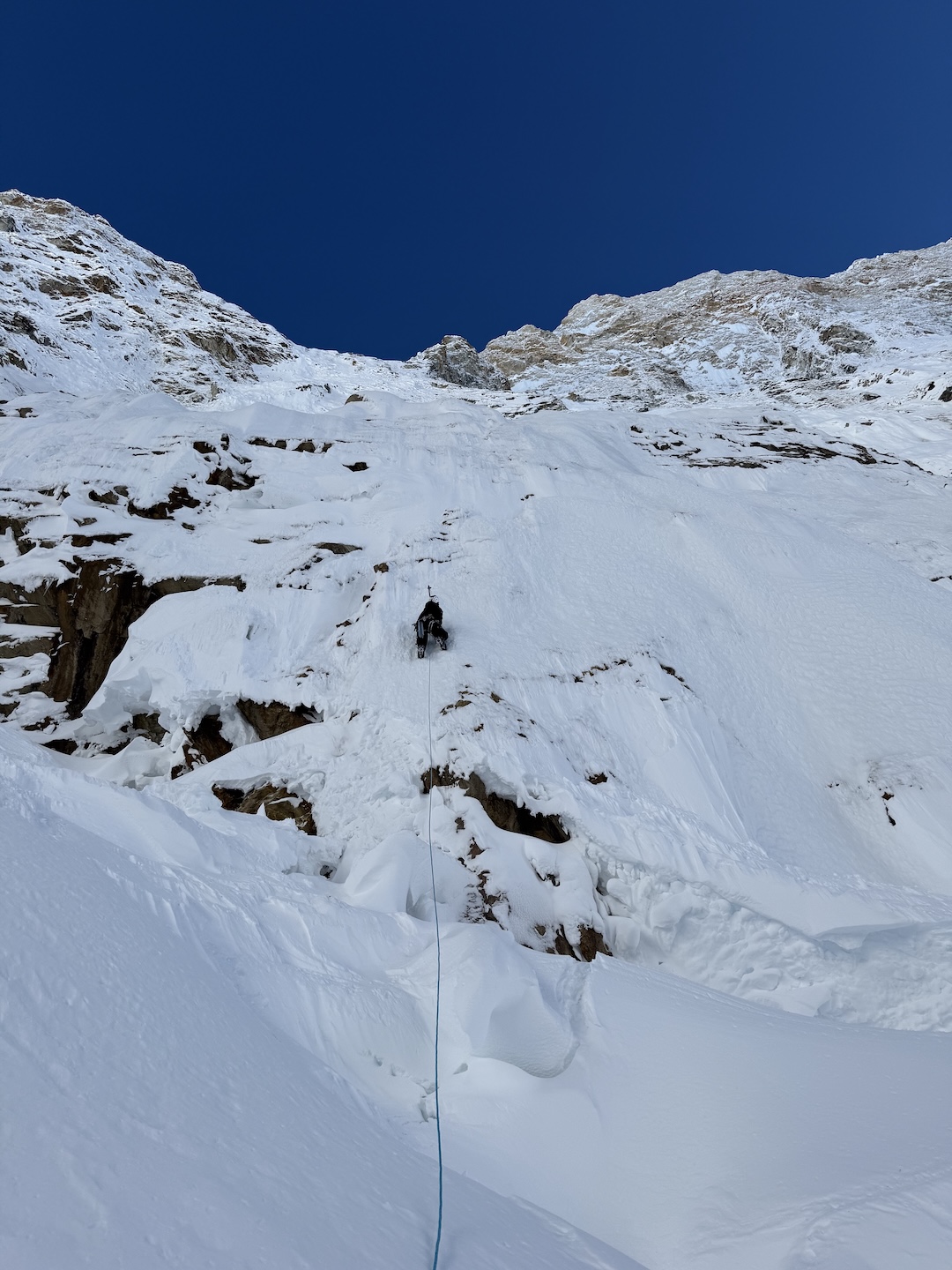
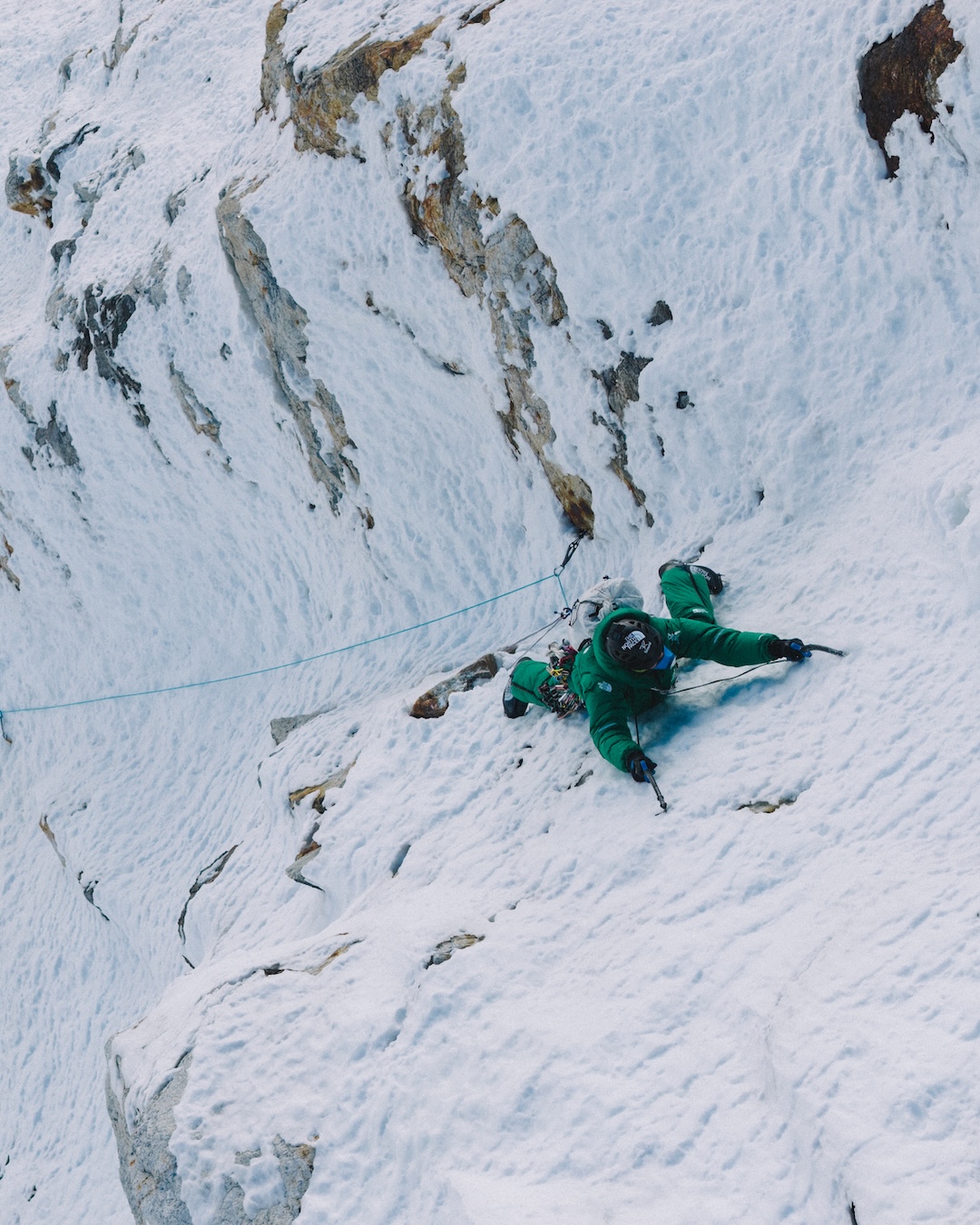
They camped at 5,100 meters on the glacier and, above the bergschrund (5,180m), fixed the first pitch. On October 13, they woke at 4 a.m., then pushed some 1,100 meters up the wall, through hard-to-protect hanging snowfields and deep snow, often climbing solo with their heavy packs, protecting themselves with the rope and pickets when they could.
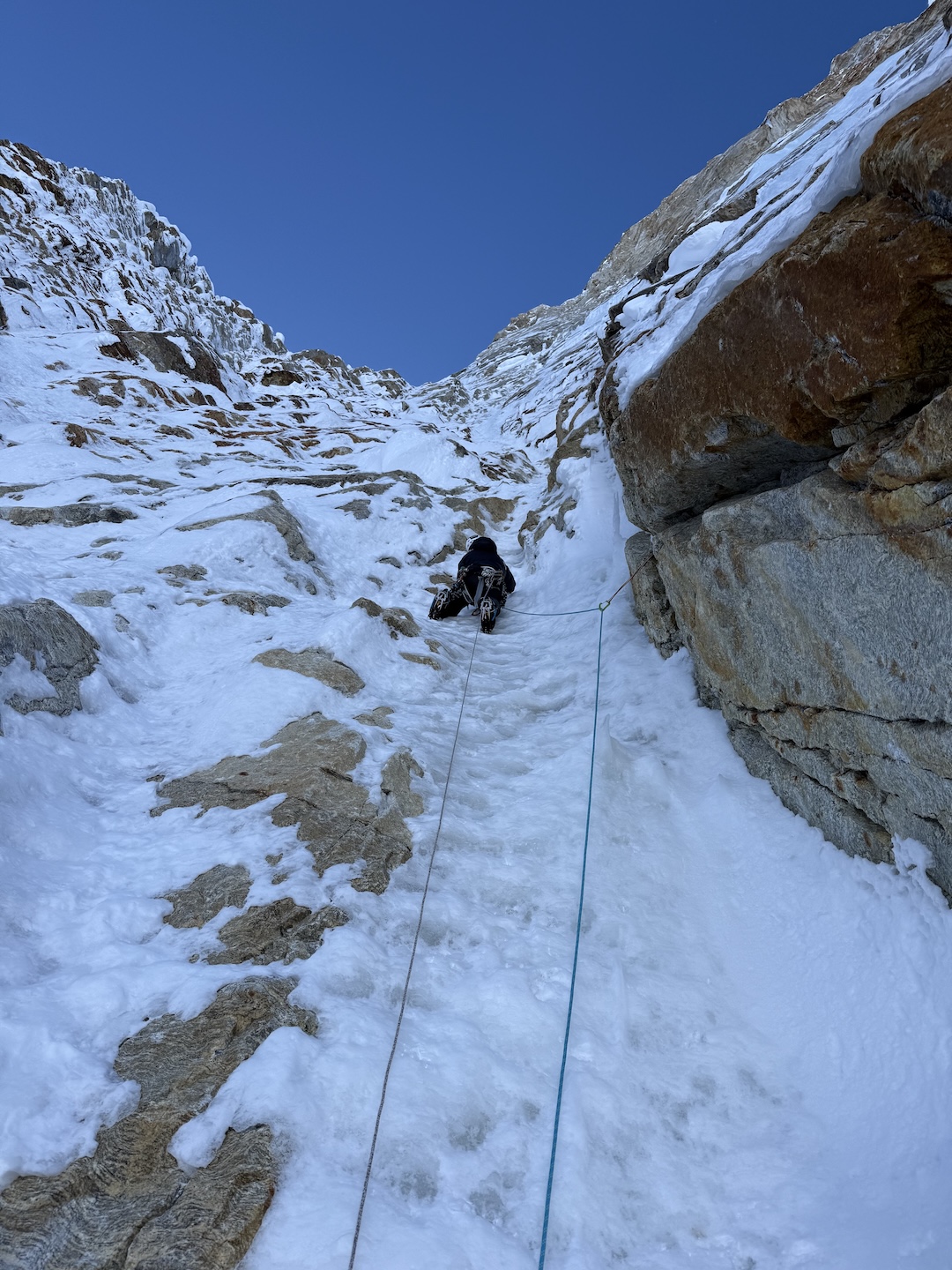
The terrain funneled into a narrow gully plagued by spindrift. Here, they found ice up to WI5 and a tenuous mixed pitch at M6. “Below a layer of thin, compact snow, it was just rock slab,” Védrines recalled. Scratching their way up, the pair arrived at a steep snowfield at 6,200 meters and dug out a bivy site.
After a frigid night, they woke again at 4 a.m. and continued up the face, under a clear sky and light spindrift. Conditions were far colder than the previous year. The freezing level in 2024 had been at 6,500 meters; in 2025, it was at 4,500 meters. As a result, both men struggled with the cold. Jean wore thinner boots than Védrines, and they agreed he should start in the lead on day two to help keep his feet warm.
They now angled left, away from the steepest wall and toward the east ridge, and soon passed their high point from 2024. “Conditions were good, the planets were aligned, and we were climbing fast,” Védrines recalled. That afternoon they reached the east ridge at 6,900 meters and set up camp. Anxious about the terrain above, Védrines led out above camp and climbed about 100 meters, verifying the line would go and making for a much better night of sleep.
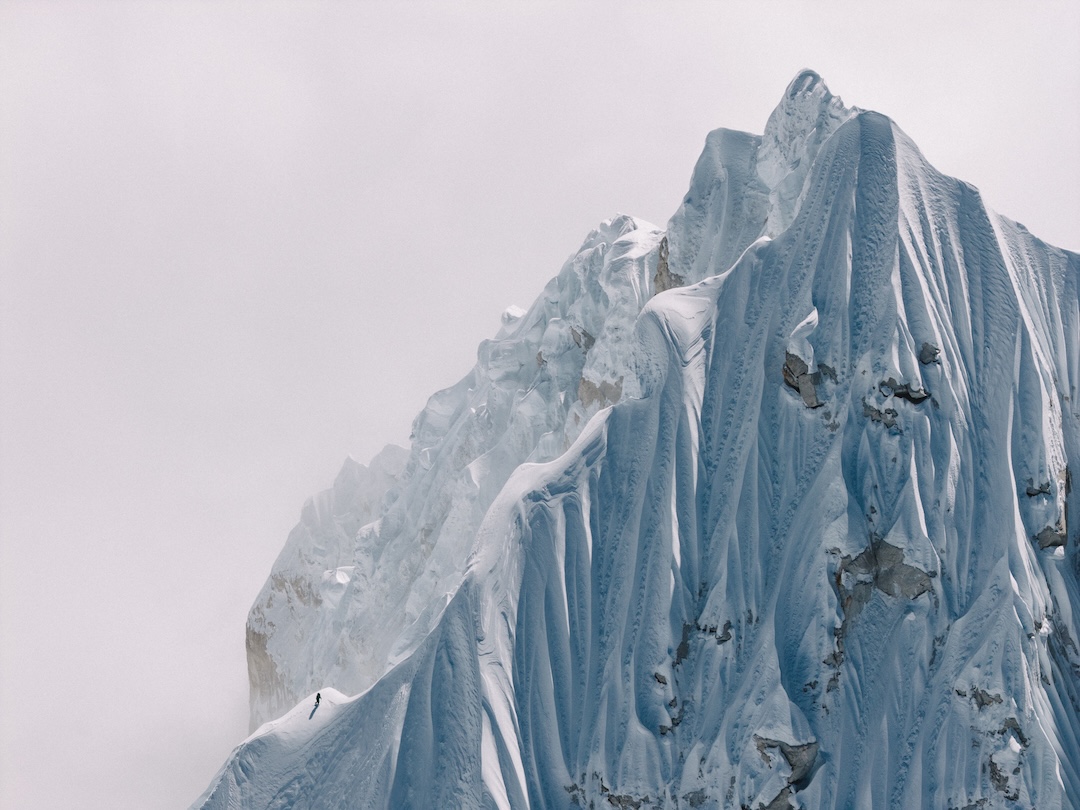
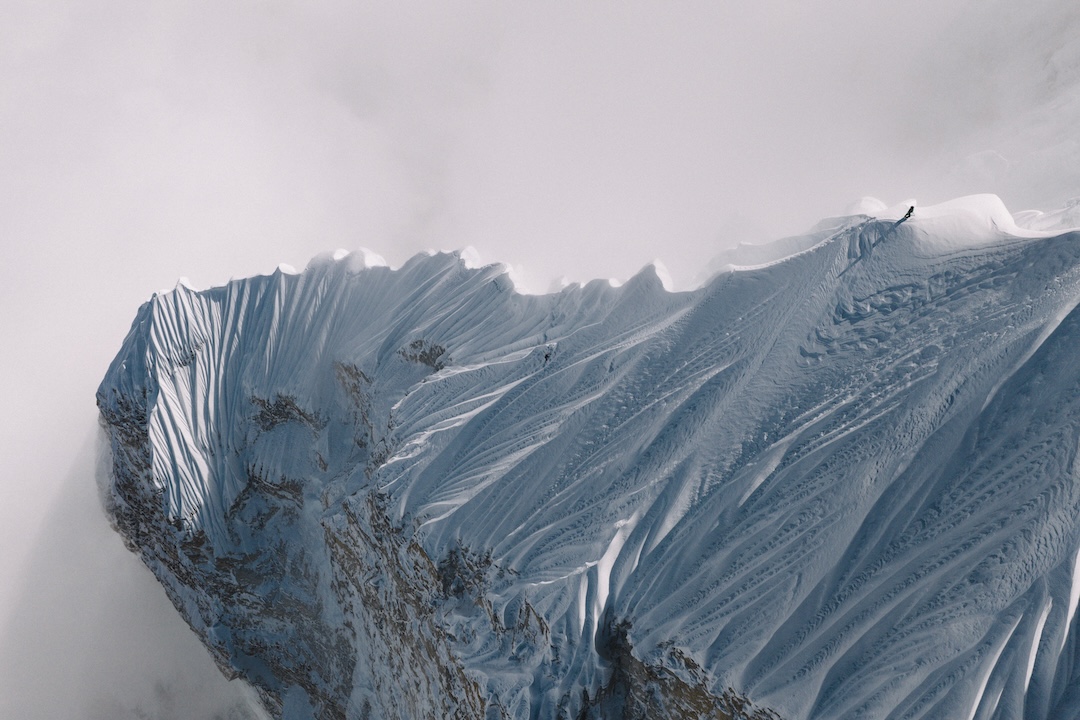
On October 15, they ascended their rope, then navigated the heavily corniced ridgeline, which became increasingly unprotectable as the snow grew deeper and less consolidated, often too loose even for pickets. Frequent snow mushrooms forced cautious route-finding. The only safety net was a grim counterbalance. “We said, if one falls on the right side, the other jumps to the left side,” Védrines observed. “That was all we could do for safety.” The terrain eventually forced them off the ridge crest and into a delicate traverse across fluted snow on the north face, where they stowed their axes and plunged their hands into the soft snow to find purchase.
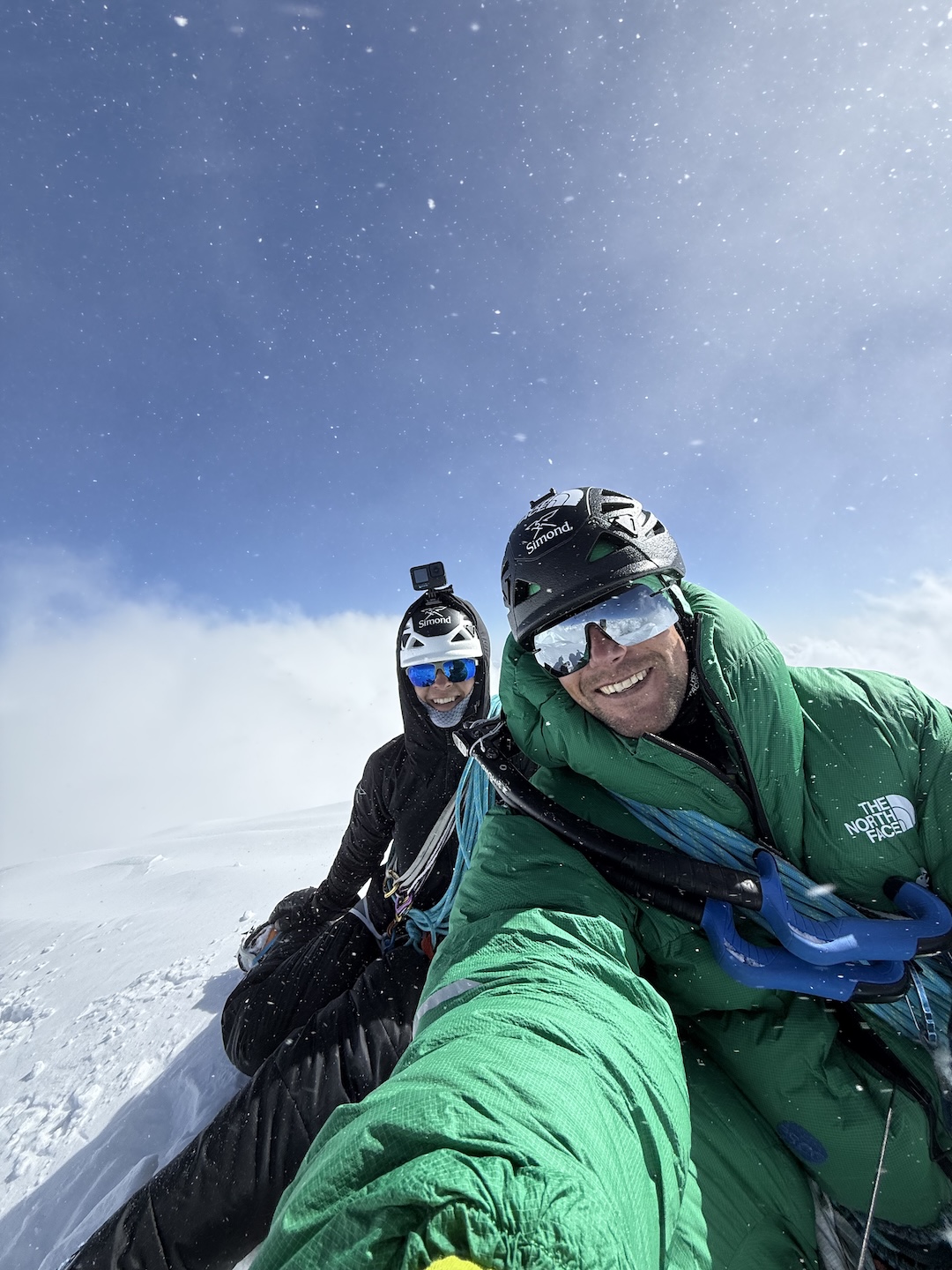
At 1:10 p.m., in a brisk wind, they reached the eastern of Jannu East’s two tops. It was a rare moment of suspension. “Most of the time, I’m very demanding with myself…with the way I climb mountains,” Védrines said. He said he often struggles to appreciate ascents in the moment, instead focusing on what he could have done better. Not here. “At this moment I was like, ‘Oh, fuck, I just want to enjoy this moment…just being happy to be happy,’” he recalled.
Then, before his partner even reached the top, Védrines radioed drone pilot Thibaut Marot at base camp and heard: Guys, I think the real summit is maybe 200 meters away and something like two meters higher. Exhausted but wanting to be sure, the two made a 30-minute round trip to the western top, which, indeed, their altimeter suggested was about four meters higher.
Jean and Védrines started their descent via a combination of downclimbing and ten rappels to the ridge bivy at 6,900 meters. The following morning, they completed about 40 rappels down the face to the glacier. They returned to base camp at 5:30 p.m.
I spoke with Védrines a few days later over the phone, for a Climbing.com story, and he told me Jannu East had sated a hunger he’d previously thought to be insatiable. “When you are an alpinist, you are dreaming constantly,” he told me. “You have these goals, these routes you are pursuing constantly. You are always chasing. But now, I feel filled. My ego…” He paused. “I feel satisfied. I am a different person than I was one week ago.”
I imagined those feelings might mellow in the months ahead. But in the Cutting Edge interview half a year later, Védrines’s sense of resolution seemed intact. “Even if I’m still looking for another achievement and I still want to push…I am another human being [now],” he said. “Even if I [had to stop] doing Himalayan alpinism, I would be super happy.”
SUMMARY: First ascent of Anidesh Chuli (a.k.a. White Wave, 6,808m), in the Kangchenjunga Himal of Nepal, by French climbers Nicolas Jean and Benjamin Védrines, September 26, 2025. The two climbed the west face and north ridge and descended to base camp using paragliders. First ascent of Jannu East (7,460m) by Jean and Védrines, October 12–16, 2025 (round trip). The pair climbed the north face and east ridge and called their route Le Sommet des Pieux (“The Summit of Pickets,” 2,300m, WI5 M6). They descended by the same route.
ABOUT THE AUTHOR: Owen Clarke is a contributing editor of the AAJ. Much of the information in this article is drawn from three interviews with Benjamin Védrines: one with Clarke and another with Rodolphe Popier of the Himalayan Database (both shortly after the expedition concluded), as well as an extensive interview with Jim Aikman, host of the Cutting Edge podcast, in March 2026.
Media Gallery