
Dioskury Peak, North Face, Direct Route
Kyrgyzstan, Pamir Alai, Gissar Alai, Ashat Valley
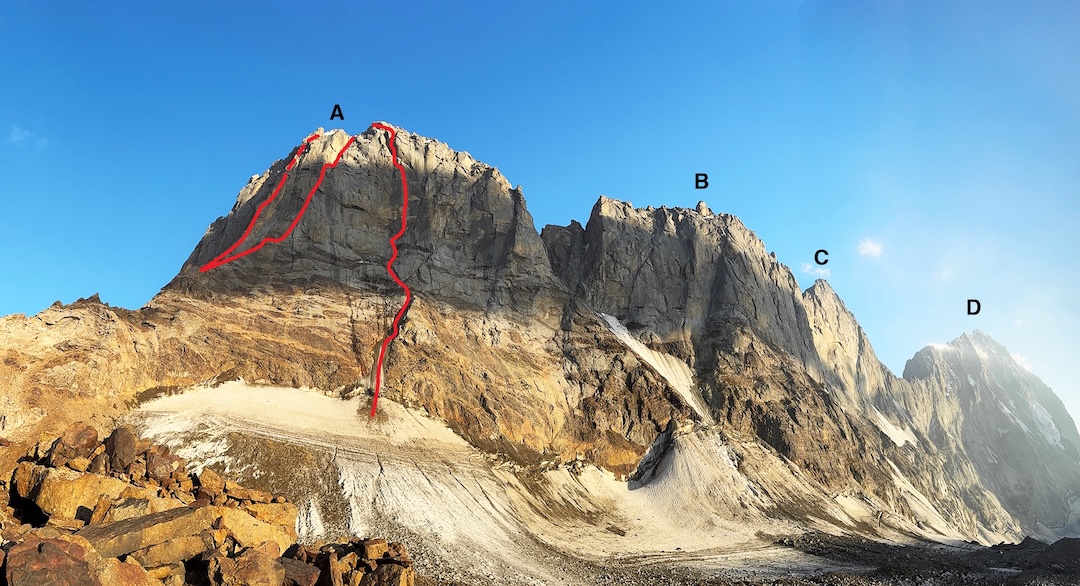
Dioskury (4,884m GPS, 39°34’18”N, 69°59’21”E) stands at the east end of the formidable ridge of peaks at the head of the Ashat Valley, which also includes Argo, Svarog, and Sabakh. This is commonly referred to as the Ashat Wall because of its row of steep, metamorphic, north-facing walls.
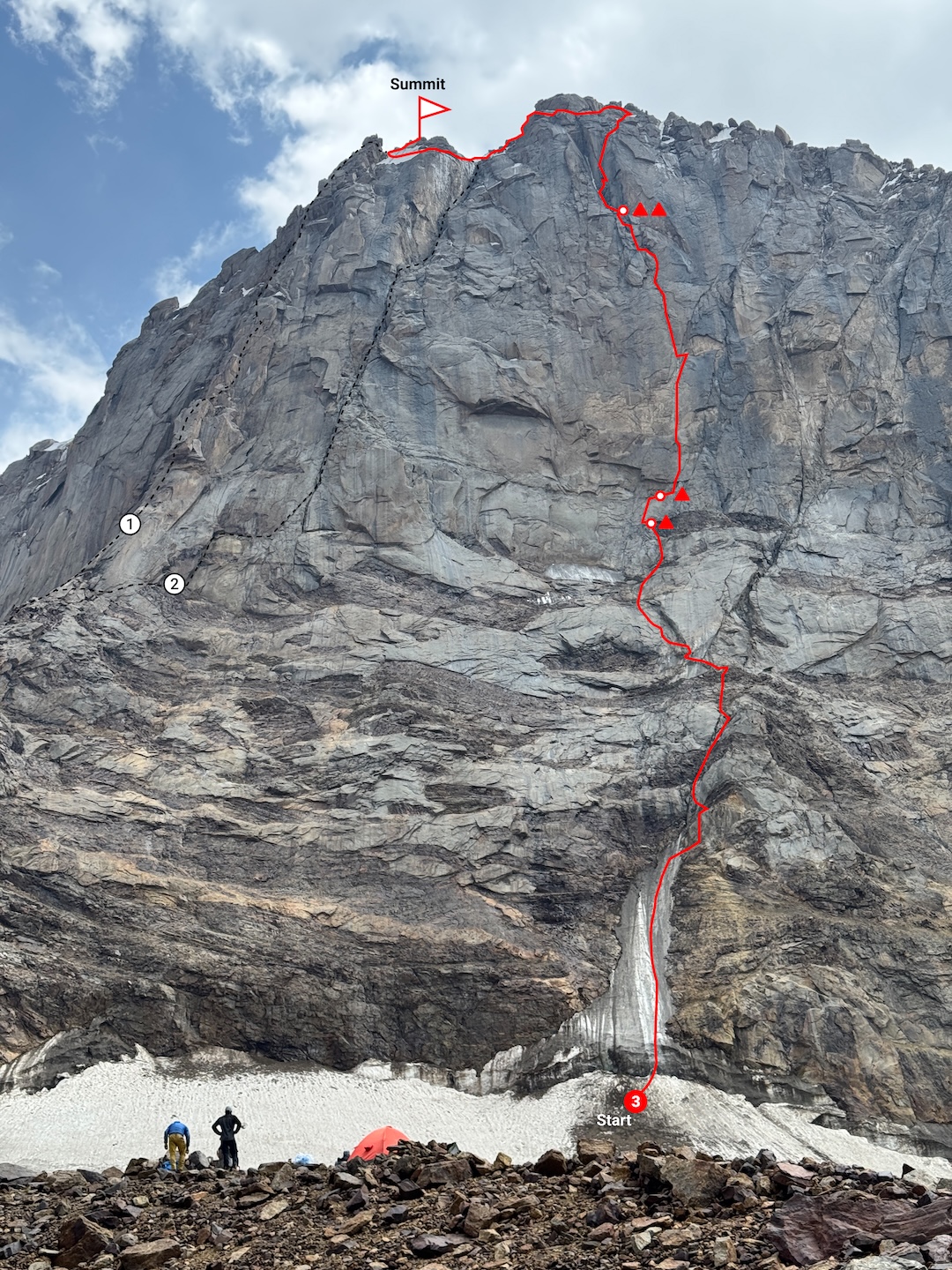
Climbing activity in the Ashat Valley began in the early 1980s, when teams from Moscow and Novosibirsk in Russia opened several major routes on Sabakh and the nearby Parus summits. In 1990, two lines were established on Dioskury, both graded Russian 6A; the routes ascend on or along a spur that drops directly from the summit, commonly called the northwest ridge, though it faces more to the north.
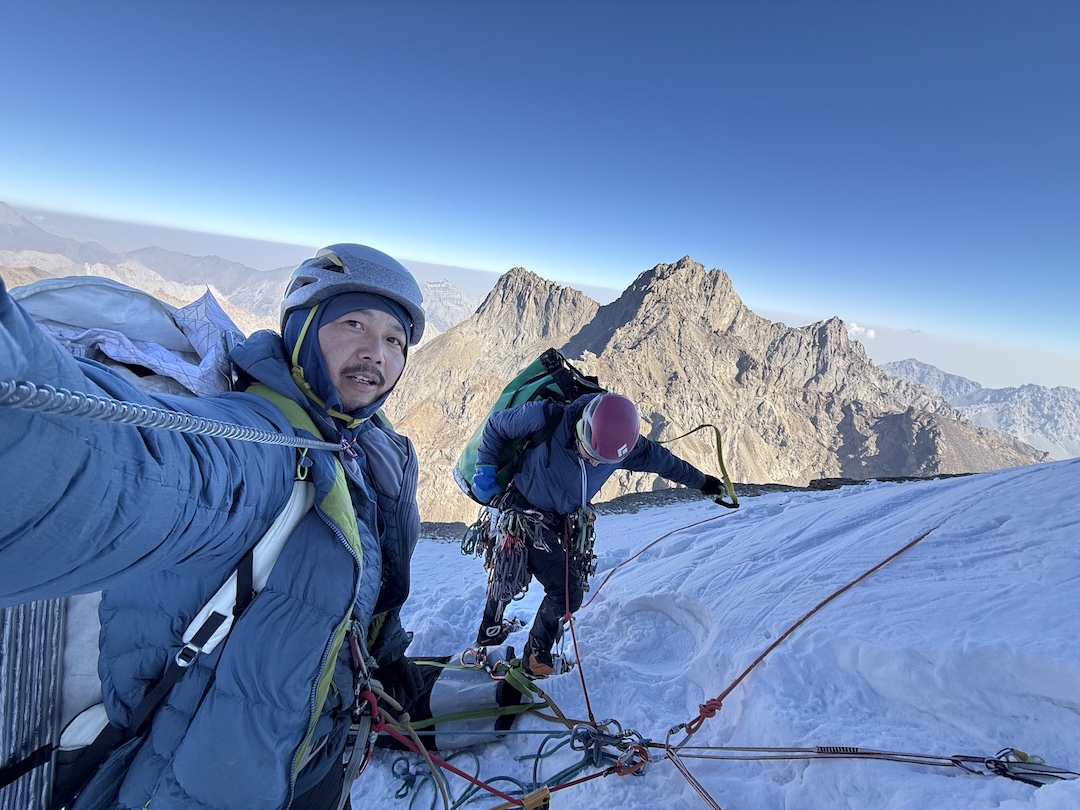
The big face to the right of this spur remained unclimbed until 2025. From August 15 to 20, four climbers—Leonid Krupa, Maxim Ten, and Roman Shesternin from Kazakhstan, and Alexey Marshalov from Russia—completed a direct route through the center of the north face.
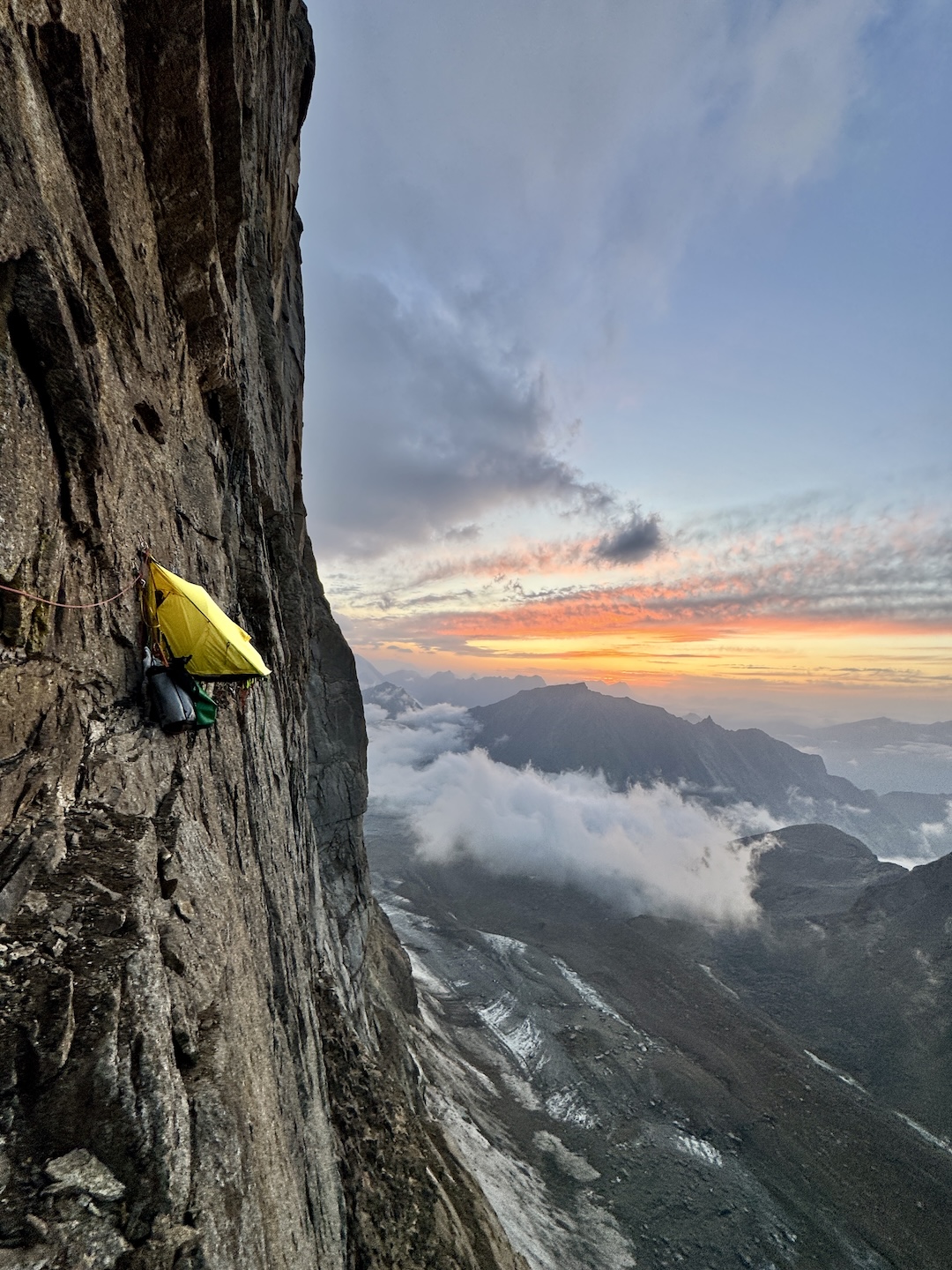
The team established camp on the glacier at about 3,900 meters below the wall, whose lower section is now a zone of unstable glacial debris and loose rock. Before starting the climb, they spent nearly a day observing the frequency and paths of rockfall. They noted that activity increased after 11 a.m. and thus decided to climb the lower slopes only during the cold morning hours. They planned to use a portaledge for all bivouacs because the wall had no natural ledges.
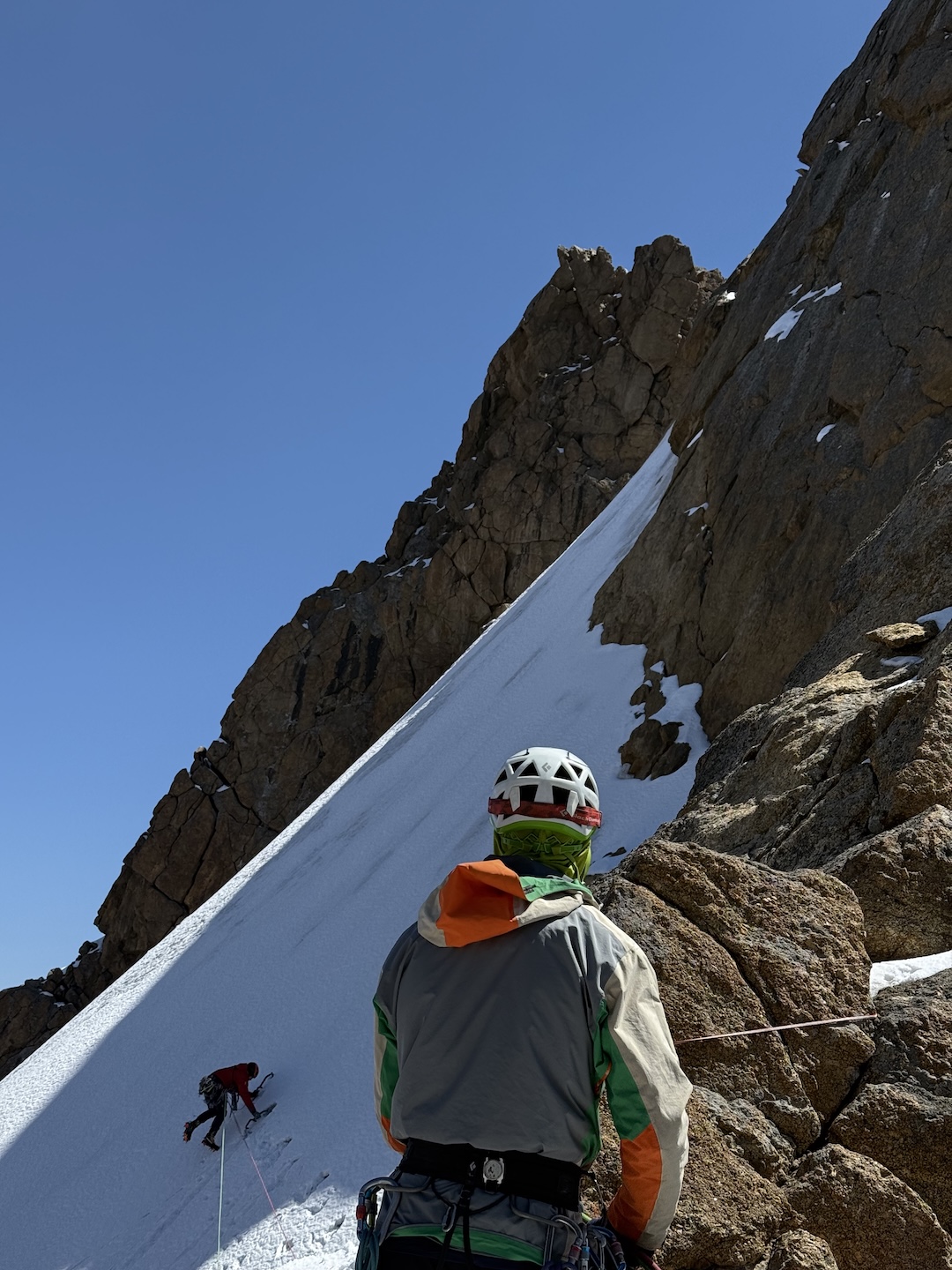
The ascent began at 3 a.m. on August 15. The first ten pitches climbed a 60°–70° snow and ice slope exposed to constant rockfall and continued for about 120 meters through unstable blocks mixed with dirt and remnants of ice. By evening, the climbers reached a zone of overhangs and set the portaledge beneath a roof that offered partial cover. They spent the night in their helmets and harnesses.
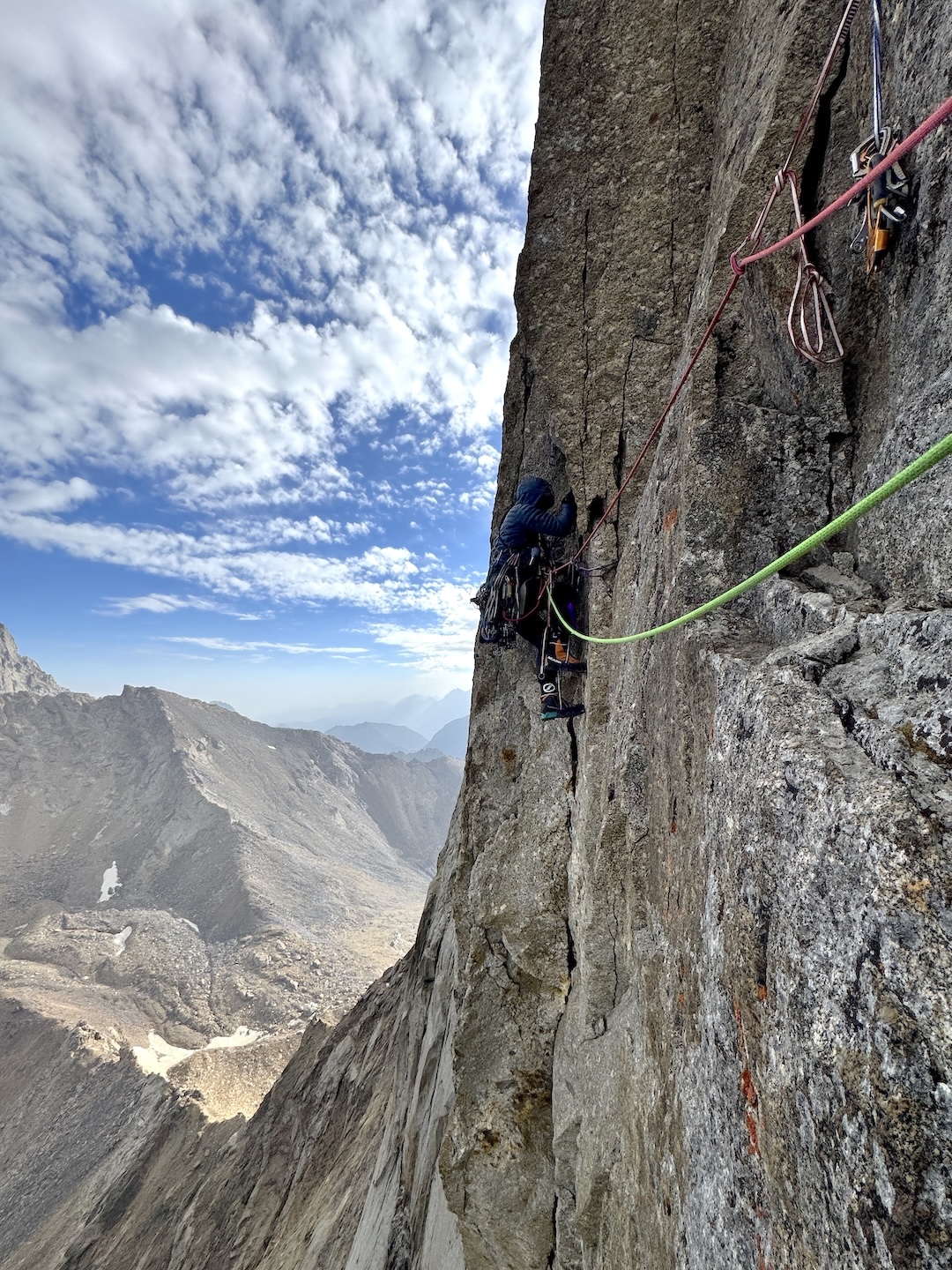
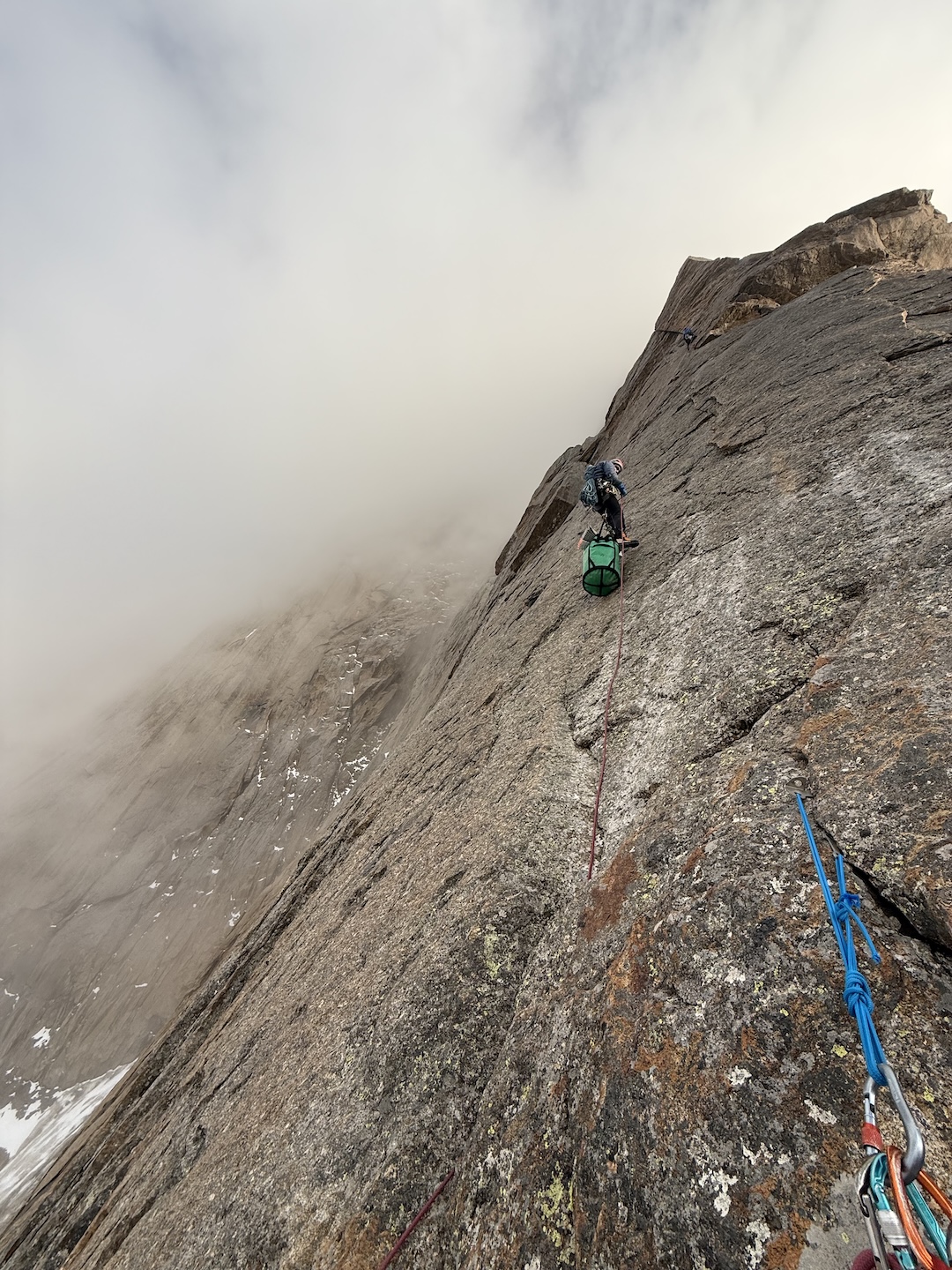
On August 16, the team entered the headwall, following thin, ice-coated cracks that required aid climbing (up to A3) on hooks and small pitons. The day’s progress was limited to three pitches. Their water supply had been reduced to about three liters for the entire team, making it critical to reach icy sections higher up. In the evening, they moved the ledge about 30 meters higher, under a broader, better-protected roof. Supper consisted of a cup of warm tea and a small piece of cheese apiece.
The next day, the terrain alternated between shattered bands of rock and compact slabs. Aid sections (A2/3) were combined with short traverses and risky pendulums with their haulbags. By evening they had reached an icy chimney in the upper wall, set the portaledge, and melted snow for water after two dry days.
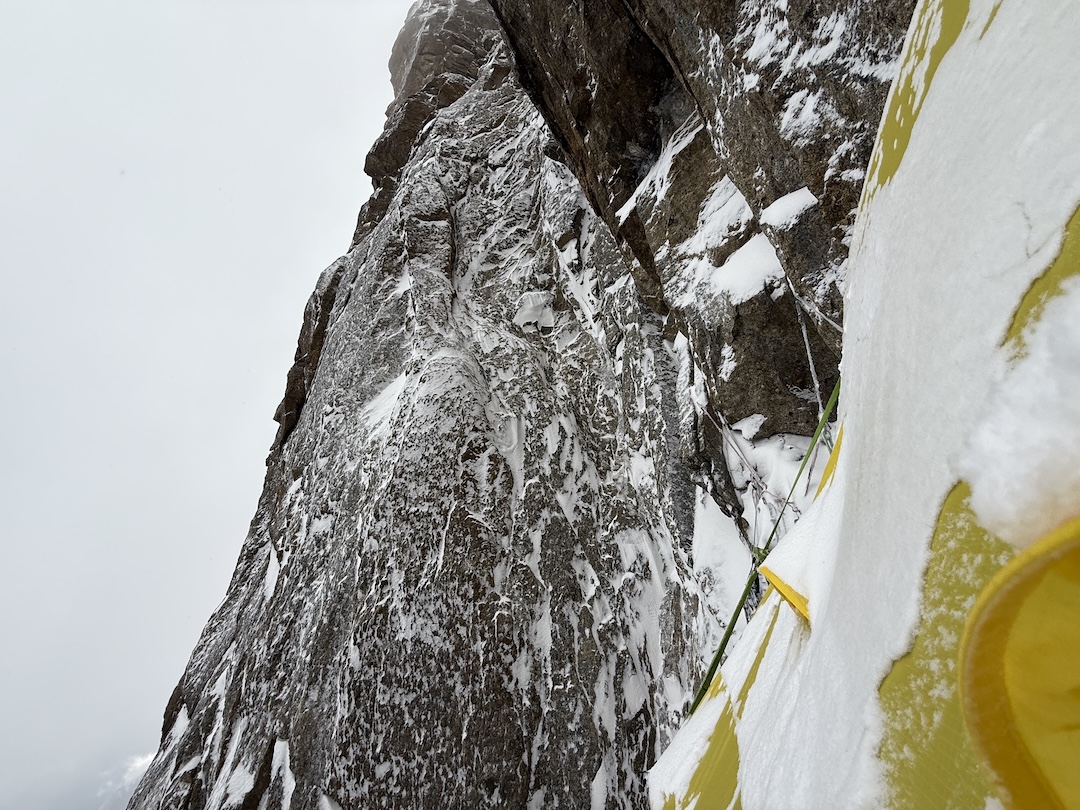
During the night, the weather deteriorated. Strong wind and snowfall continued into the morning, covering the wall with half a meter of new snow and dropping the temperature sharply. Around 11 a.m. on August 18, the storm subsided, and Marshalov and Krupa resumed the climb, leaving the portaledge in place. They led three mixed pitches through a vertical chimney of thin ice and unstable rock, graded about M7, and reached a point near the top of the wall where the angle eased. They returned to the same bivouac for the night.
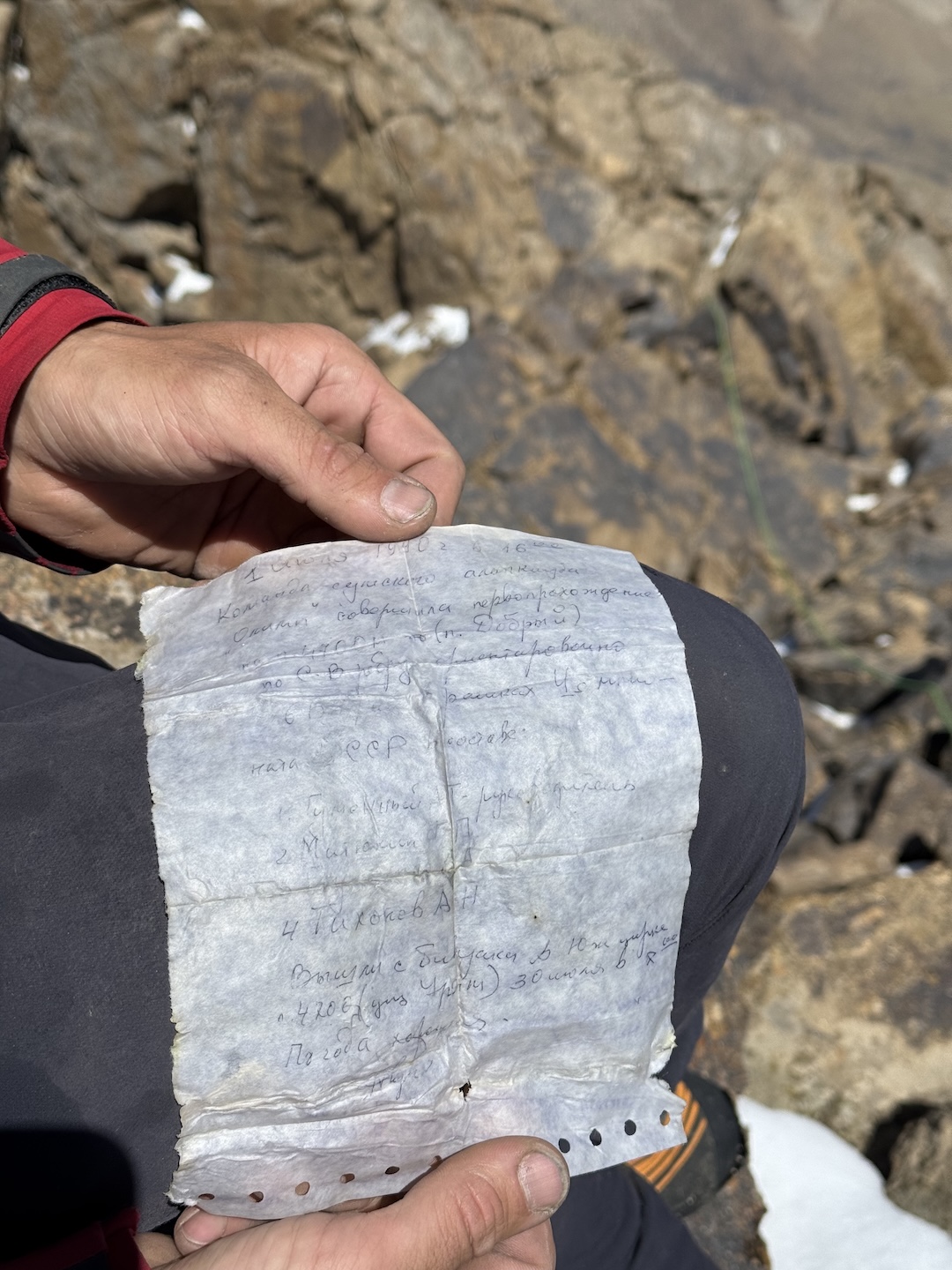
On August 19, Shesternin and Marshalov ascended the fixed ropes and took the lead for the final three rope lengths on ice and a short ridge, bringing the climbers to the summit of Dioskury at about 3 p.m. The GPS recorded 4,884 meters, about 200 meters higher than indicated on older maps. On the summit they found a note dated July 1, 1990, left by the Soviet team led by A.T. Gumenny that made the first ascent of Dioskury.
The descent followed one of the established lines on the northwest ridge. The team made a series of long rappels, bivouacking once on the ridge. They reached their tent below the wall on August 20 and returned to base camp the same day. The new route gained 1,200 meters and was graded Russian 6B/ED2 M7 A3.
—Anna Piunova, AAJ, with information from Maxim Ten, Kazakhstan
Media Gallery