Nenana Mountain, Ketamine Arête and No Guides Allowed
Alaska, Alaska Range, Hayes Range
Balin Miller’s gear was nowhere to be found—or so he claimed.
Fresh off his solo ascent of the Slovak Direct on Denali and a short crabbing season off the Seward Peninsula, he arrived in Anchorage on July 1 to find me, Tristan O’Donoghue, and Julie Costa psyched for a trip to Nenana Mountain (7,881’, 63.53487, -147.83370) in the western Hayes Range. But Balin was cooked. He had already spent 53 days of his summer on a glacier, and the idea of five more days was unappealing. He offered up a convenient excuse: All his gear was locked inside a CONEX shipping container, and his father had just left for California with the key.
Unfortunately for Balin, Julie is the single most generous person I’ve ever met. Not only did she offer to pay his heli share, but she also fully outfitted him in brand-new gear the day before we flew. We essentially forced him to come with us, and soon we were established on the Hotel Glacier for the most impeccable Fourth of July weather we had seen in years.
Nenana Mountain could be best described as a massif, with many features leading to small independent summits, both climbed and unclimbed. The climbing could easily be compared to that found above the Pika Glacier in the Central Alaska Range, with more continuous lines of splitter cracks. The best individual pitches I’ve climbed at Nenana easily compare to the best I’ve done in places like Patagonia or the High Sierra. To be fair, though, I’ve had the privilege of plucking the best lines in the massif, ignoring those that appear less desirable. Tristan and I were there for our fourth trip, while Julie and Balin were seeing the place with fresh eyes. (See reports in AAJs 2021, 2022, and 2024.)
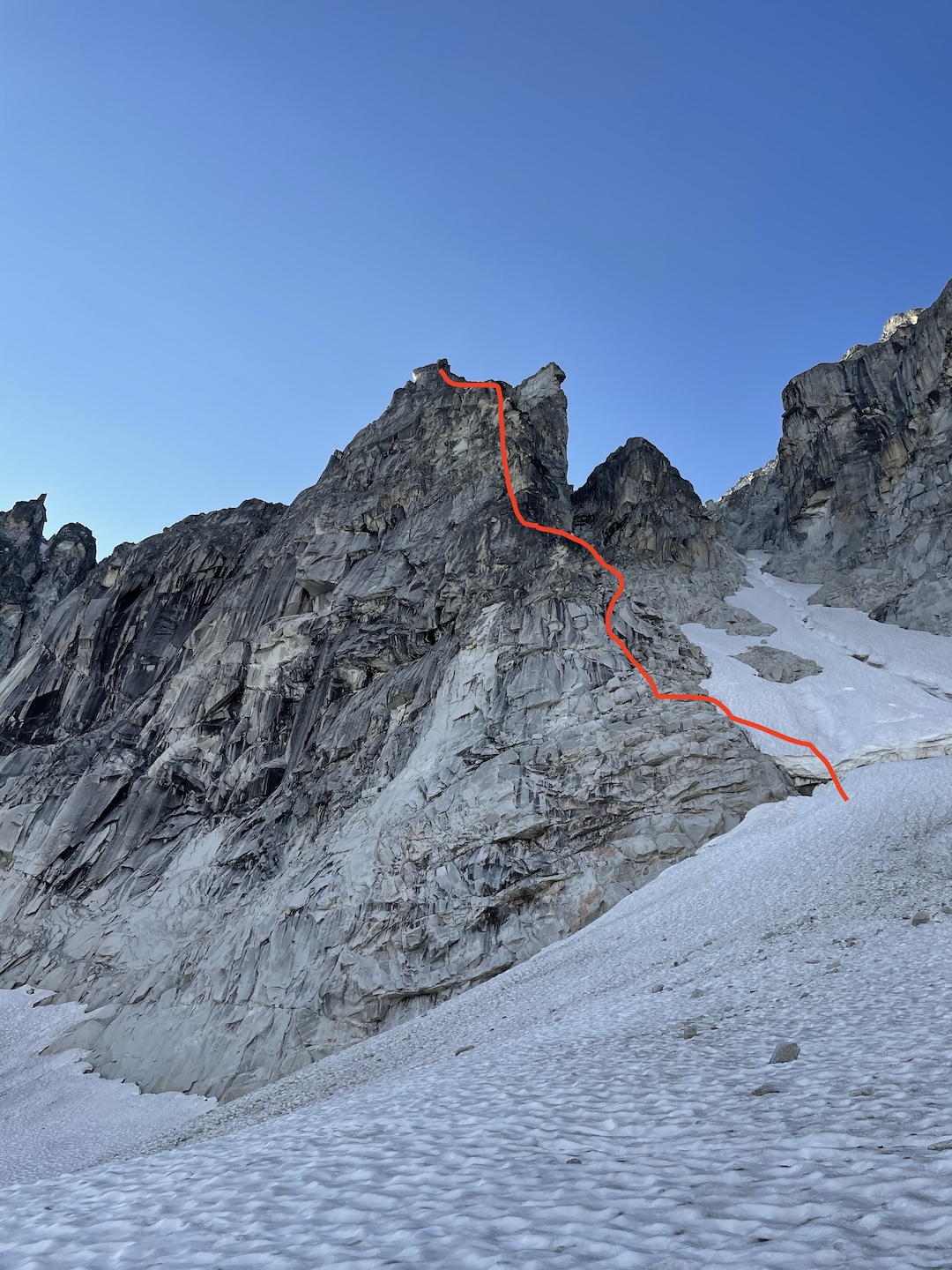
With a late start on our first day, as two separate teams, we established long and clean splitter pitches at the base of a feature we dubbed Relaxation Spire, named for an evening spent staring up at it from basecamp. The next morning, Tristan and I were set on completing a line we had attempted in 2023, a long, appealing arête on the east side of a steep, complex face we informally called the Stimulation Wall. The arête appeared to be the easiest path to the summit; we had pushed three or four pitches up during our previous attempt.
After climbing steep snow and a large bergschrund to reach the base of the arête, we swapped boots and crampons for rock shoes, and Tristan took on the high-stakes responsibility of throwing our alpine kit back over the bergschrund, so we could rappel the face directly. Thankfully, Tristan has always been a multisport athlete—his toss cleared the schrund with ease.
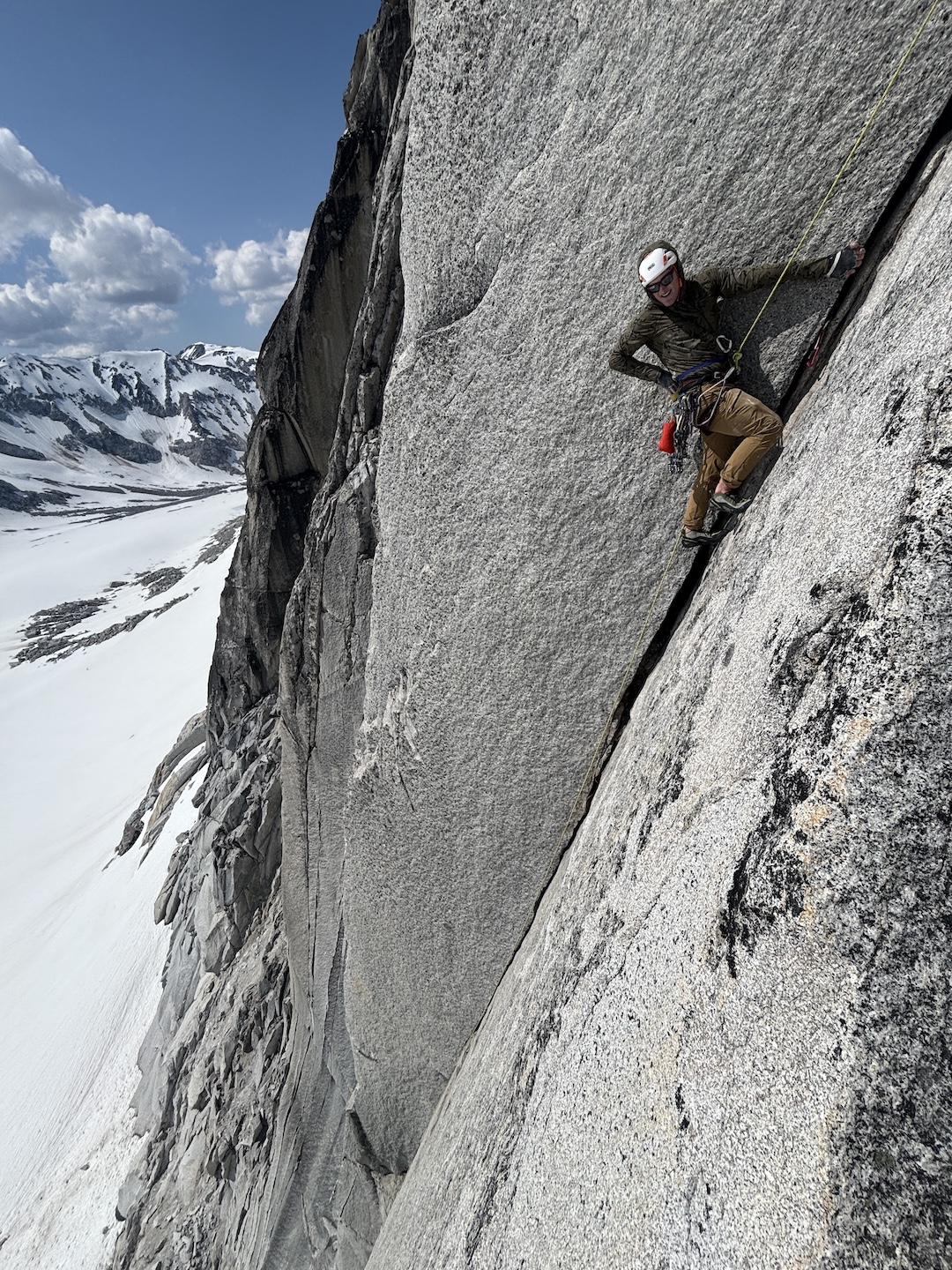
A few rope lengths of 5.7–5.8 terrain led to a long 5.10 crux pitch, with a sweet roof pull capped by steep, well-protected jamming, stemming, and face climbing. The next pitch was loose and uninteresting 5.9, but it guarded a wonderful 5.8 squeeze chimney that split the middle of the arête. From there, we rambled up low-angle cracks to a gorgeous 5.9 headwall. A few more rope lengths brought us to a sharp summit, from which we rappelled straight down the middle of the Stimulation Wall.
We found ourselves at the bottom after seven long, steep rappels on mostly clean, beautiful stone. It was a novel experience to rappel into vertical terrain that, to our knowledge, no person had ever climbed or descended. Many fantastic hard routes could tackle the features of this face, to the left of our route, which we named the Ketamine Arête (1300’, IV 5.10c). A standard alpine double rack to number 4 protected our route well. We left no trace of our ascent on the way up and rappelled the steep face on two-piece anchors of nuts and pitons, as well as a few slung horns.
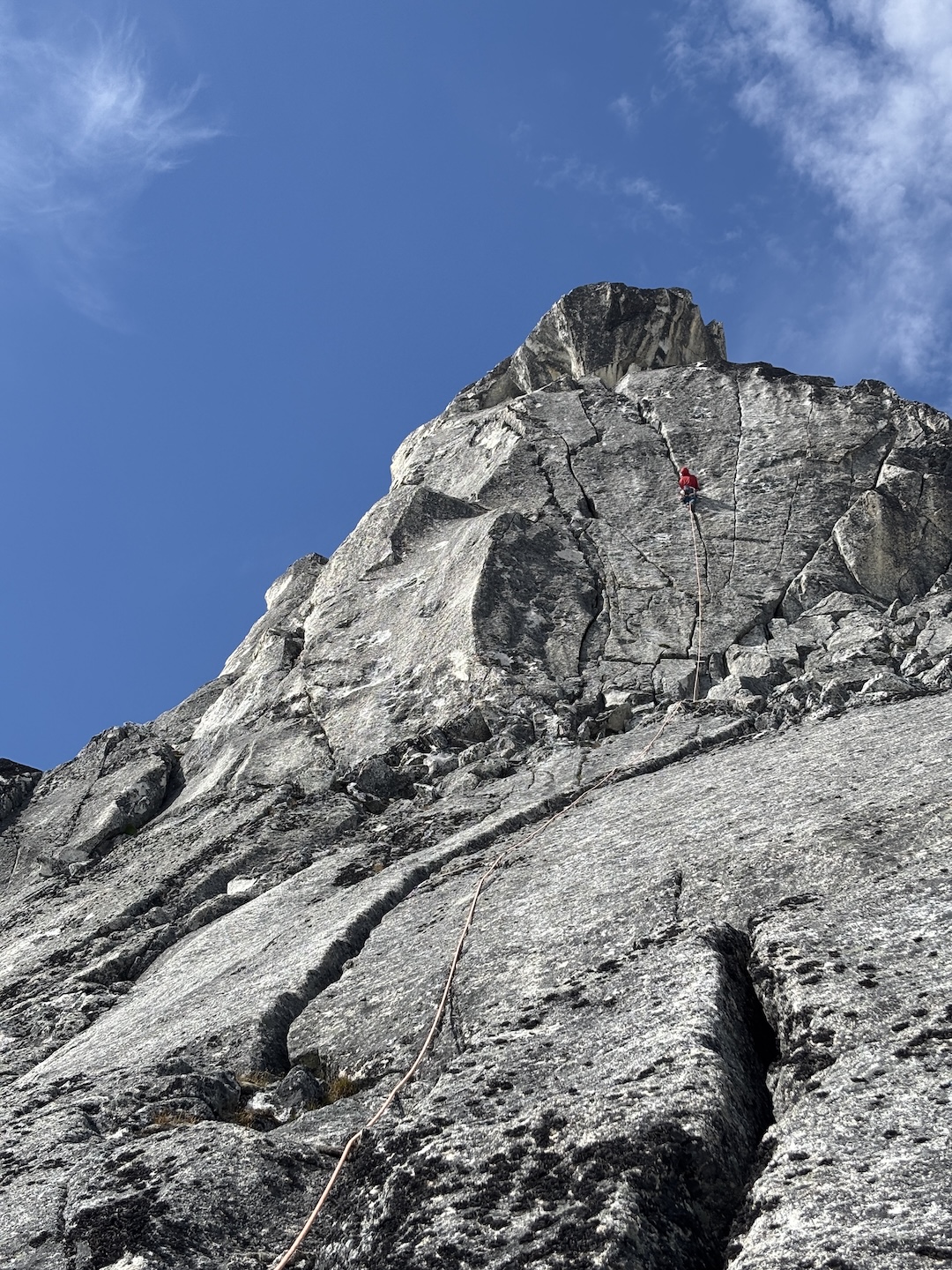
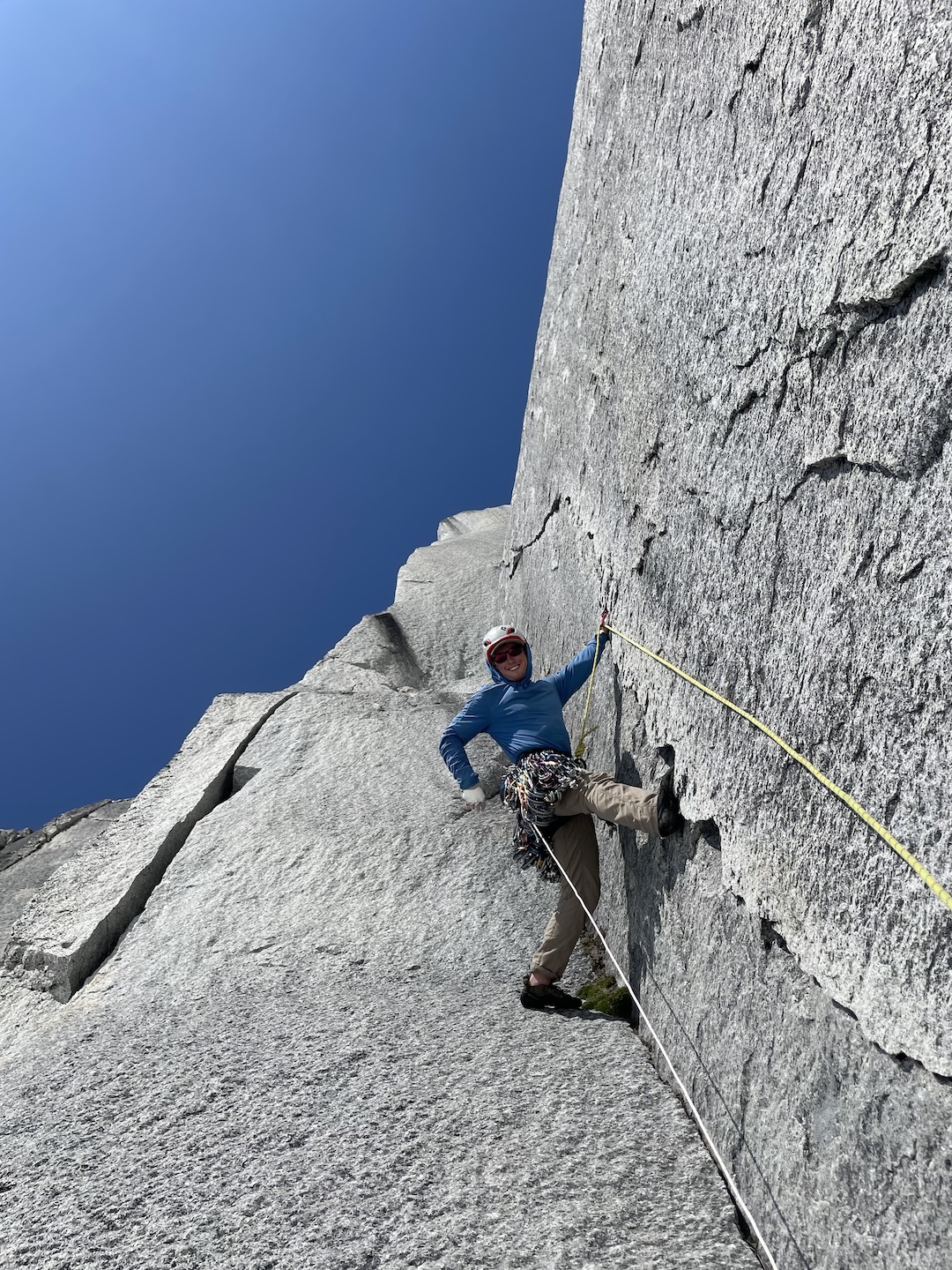
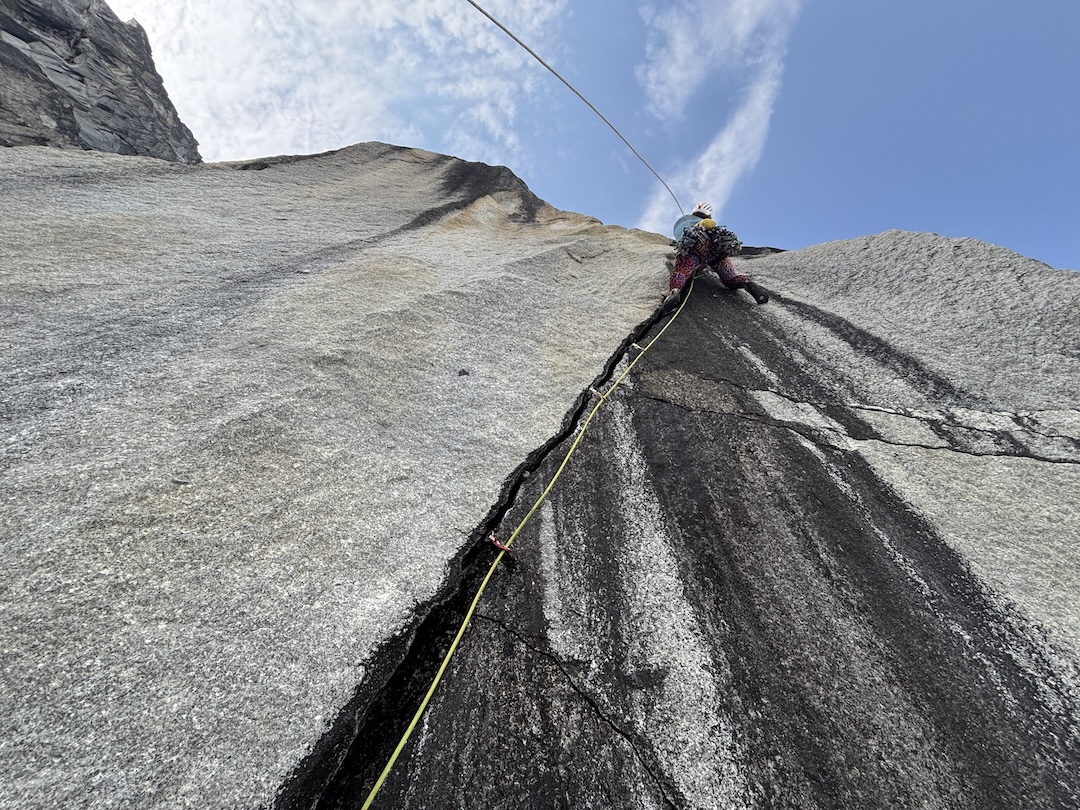
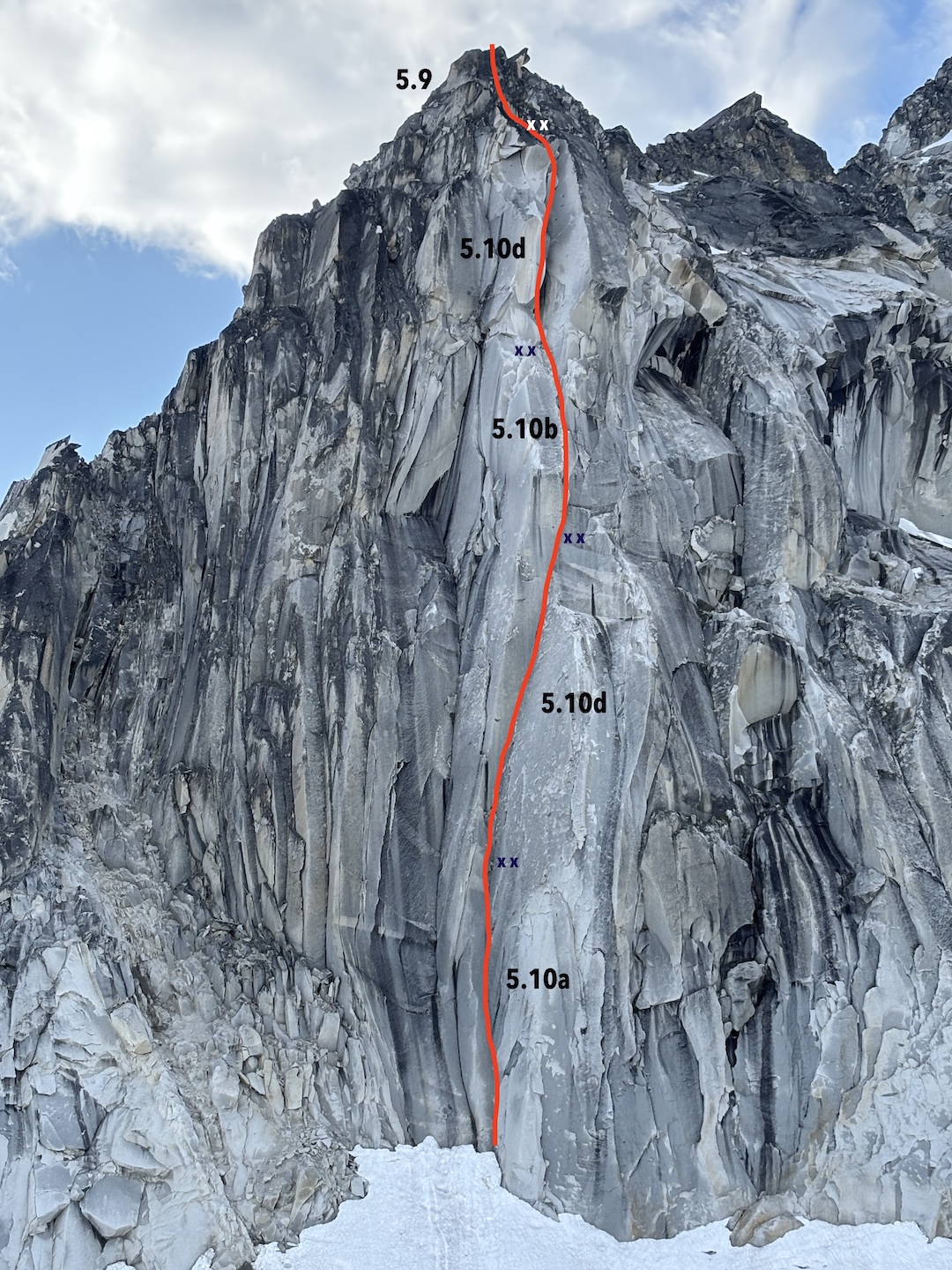
While Tristan and I had our alpine adventure, Balin and Julie had been hard at work aiding, cleaning, and bolting anchors for a modern free climb up the center of Relaxation Spire, so named after an evening spent staring up at it from base camp. The next day, Julie, Balin, and I cruised to the top of the climb, having an absolute blast. Every pitch except the last was solid, sustained 5.10 or harder crack climbing, comparable to the best pitches I’ve done in Yosemite. From the top, we did two single-rope rappels on natural anchors back to the highest of four bolted anchors set up for 60-meter rappels.
Balin insisted the route was no harder than 5.10d. He also wanted to name the 650-foot route No Guides Allowed. As Balin is no longer with us, I have to respect those wishes, though I may not agree with them. Of all the routes I’ve done at Nenana, this is the most worthy of a repeat. It can be done with a triple rack to number 3 and a single 4.
We had a day left in our trip and decided to try one more climb, despite being very tired from our previous efforts. Balin, Tristan, and I quested three pitches up a nice unclimbed line near Brown Pants (see AAJ 2021), while Julie sunbathed. The third pitch was a memorable overhanging 5.11, but the 4th pitch, an alleged hand crack that Tristan and I had been dreaming about for years, turned out to be a wet seam. We joyfully rappelled, happy to have done some good climbing together as good friends.
This was the last time that Tristan and I got to rope up with Balin. I am happy he got a chance to climb in the Hayes Range, as he would often dream about objectives like the East Ridge of Deborah or The Entropy Wall on Mt. Moffit. I have no doubts he would have accomplished some incredible things in this quiet part of the Alaska Range, but for now, the Hayes Range and the small group of people who climb there are left a little quieter.
—Ethan Berkeland
Media Gallery