Mt. Hooker: Northwest Passage, First Free Ascent; The Living Stone, First Ascent
Wyoming, Wind River Range
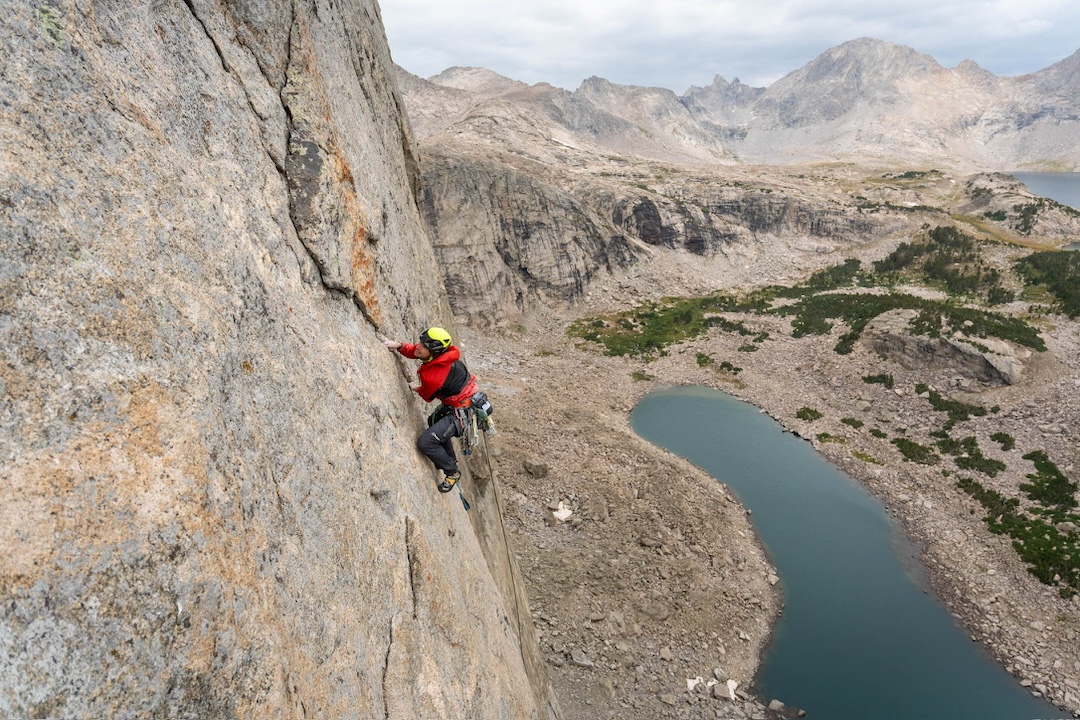
Jonny Schaffer and I have both spent significant time on Mt. Hooker, Jonny primarily establishing new free routes, and myself climbing existing lines on the wall. In 2024, we made a 12-day trip together with two objectives. The first was to free Northwest Passage (Hokanson-Spangler, established at VI 5.9 A3 in 1998), which Jonny had spent time on the year before. [This 12-pitch route takes a direct line up the northwest face of Hooker.] The day after hiking in, on July 31, we climbed to his old high point and continued upward, onsighting the remaining pitches to the summit and topping out sometime after midnight. We found difficult climbing on the lower half of the route, with a couple of pitches sustained in the 5.12+ to 5.13- range.
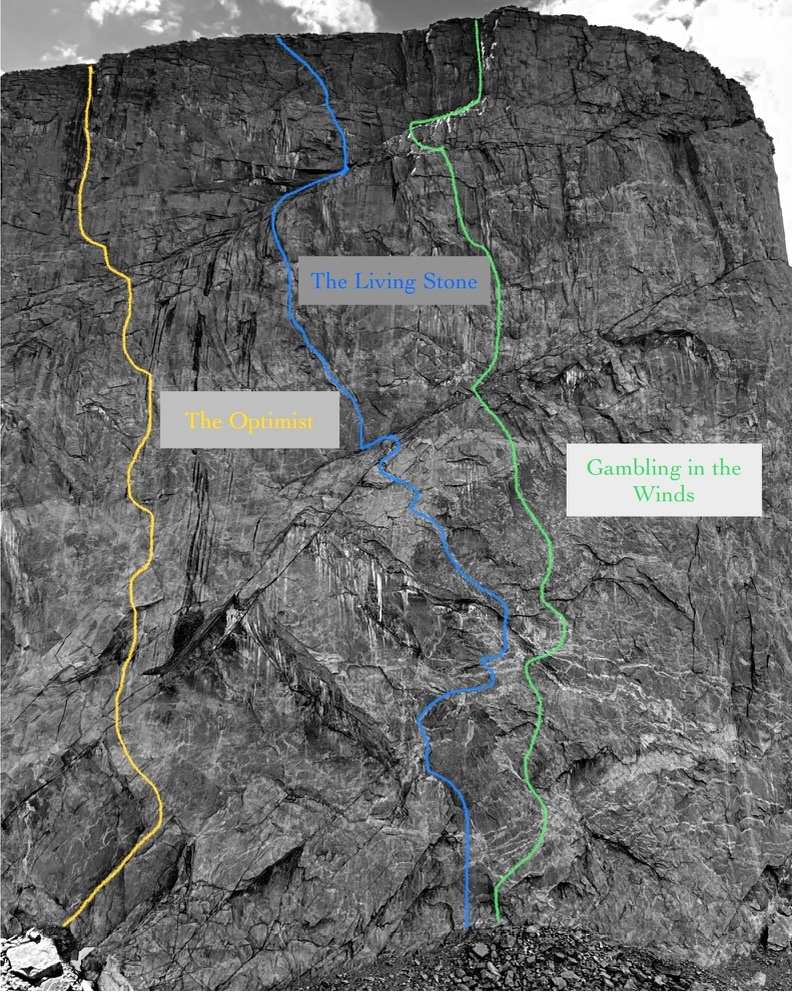
We then turned to our second objective: to explore a potential new free line on the northeast face, left of Gambling in the Winds (5.12+, Birdwell-Huey-Kennedy-Magro, freed in 2019). Discontinuous cracks, blank slabs of Hooker’s jade rock, and a very large roof slashing at a downward angle across the lower half of the wall made the odds of a free climbing passage slim. But we’d spent enough cumulative time reading Hooker’s rock to know the risk of getting shut down was worth the reward.
From August 2 to 11, we sussed out the route in ground-up style, without aiders, leaving each belay with an onsight mentality: following cracks and seams and free climbing when we could, and hanging on hooks when hand-drilled protection became necessary. Two pitches up, we reached a belay ledge below the roof, guarded by 35 meters of steep face climbing. A path of crescent flakes, swirling dikes, and a few chicken heads led to a layback crack that steepened as it arced toward the roof.
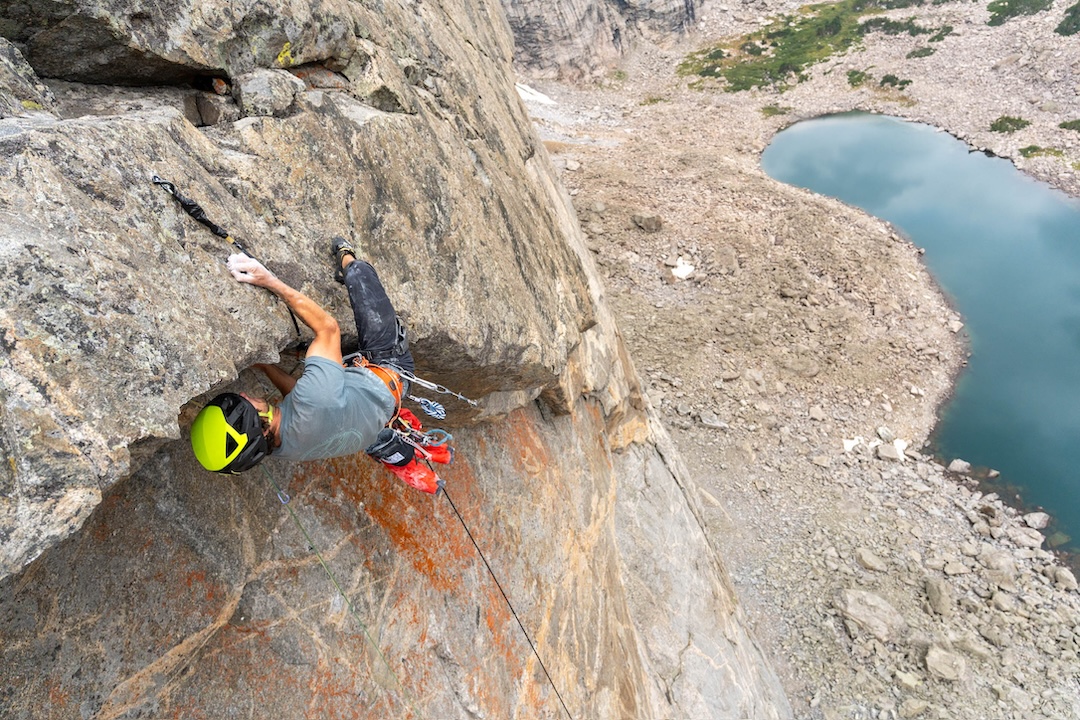
Jonny cast off, onsighting steep terrain with sparse options for gear, lassoing a chicken head and hand-drilling from hooks, to get to the signature roof. We swung leads on the pitch a few times, working out beta and figuring out where bolts needed to go, until Jonny pulled the lip of the roof at solid 5.13 and found a belay just above it.
We felt hopeful, but most of the wall still loomed above. We dispatched a bold 5.10 pitch we dubbed the Heart, then continued up a full, 70-meter 5.12+ adventure pitch to get to Der Minor ledge. Above, the wall was blank, with few climbable features going in the direction we wanted. We tried and failed on a few options before committing to a small Houdini stem corner with two very old bolts; we think these relics may be from the old aid route Year of the Horse (a.k.a. Northern Lights, VI 5.10 A3, Dunkak-Maus-Wadman, 1998). Two more long, adventurous pitches brought us to Der Major ledge, two pitches below the summit.
We returned twice in 2025. On the first trip, we spent four days working out the remaining free climbing on the crux pitches and taking the line up the final two pitches to the top. Finally, on August 26, we traded brushes and hammers for sending shoes and a light rack. After a couple of wet days, we got a short weather break to give it a shot. Freeing the whole route in one go felt like taking the weight vest off: the easiest day of the entire process. The Living Stone (1,800’, 10 pitches, 5.13 R) is a fine free addition to one of America’s most iconic backcountry cliffs.
—Wilson Cutbirth
Media Gallery