
Djangart Range, Four Ascents
Kyrgyzstan, Tien Shan, Central Kokshaal-Too
Between July 27 and August 21, fellow Basque climber Mikel Txintxurreta and I, both 27, visited the Djangart Range in the Central Kokshaal-too. We flew from Madrid to Bishkek on July 27 and by July 30 were in base camp (3,700m, 41°40’24.25”N, 78°47’24.21”E).
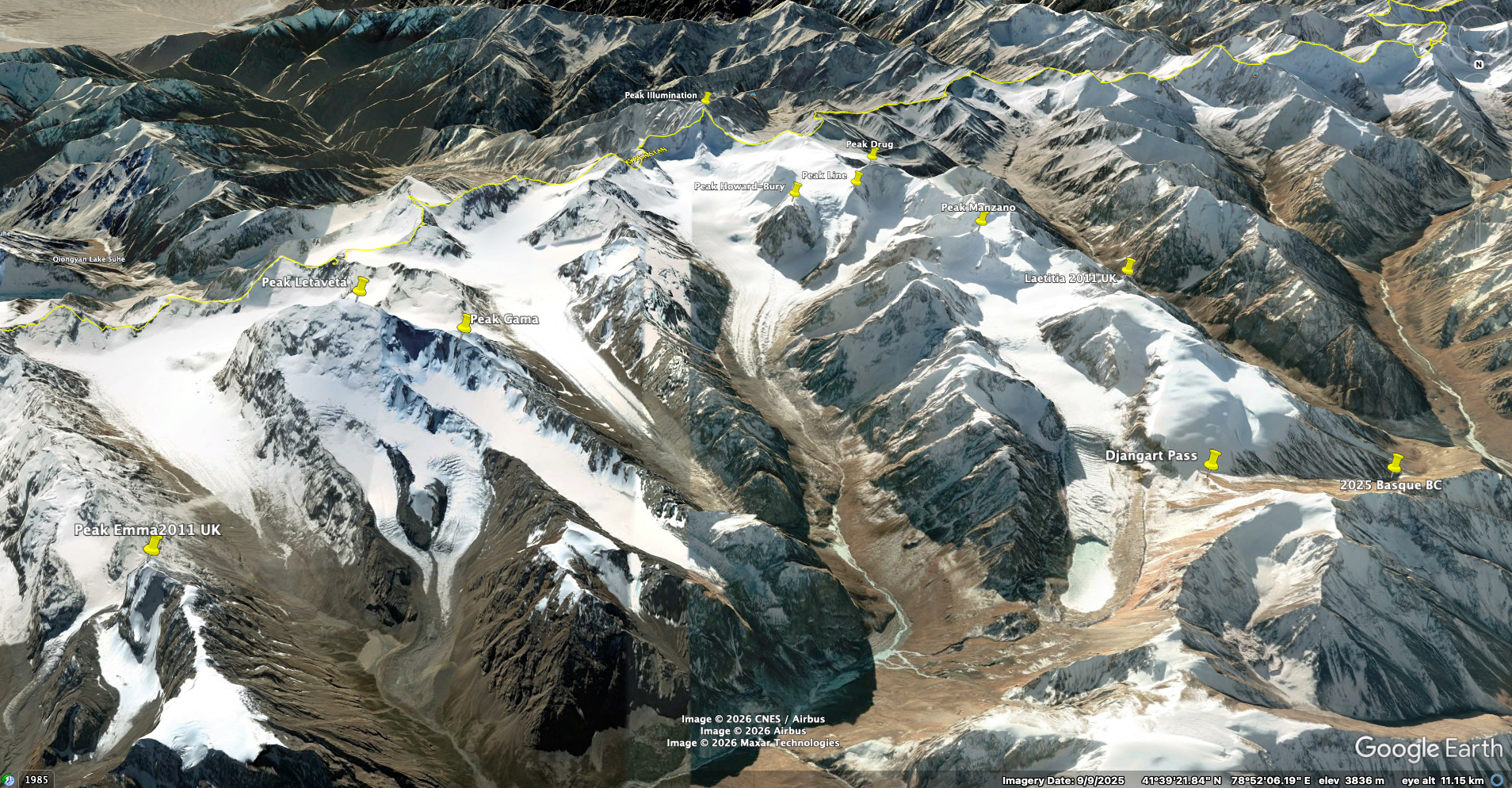
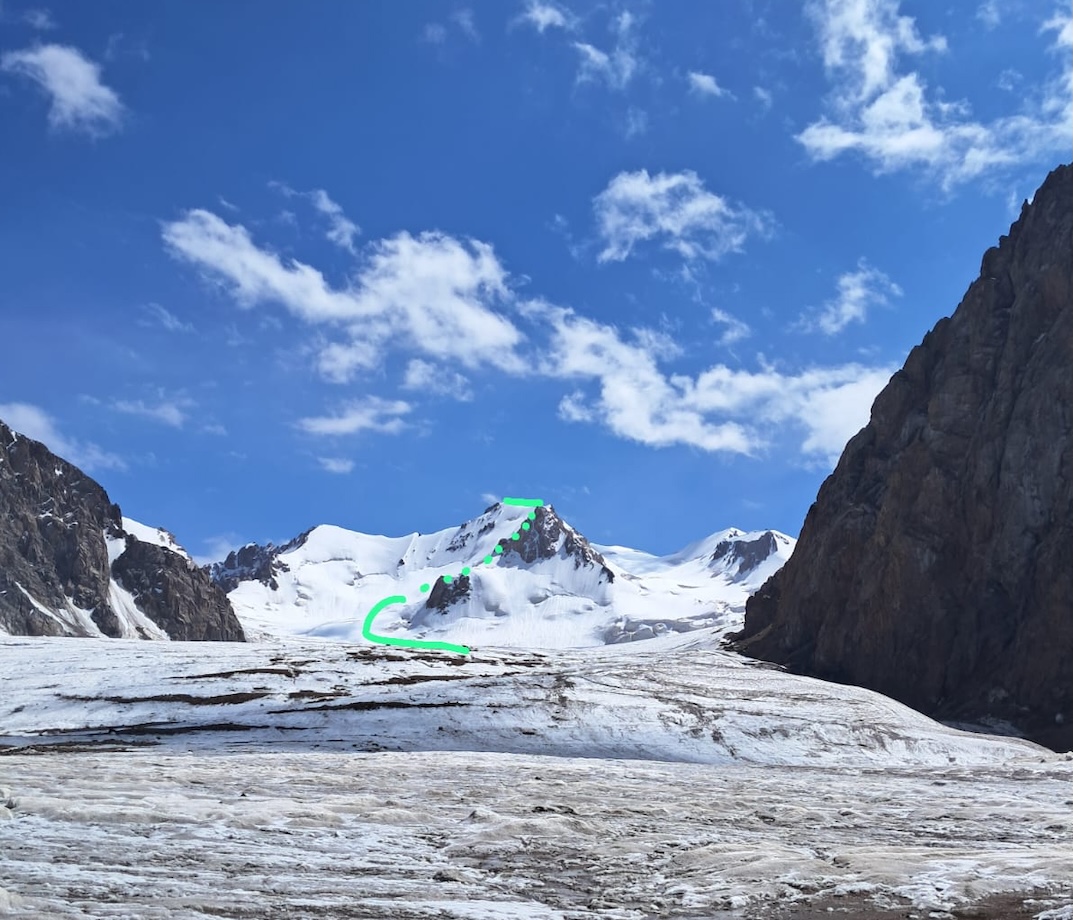
For an acclimatization route, we spent two days going east from base camp, then south up a very dry glacier, heading toward the north side of a snow and ice peak we named Manzano (4,925m, 41°38’12”N, 78°50’00”E), after an old friend who had died. Moving around to its east face, we climbed a 300-meter ice wall at around 55°–60° before summiting via the elegant crest of the upper north ridge. We rated the route AD.
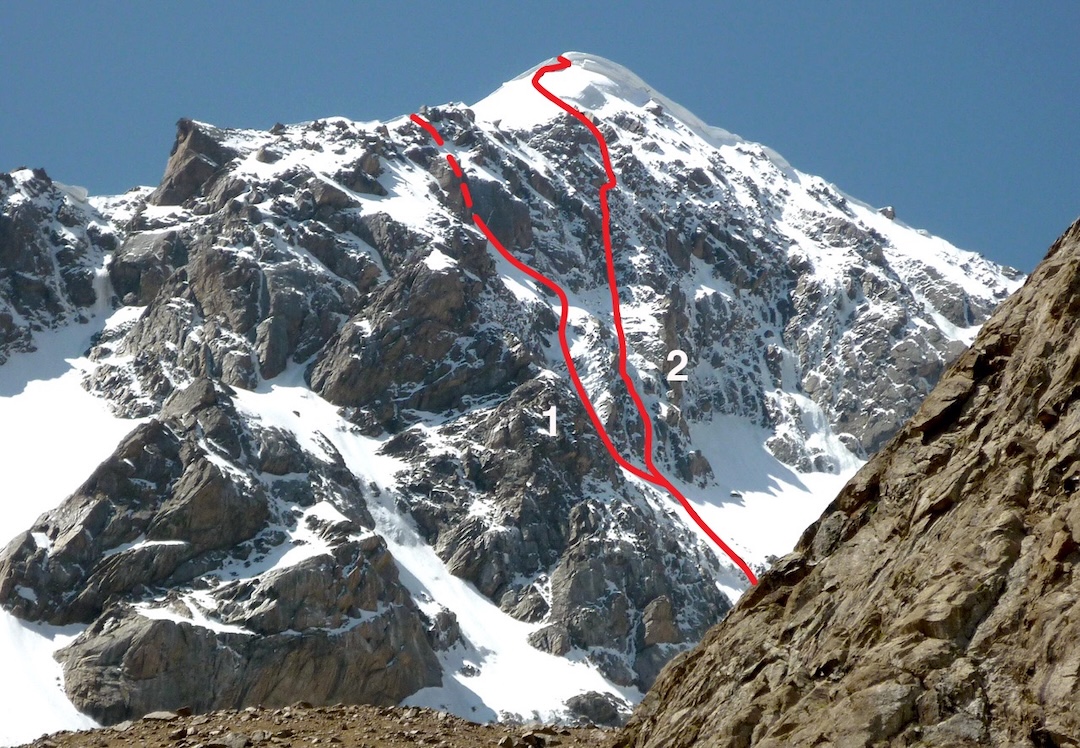
After a rest day in camp, we set off for Tushunbodum (5,081m, 41°39’07”N, 78°50’46”E), first climbed by the north face by a team from Mallorca in 2011 (AAJ 2012). We climbed a slanting mixed line to the left of their route, with 12 pitches at around D+ M3 80°–85°. We ended our ascent after 500 meters on the eastern shoulder of the peak (the heat made it unsafe to continue to the summit) and called our line Santa Bárbara, after our local climbing area. The most feasible descent was being bombarded by large rocks, so we made eight rappels from ice-thread anchors down our line of ascent.
We had planned to attempt the north face of Letaveta Peak (5,285m, first climbed in 2008 by a Russian team, probably from the south), but a huge crevasse blocked our intended route. Instead, we climbed a summit on the long ridge running northwest from Letaveta, which we named Gama Peak (4,974m, 41°39’47”N, 78°54’19”E), via an AD 60° line up its northwestern ridge, gained from the north. We descended a line parallel to our ascent route, via three rappels and some downclimbing.
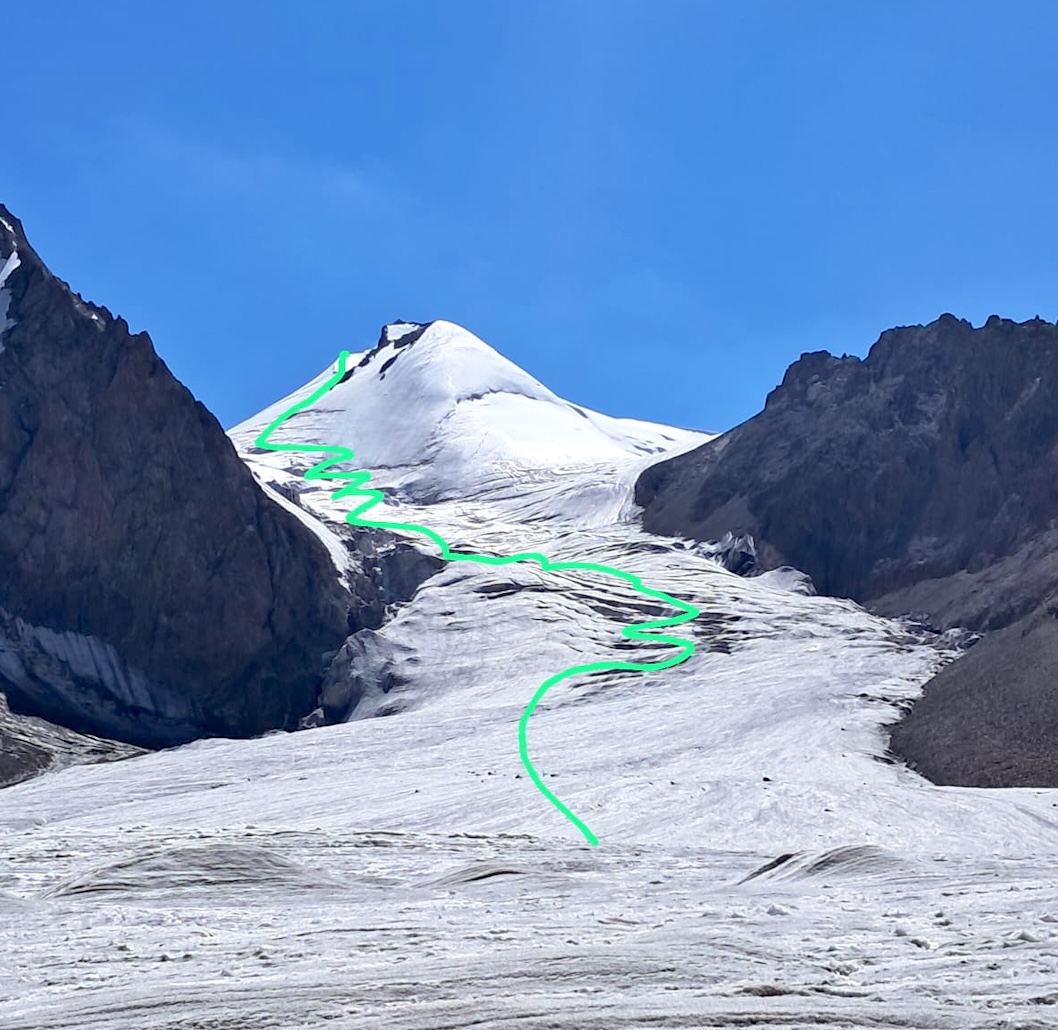
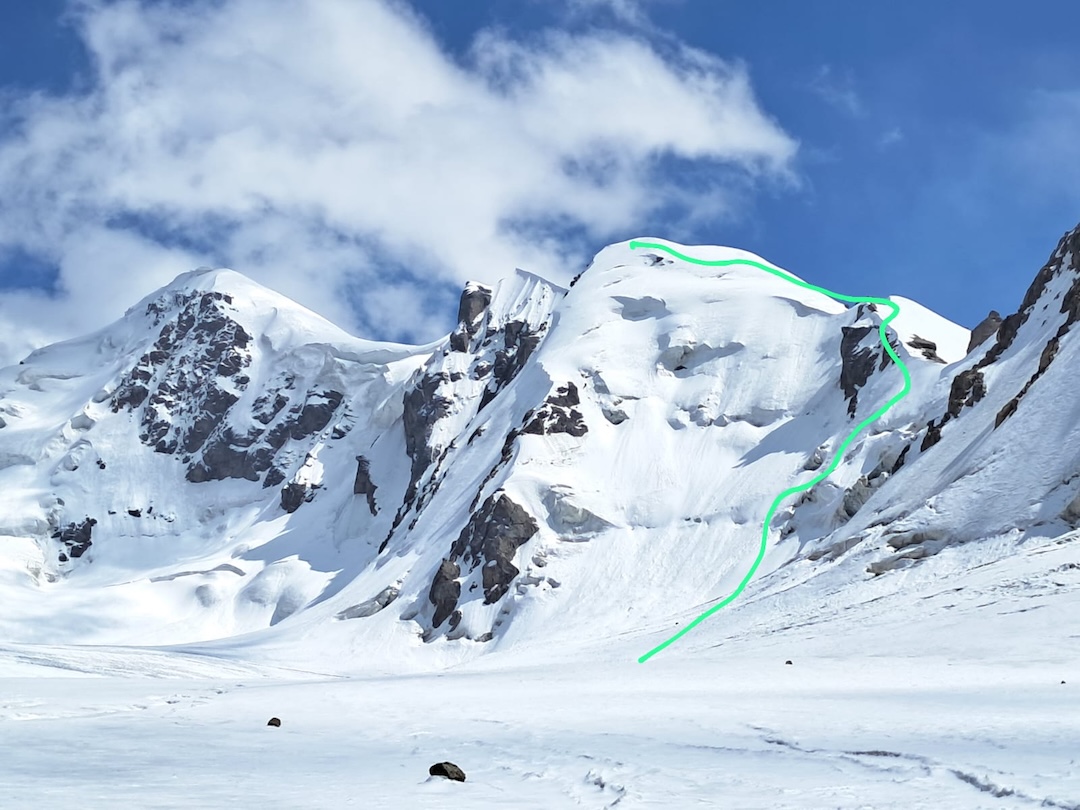
Our final ascent went up the very broken glacier west of Howard-Bury Peak (4,766m), passing below the top called Line Peak, climbed in 2024 (AAJ 2025), then continued southwest to a higher summit beyond, which we climbed by its south face at AD 45°–50°. We called this Drug Peak (4,912m, 41°36’50”N, 78°50’47”E); Drug (Друг) is Russian for “friend,” a name we chose to honor the hospitality of the Kyrgyz geophysicists we met in the valley.
During the 20 days we spent in the area, it rained and snowed on 13 days, but we expected this based on past expeditions’ reports. We had been warned in Bishkek that it had been a very hot and dry year, and we found the mountains very dry with much rockfall. We had to do most of our activities at night, as the conditions on the mountains deteriorated considerably as soon as the sun rose.
—Imanol Muro, Spain
Media Gallery