
Torres del Paine, 2025–2026 Summary
Chile, Southern Patagonia, Torres del Paine
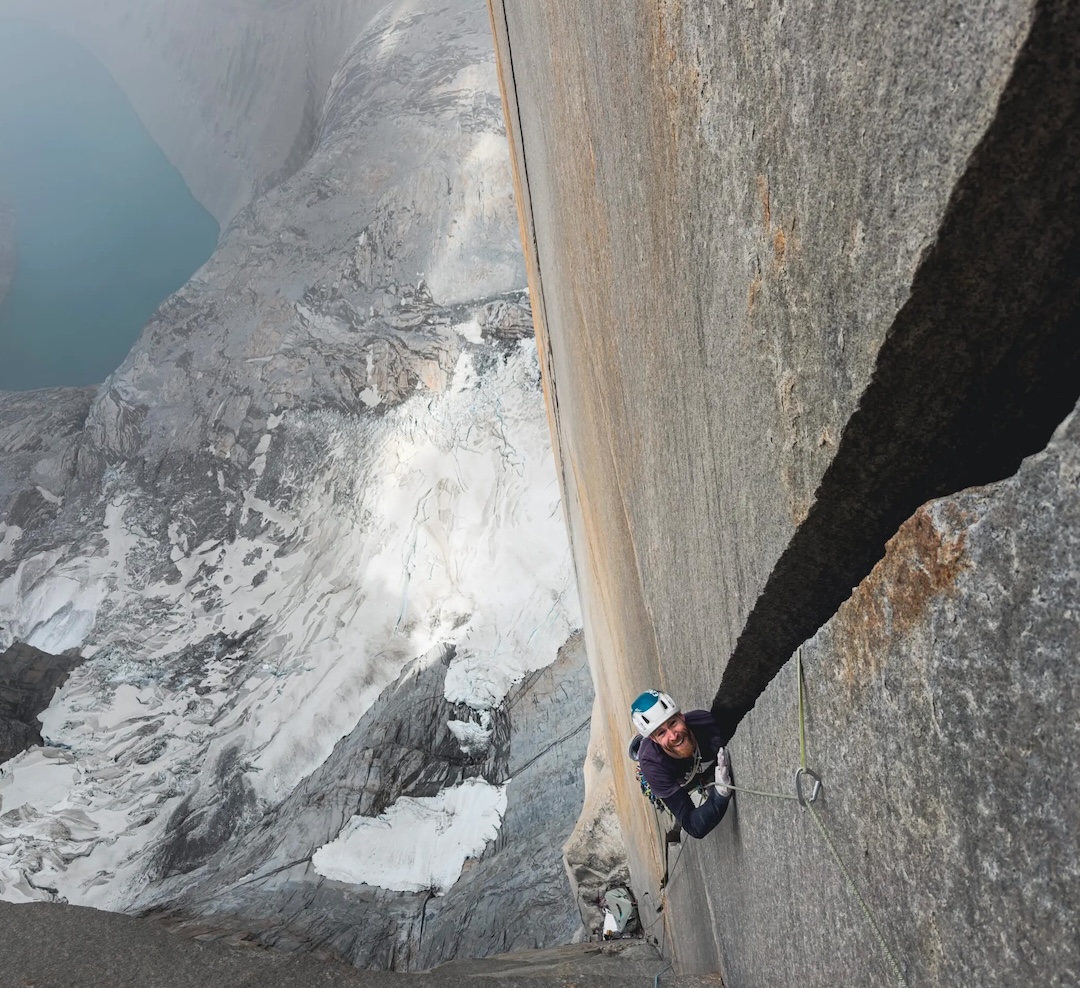
There was a lot of activity in the Torres del Paine massif this season, including multiple teams on various routes up the towering east face of Torre Central.
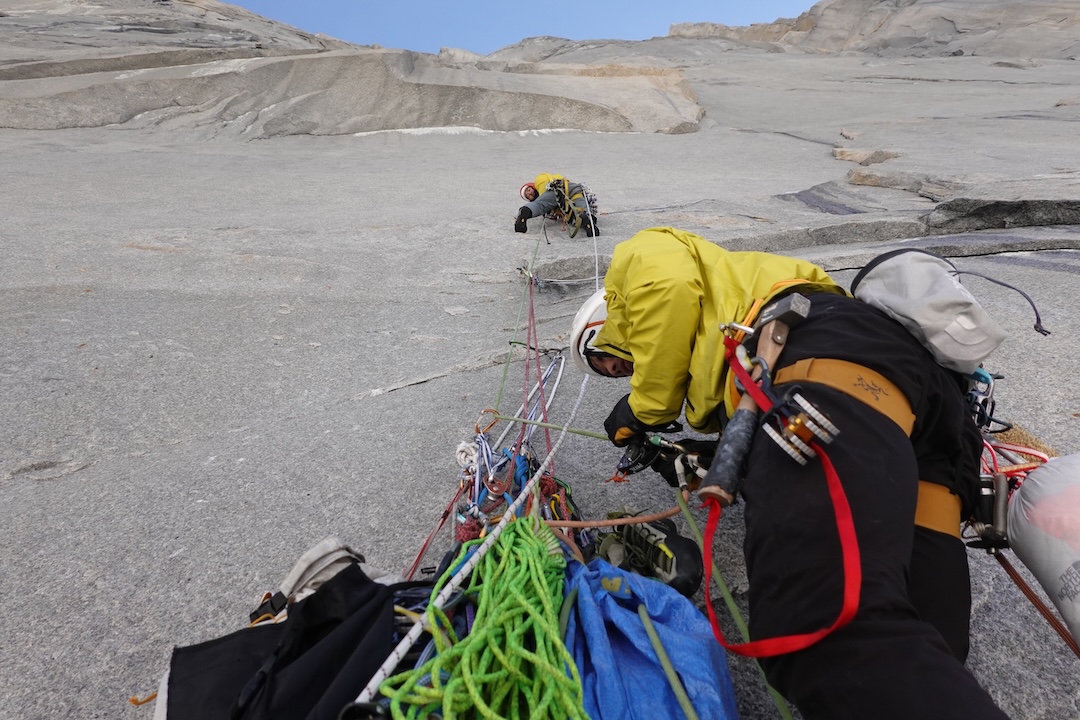
Three teams succeeded in climbing the Sudafricana (1,200m, 5.11 A1 or 5.12c) on the east face of Torre Central, first climbed in 1974 and free climbed in 2009. The first pair up the route was Nicolás Gutierrez and Isidora Montecinos, who spent 18 days on the wall. Then, on their third attempt, Tommy Caldwell and Siebe Vanhee managed to free climb the Sudafricana in a day, taking 24 hours to reach the summit and another eight hours to descend. This was the third free ascent of the route. [Caldwell and Vanhee appeared on the AAC's Cutting Edge Podcast to talk about this expedition: Listen here.]
Later in the season, in mid- to late February, Julia Cassou, Amelie Kühne, Caro North, and Belén Prados repeated the route over 13 days, completing the first all-female ascent. They encountered winter-like conditions, with very low temperatures and significant ice and snow in the cracks, which prevented them from free climbing.
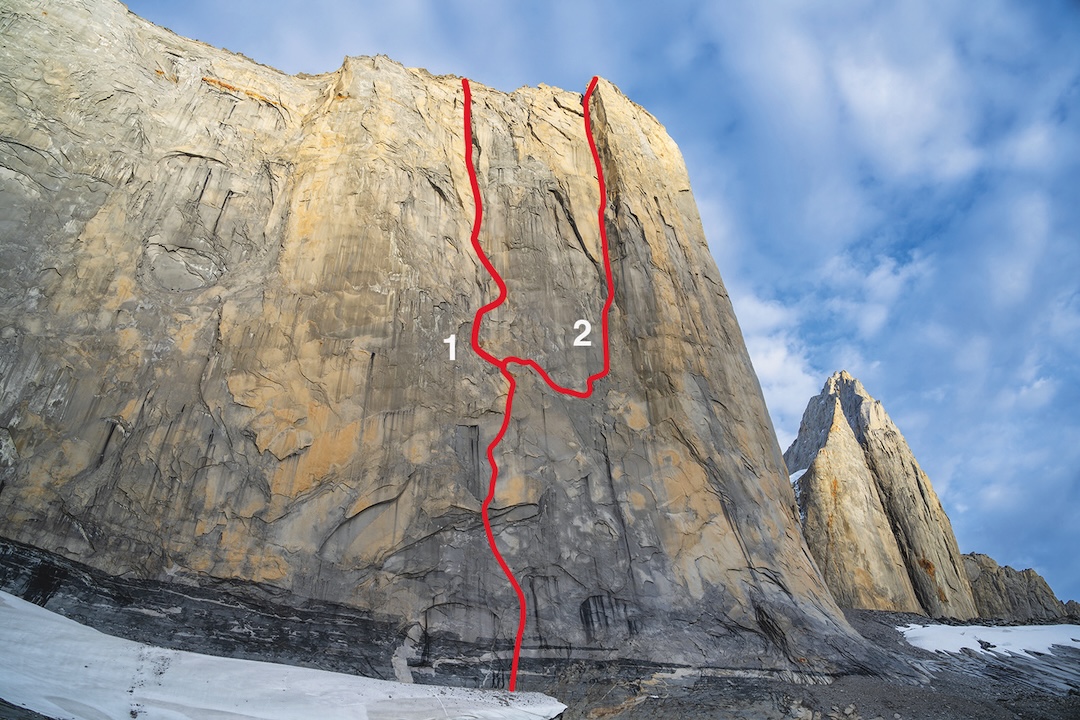
To the right of this route, Americans Trevor Anthes, Harry Kinnard, and Myles Moser completed a new route called Paradigm Shift with 29 independent pitches and another seven pitches to the top (see their report here).
Farther left on the east face, Stefano Ragazzo soloed Riders on the Storm (1,200m, 5.11 A2, 1991) over two weeks. He encountered such challenging conditions that on the pitches above the roof he was forced to aid using Stoppers and Peckers, as cams often were unusable in the icy cracks. With ropes fixed to the end of the last hard pitch, and while he waited for a favorable summit window, his fly tore and his portaledge flipped. He was forced to rappel two pitches to a small ledge for the night, narrowly avoiding hypothermia or frostbite. Fortunately, the weather stabilized the following day, allowing him to rest, recover, and gather enough energy to reach the summit the day after.
It should be noted that the rock quality in the lower third of the east face is far from ideal, and, as with ice routes, climbing directly below another party should be avoided at all costs.
On the north side of Torre Central, Shutaro Fujiwara soloed the classic Bonington-Whillans (500m, 5.11). Fujiwara also established the fastest known time for climbing Torre Norte, via the route Homenaje (250m, 5.10); he took 17 hours and 38 minutes to cover the 40-kilometer round trip from the parking lot, with 2,200 meters of vertical gain, and the climb.
Elsewhere in the Torres, Tasio Martín and Rafael Gómez repeated the Travesía Doble M, Seán Villanueva O’Driscoll’s 2024 link-up of the four Paine Towers from southwest to northeast, connecting Il Lungo Sogno on Torre Sur (800m, 5.11) to the Kearney-Knight on Torre Central (800m, 5.11 A1), the Monzino on Torre Norte (250m, 5.10), and Puro Filete on Peineta (350m, 5.11). It took them four days, including an entire day waiting for the weather to improve.
With an ascent of Torre Sur, by the north ridge, late in the season, Chilean Marina Andesita became the first woman to have summited all four towers, a feat she completed through ascents spanning the past three seasons.
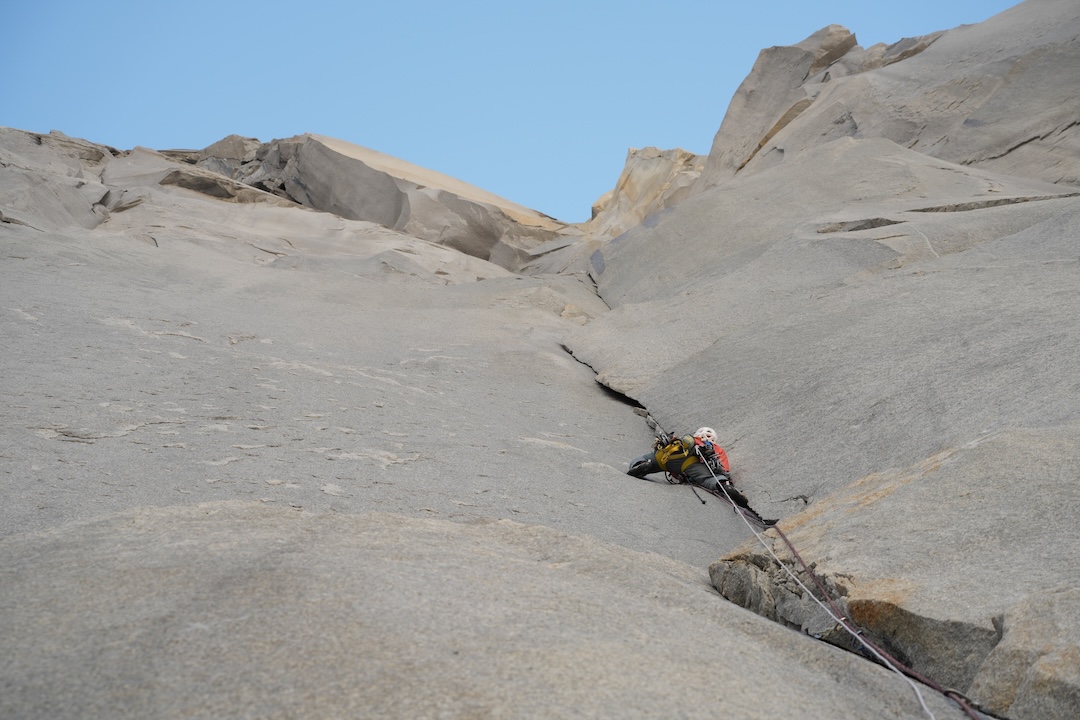
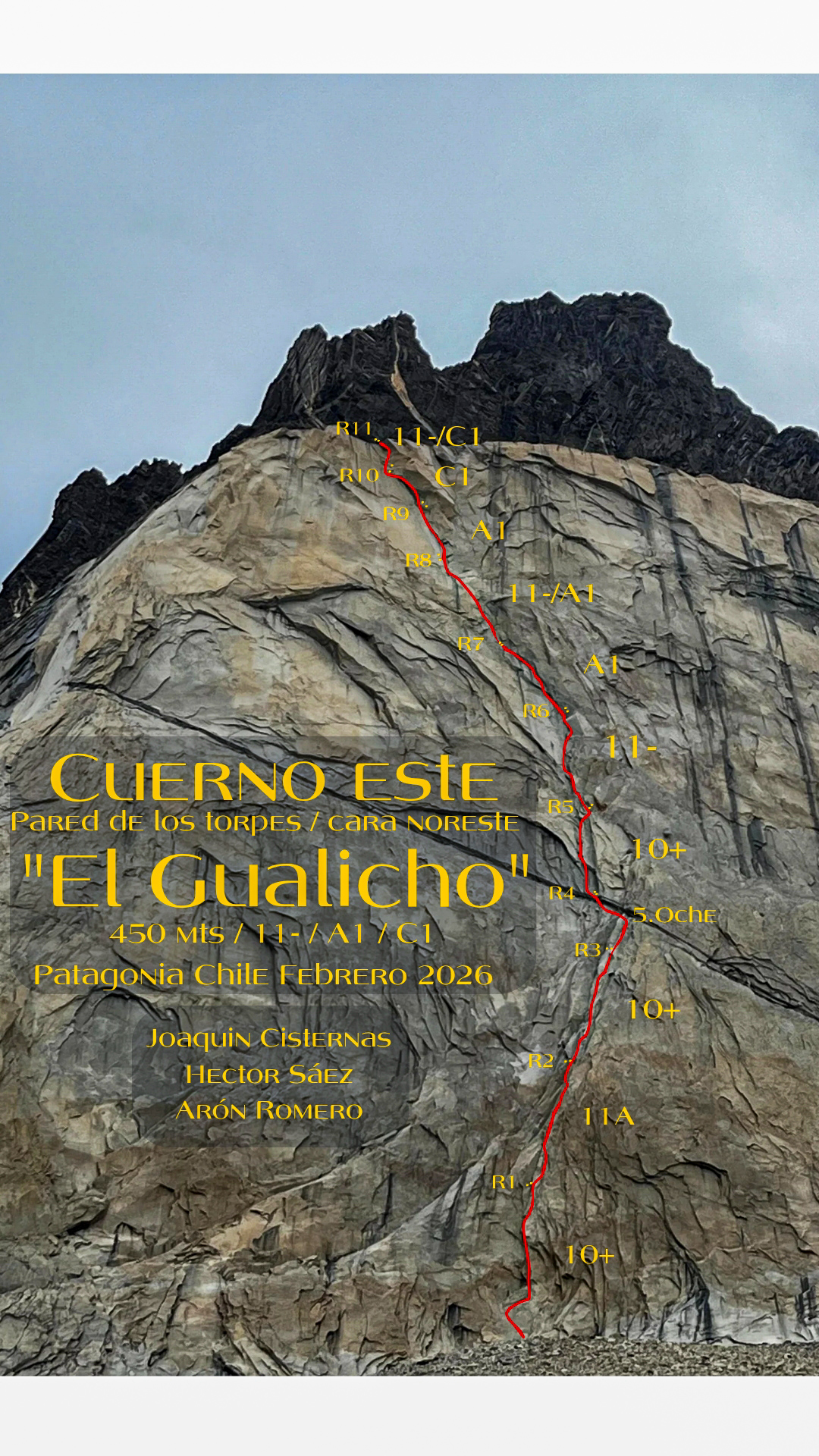
To the west, approaching via Valle Bader, Joaquín Cisternas, Arón Romero, and Héctor Sáez climbed a line on the left side of the northeast face of Cuerno Este. Gualicho (450m, 5.11 A1) took several seasons to complete. One notable aspect of this and other recent new routes in Paine—including Paradigm Shift—is the use of power drills, which seem to have become an integral part of the rack for many teams.
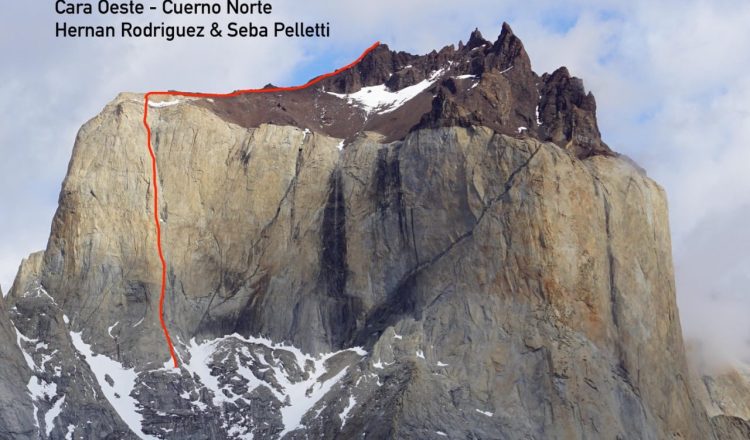
In the French Valley and on the left side of the west face of Cuerno Norte, Sebastián Pelletti and Hernán Salas climbed Norteados (400m, 5.11+), a line that follows technical low-angle pitches that ramp up into finger cracks and a sustained wide-crack stem corner.
Across the valley, on the east face of Cerro Cota 2000, Kosuke Kawachi, Toru Nakajima, and Yudai Suzuki climbed the first six pitches of Osa ma non Troppo (2007), then traversed right for four pitches to reach a stunning corner that led to the top over ten additional pitches. They named the line Echoes in the Dark (20 pitches in total, 5.11 A3; download a full description here). The team fixed the first four pitches in late February, then hauled bags for a day, then climbed the rest of the route in a five-day push in early March. Although in sections the climbing is of very good quality, quite a few pitches have loose rock, several involve wide cracks or chimneys, and others were wet and icy. It is not an easy or user-friendly route.
—Rolando Garibotti
Media Gallery