Central Tower of Paine, Paradigm Shift
Chile, Southern Patagonia, Torres del Paine
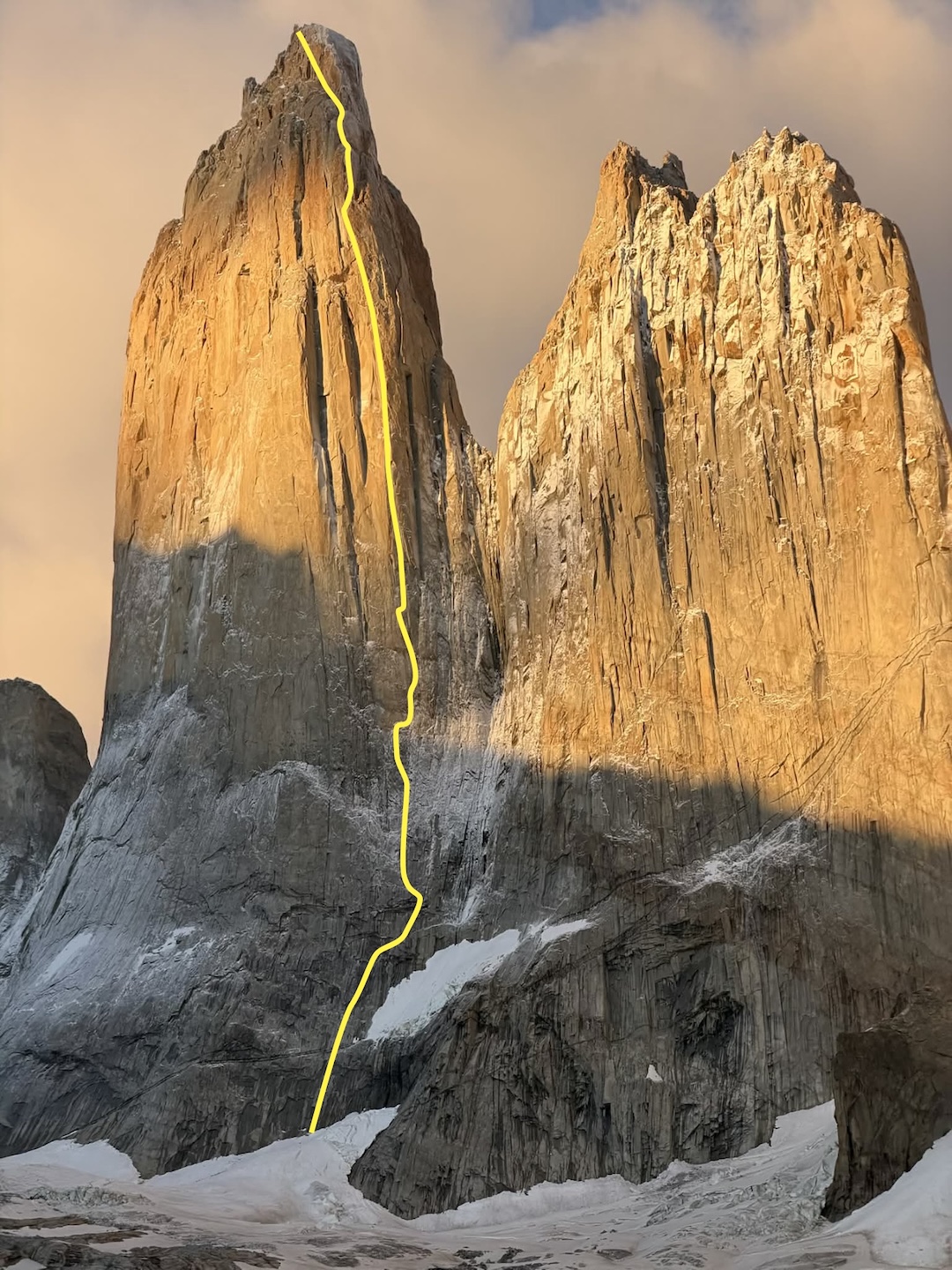
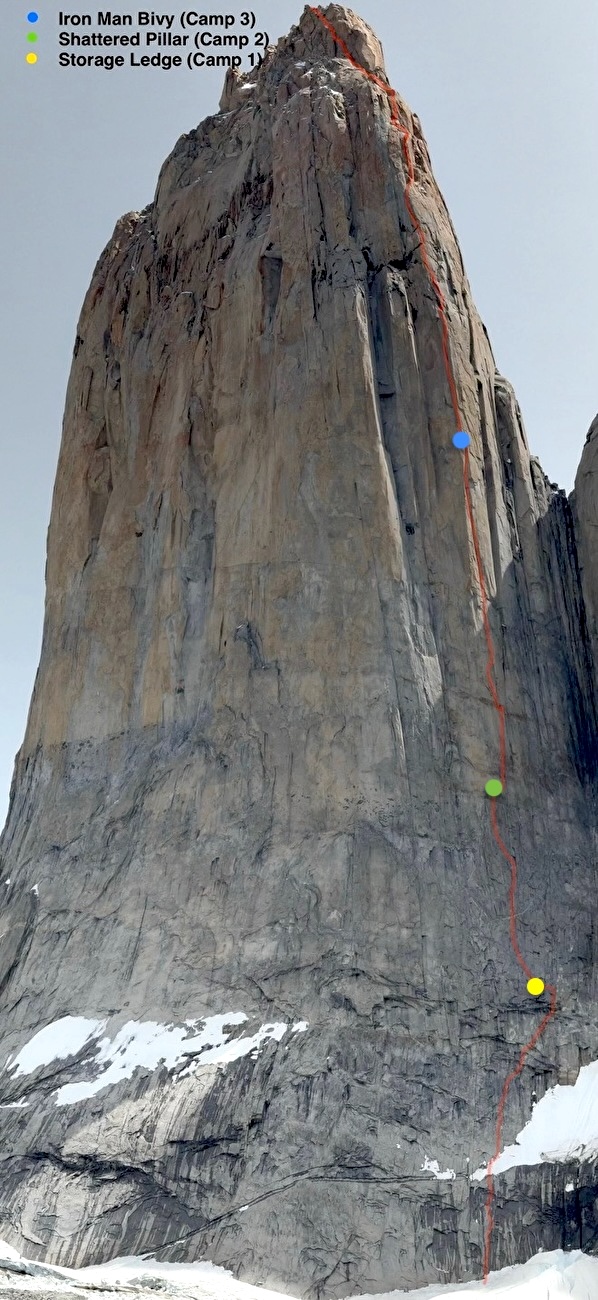
This project began in the Chilean summer of December 2024, when Trevor Anthes, Kellen McGrath, Hugo Perez, and I carried 950 pounds of gear up to the Central Tower of Paine, aiming to establish a new free route up the east face in a capsule-style push. In 2013, I had put up a route on the east face of the North Tower (Plate Tectonics, with Amy Ness), and the photos from that route helped us plan the new line.
The route would begin directly right of Sudafricana and to the left of Waiting for Godot. Partway up, it would cross Una Fina Linea de Locura, which I had climbed in 2015, before continuing up into a corner system riding the prow of the Central Tower.
In the first season on the new line, we endured 30 days on the wall in very cold temperatures that had Jack Frost nipping at our toes and hands as we set steep, complex pitches. We managed to pioneer the route up to pitch 17 (the Iron Man Bivy), holding on tight through an absolute bombardment of falling ice and severe wind gusts.
Eventually the beating became too much, forcing us to pack it up, descend, and walk away wondering: Was it worth it?
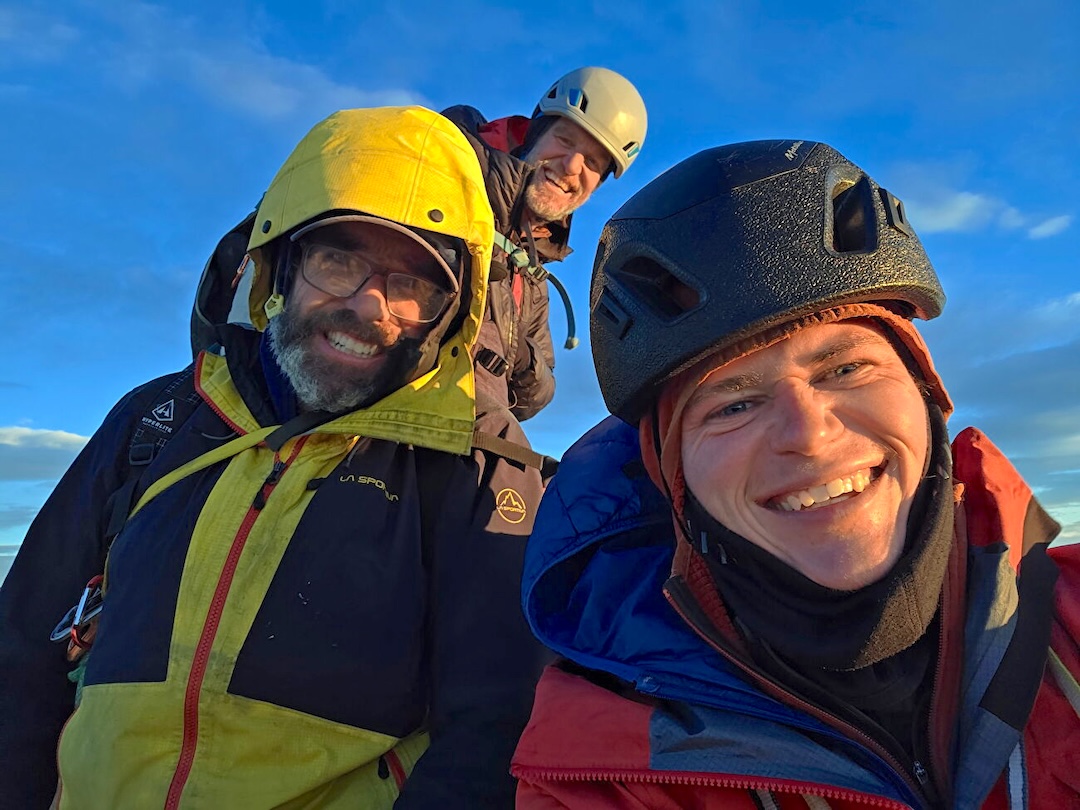
In December 2025, I returned with Trevor and Harry Kinnard. We pushed off the ground on January 22, 2026, with 15 haulbags, five racks of cams, an arsenal of pitons, two portaledges, and enough bolts to set a free climbable king line. Over the two seasons, we completed 29 independent pitches before intersecting the 1963 Bonington-Whillans route up the north ridge for the last seven pitches to the summit.
The climbing is stunning, and we put in a huge effort to create a route for future climbers to enjoy. We cleaned the route of loose stones, cutting our own ropes in the process and accidentally chopping some of our anchors. Using a power drill both years, we placed 105 lead bolts plus three bolts at the main haul stations, and we fixed 18 lead pitons.
After two and a half weeks on the wall, we had reached the final gatekeeper pitches. The weather to this point had been stable, not providing any snow to melt, and we had been forced to ration water, unable to even hydrate our meals. As Harry started working on pitch 23, we called him down to deliberate whether we should continue, with only two gallons of water left for the team. We decided as a group to wait 24 hours in the ledges, hoping for a snowstorm. By the end of the 24-hour mark, we had been hit with all the snow we could bear, trapping us in the pods for four days straight.
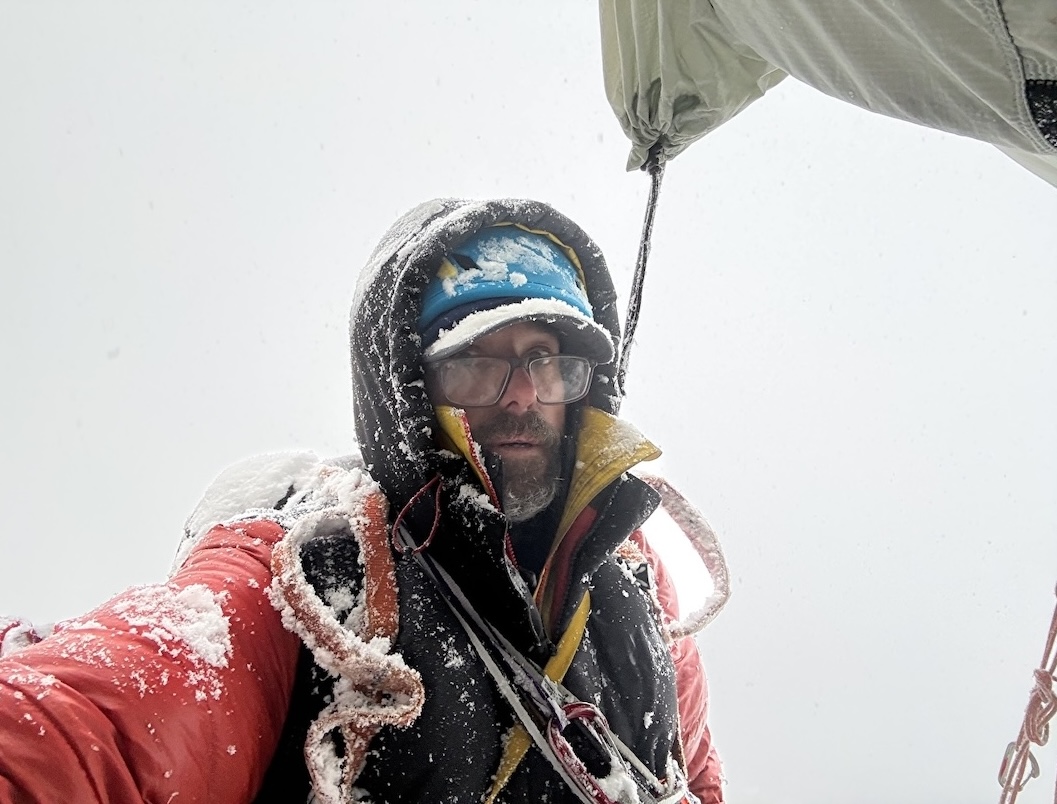
Now fully hydrated, we pressed on to the Grand Staircase (pitch 26). To reach this point for a summit bid, we would have to ascend 1,500 feet of overhanging fixed lines from the Iron Man Bivy. The weather turned again, and we sat for six more days, making a single attempt on what appeared to be an acceptable day, only to be rag-dolled by 100 kph winds.
We then sat for three more days waiting for the weather to clear. We’d been texting with Rolando Garibotti, asking for aid with the forecast, and with his help we chose February 24 for our final summit attempt.
We had to pioneer three new pitches from the Grand Staircase to the shoulder, where we joined the British route to reach the summit at 9 p.m. We then made the long descent to our portaledges, collecting fixed ropes as we went, and didn’t reach camp until 5 a.m., after a 26-hour push.
It took us another week to descend the wall, shuttling loads and waiting out storms. We pulled everything off the wall: no stuck ropes, no garbage, no human waste. In all, we spent 41 days on the wall during the ascent and descent.
Although we didn’t achieve our goal of free climbing the entire route, I’m proud of the effort we put in. We freed 18 of the new pitches, up to 5.12c. All but two of the remaining pitches definitely will go free, up to around 5.13a/b. Two pitches stand as question marks: There is a 30-foot pane of glass on pitch 16 with a three-bolt A0 ladder that I don’t believe is free climbable and might need a variation. Pitch 17 has 20 feet of A2, and we struggled to see the possibility of freeing this, but it would not surprise me if one of the superhumans out there can figure this out.
We named the route Paradigm Shift (VII 5.12+ A2). The climb was established specifically for free climbing, essentially a route designed for the onsight.
—Myles Moser, USA
Media Gallery