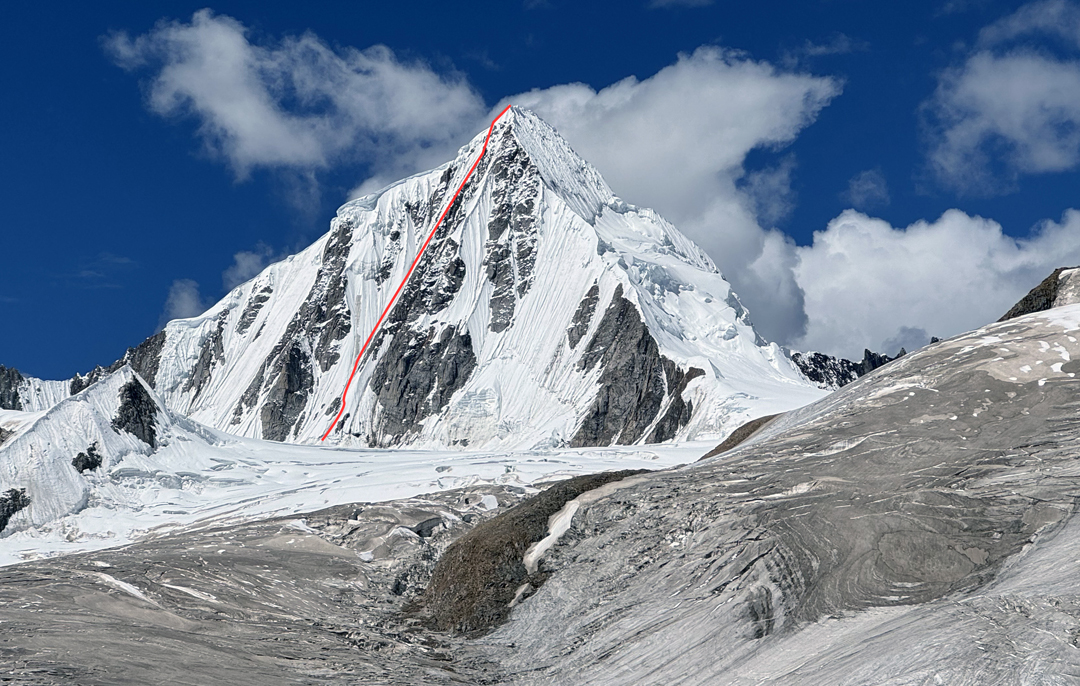

Nyanchen Tanglha East, Sendho, first ascent, via east face
China, Tibet
Following his first ascents in 2024 of Chuchepo and Jiongmudzhi, Tong Haijun returned to the Nyanchen Tanglha in 2025 with Huang Siyuan. Their goal was unclimbed Sendho (6,620m, PLA map; GPS measurement 6,643m, 30°18'29.61"N, 93°32'20.94"E), a little to the north of Chuchepo.
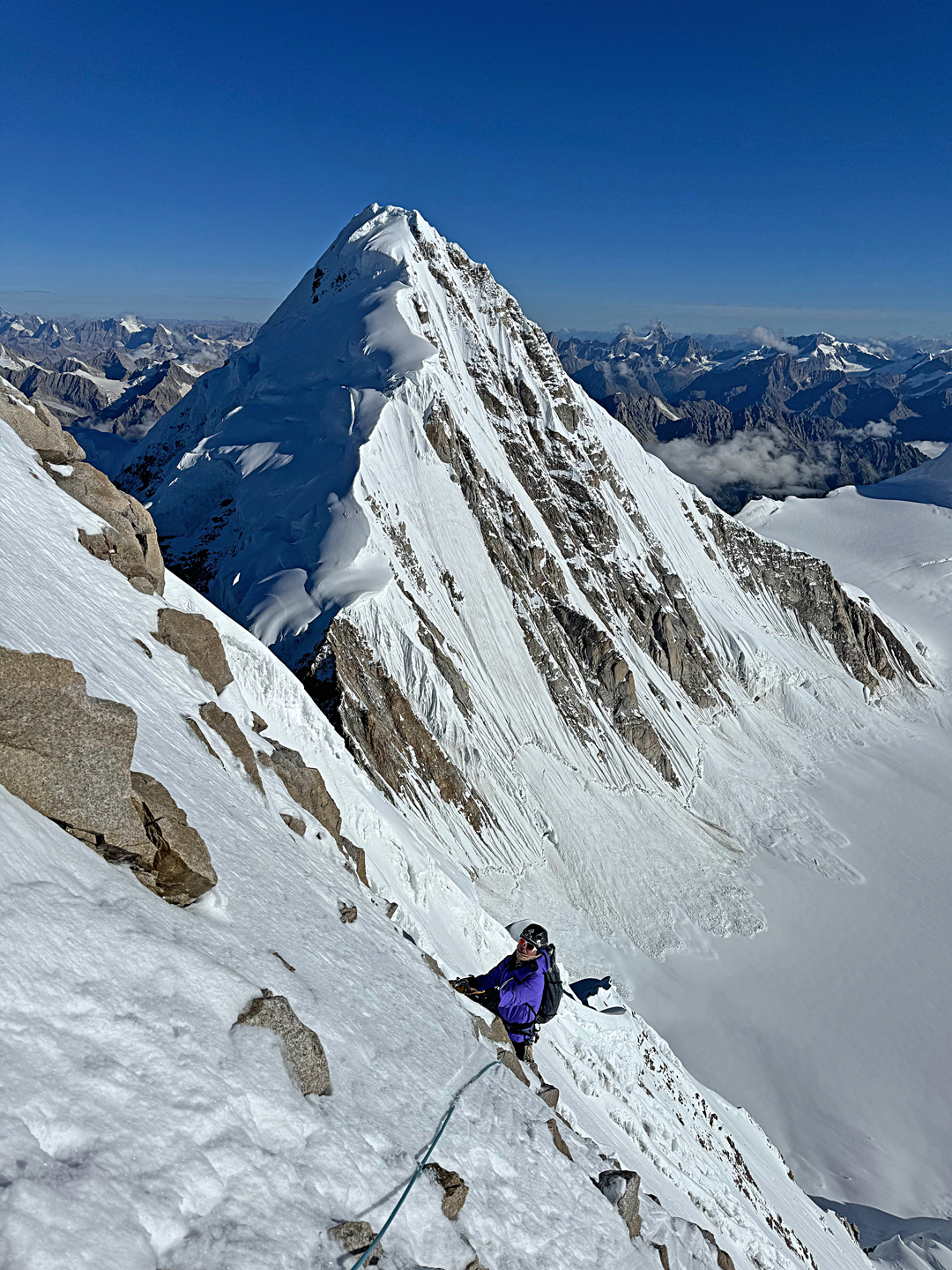
On September 9, they set off from Yiga village at 3,700 meters in the main valley north of the mountain and reached the Aigagon (a.k.a. Yiga) Glacier at 3,900 meters. This was the same glacier Tong had used to approach Chuchepo, and his prior knowledge helped them efficiently reach the site for advanced base at 5,300 meters. The next day, after eight hours on the deep, snow-covered glacier, they made Camp 1 (5,850m) close to the east face of Sendho.
September is the most reasonable month for climbing in this range, because it is near the end of the monsoon, the weather is more stable, and temperatures are decreasing. Nevertheless, Sendho was hidden by cloud during most of the approach. During any short periods of visibility, they took pictures and scoped the face to find a line clear of avalanche or rockfall tracks.
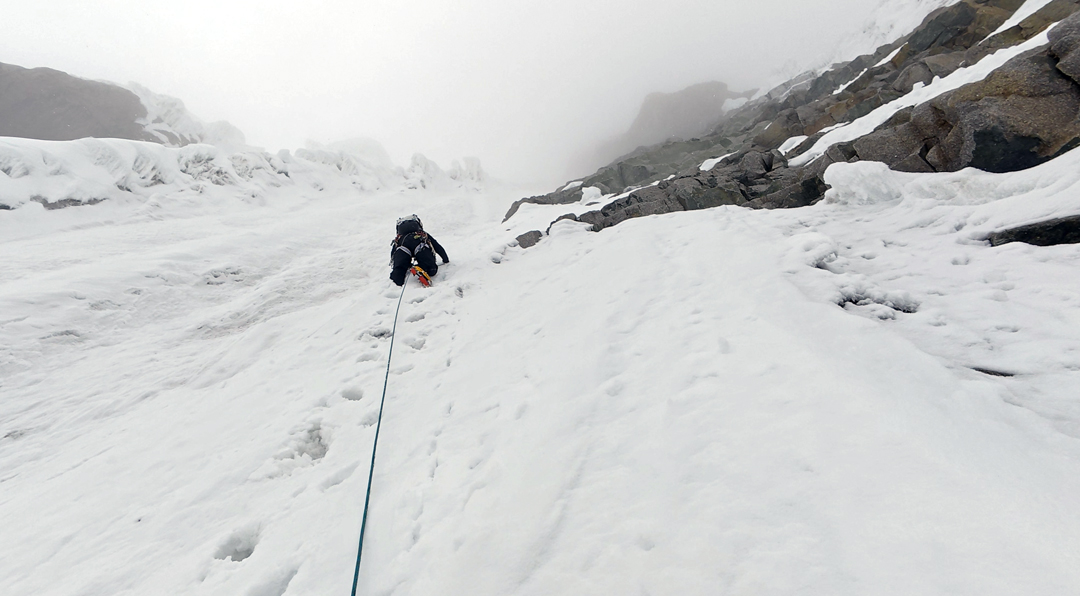
On September 11, they set off at 4 a.m. and soon reached the bottom of the 700-meter face. The first pitch was a gully, deeper and narrower than expected, and the two found themselves in the stressful position of having no escape from falling debris.
Above this, they traversed left to the start of what they had perceived to be a long ice face in a broad couloir. Instead, they found deep snow covered with crust. Since they could place solid screws in the ice beneath, they decided to continue, slanting up to the right side of the couloir, where it was more sheltered from objective danger.
After midday, mist rose from the glacier and enveloped the lower face. Though beautiful, this made it harder to identify their position on the photos taken from near Camp 1. The upper snow slope wasn’t long, but the snow was too deep and soft to protect well.
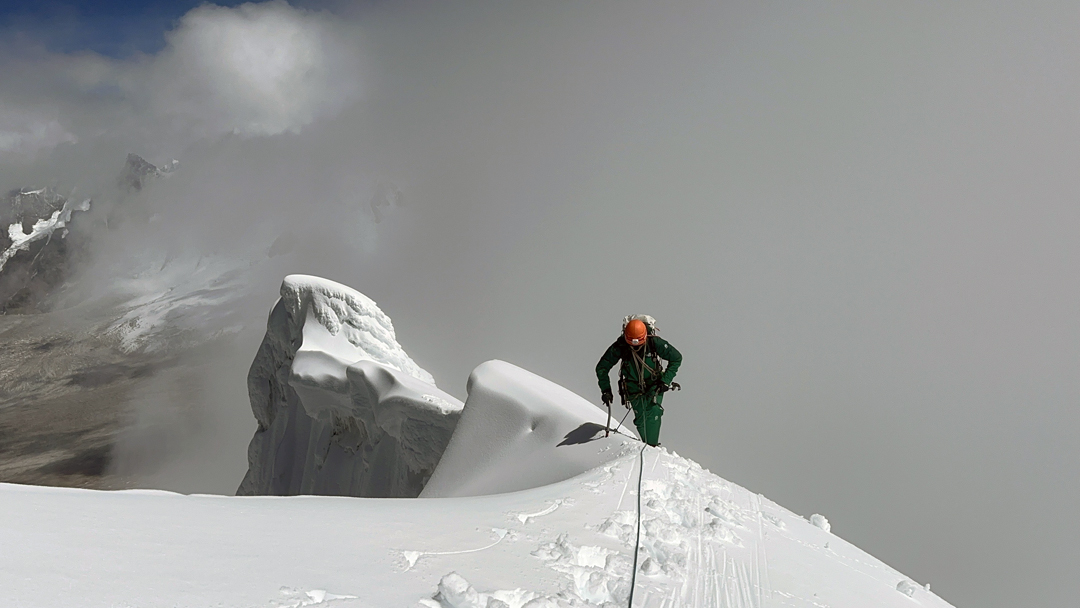
The pair progressed with caution to the summit cornices. Tong pushed his ice tool into the cornice and immediately made a hole through which he could see the other side of the mountain. The two delicately reached what they had thought to be the summit, only to see another cornice around eight meters higher. They continued, and at 3 p.m. reached the true summit. After a short break, they began to descend by rappel and reached camp before darkness.
Huang and Tong had felt relaxed on the route and experienced the mutual trust that is the foundation of a successful partnership. They simply set their sights on enjoying climbing in this beautiful and remote mountain environment, rather than trying to compare their route with others. For those reasons they have not given a specific grade.
—Xia Zhongming, Luxembourg
Media Gallery