
Bhagirathi II, complete northeast ridge
India, Western Garhwal, Gangotri
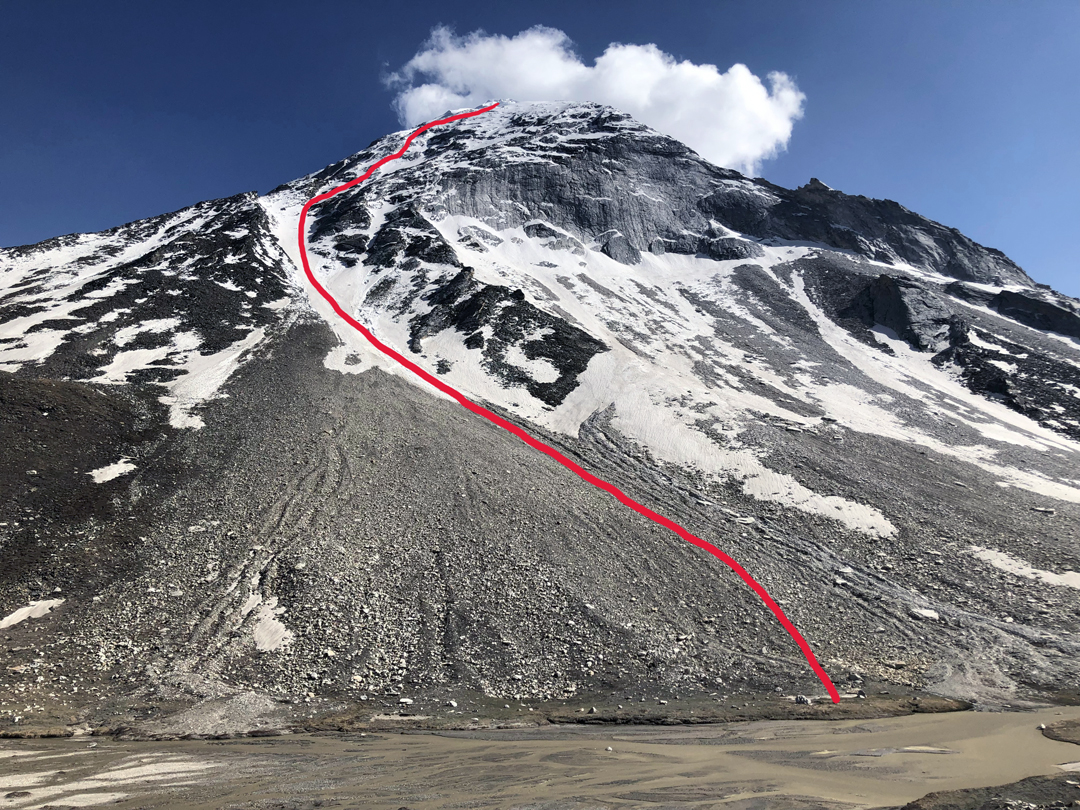
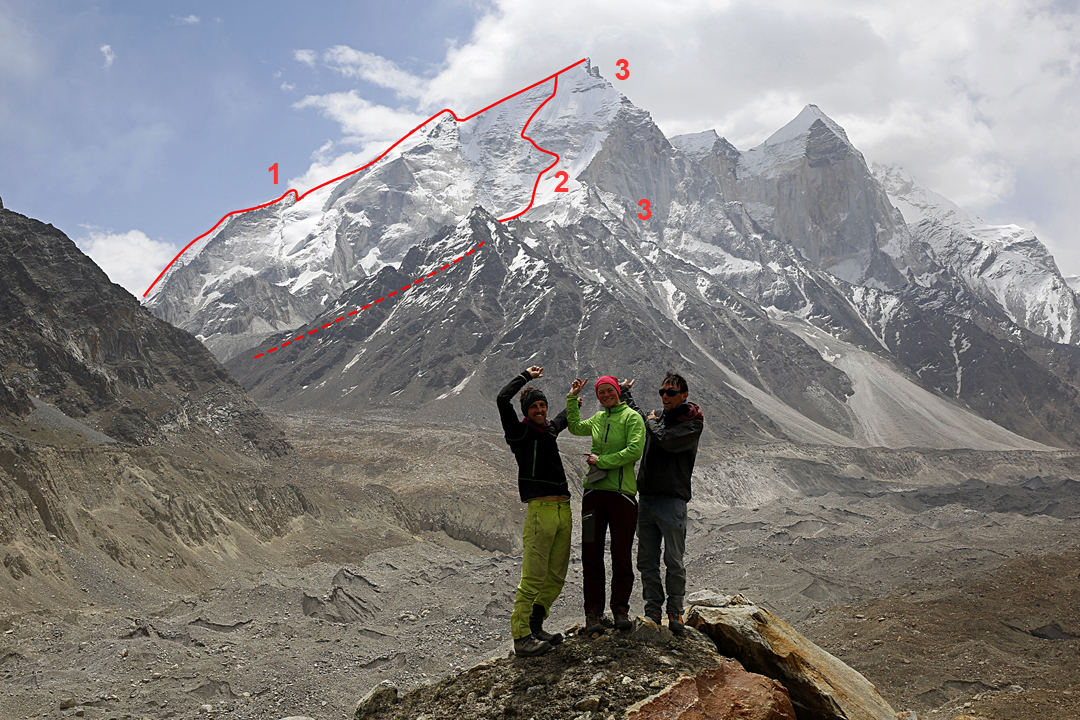
In 2022, we three young and ambitious alpinists planned to attempt Bhagirathi II (6,512m, 30°53’3.97”N, 79°8’6.34”E) as our first expedition to the Himalaya. At home, over mulled wine and Christmas cookies, we had discovered a picture of the mountain showing the northeast ridge. We searched for previous ascents but found none. Our excitement rose: It seemed a technically demanding objective, although not extreme. [While the upper northeast ridge has been accessed via the east flank and followed to the summit, there is no record of it having been climbed directly from the base.]
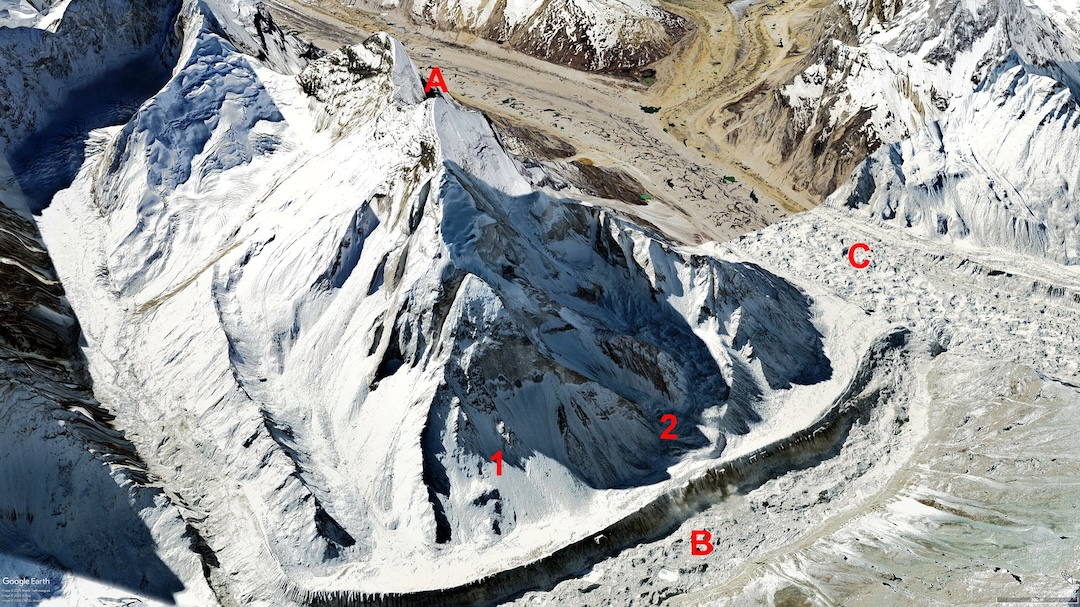
In late April 2022, Henri Eggenweiler, Simon Schiefer, and I arrived at Nandanvan base camp (4,450m). Henri was sick, so Simon and I headed up as a pair to check out the first part of the northeast ridge. Toward its base, the ridge forks, with the two branches enclosing a triangular face approximately 1,000 meters high. We started up the rocky right-hand ridge and found relatively enjoyable climbing, with difficulties around M4. However, we moved slowly, and given the ridge’s length, we realized it would take several days to reach the apex, still only a third of the way up the full route to the summit. Disappointed, we returned to base camp.
Once Henri felt better, we continued acclimatization by climbing the normal route up the east face to a camp at 5,900 meters. We had planned to push to the summit, but alarming signs of altitude sickness forced us to descend.
On our way back to base camp, we spotted a possible weakness on the left side of the triangular north-northeast face. The steepness (50°–55°) and the well-consolidated snow promised a faster option. Two days later, we had moved up the lower Chaturangi Valley and put an advanced base at 4,800 meters, directly below the face.
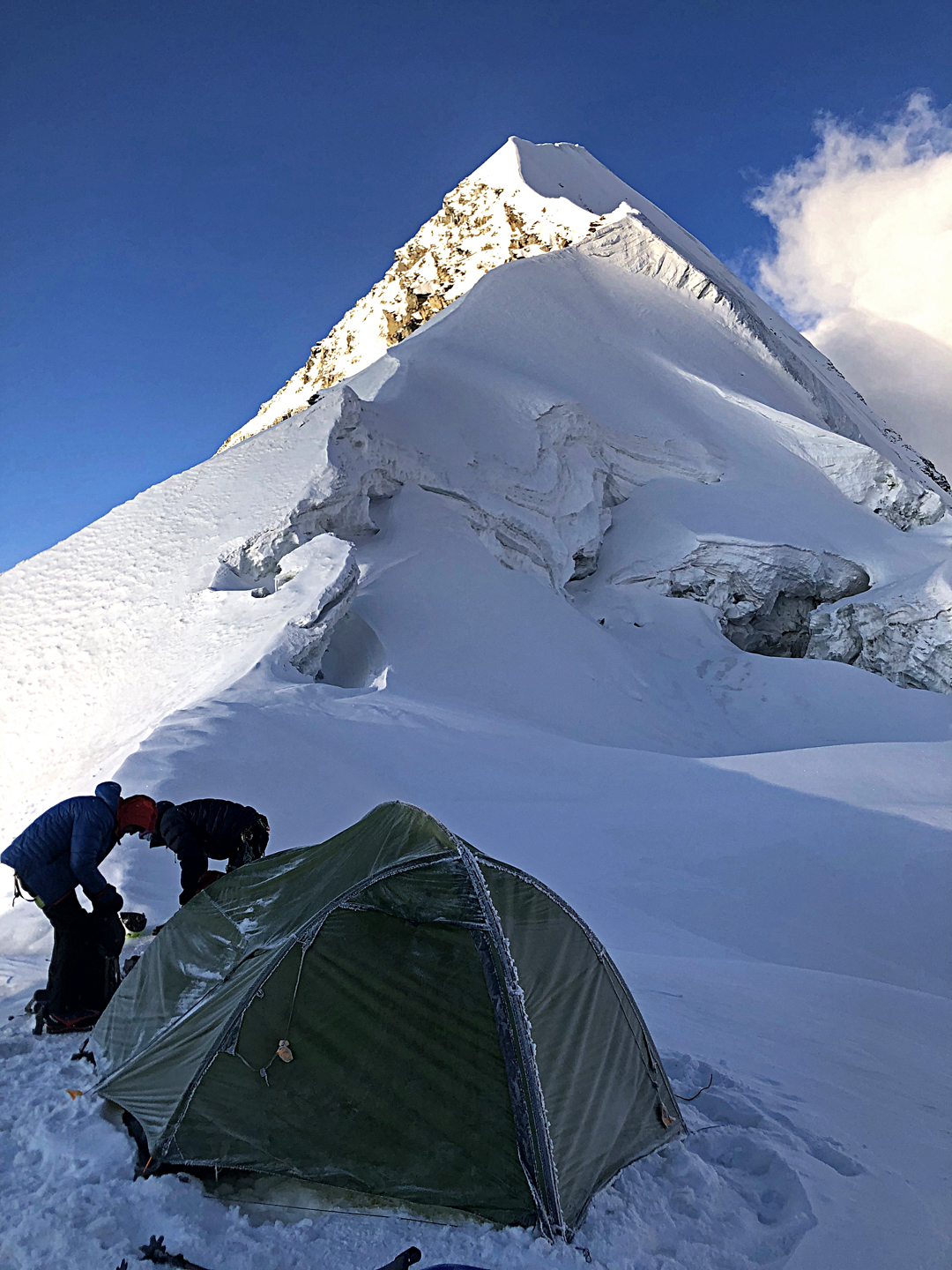
Leaving at 1:30 a.m. on May 14, we climbed unroped, finding one tricky pitch (M3) where the rock was bare of snow. At 10 a.m. we reached the top of the triangular face and from the apex made a 50-meter rappel to the start of the steep, crevassed area that forms the middle of the northeast ridge. At 5,700 meters, we camped.
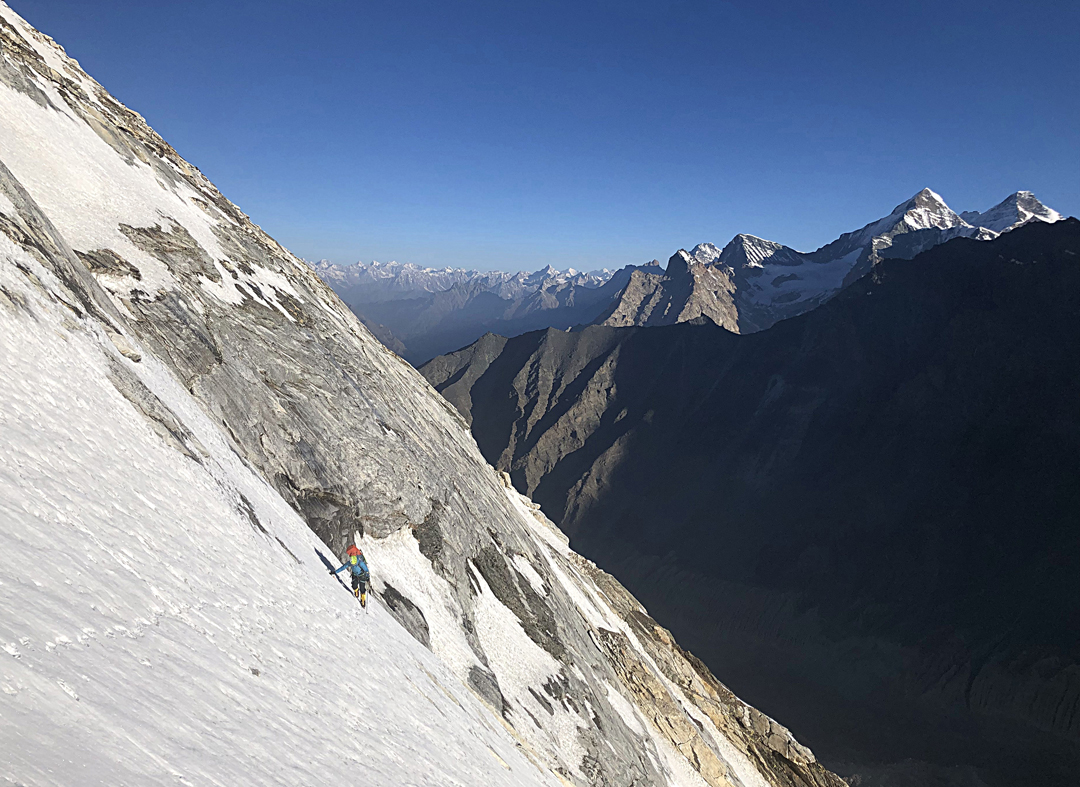
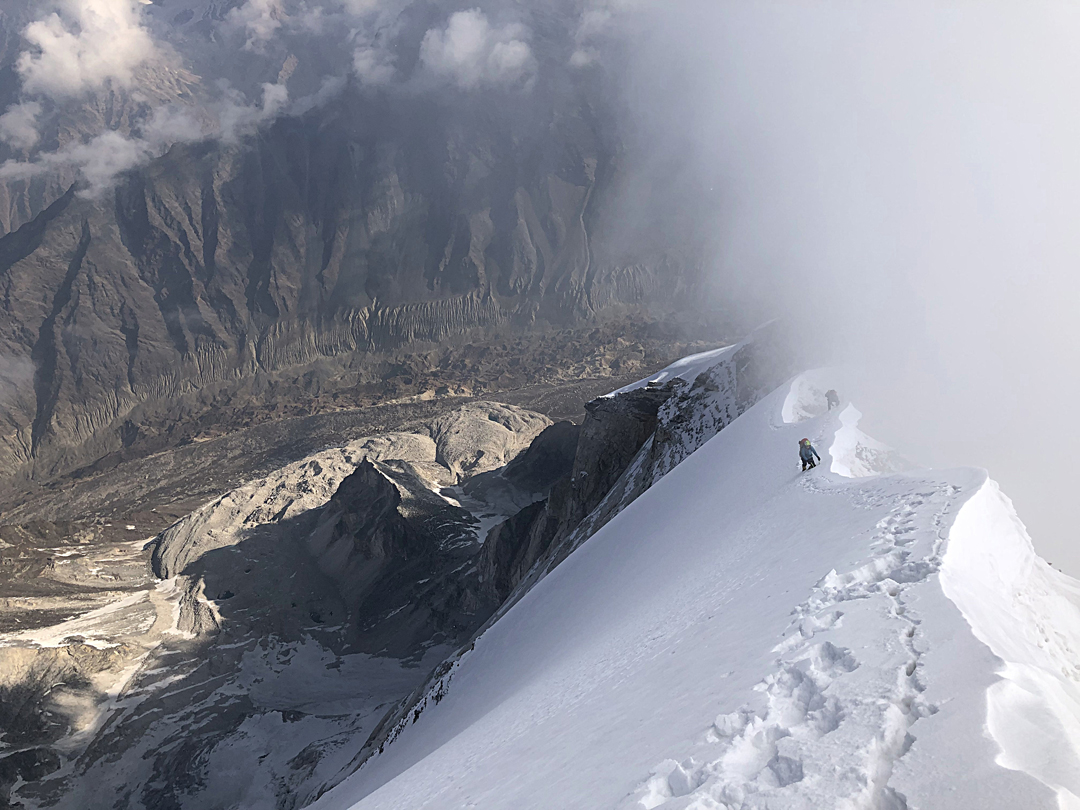
On the 15th, we started at 5 a.m., working our way around big crevasses. We belayed one steep section (65°), rappelled another rocky step, then arrived at our last camp at 6,100 meters. At 6 a.m. on the 16th, we began climbing the final section, a 45° knife-edge of névé. Clouds were building, and bad weather was forecasted for the afternoon. Fortunately, we escaped the clouds at the end of the ridge, and at 10 a.m. we stepped onto the summit.
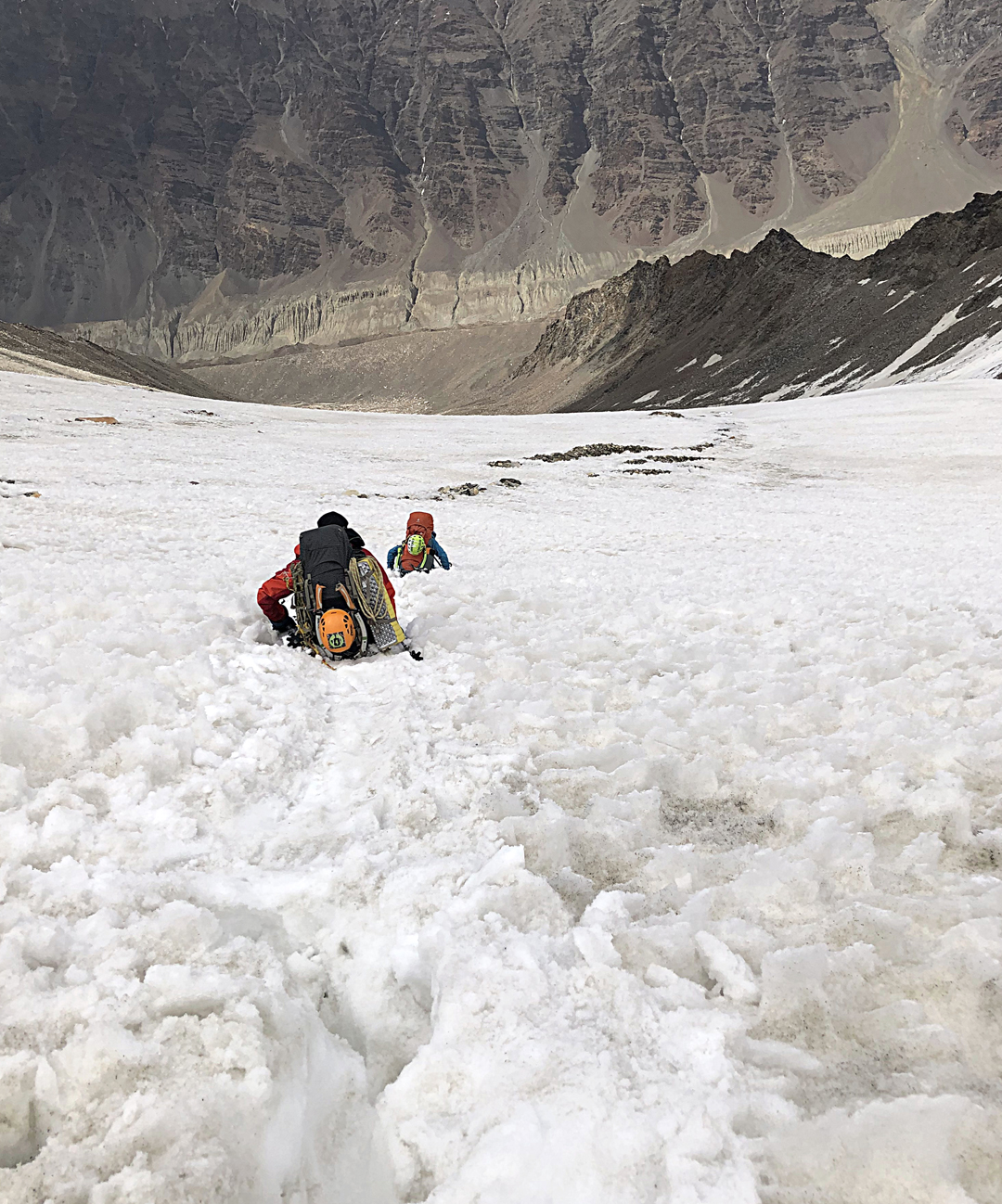
We descended the east face, which was exhausting due to soft snow, and reached the site of advanced base on the normal route at 4:30 p.m., just as it began to snow. The following day, three tired but happy climbers returned to base camp.
—Magdalena Ritzau, Germany
Media Gallery