Munocho Chhok, southeast face and northeast ridge, attempt
Pakistan, Karakoram, Batura Muztagh
The self-organized expedition by the Young Alpinist Group [an informal three-year program for experienced young alpinists from the U.K. and Ireland] took place from the end of September to the end of October. There were five members, including three women—Gemma Robertson, Anna Soligo, and me—and James Price and George Ponsonby, who climbed Aikache Chhok.
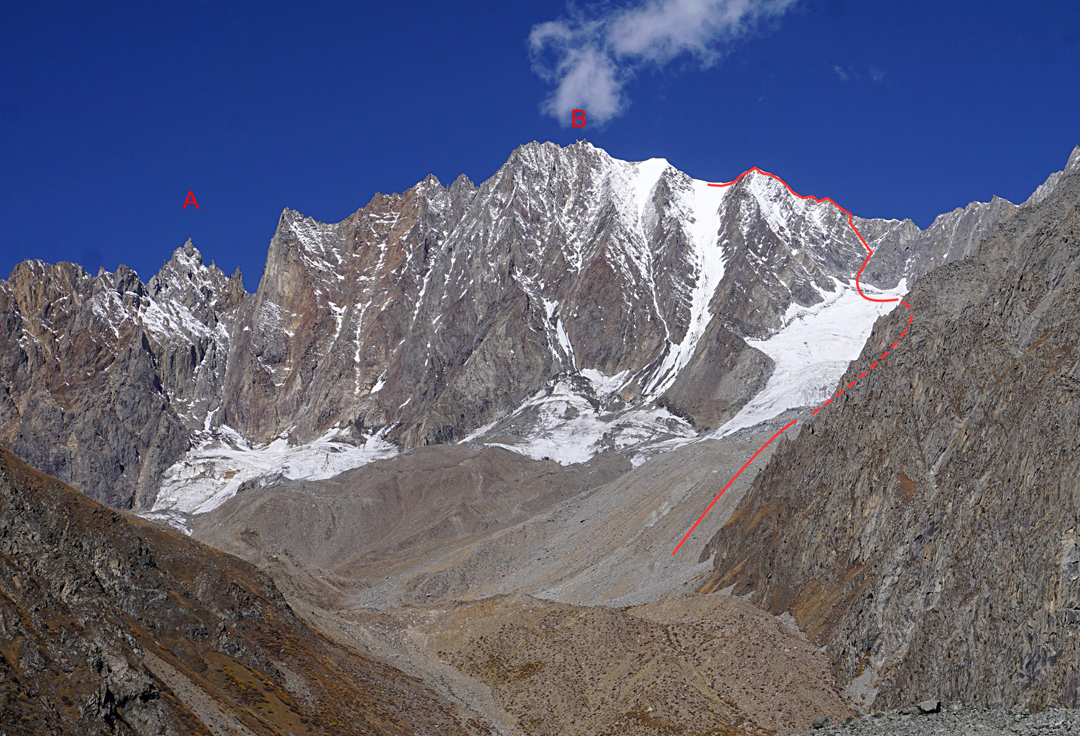
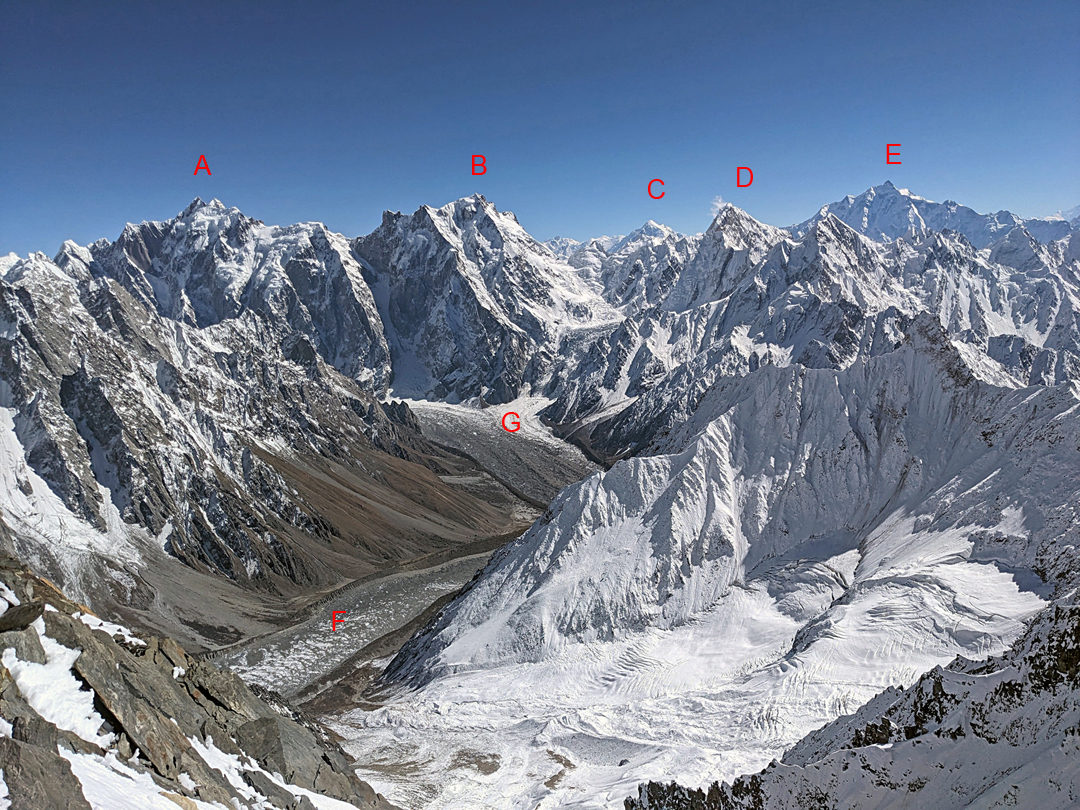
After settling into base camp in the Baltar Valley, Gemma, Anna, and I made an acclimatization trip toward our chosen mountain, Munocho Chhok, on the west side of the Toltar Glacier. [On the Polish Wala map, this is the 5,770-meter summit north of 5,500-meter Muno Chhok, at 36°30'45.78"N, 74°18'38.77"E.] At the time, we estimated the peak to be around 5,600 meters, with around 300 meters of technical climbing, the rest involving scree, glacier, and snow ridge walking. We had never tried a first ascent before, so this objective seemed appropriate. After caching some equipment, a tent, and our boots, we made it back to base camp in time for a week and a half of bad weather.
Once a good weather window arrived, we waited a day and then set out in running shoes to find our cache and our boots. Despite wet feet, a lot of worry, and teasing from the boys over the previous days, we located our gear, still dry under the snow. We reached the glacier below the southeast face of Munocho Chhok and camped for the night.
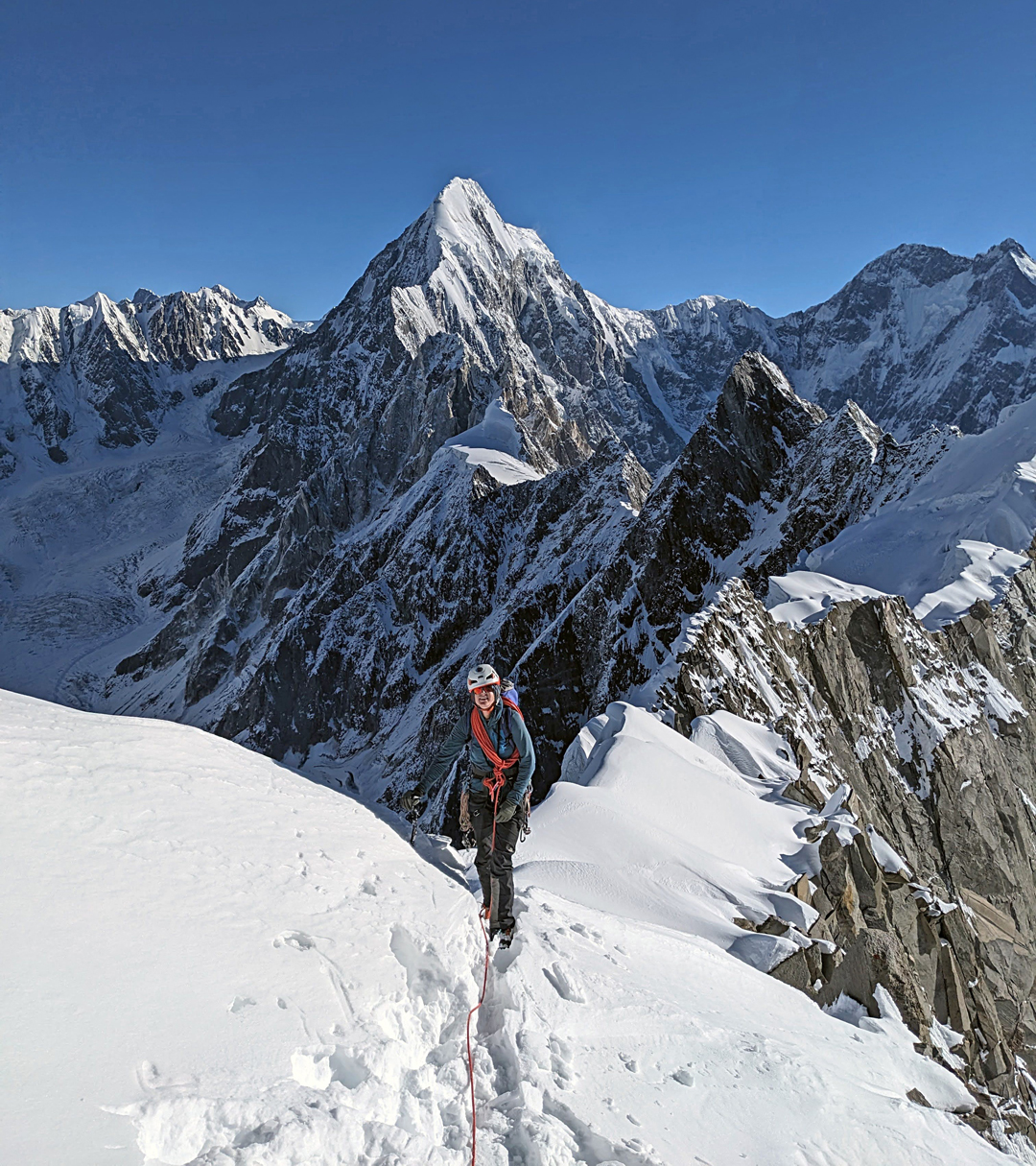
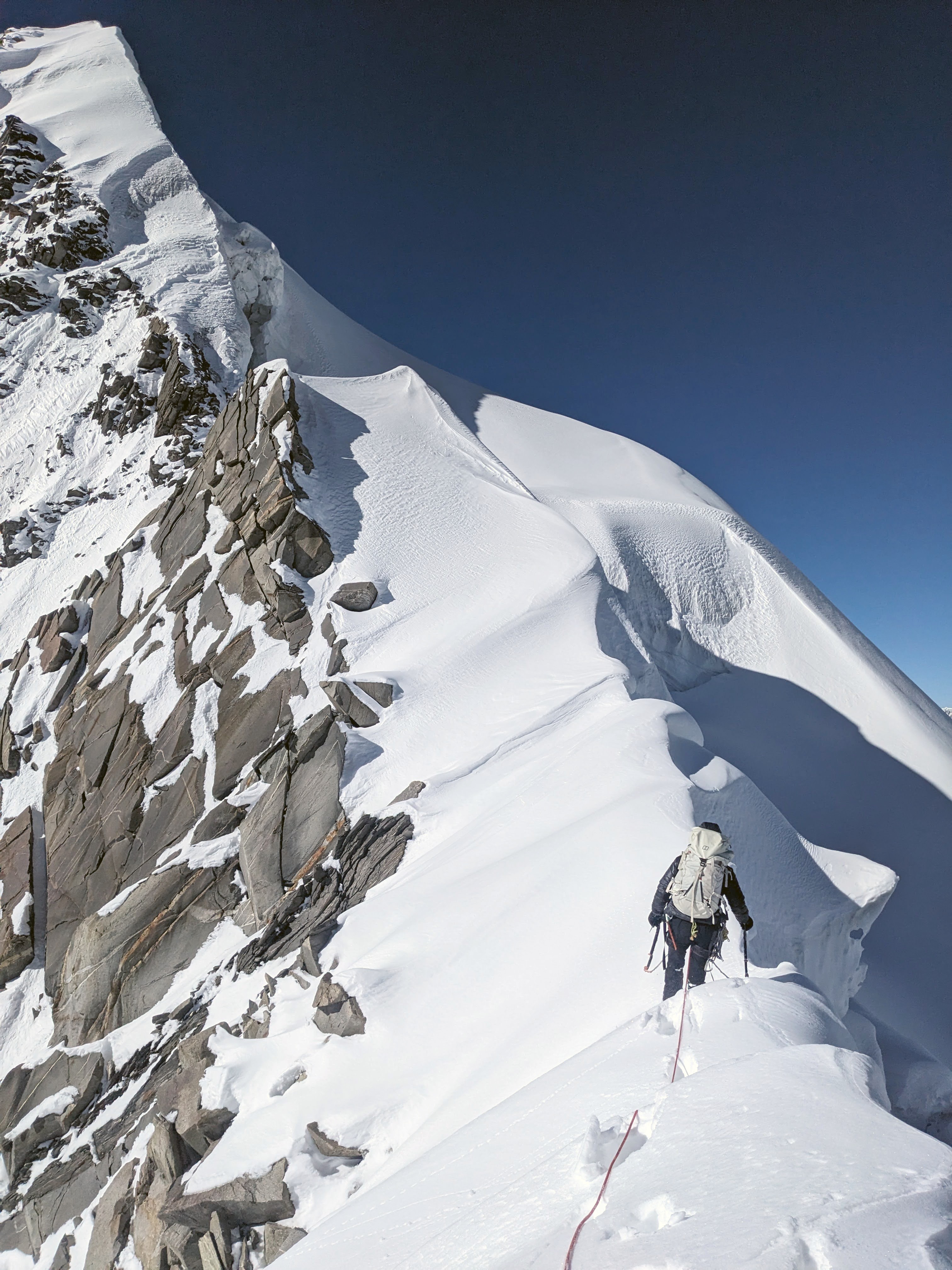
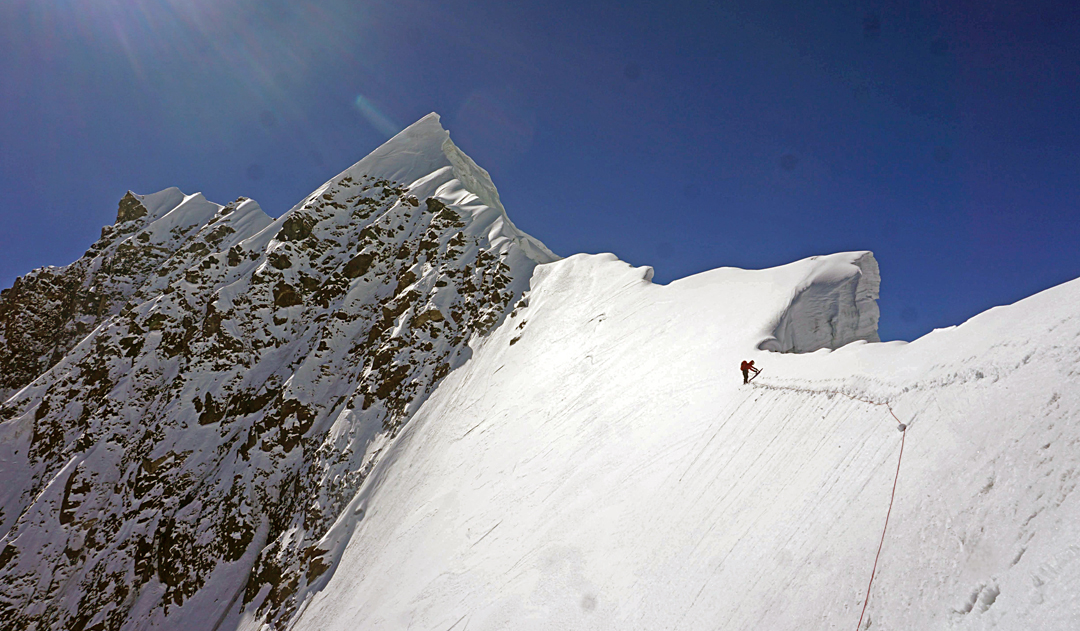
The following day, it took six hours to wade across the glacier, after which we climbed a gully through a rock band, with pitches of M3 toward the end, and eventually reached the northeast ridge at midnight, exhausted. On October 14, having planned a four-day round trip from base camp, we left the tent after a few hours’ sleep and headed for the summit. The ascent of the ridge wasn’t complicated but did involve much steep snow swimming. However, as each hour passed, we became slower. We crossed a northeast subsidiary top, and after a lunch break realized that we were still only halfway to the summit, with an intimidating steep section ahead. To continue would have meant certain benightment, so we turned back at an altitude of 5,632 meters (inReach).
After rappelling and much wading, we regained the tent a few hours before sunset, then elected to continue down in order to sleep lower and breathe easier. Four more rappels took us to the glacier, where we set up camp an hour or two after sunset. On our fourth day, we returned to base camp.
I believe we chose an achievable goal and worked well as a team: Anna did the snow swimming, Gemma did the mixed, and I did the ice. A plan to do the peak over six days would have given more chance of success, but with Anna’s flight home only days after we returned to base camp, we were on a tight schedule. More acclimatization also would have helped, but since we had cached our boots up high, we were partially basecamp-bound during the period of bad weather. In conclusion, don’t stash your boots, don’t stash your tent.
—Sinead Thin, U.K.
Media Gallery