Denyai Tokpo, Many First Ascents
India, Ladakh, Zanskar Region, Kishtwar Range
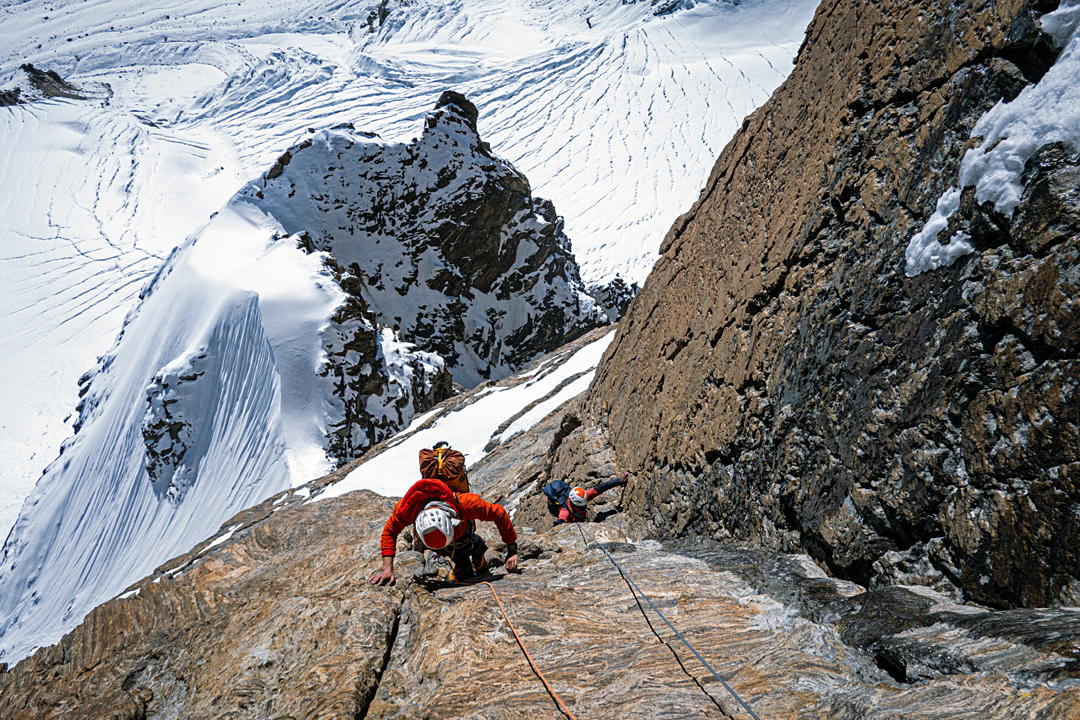
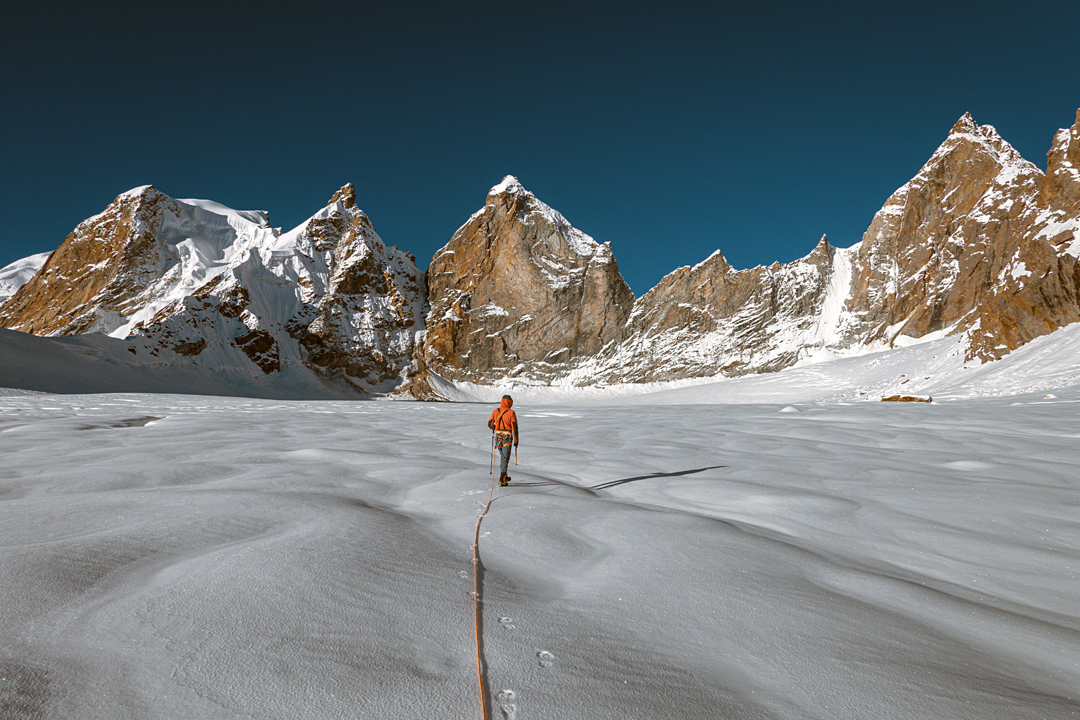
The Expedition Academy of the Royal Dutch Climbing and Mountaineering Association (NKBV) is a two-year program that trains already proficient alpinists, concluding with a self-organized expedition to the Greater Ranges. The fourth cohort of the academy visited the Denyai Tokpo during August and September. The team comprised Folke Drost, Maël Durand, Claartje Meijs, Jan van der Meulen, Laura Oldenburger, Jules de Ruiter, Alex Sternfeld, Joris Timmermans, and Karlijn de Wit, supported by coaches Niek de Jonge, Boris Textor, and Bas Visscher.
The team chose the Denyai Tokpo because there had been little exploration in the valley. We extend much thanks to Matic Jošt, who explored this area in 2016, for providing us with copious information and logistical details, and to Tess Smith for information on the approach to base camp.
We chose to drive from Delhi to Zanskar via Manali, as this would take us through more politically stable regions. (The alternative, a flight to Leh, would have required a one-day drive through Kargil, which was unstable at the time.) Strong rainfall and resulting landslides on the road to Manali caused major traffic jams, and our journey to Padum in the Zanskar Valley took four days instead of the scheduled three.
We knew from Matic that the approach to base camp might require a tricky river crossing, and this proved to be the case. The river was too high for either porters or horses to cross with loads. We eventually built a rope Tyrolean over the river and pulled our luggage across. Without baggage, both horses and people could cross safely.
We arrived at base camp at the same time as the worst storm in Zanskar since 1984. After four days of continuous snowfall and frequent excavation of our tents, we were greeted by sun, though for the next two and a half weeks, sun and snowfall alternated—an unusual weather pattern for Zanskar, which normally has a desert-like climate.
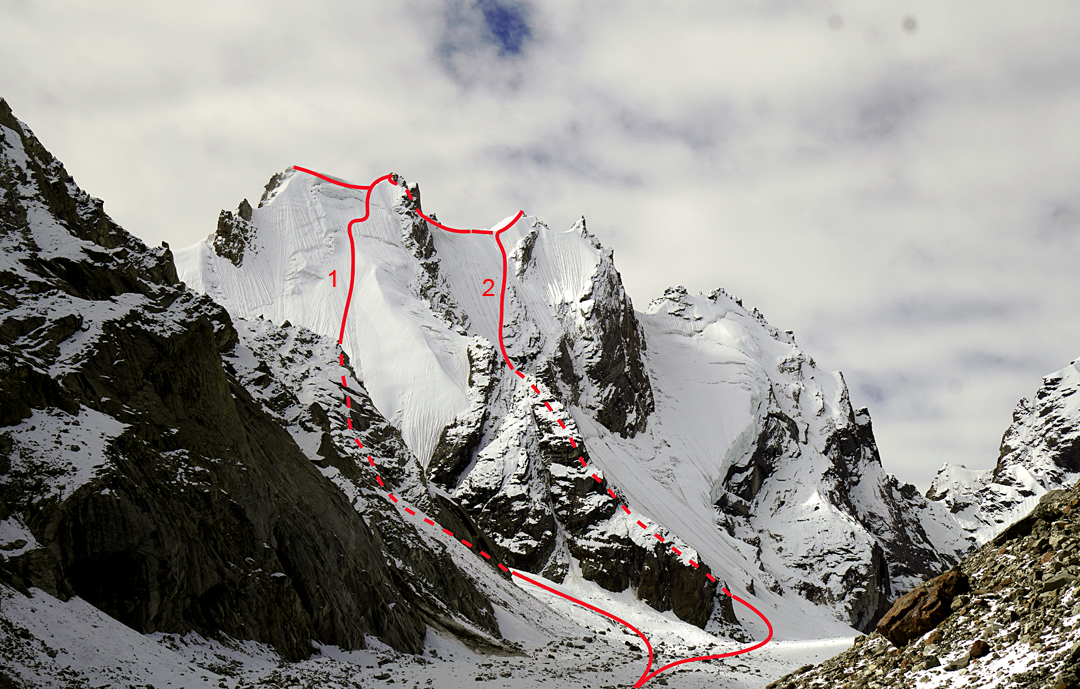
On September 1, after a week of patiently waiting for conditions to improve, Folke and Jan waded through snow for 13 hours to a summit they named Nochung Ri (ca 5,700m, 33°33’55.97”N, 76°38’27.74”E). The pair climbed the north face and northeast ridge, by a route they named Committed to the Cause (PD+ 45°).
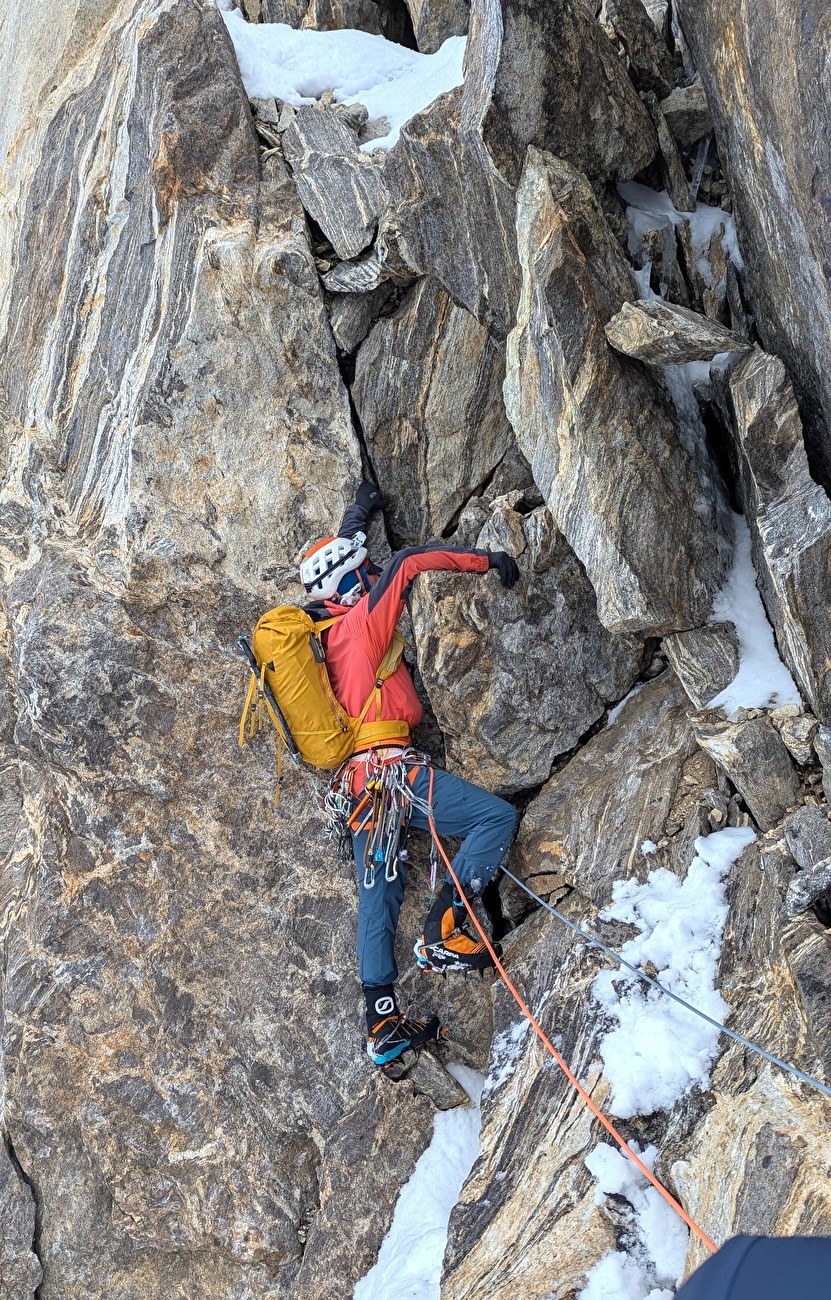
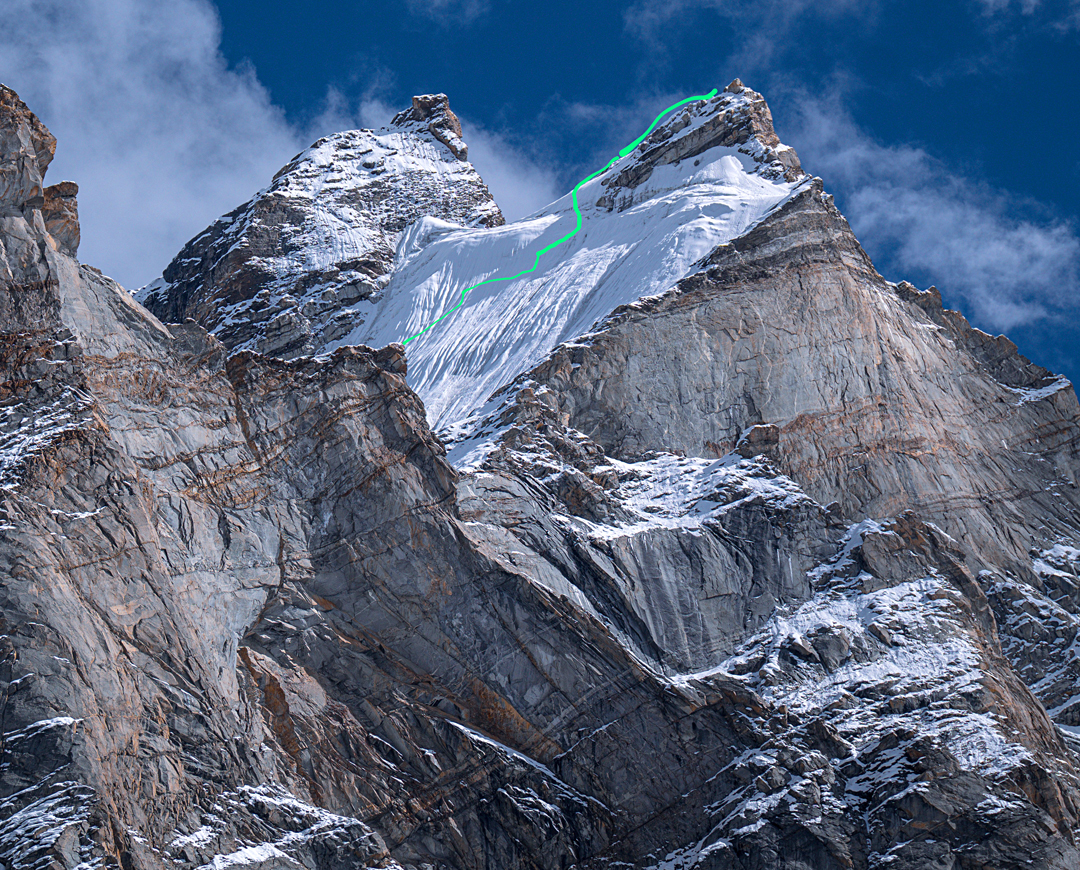
On the 4th, Boris, Claartje, Karlijn, and Laura attempted the northeast ridge of Chorten Rigib East (33°33’55.2”N, 76°38’09.8”E), along the ridge west of Nochung Ri, but they reached an impassable and unprotectable slab just 20 meters short of this 5,800-meter summit. The 650-meter route to that point had difficulties of 5b 45°.
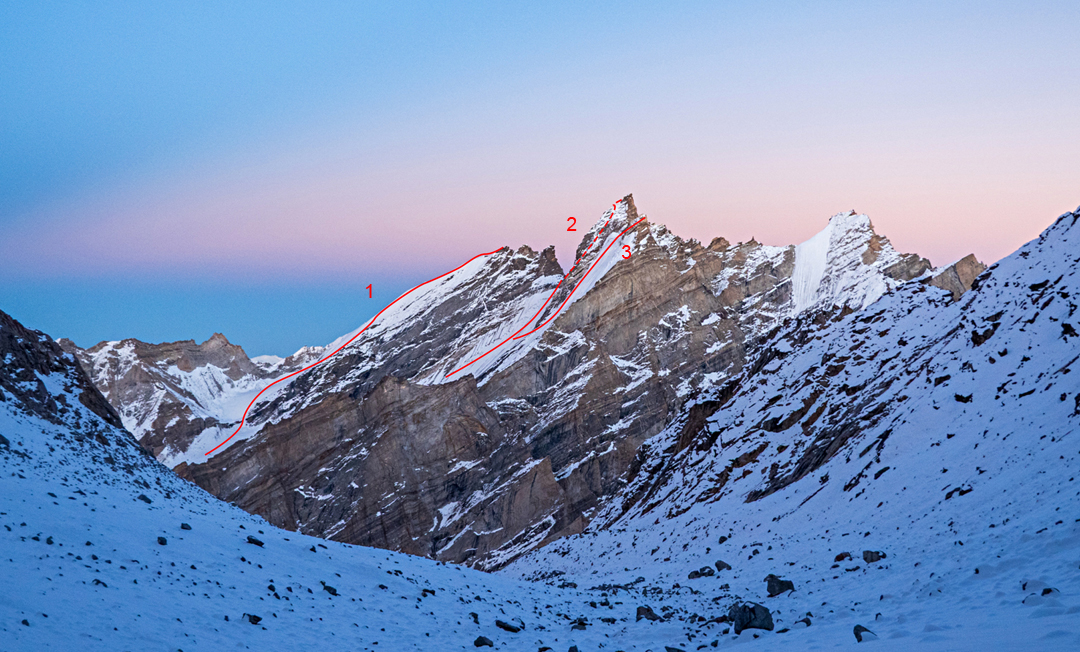
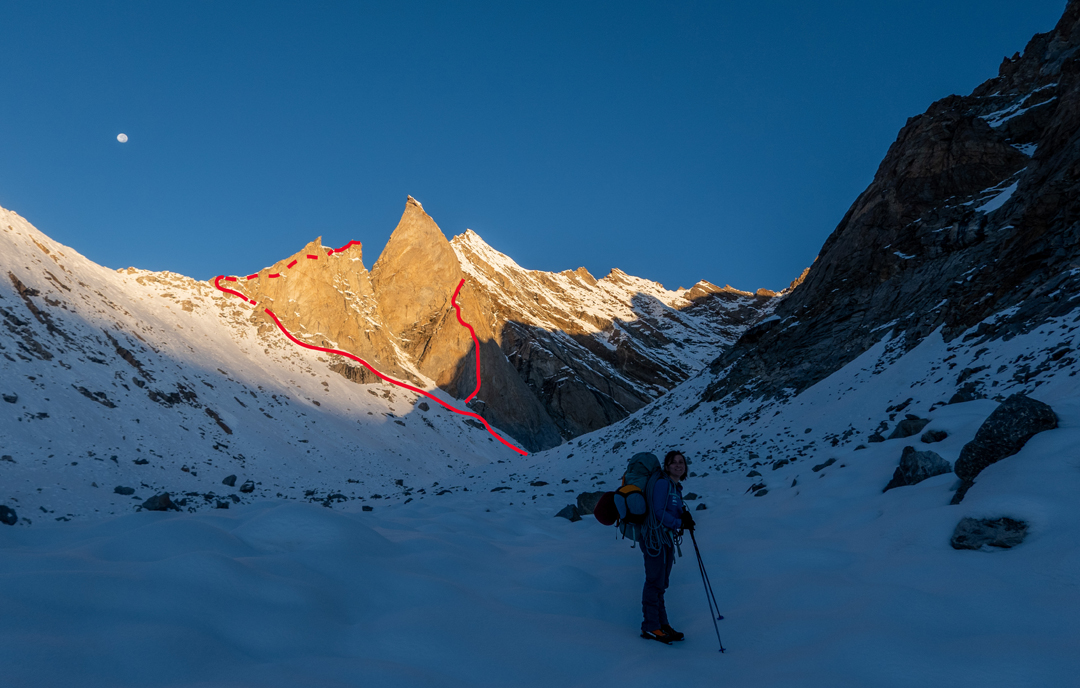
The following day, Alex and Maël climbed the north face of Chotzangma Central (5,800m, 33°32’49.2”N, 76°37’01.2”E), an ascent followed through binoculars from base camp. They reached the col between Chotzangma’s central and east summits and traversed the ridge to both tops, which had similar altitudes. They named their route Snow Symphony (500m, D 80°) and descended the same way, returning to base camp late in the evening.
Jan, Jules, and Niek left base camp early on the 6th to attempt the north face of Chotzangma West (5,770m). Steep snow slopes, interrupted by one pitch of mixed climbing, led to the summit. The pair traversed to the central and east summits, then descended the line followed by Alex and Maël. They named the route Tak Sham (500m, D+ M4 75°).
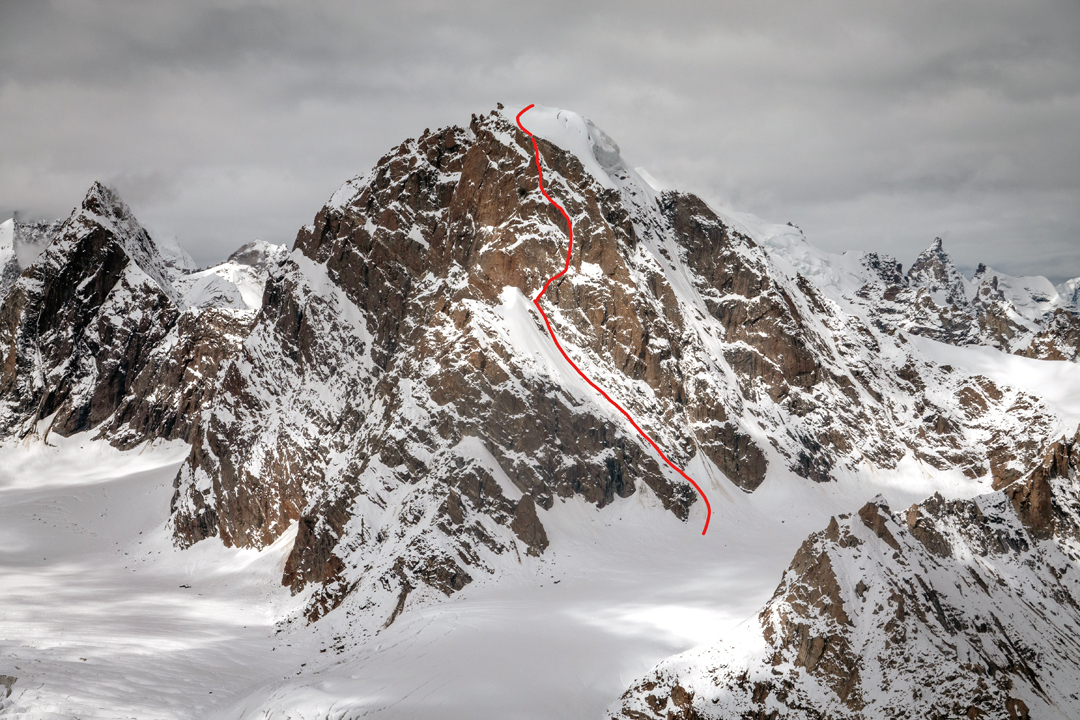
The same day, Bas, Folke, and Joris set out to climb Chorten Rigib West (5,752m, 33°33’54.9”N, 76°38’01.8”E). They ascended the increasingly steep northwest face and climbed a steeper pitch of ice to reach the snowy summit ridge. They made many rappels during the descent. The route is named Julley Broer (600m, D AI3 70°), Julley being a Ladakhi greeting frequently used by Gara, the expedition’s ever-smiling base camp helper, and Broer being Dutch for “brother.”
For the last five days of the trip, the team was blessed by stable, sunny weather. Boris and Karlijn reached the summit of Rejam Ri (ca 5,600m, 33°35’6.46”N, 76°36’6.57”E) via the east ridge. They named the route Steps of the Chough (5b+ 30°).
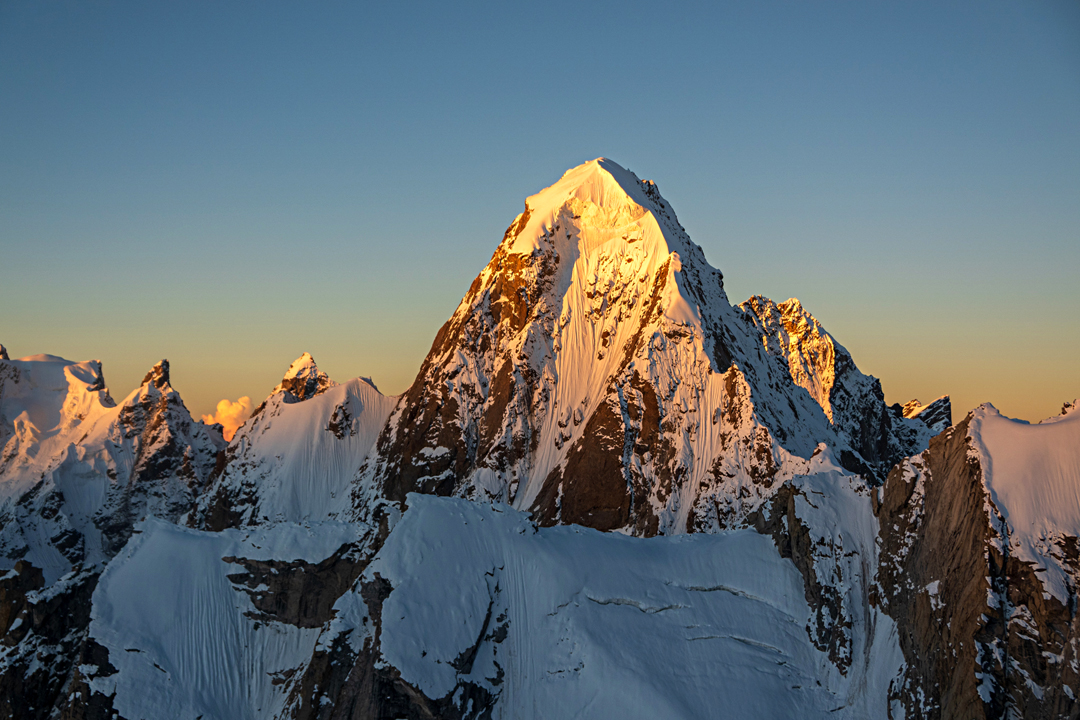
On the 12th, Alex, Bas, Folke, Laura, Maël, and Niek climbed the valley’s highest peak: Khang Chan Chenmo (6,135m, 33°34’02.7”N, 76°35’17.8”E). They started up snow and ice on the left side of the northeast face, then climbed the mixed 400-meter headwall, which faces southeast. The route was named Wish You Were Here (700m, 5b 50°), in memory of lost friends.
Team members also opened several rock routes on subsidiary peaks close to base camp, and Jan opened more than 50 boulder problems. More details can be found at The Expedition Academy.
—Dutch Expedition Academy, Netherlands
Media Gallery