
Brahma Satli Central (Cathedral Dome), east flank and southeast ridge
India, Kashmir, Pir Panjal Range
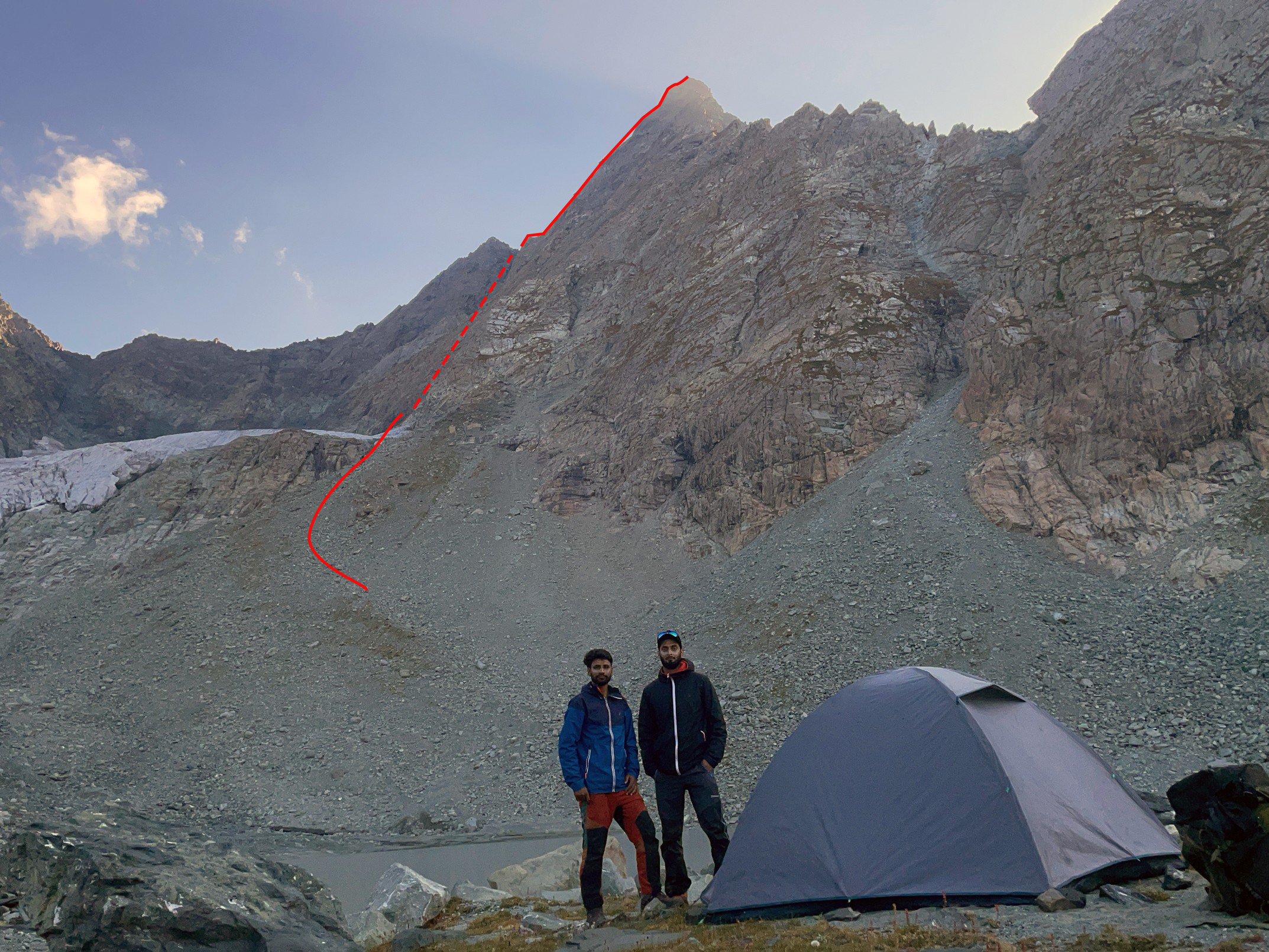
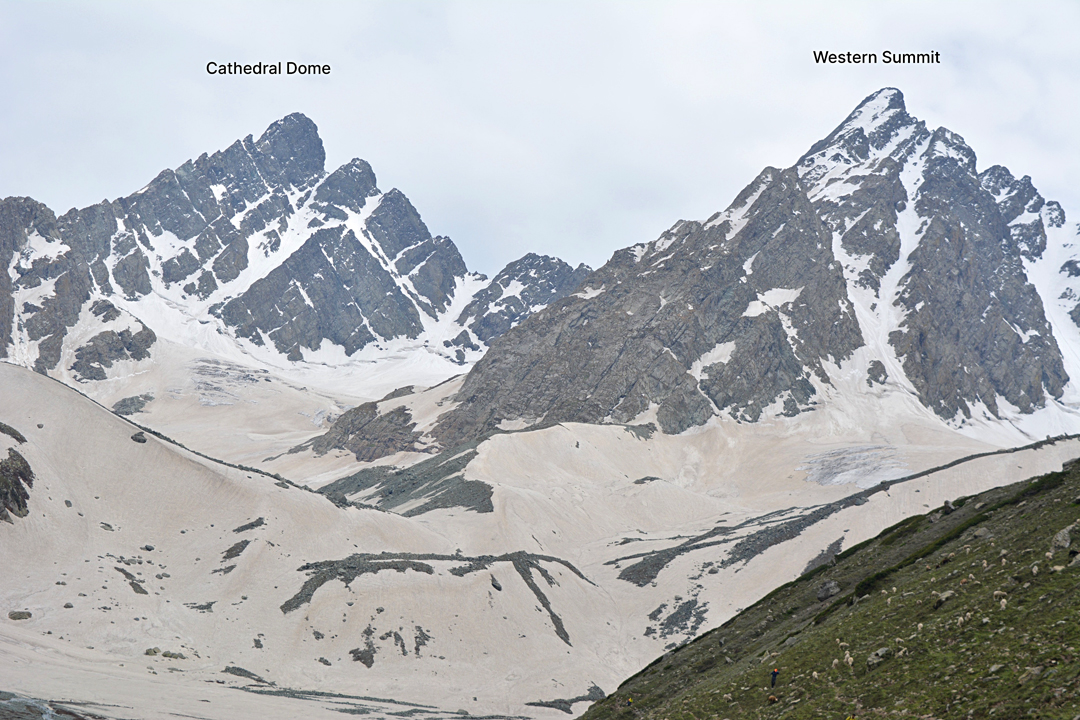
The Pir Panjal Range of the Lesser Himalaya lies south and west of Srinagar and the Vale of Kashmir, which separates it from the Greater Himalaya. The highest peak is Tatakuti (various spellings, 4,760m), first climbed in 1901 by C.E. Barton and Ernest Neve (U.K.). Toward the southeast end of the chain are the three graceful Brahma Satli peaks. These are rock peaks, with the highest generally accepted to be the western summit, which the Survey of India records as 4,730 meters. The central peak, often called Cathedral Dome (or Naik Peak on Google Earth, 33°28’54.63”N, 74°50’8.03”E), appears similar in altitude.
The first documented ascent of Cathedral Dome took place in 1989 by a team from Kashmir led by M. Amin. The description is vague, but the team started from the north to reach a valley that led to the col between the Dome and the southeast summit. From a camp on the col, they climbed the Dome, presumably along the southeast ridge or its flanks, with the last 150 meters described as “steeper.”
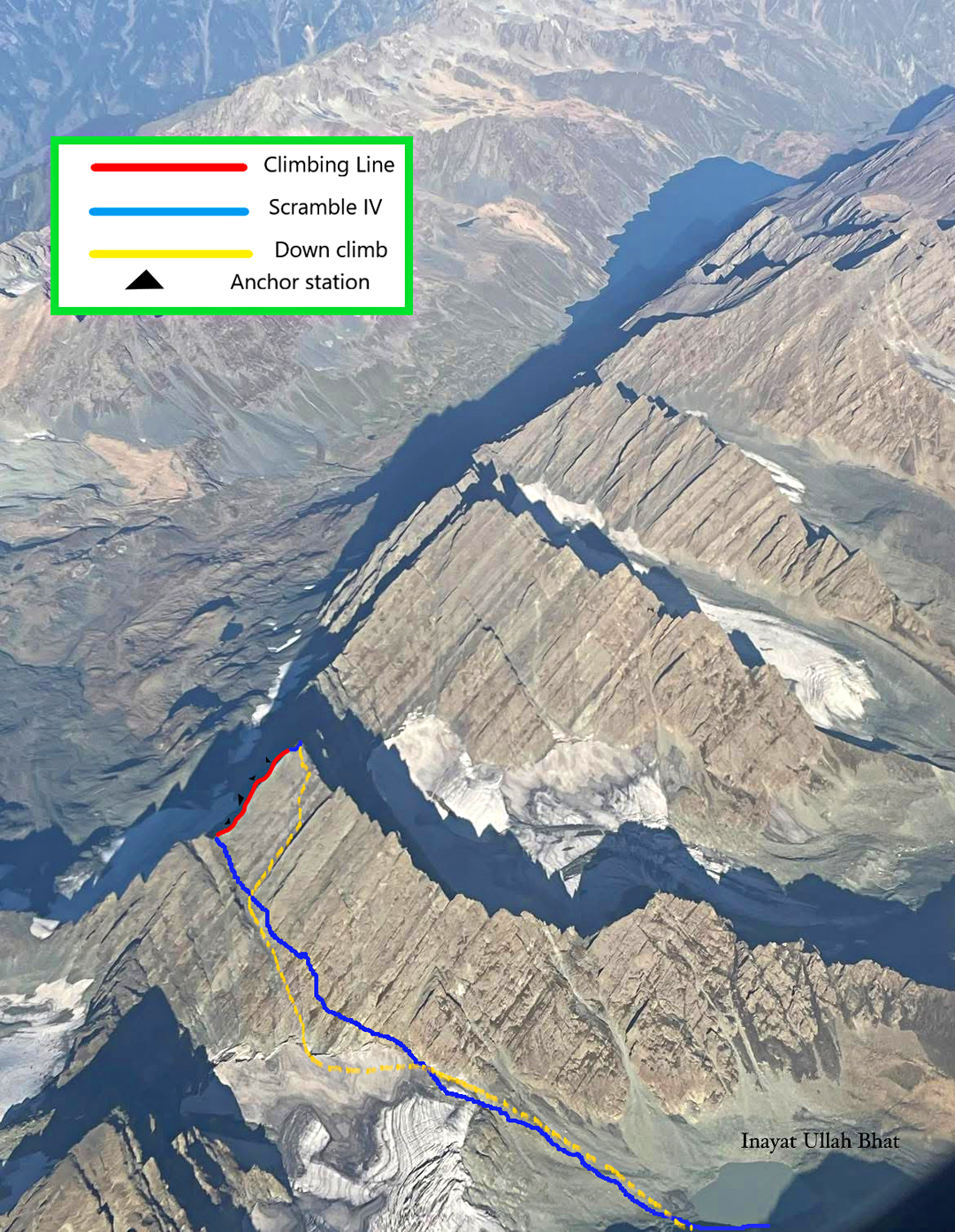
In September 2025, Cathedral Dome was climbed again. On the 17th, local climbers Inayat Ullah Bhat and Laway Mudasir camped at Novsar Lake, north of the mountain. Leaving at 5 a.m., they reached the east face and slanted up left for around 100 meters at UIAA IV to reach a prominent rocky gully. Scrambling up this, they gained the crest of the southeast ridge at around 4,500 meters.
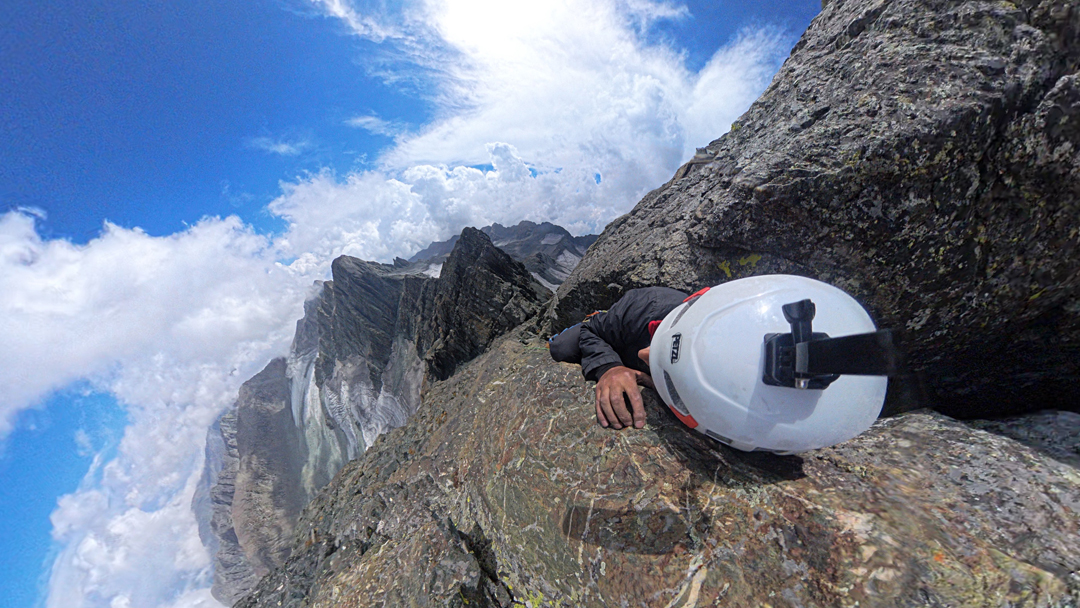
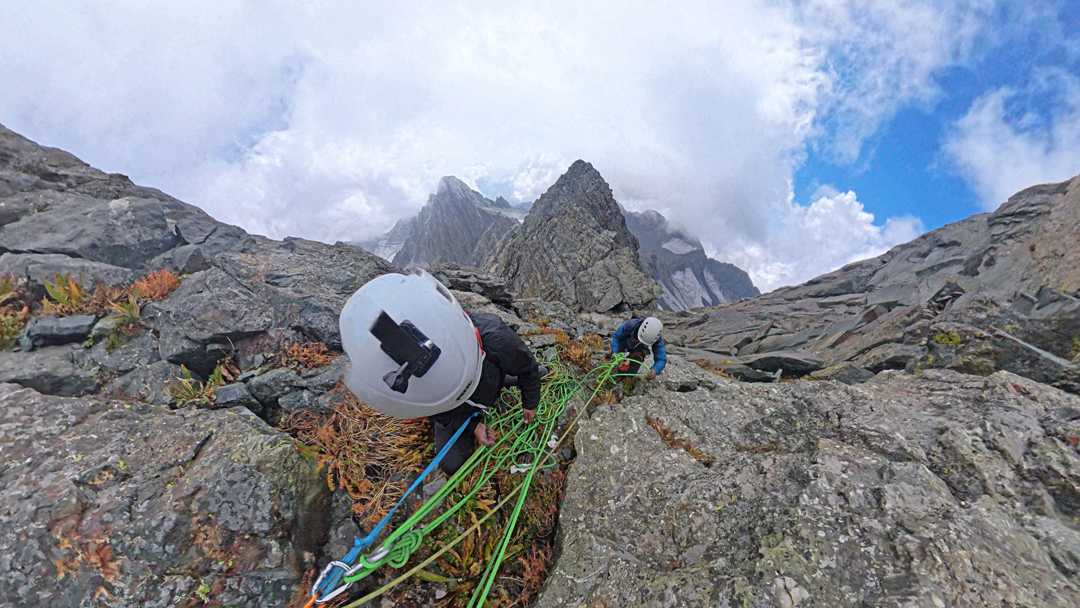
Above, a crack system in the broad ridge rose for 80 meters, then widened to a chimney. The pair climbed four rock pitches, with some aid, to gain a good platform at 4,670 meters. From there, 60 meters of scrambling in deteriorating weather led to the summit.
The pair returned via a line dropping more directly down the east face into the gully, eventually reaching base camp after an 18-hour day. They confirmed a summit altitude of 4,730 meters.
—Lindsay Griffin, AAJ, from information supplied by Inayat Ullah Bhat, India
Media Gallery