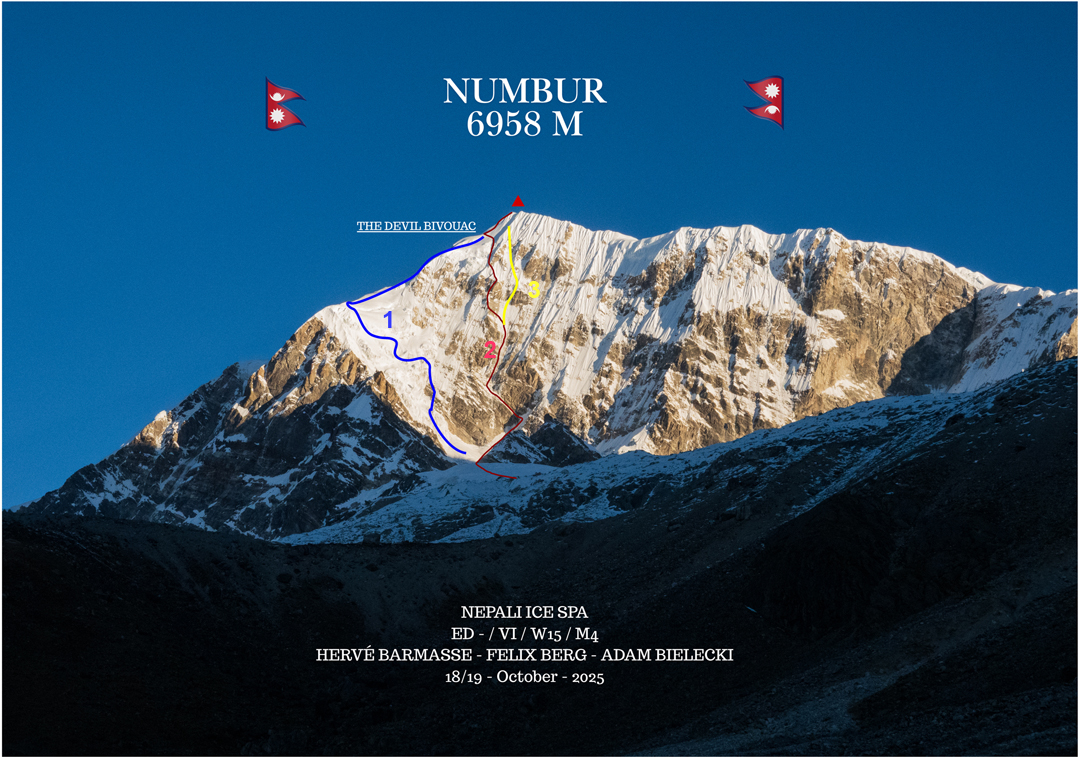

Numbur, southeast face, Nepali Ice Spa
Nepal, Rolwaling Himal
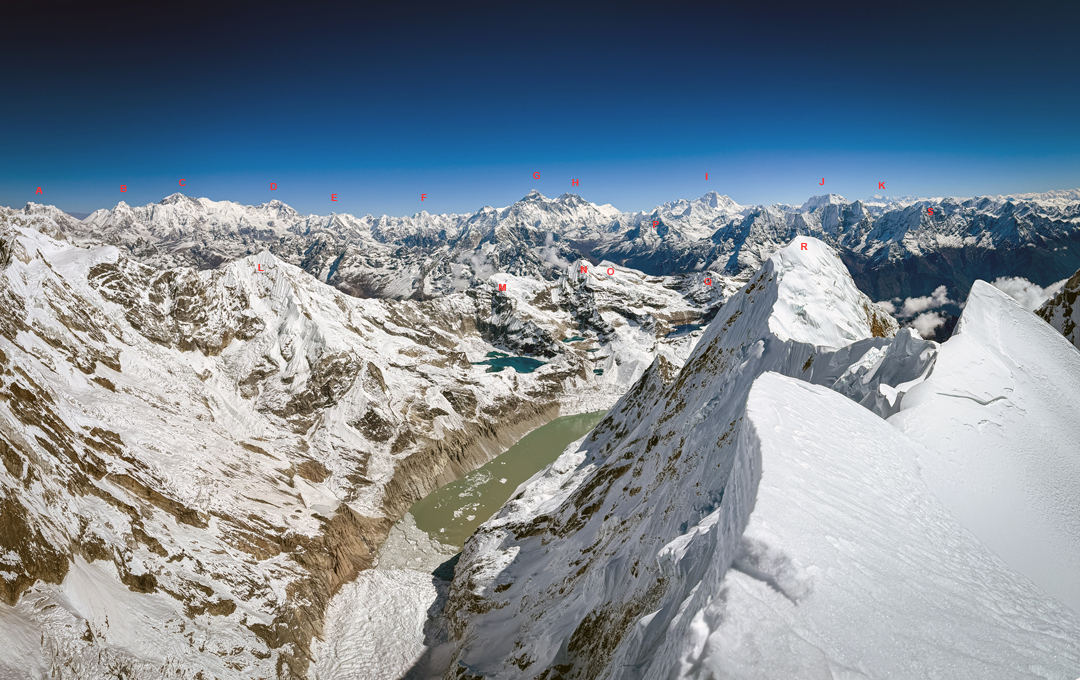
Numbur (6,958m, 27°45’17.57”N, 86°34’20.65”E) is a shapely pyramid south of Tengkangpoche that was first climbed in 1963 by a Japanese expedition, via the southwest ridge. Prior to 2025, in addition to repeats of the southwest ridge, there had been three attempts on new routes, including two unsuccessful attempts from the north and an attempt on the unclimbed southeast face that came very close to the summit (AAJ 2017).
In October, Hervé Barmasse (Italy), Felix Berg (Germany), and Adam Bielecki (Poland) drove by jeep from Kathmandu to Taksindu, then walked up the Solu Valley to establish base camp, on October 10, at 4,680 meters by the north shore of Dudh Kund lake. Two days later, they made an advanced base at 5,700 meters, two hours’ walk from the foot of Numbur’s southeast face. The face begins at 5,900 meters, and the approach via the upper Dudh Kund Glacier is complex—the team used a drone to find the best line.
After a few days at base camp, the team regained advanced base on October 17 and set off for the face at 3:15 the following morning, hoping to climb to the summit and descend the same day. However, when they reached the bergschrund, Bielecki was vomiting and weak. He suggested the other two continue, but they were having none of it: “We’re a team,” Berg said. “Let’s try this together, and if it doesn’t work out, we can always come back in a few days.”
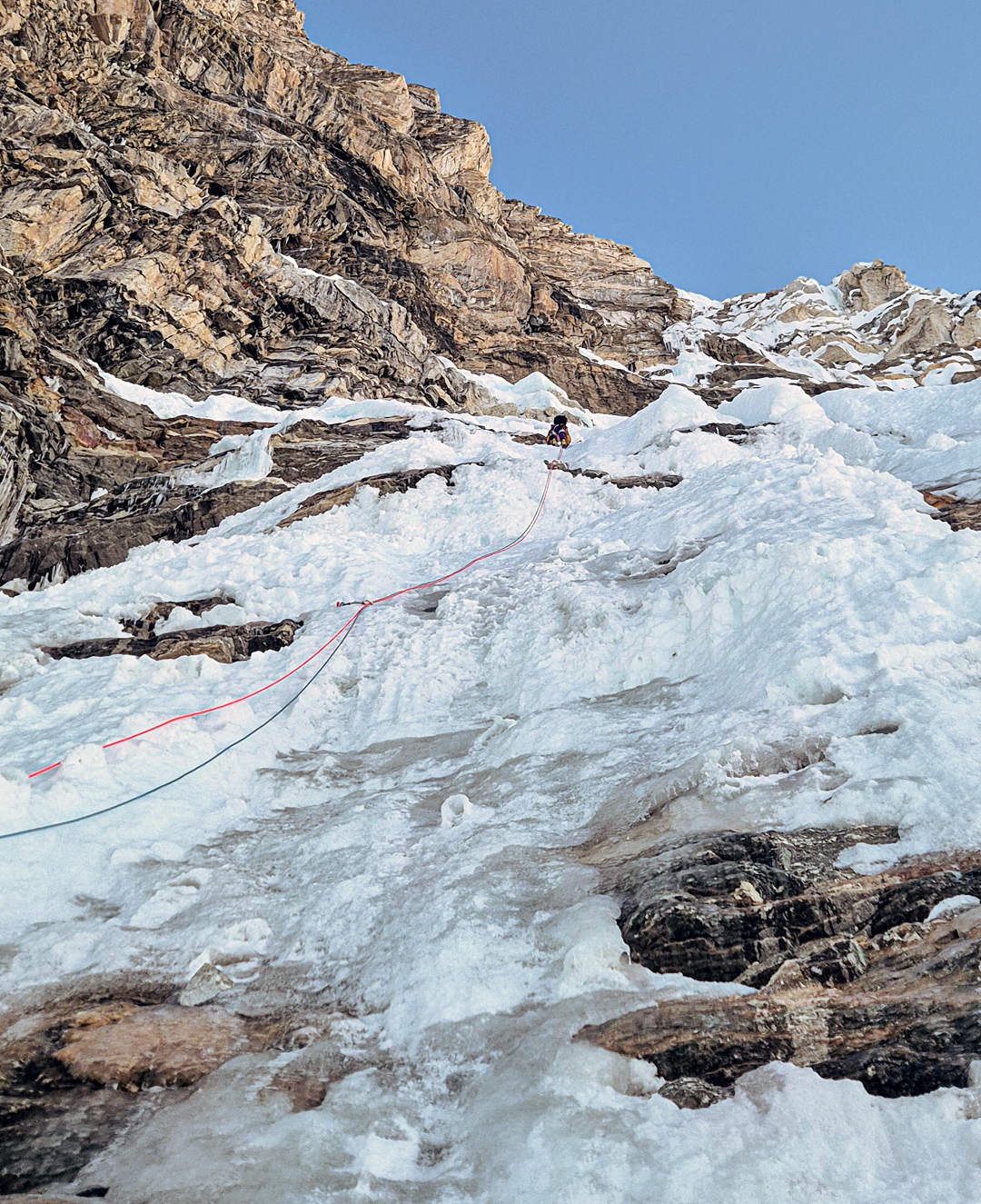
Bielecki agreed to try, and the three started up the face following the logical line taken by Oriol Baró and Santi Padros in 2016. These Catalan climbers climbed a direct line toward the summit but turned around in bad snow, only about 80 meters below the top.
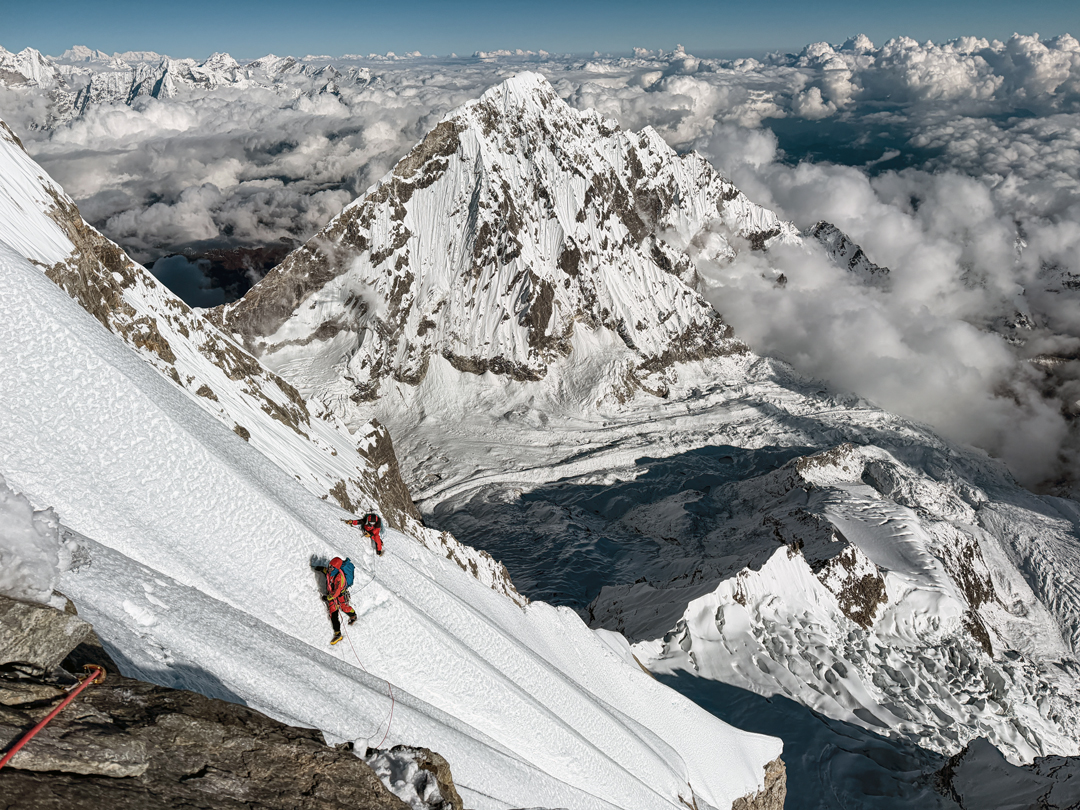
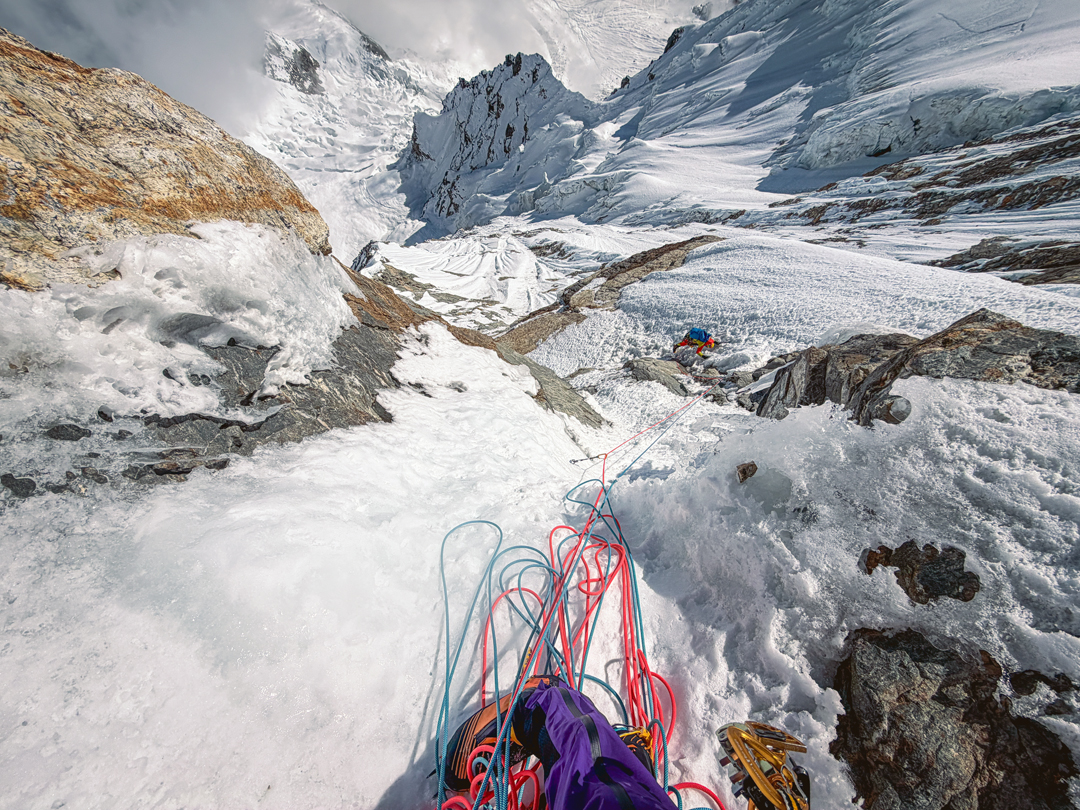
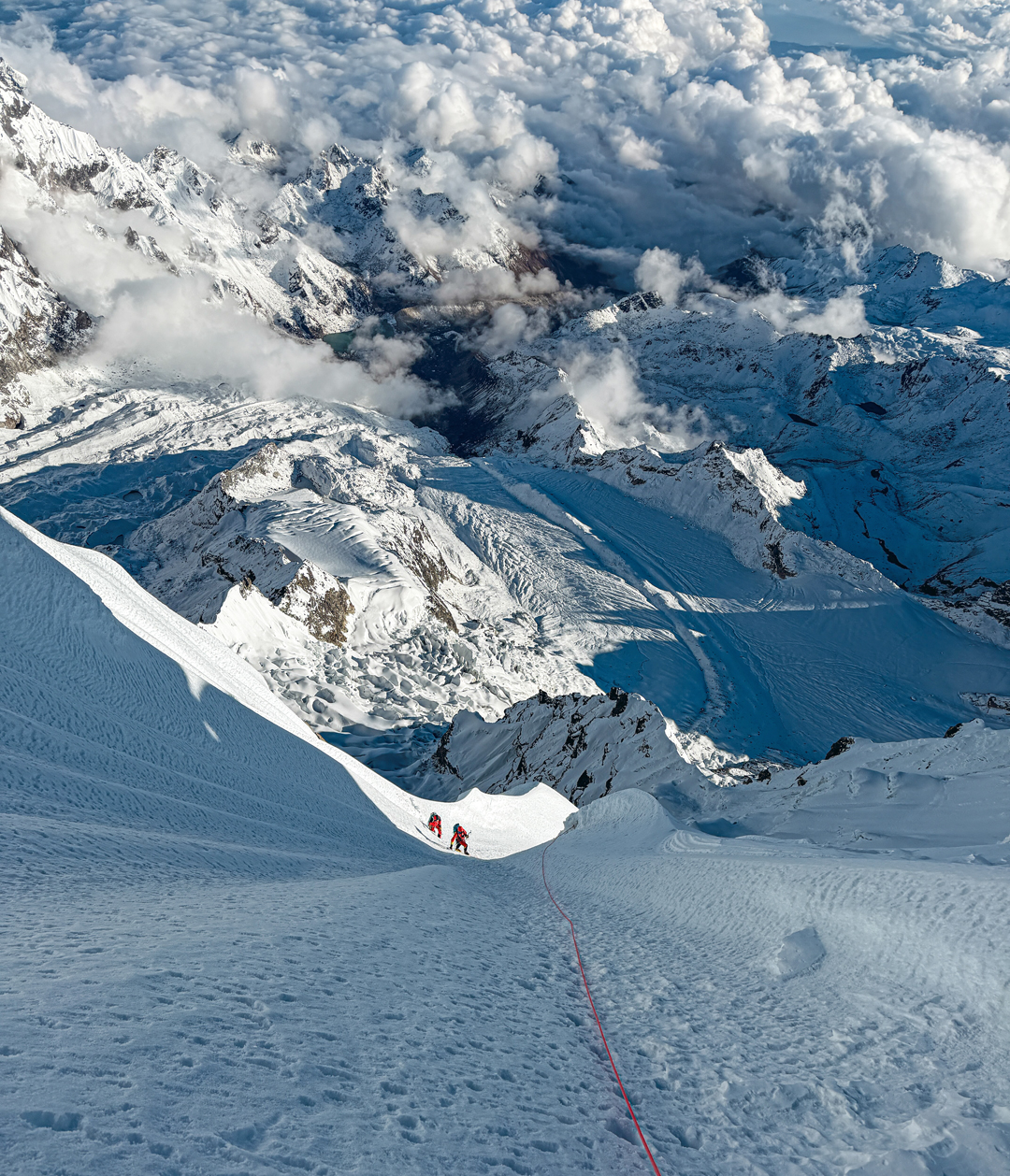
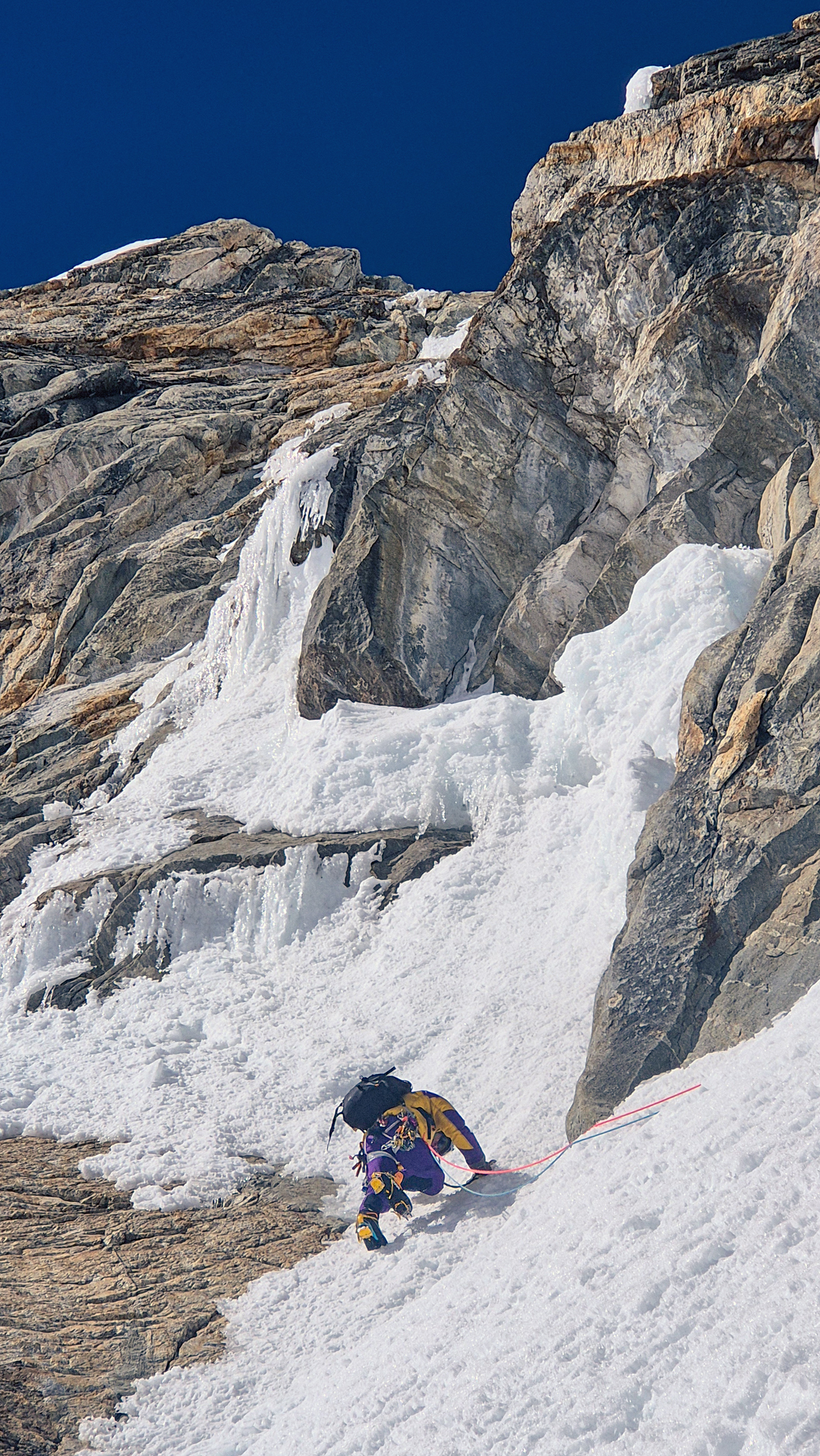
In 2025, the first part of the line gave enjoyable, sustained, safe climbing, with spectacular ice and plenty of opportunities for protection. Higher, the three-man team began to experience frequent rockfall and ice fall, and at around 6,450 meters, they decided to leave the Catalan route and traverse left onto more sheltered rock slabs. Barmasse took a rock to the shoulder that made continuing painful, but still preferable to a risky retreat. The three continued up toward the southwest ridge, the last 250 meters providing the psychological crux of their route, over steep, unconsolidated snow with no protection.
At sunset they had reached 6,900 meters, just below the exit onto the ridge. They had not planned to bivouac—they carried a tarp but no sleeping bags—but the weather was good, so the team decided to stop and rest. Unfortunately, the wind rose during the night and the temperature dropped to -25°C. They spent until morning boiling small quantities of water with a partially functioning stove and fending off frostbite.
The wind dropped in the morning, but the next weather system was obviously on its way. Leaving at 8:30 a.m., the three quickly reached the summit through straightforward deep snow and began their descent of the southwest ridge. This involved an easy first half of downclimbing and then half a dozen or so rappels through a hanging glacier to regain advanced base at 5 p.m.
The route was named Nepali Ice Spa (1,000m, ED- WI5 M4), and, as Barmasse commented, “Technically, you can be ready to climb anything, but for an adventure like this you can never be ready enough.”
—Lindsay Griffin, AAJ, with information from Hervé Barmasse, Italy, and Tobias Pantel, The Himalayan Database
Media Gallery