
Ron Olevsky, 1954–2025
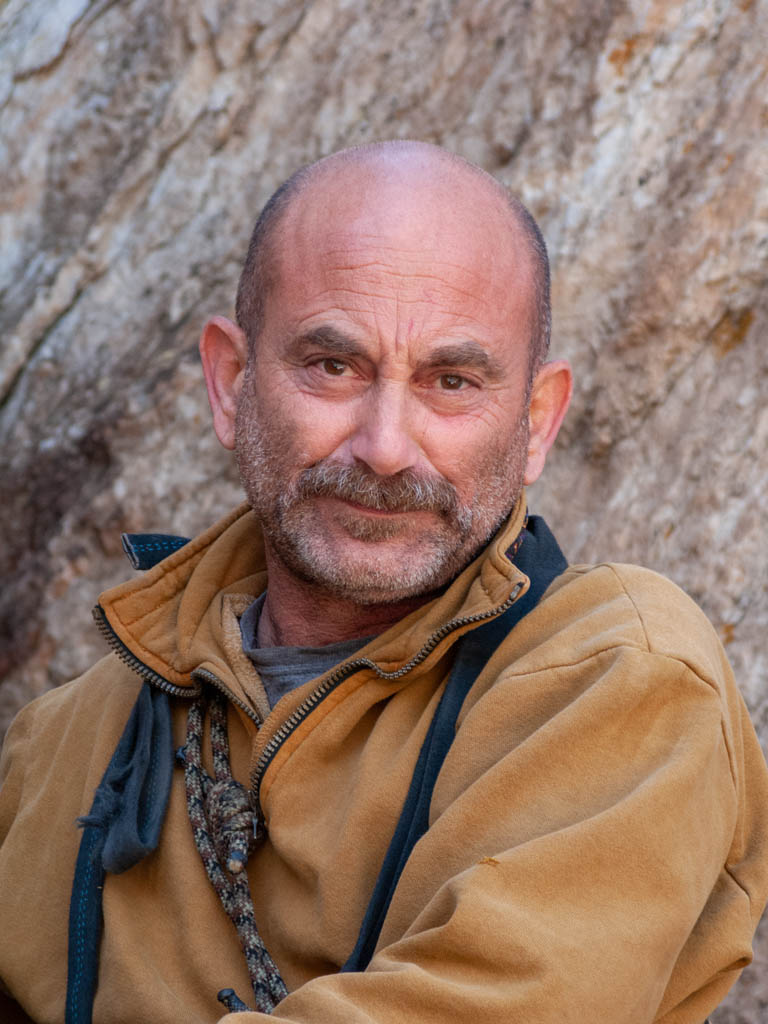
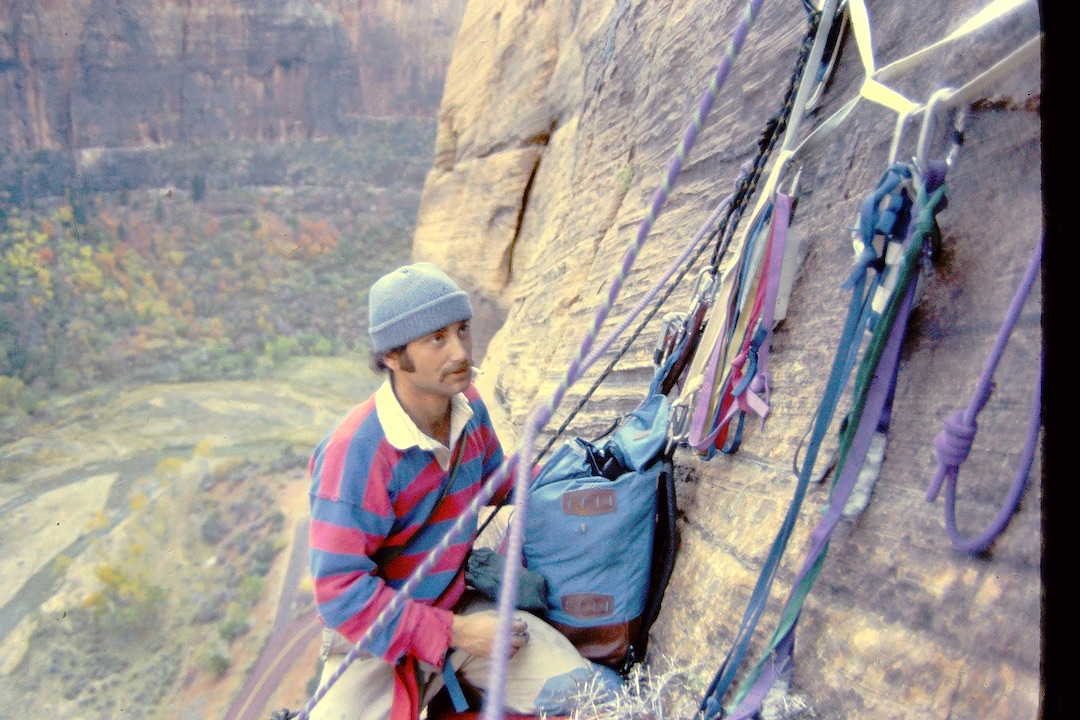
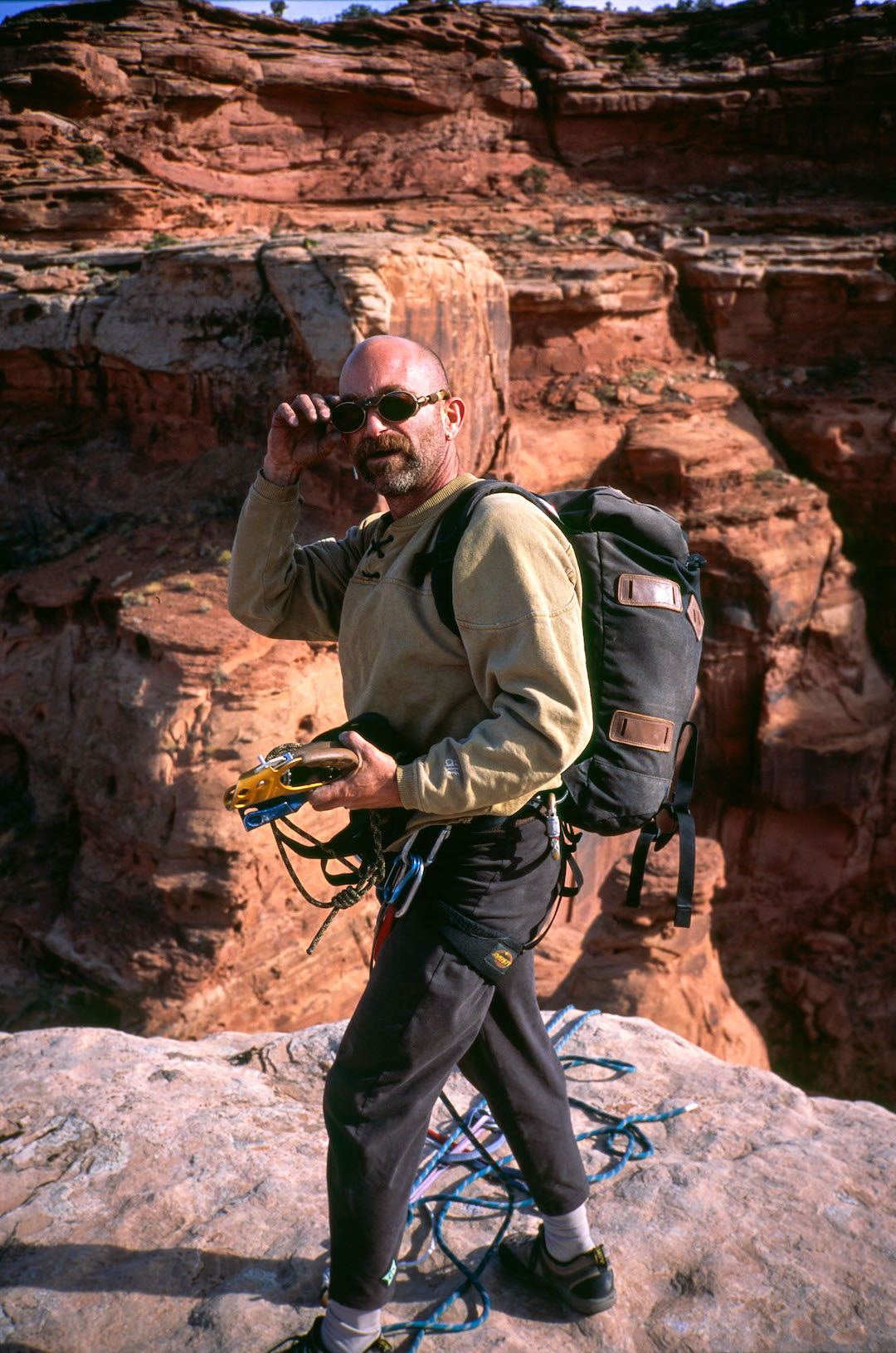
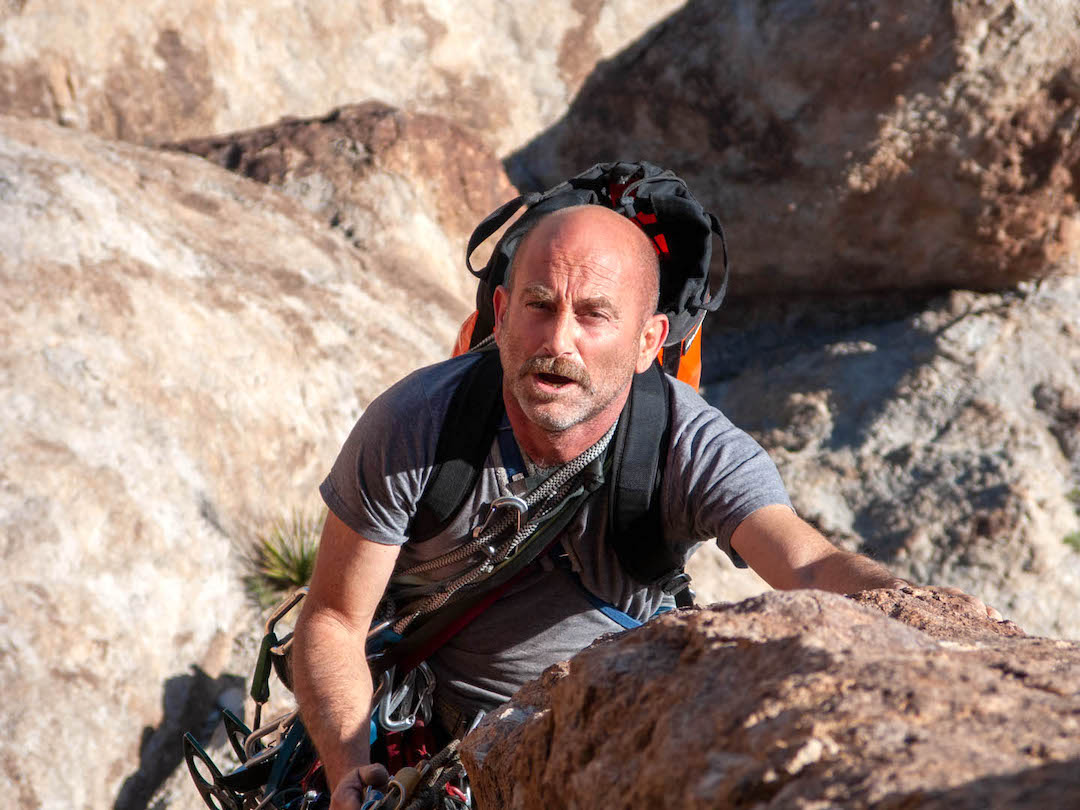
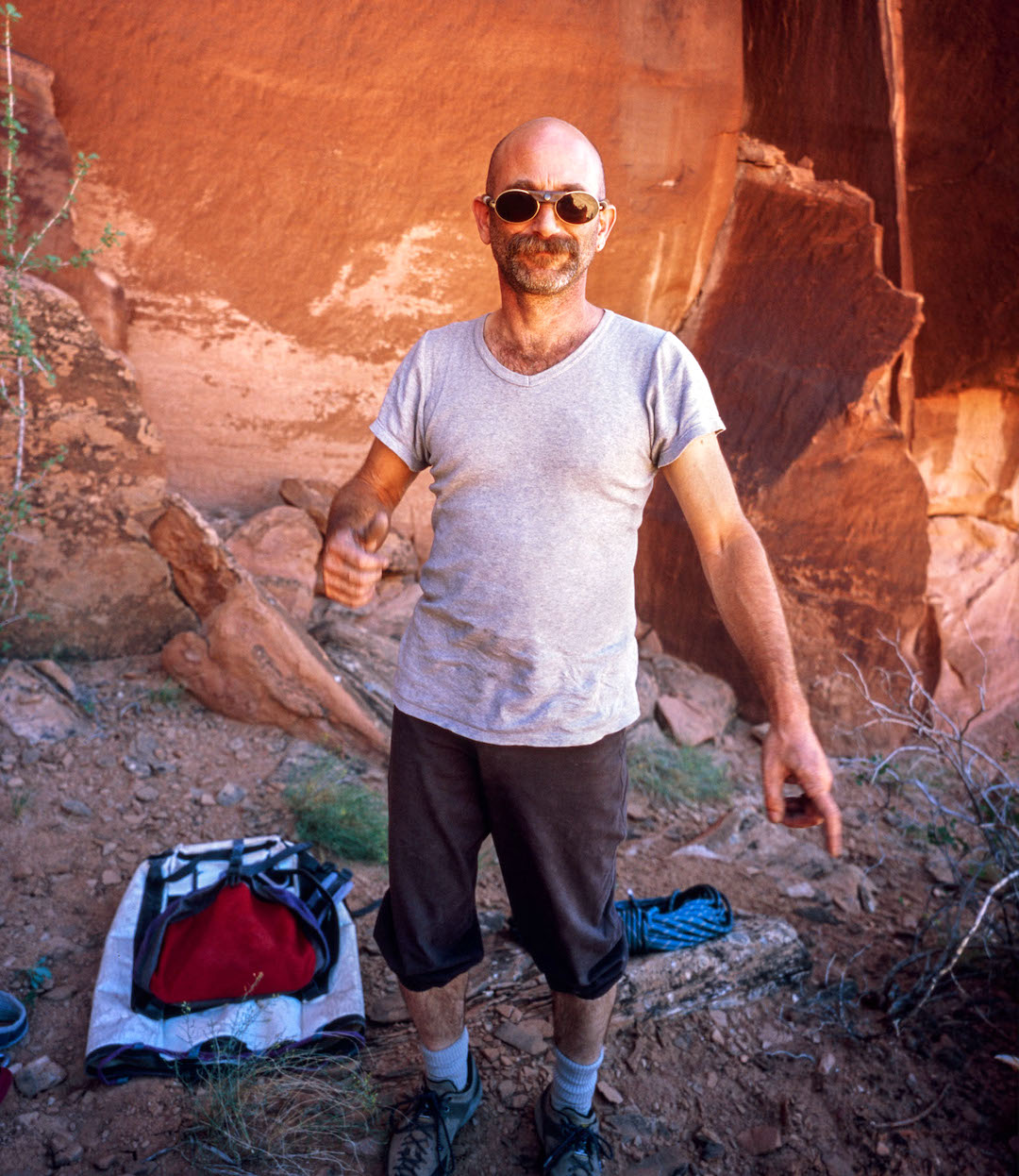
Ron Olevsky, a major—and colorful—player in the 1970s-80s blossoming of Utah desert climbing, passed away in July 2025 at age 71. Ron was key in transforming a then sleepy Zion National Park into a big-wall mecca.
He was born in New York, where his father, Julian, was a distinguished violinist and teacher who toured in Europe and played at Carnegie Hall, and his mother a docent at the Museum of Modern Art. The two divorced when Ron was not yet in his teens, and he was sent north to a boarding school in Tarrytown, on the Hudson River.
The rural ambience fostered a love of the outdoors that in 1973 drew Ron west to University of Colorado Boulder, where he began climbing seriously. In 1974, ascending the Curving Vine route on the Diamond face of Longs Peak, he spied a line to its left. He returned with Bob Dodds and a rack of pitons, and established Pervertical Sanctuary (IV 5.11a). This, his first-ever new route, is now regarded as one of the best climbs on the wall.
The young Ron next set his sights on soloing a new route on El Capitan, but first he needed a quiet place to practice. A 1972 article in Ascent by Jeff Lowe described free and aid climbing on the sandstone walls of Zion, in Southwest Utah. Olevsky, intrigued, visited in April 1976. His binoculars revealed splitter cracks shooting hundreds of feet up otherwise flawless, varnished sandstone buttresses. He was impressed, and climbed some pitches, but still focused initially on Yosemite.
That year, on El Cap, Ron climbed the Nose and the Shield, and in 1977, with Tony Yaniro, did the first ascent of Dorn Direct (5.9 A4). The solo new route did not pan out. He explained in a 1985 AAJ retrospective, "On my El Cap attempt I was soloing on virgin rock, but I was only a short distance from the Muir and Magic Mushroom routes. It was a contrived adventure." Yosemite's golden age of big-wall exploration seemed to be over.
But, as he let slip in the same article, “Zion's golden age has just begun.” He relocated to Utah and got to work. He brought tenacity and seemed to have unlimited time. Ron lived well but also never seemed to work, aside from some guiding. He told me once that his money came from “investments,” and we left it at that.
Over the next few years Ron put up dozens of big-wall routes, including Touchstone Wall (IV 5.9 C2), solo, in 1977; Spaceshot (IV 5.7 C2), with Dave Jones, 1978; Monkeyfinger (IV, 5.9 C2), with Rob Schnelker, 1978; Prodigal Sun (V 5.8 C2), solo, 1981; Thunderbird Wall (VI, 5.9 A3), with Earl Redfern, 1986; and Iron Messiah (5.10b), solo, 1988.
As his reputation grew, he started guiding (he guided the nine-pitch first ascent of Monkeyfinger). He was there at the birth of the American Mountain Guiding Association, and in 1990 became one of the first certified guides.
Touchstone Wall was perhaps Ron’s proudest Zion climb. He established this eight-pitch route alone, with a full rack including pitons, and liked it so much he repeated it several times, but also hit a conundrum. He wanted future generations to enjoy his creation, but piton placements were eroding into flared slots.
Ron’s solution was to fix Touchstone Wall such that no more hammering was needed. Preparation included adding “fixed” pitons (pounded into drilled holes) and a process he called “constructive scarring” (using a hammer and piton and shaping the placement to accommodate a nut). In May 1981, he climbed Touchstone Wall hammerless and demanded that future climbers do the same.
Chiseling the rock was as controversial then as it is now. Still, Touchstone Wall is today a popular big-wall classic that has also gone free at 5.13b.
Ron climbed all over southern Utah, with a focus on exploring remote canyons (when the roads ended, he’d run the rivers) to find new desert towers. He roped up frequently with Kyle Copeland and Charlie Fowler, referring to the trio as the “Three Musketeers;” he regarded Copeland as the best desert climber he ever met.
Notable tower firsts included Thracian Mare via the north face (5.8 A3), solo; Horsethief Tower via River Pirates (5.10) with Rusty Kirkpatrick, Kirk Miller, and Ken Trout, 1984; and the 300-foot tower of the Witch, via Midnight Rider (5.9 C2), also solo.
In 1978, in the heart of Arches National Park, he was somehow the first to notice Owl Rock, right by the road, which he soloed via West Crack (5.8). Owl Rock is now the most popular climb in the entire park above 5.3, according to Mountain Project, and a candidate for the most fun, moderate, classic “desert tower” on the entire Colorado Plateau.
Perhaps Ron’s proudest tower, elegantly curved, lies near Green River's Bowknot Bend; he climbed it (IV 5.9 C2, now free at 5.12b) and named it Abbey Tower for his favorite author, Edward Abbey. He also established many new routes at Snow Canyon State Park near St. George.
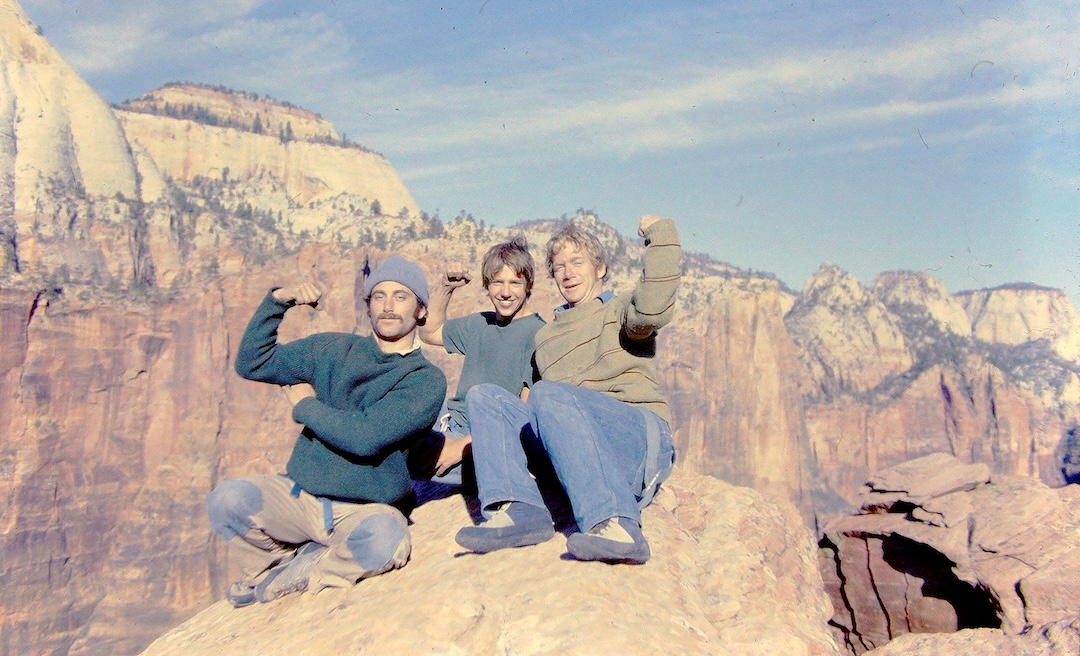
In the new century, Ron’s climbing focus shifted to revisiting his old routes “to see how they are holding up,” as he explained it. He and I, with Jim Donini, climbed the Witch in 2004, the 20th anniversary of the first ascent. We had a blast. I began to understand that beneath the persona—Ron had a booming voice and a love of guns, and told outrageous stories—was a kind-hearted, caring person.
That same year, the documentary Clean Walls appeared, featuring Ron and Jeff Lowe climbing Touchstone Wall with 15-year-old Megan Emmons—a fine testament to clean climbing and Ron’s abilities as mentor and guide. The soundtrack used music by Ron’s father.
Ron was generous to a succession of friends waging debilitating battles with terminal illnesses, particularly Copeland, who died in 2009, Layton Kor, gone in 2013, and Jeff Lowe, 2018. Ron helped Kyle with his finances and bought him a motorized wheelchair. Hoping to create a revenue stream to support the Kor family, Ron embarked on a documentary about Layton’s life (though it never was completed). Connie Self, Jeff’s partner during his decline, said that Ron raised the funds to buy Jeff a van with a mobility lift, and during a visit he might quietly leave an envelope containing hundreds of dollars.
In 2017, the 30th anniversary of the first ascent of Abbey Tower, Ron enlisted Danny McGee, Eve Tallman, and me for a repeat. We approached the tower in the same motor-canoe Ron had used 30 years earlier. It was, as promised, a wonderful climb. For me, though, this time the climbing-with-Ron experience felt less fun. He seemed louder, more demanding, less tolerant of, well, anything.
Perhaps I'd not noticed before? Or previously he had been more patient with me? Who knows? But an accounting of Ron’s life has to mention his difficult side. He did not go out of his way to make friends. He disliked rangers and had particular disdain for “ankle biters,” climbers who crawl up the first pitch or two of a big-wall route—especially an Olevsky creation—then retreat. But he could be great company: well-read, with a remarkable memory, and a deep knowledge of history, especially World War II battles where underdogs defeated much larger armies. He told stories well: Mark Bowling, who knew Ron since 1985, says, “He made me laugh, more than anyone.”
The stories told about Ron and his antics are wilder still, involving illicit substances, guns, and explosives. What was in that extra cooler we carried to Abbey Tower but never opened, Ron? The one you said to handle gently?
Mike Strassman, a friend from the 1980s, wrote that climbing with Olevsky “is an experience in itself. He demands discipline and militaristic precision.” He also called Ron “a lover of the wilderness and the land around him.”
Steve Biggs, another longtime friend, reflecting on a day climbing with a heavily armed Ron in a location where Ron had previously had a run-in with rangers, resulting in court appearances, described him as “in perfect form—unpredictable, slightly terrifying, and utterly committed to his own logic.”
Ron left a proud legacy of hundreds of classic climbs. He found the path he wanted to follow, and walked it on his own terms.
—Steve Bartlett
Media Gallery