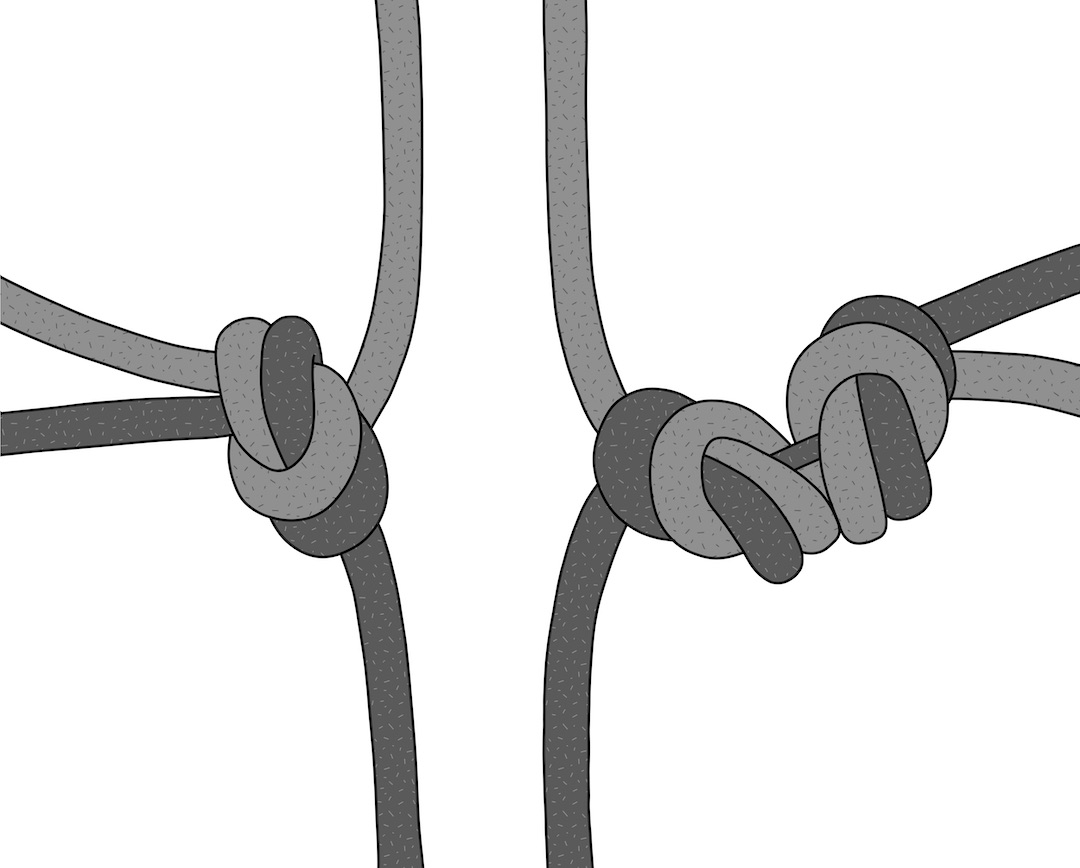

Know the Ropes: The Tangled Science of Climbing Knots and How They Can Fail
Although knots are an integral part of safety systems, their climbing applications have long been a matter mainly of tradition and habit, with rigorous empirical assessments trailing behind. Climbers throughout have been clever innovators, adapting and modifying safety knots for various purposes. Knots still in common climbing use were first tied in three-strand hawser-laid hemp rope rather than today’s synthetic kernmantle.
Although considerable information and opinions have been published concerning knots, much is still poorly understood about knot science. Knot properties have been examined in hundreds of peer-reviewed papers across multiple academic disciplines. The following provides a cursory overview of some of that research and a summary of fundamental concepts and evaluation methods, with a few examples of how knots commonly used by climbers can fail. Note that this is not meant to be a practical or how-to article; the tying and application of real-world knots are covered extensively in other sources.
EVALUATING KNOTS
Critical and Desirable Knot Characteristics
Climbers tend to tout knot characteristics like the convenience of tying and inspection, and the ease of release or untying after loading. Knots, in general, can fail in two ways—they can either come untied or rupture—and numerous knots and hitches have a non-zero chance of failure. Therefore, strength and especially security are critical characteristics. They are governed by knot complexity (tying difficulty and structural intricacies), symmetry (Reef or Square Knots are symmetrical while Bowlines are not), sinuosity or ropelength (spelled as one word in the scientific literature; the amount of rope within a knot), chirality (having a mirror image), and other factors, all of which can affect tier behavior when tying and using various knots. To learn more about these concepts and others to follow, the interested reader is encouraged to dig deeper, starting with the references cited at the end.*
Absolute Breaking Strength and Knot Efficiency
Knots typically reduce the breaking strength of rope and cord, with tensile breaking strength—the maximum pulling force a material can withstand before it fails—the default research focus. Slow-pull test data are most frequently quoted, often without consistency or agreement. These data can be presented in two ways: absolute breaking strength in units of force; or knot efficiency expressed as a percentage of the unknotted material’s absolute breaking strength. The first depends on how strong the material is—the strength of any knotted material must be several times stronger than the force it must hold. This is known as the safety factor. Knot efficiency, on the other hand, facilitates a comparison of knots across a range of tying materials and structural variations.
It can be difficult to generalize conclusions with strength testing when the characteristics of rope and accessory cord, not to mention testing methods, vary in myriad significant and subtle ways. Key factors include the synthetic material itself as well as the rope’s structure, knotability (EN 892, UIAA 101)*, sheath deformation, surface asperities (texture), and static coefficient of friction. A rope’s condition and age also play a role in its knotability and strength. Adriana Stöhr, a textile engineer at Mammut, once stated on a Hard Is Easy YouTube episode that “Ropes are moody.” The structural nuances of knots and whatever pre-test load is applied to snug them up beforehand also influence experimental results. According to Šimon and Ftorek (2022)*, knot efficiency is a random variable that’s directly immeasurable. When calculating knot efficiency, there is variability when measuring the absolute breaking strength of a particular rope, cord, or tape, and when determining the breaking strength of that knotted material. The data should thus be evaluated using a probability density function, in which strength is expressed as a range whose lower limit is the most reliable value.
Security Modeling and Testing
Raw knot strength is certainly important, but it depends primarily on the strength of the tying material itself. (It’s reassuring to see that modern synthetics are amply sufficient.) The ANAC accident reports summarized in Table 1 were the result of knot-related security issues. As this table compiling 10 years’ worth of ANAC data confirms, knot failure is typically caused by knots coming untied or slipping, and there have been similar reports online and in climbing magazines. Security is more important than strength: If a knot accidentally unties, its potential breaking strength is irrelevant.
There are several major reasons why knots fall apart: Firstly, they may be incomplete—perhaps a knot was not dressed or tightened properly—or tied incorrectly, and then no one checks them. Tying errors can happen when a climber is tired, rushed, in an awkward position, or when bad weather and darkness set in; in these scenarios, climbers may get distracted or forget what to do, or judgment can become clouded by overconfidence or insufficient information. Secondly, an incorrect or inferior knot may be employed for a critical purpose—climbers sometimes experiment with new knots and knot variations that have not been properly tested. And thirdly, unforeseen circumstances may cause a knot to be loaded in an unusual manner that results in distortion and failure.
Therefore, all knots need to be evaluated in several ways to ensure security.
There are numerous theoretical approaches to evaluating a knot’s reliability-too many to outline here. Most require idealized topological or geometric calculations to assess the structural or frictional mechanics at contact points and areas of compression and curvature. Many models utilize the Euler-Eytelwein capstan formula—which encompasses the interplay between forces, contact angles, and the accumulation of static friction—but tend to be inaccessible to the practical knot tier who lacks a sufficient math or physics background. Patil et al. (2020)* developed a simple mathematical approach to approximate how well a bend will hold, in relative terms, taking into account its crossing number, topological twist fluctuation energy, and topological circulation energy, as well as the force vectors. These are knot characteristics that can be quantified based on common physical features. Although relatively simple compared to other methods, the calculations are beyond the scope of this brief article. These characteristics provide numerical values for a knot’s security based on its structure, how forces are propagated within that knot, and how the rope interacts with itself at its contact points. Those curious can explore the reference list below.
Beyond mathematical modeling, there are real-world considerations when assessing security. Knots are used in different ways, and they are exposed to different loading situations, including duration loading (hanging belay stances and bivvies), sudden impacts (leader falls), and cyclic loading (when the force repeatedly spikes and drops, which can happen during rappelling, ascending, and hauling). For research to be meaningful and useful, knots should be tested according to how they will be utilized in practice. Further, testing should also anticipate unusual or accidental loading situations that could compromise security. A thorough evaluation should also account for rope qualities, such as surface asperities, that can mask a knot’s innate structural behavior.
Teaching, Learning, Memory, Bias, and Practice
There are challenges to teaching, learning, and mastering safety knots. Knot names and terminology vary widely, which creates communication problems. (Herein, alternative names will appear in parentheses.) Instructors, meanwhile, should be aware of how their spatial perspective may differ from that of their students:
Tier handedness (their dominant or writing hand) and knot chirality (which mirror-image version of the knot is being tied) can complicate things if instructor-student concordance is lacking. Further, instructors need to accommodate different learning styles, while also encouraging ongoing practice and repetition in real-world applications to promote mastery.
A knot’s complexity can predict tying-error potential. How many steps are required to tie the knot? Is its structure simple to visualize, or does it have unusual and potentially confusing structural quirks? Conversely, complacency can arise from knot simplicity, user familiarity, and automatic tying action. As history has shown, even elite climbers can err. So, deliberate and focused self-checking and buddy checking must be part of the learning curve and regular tying practices. Everyone is fallible (see ANAC 2025).
It’s important to distinguish between opinion and fact. If a knot seems to work and inherent problems remain undetected, confirmation bias (interpreting new evidence as confirmation of your existing beliefs) and continuation bias (persisting with the original plan even though emerging evidence reveals it to no longer be safe) can kick in. Authority bias—attributing greater accuracy than might be merited to an authority figure, such as a guide or climbing instructor—might be misleading as well. The availability heuristic relies on readily accessible information, which is often selected based on entrenched beliefs. Risk homeostasis—adjusting our behavior to match our target level of risk—is another consideration. We all fall prey to these biases, and it is beneficial to be aware of them when evaluating knotting practices. Safety is never transactional—it cannot be negotiated, despite our inherent biases.
EXAMPLES OF FAILURE
Munter Hitch
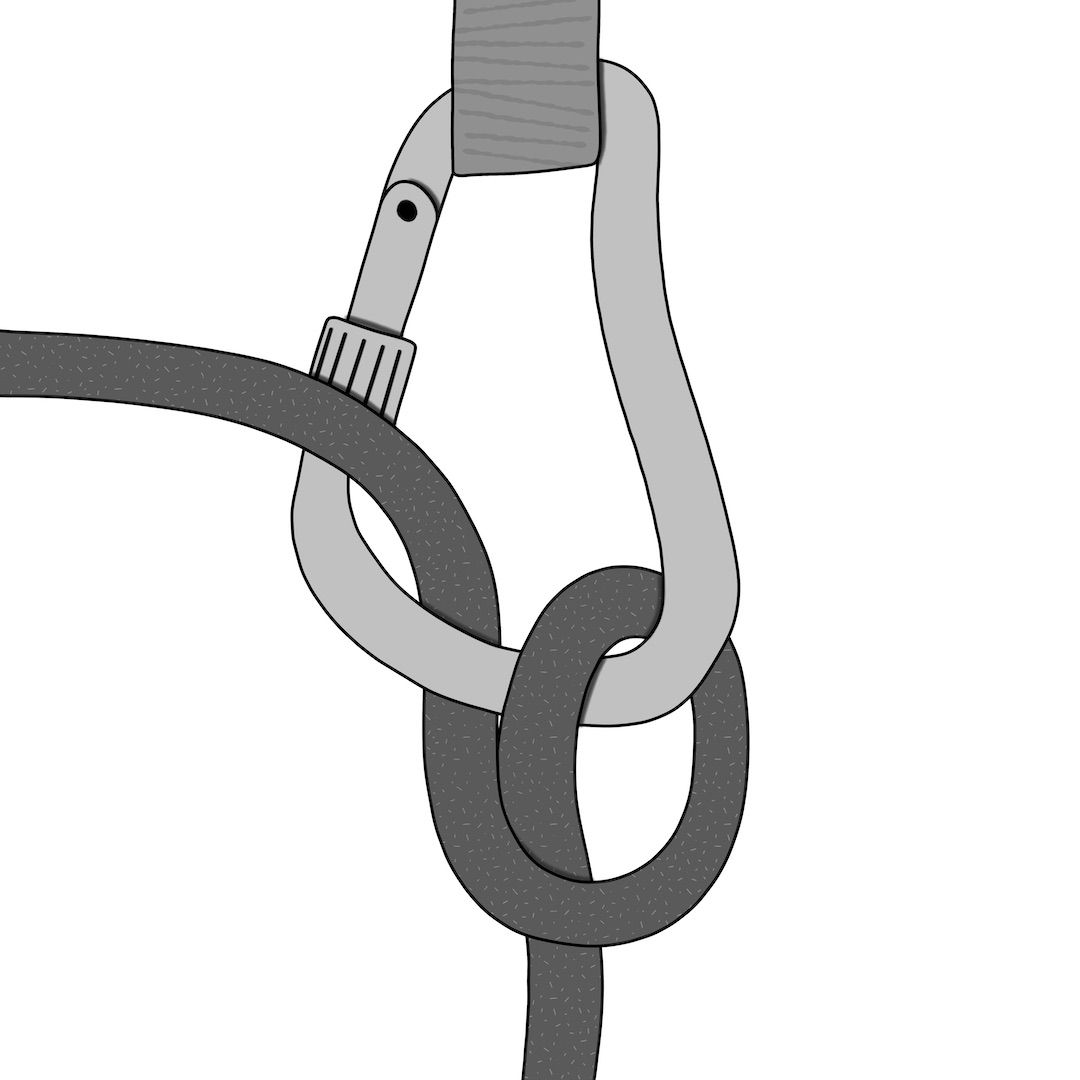
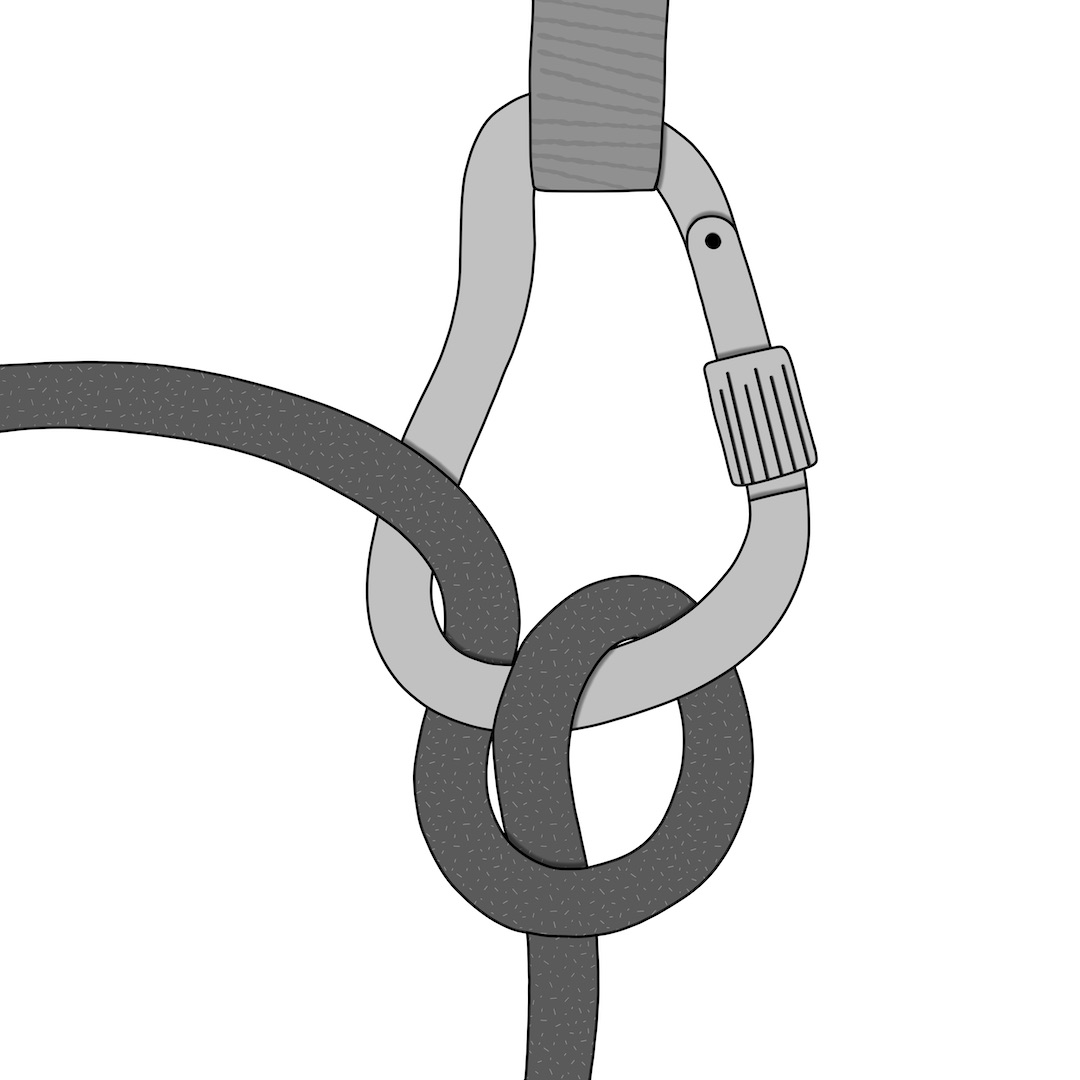
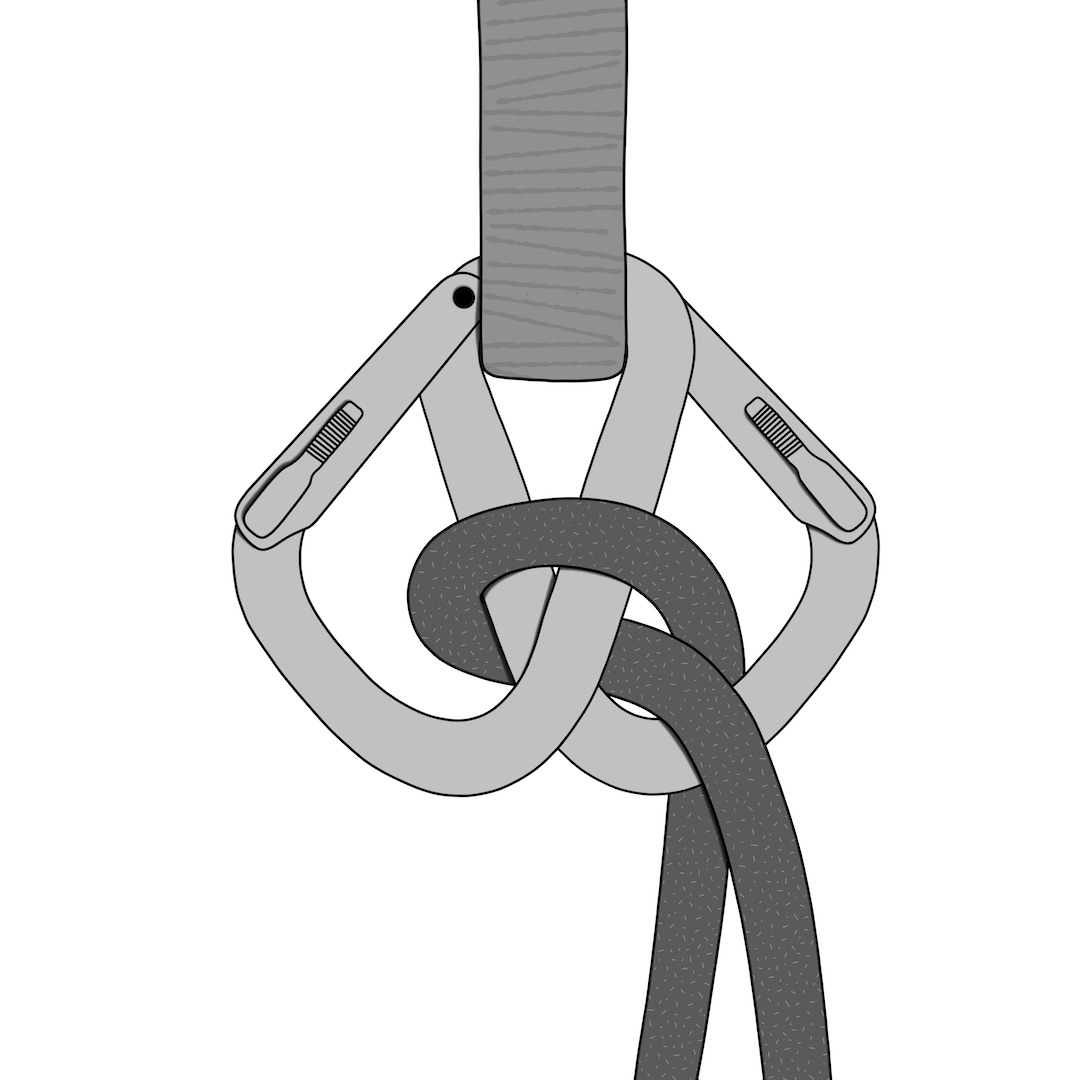
The Munter Hitch (Crossing Hitch, Flip-Flop Knot, Half Clove Hitch, Italian Hitch, UIAA Hitch) is one of numerous carabiner belay hitches, and is a useful knot in an emergency, such as a dropped belay/rappel device. The Munter Hitch can be rigged with the braking side of the rope either adjacent to the carabiner gate (Figure 1a) or across from it (Figure 1b), which can affect its security. To add another complication, the Munter Hitch has a mirror image and can be oriented up or down depending on the belayer’s position.
There have been reports of Munter Hitches accidentally unclipping from both manual and auto-locking belay carabiners. With auto-lockers, these events occurred when the rope’s brake side was oriented near the gate-keeper and the rope came into contact with the sleeve—the running line rotated the sleeve and opened the gate. Consequently, the braking side of the rope unclipped. Instead, orienting the braking side of the belay line adjacent to the carabiner’s spine—across from the gate—ensures a higher level of security, though constant monitoring of the rope travel and ensuring gate closure remains necessary. Even though the chances of accidental unclipping are greatly reduced, the likelihood is not entirely eliminated (see ANAC 2025).
The Alpine Clutch and the Gleiclaufsperre
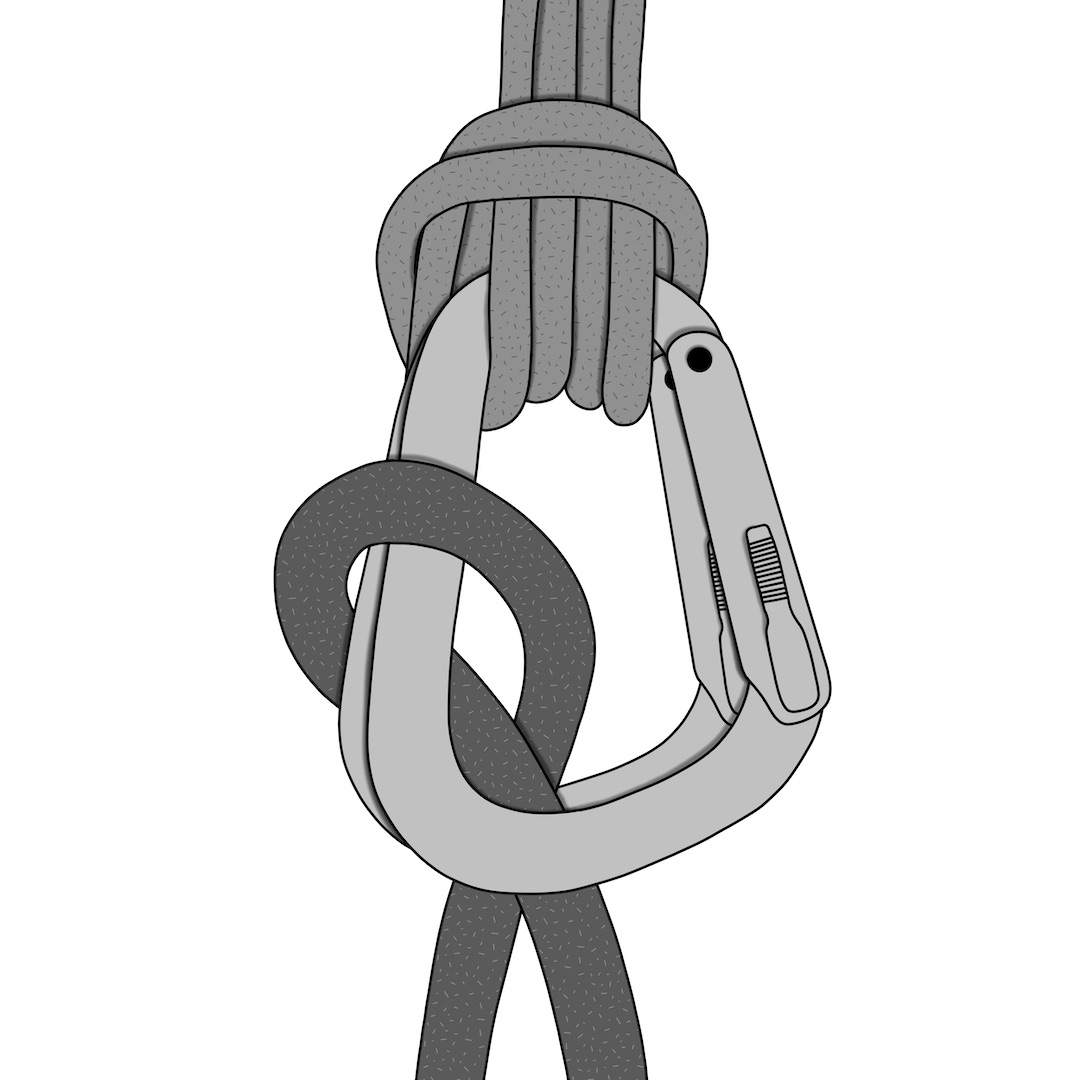
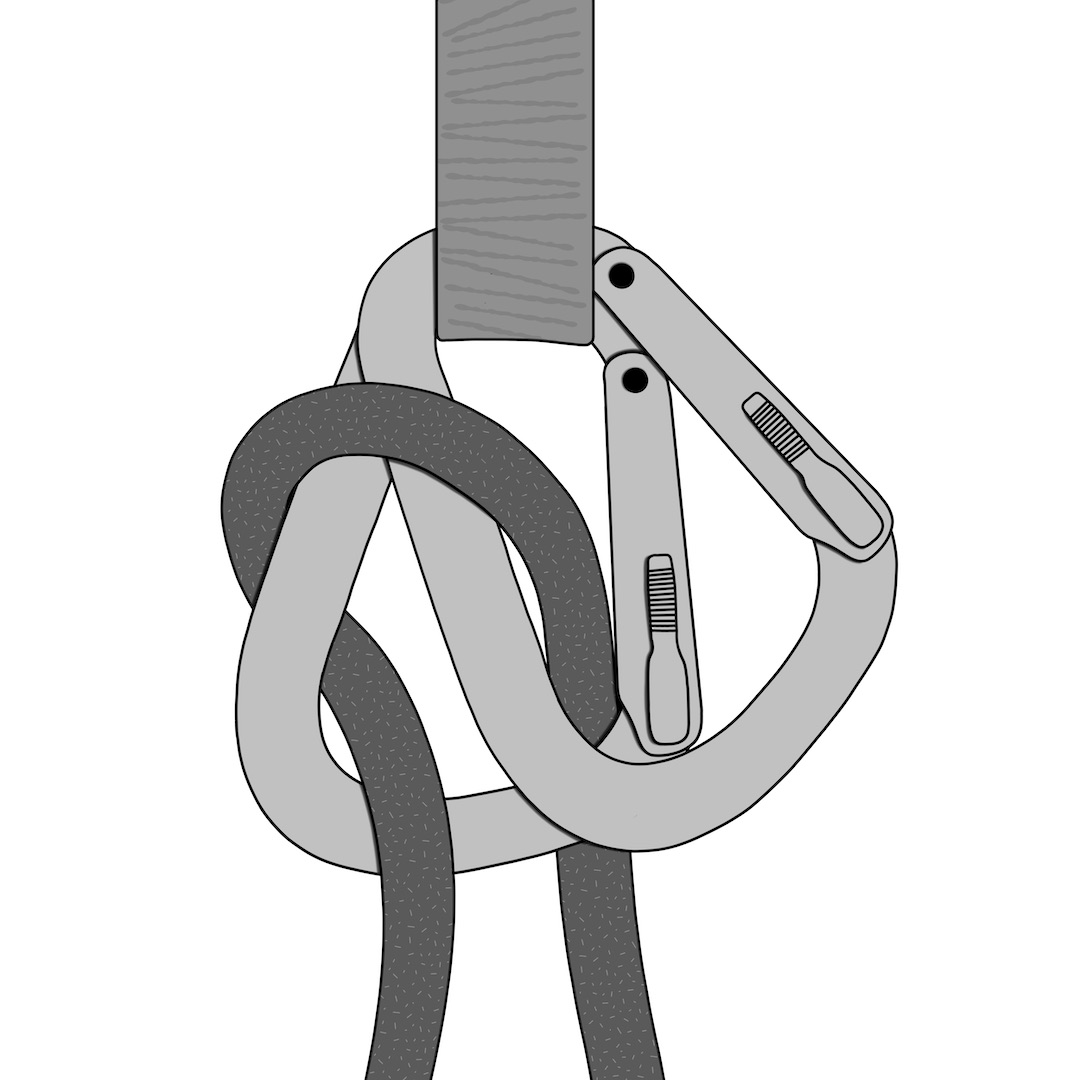
You can use an array of locking-carabiner hitches in rescue systems for progress capture, including several Locking Munter Hitches, the Prohaska Rope Stopper, variations of the Schutltlerhub-Sperre, the C and F Belay Hitch, and the similar Lorenz and Stuflesser hitches. The Alpine Clutch (Garda Knot or Gardaknotten; Figure 2a) is also quite popular for this purpose; however, there are ways in which it can release unexpectedly, as shown in Figure 2b. If the rope is too thin and the carabiners are too large, the rope may shift inside the carabiners and cease to pinch itself; also, if you fail to link the upper apexes together with a Girth Hitch or Lark’s Head to create a hinge point, the carabiners can shift when loaded and allow the rope to lose its grip. A similar but more secure option is the Gleiclaufsperre (Figure 2c).
Rope Hitches
The key property of a rope hitch is its ability to grip; its security depends on rope and cord diameters, knotability, surface asperities, age and wear, knot dressing, context, sheath deformation, the presence of water, ice, or mud, and other conditions. A secondary feature of a hitch is its ease of release when loaded. Is holding ability or releaseability more important to climber safety? Some hitches are usually adequate as a third hand for rappelling but can be less reliable in other applications such as ascending and partner rescue when gripping ability becomes a priority.
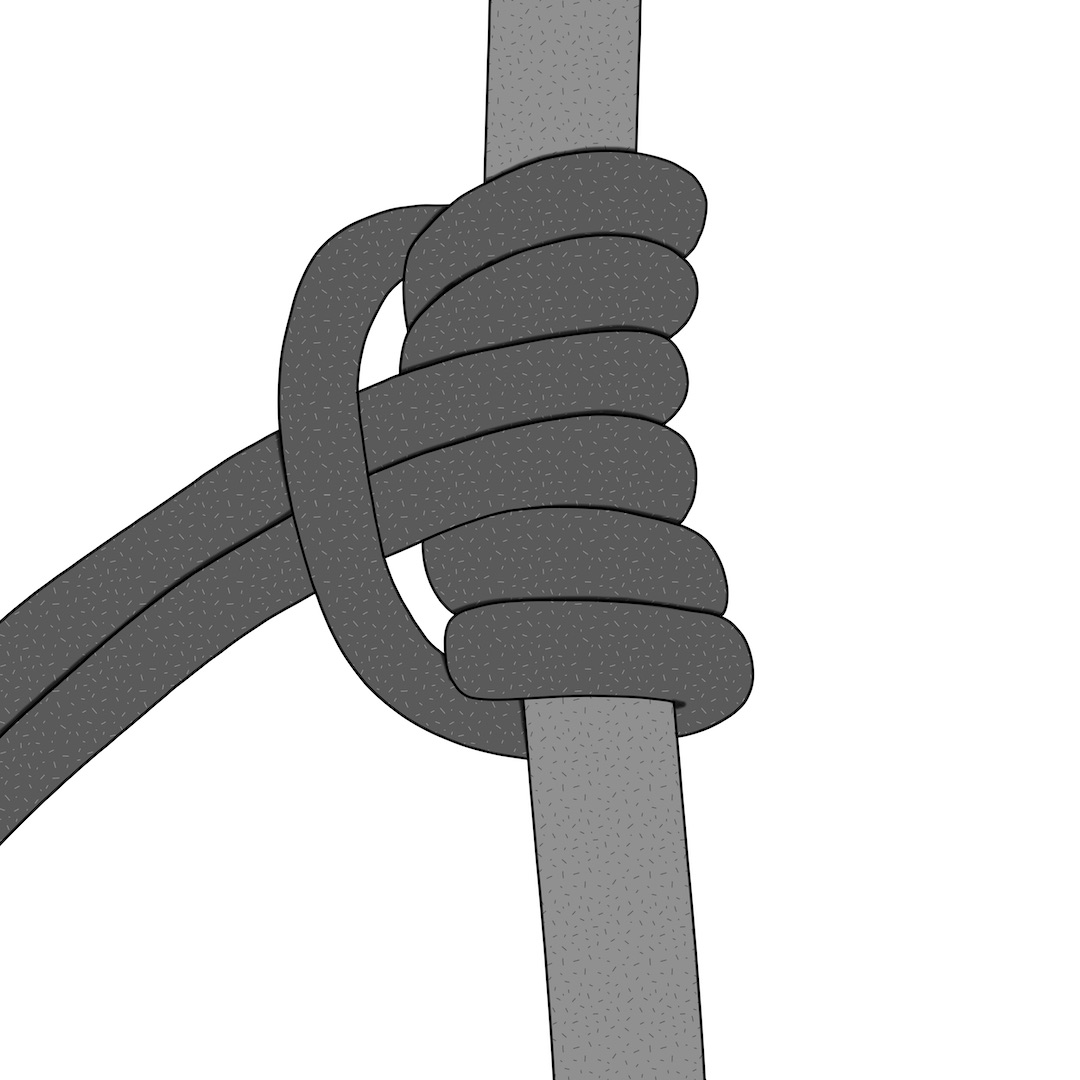
Rope hitches grip by compressing and camming the main line in one or multiple locations. The Prusik Knot or Prusik Hitch (Figure 3a) is one of the most reliable rope hitches. Yet, climbers often complain about how difficult it is to release under load (There are tricks to releasing it easily.)
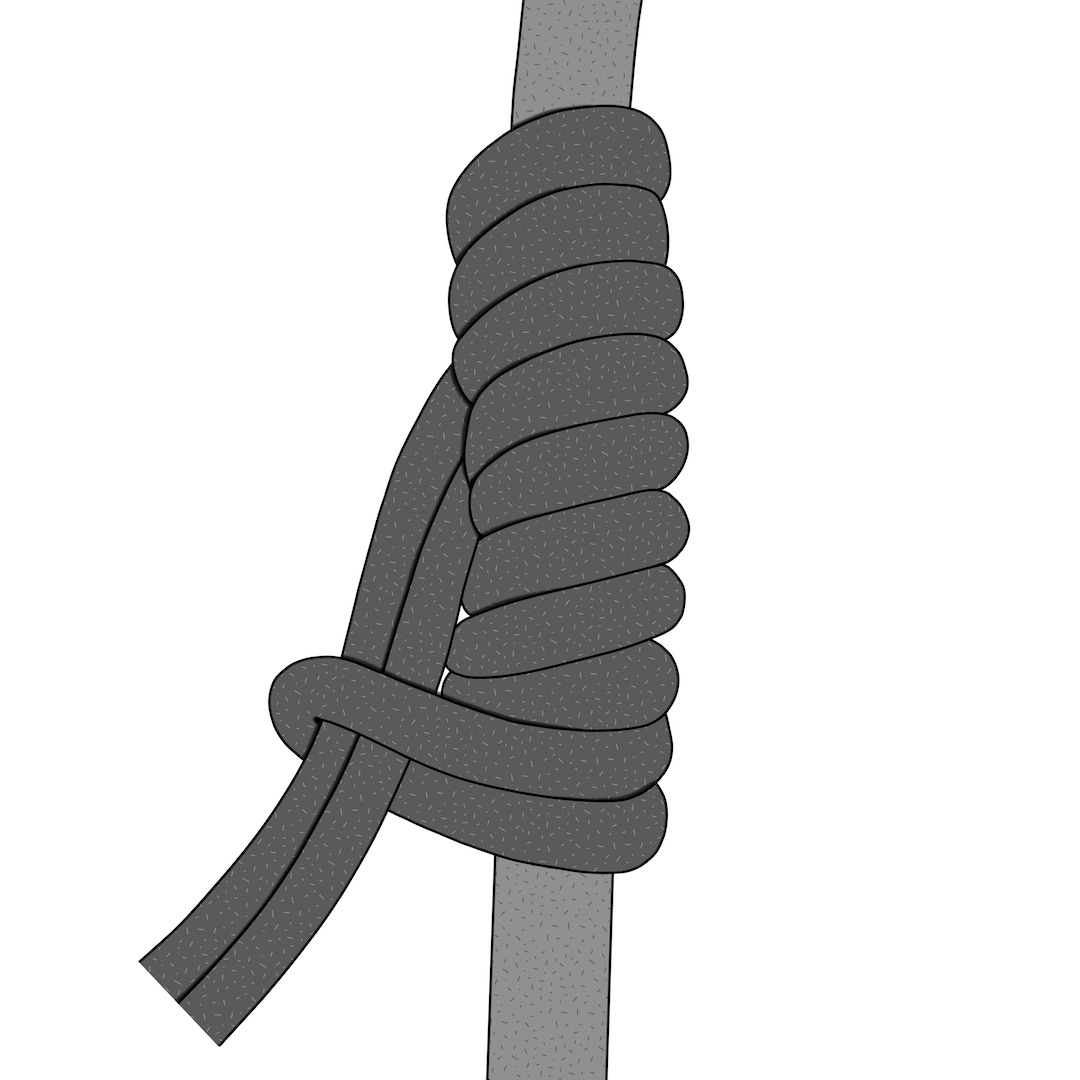
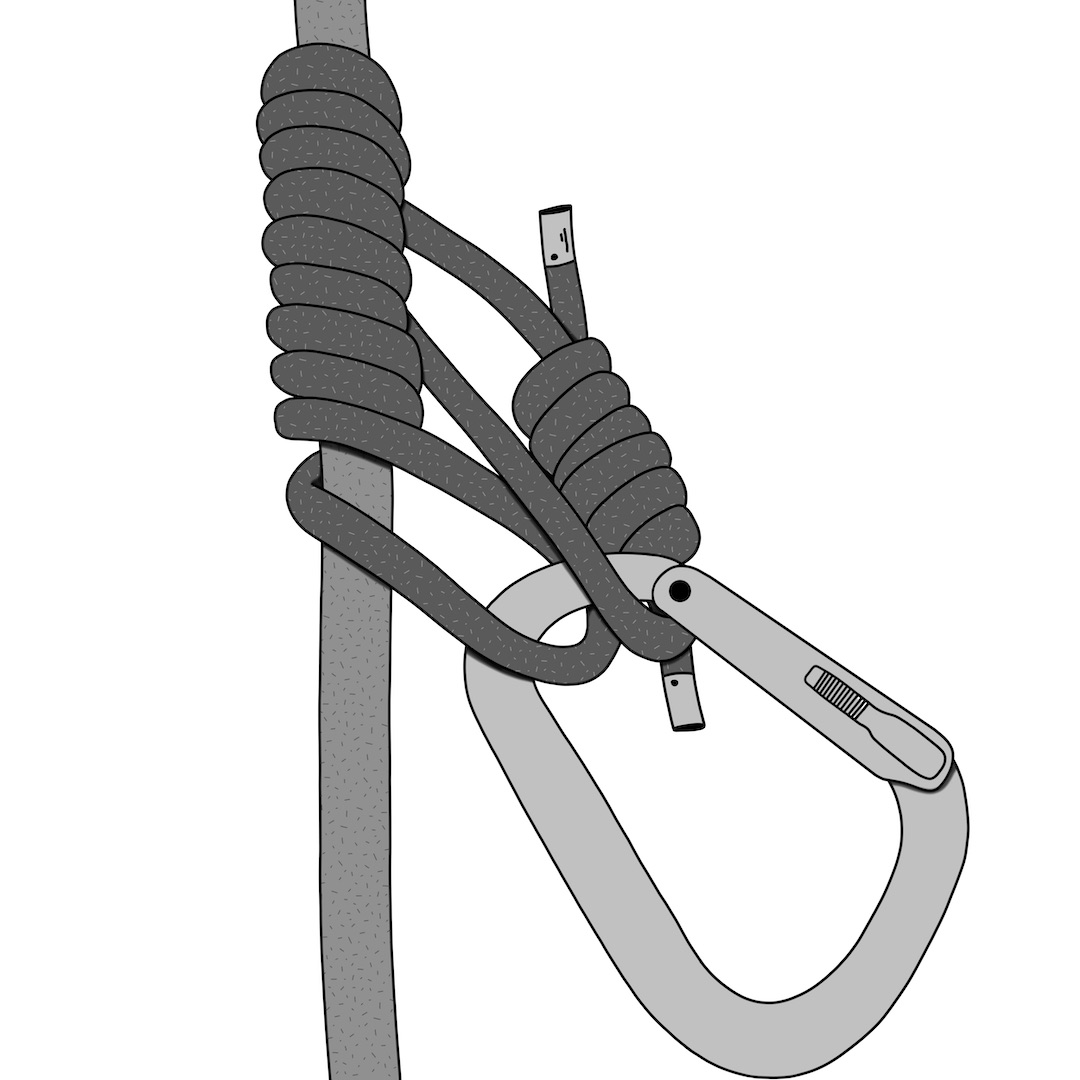
Hence, many climbers prefer hitches that release more easily, such as the Extended French Prusik, the Klemheist (Figure 3b), the Autoblock (Figure 3c), and others. However, according to data presented at the 2016 International Technical Rescue Symposium and independent mathematical analyses, these knots have a much lower failure load because they slip so easily. A principal determinant of grip is how snug the hitch is: If the angle between the independent arms of a hitch is small, it will slip easily, as with the Autoblock; if the arms are wider apart or linked in a secure manner, as with the Prusik and Klemheist, the hitch is less likely to slide.
Bowline Versus Figure Eight
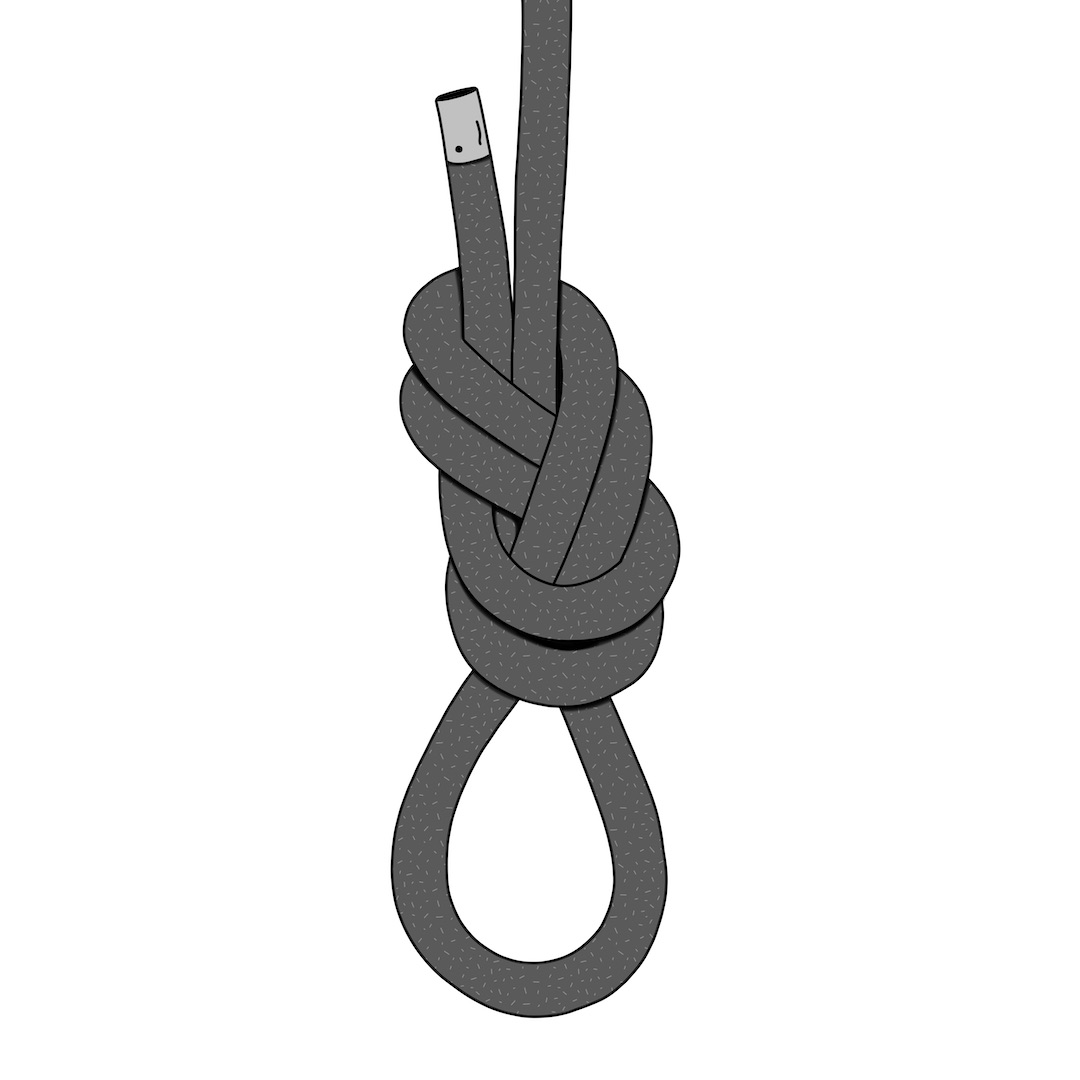
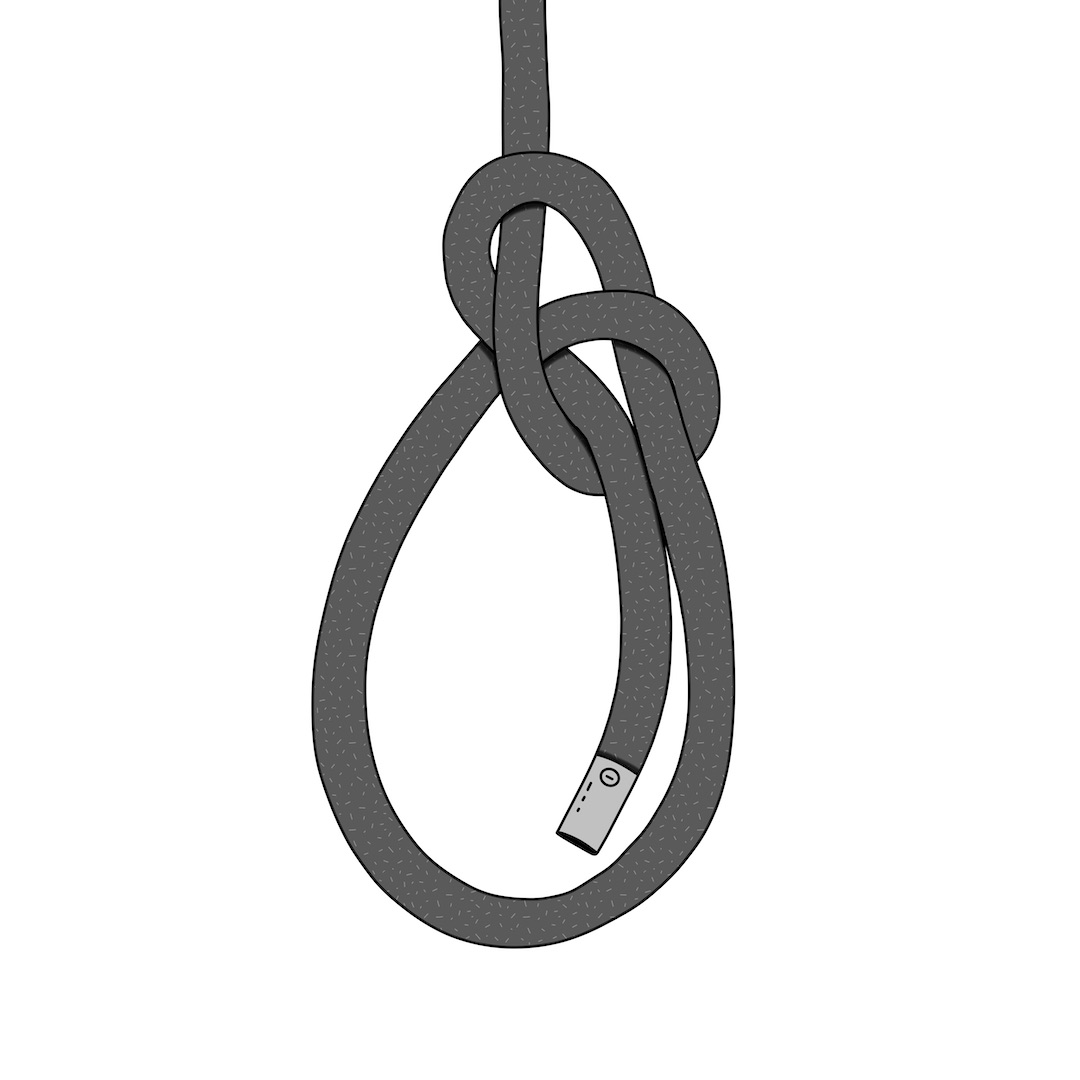
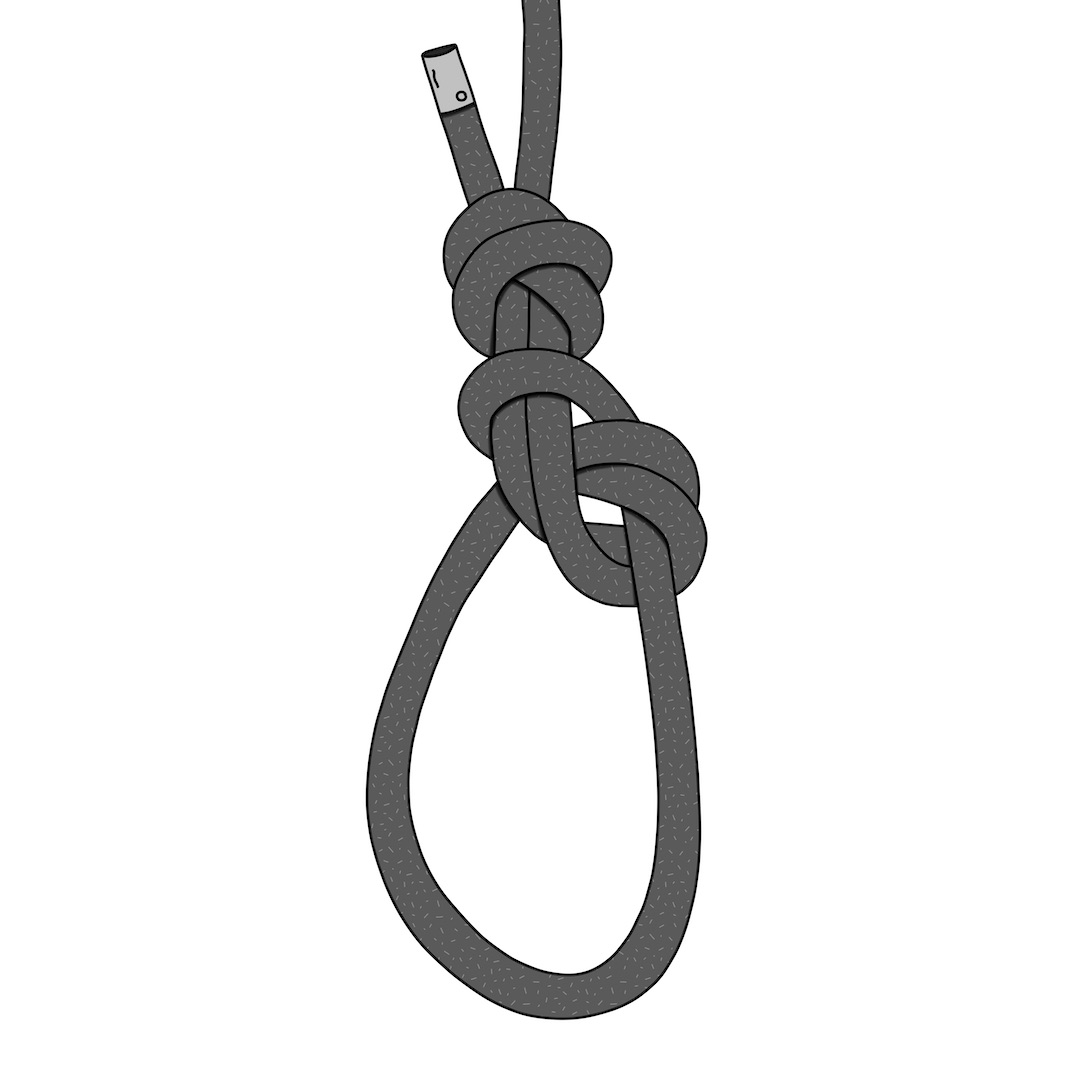
Climbers often bemoan the challenge of untying a Figure Eight Follow-Through (Figure 4a) after it has cinched tight following a fall. For that reason, they may favor versions of the more easily untieable Bowline (Figure 4b). Bowline knots are convenient to untie. This indicates they aren’t as secure as the Figure Eight, a fact borne out by mathematical modeling and accident reports.
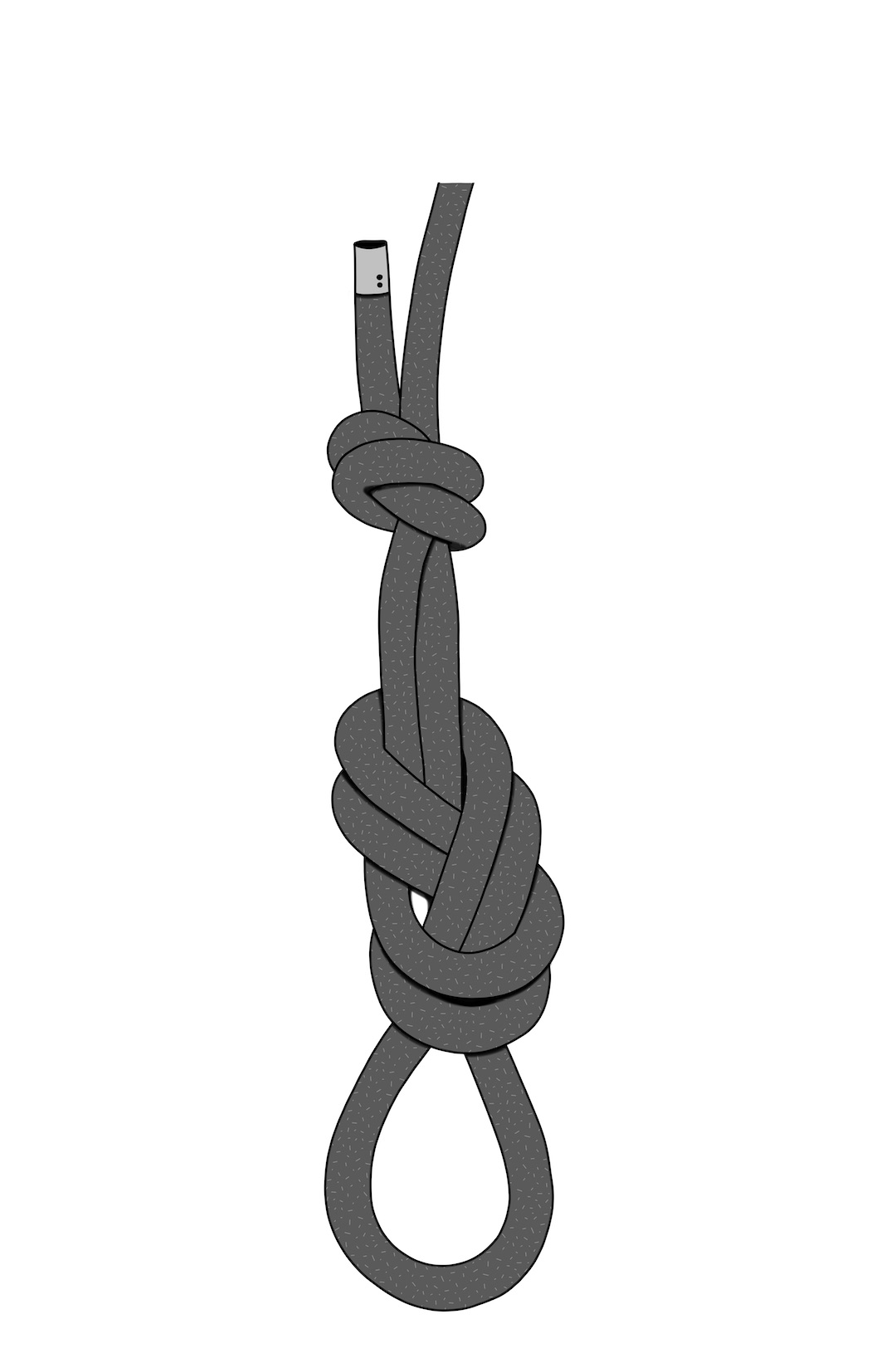
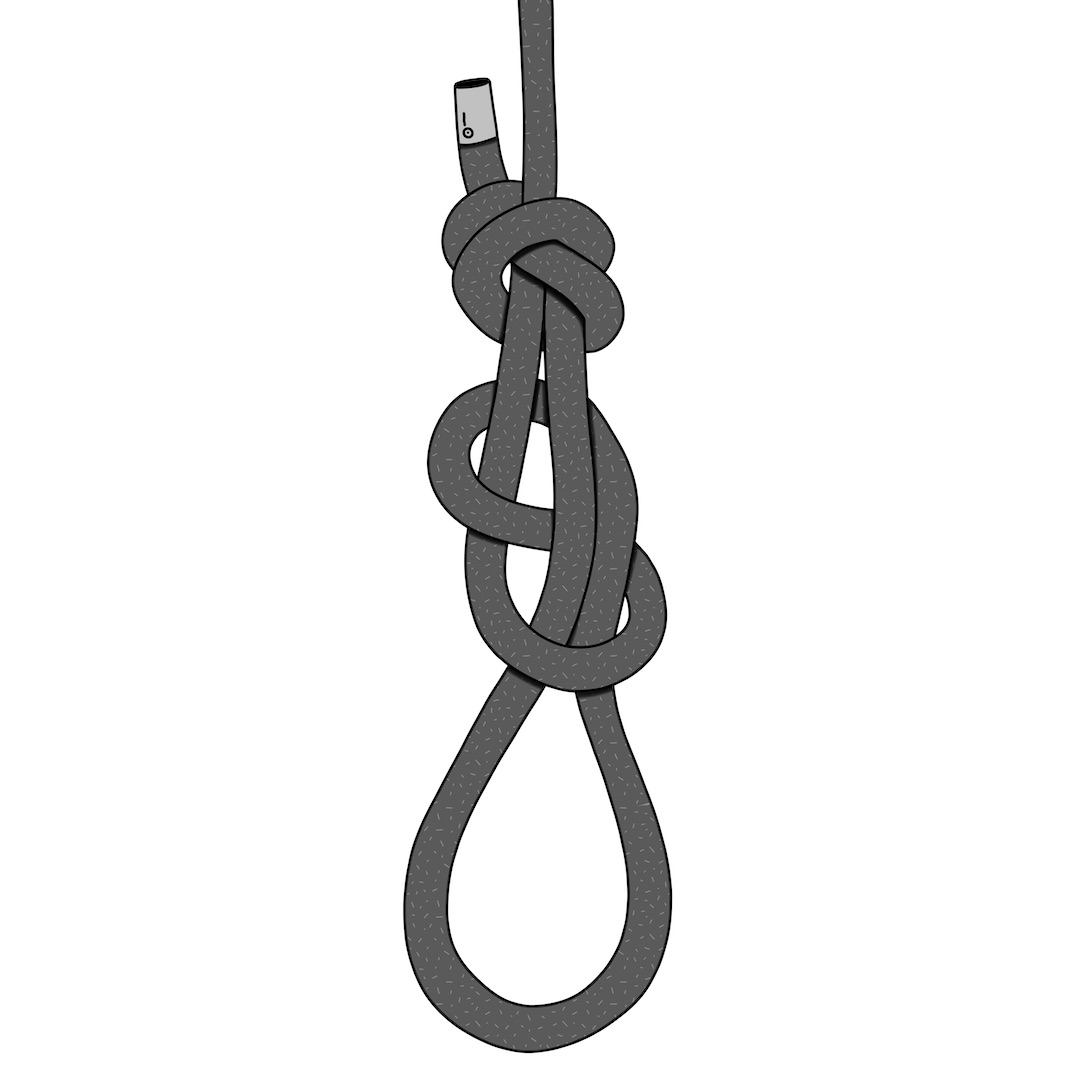
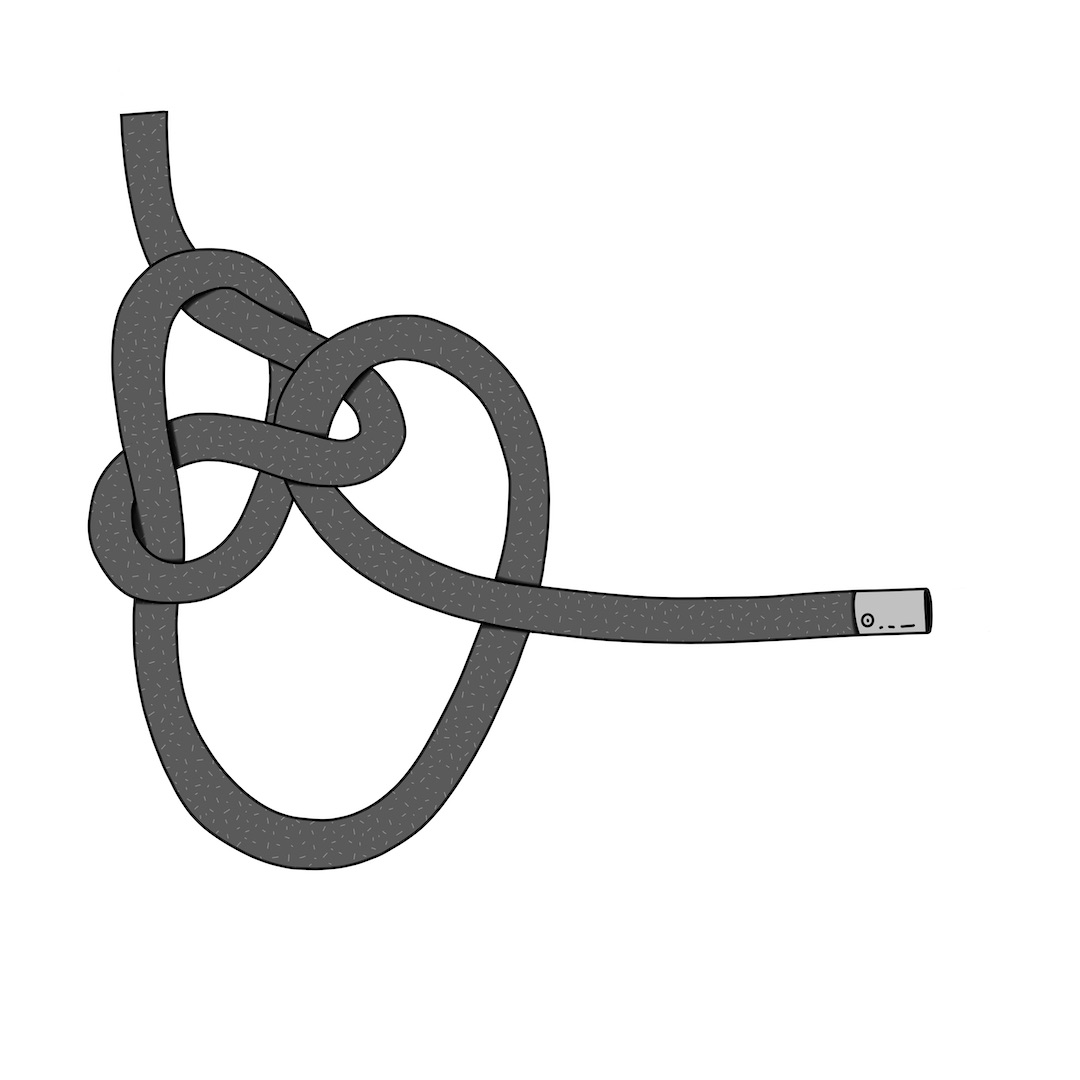
Whereas the Figure Eight Follow-Though with a Back-Up (Figure 5a) is relatively tolerant of minor errors and messiness such as failing to complete the knot and tying what is essentially a slip knot (Figure 5b; note that, in this case, only a proper backup knot will prevent failure), the Bowline must always be tied with precision. Adherents of the Bowline have thus devised multiple ways of enhancing security by adding a variety of extra bights and tucks (Figure 5c)—there are dozens of complex Bowline variants, each with its pros and cons but all sharing an increased chance of tying error: Any deviation in a crossing or tuck produces a different and possibly unreliable knot.
The Figure Eight is a pre-bight knot, or “tieable in a bight”: Tying occurs before and after the end is passed through the harness tie-in points. Again, the downside is how difficult it may be to untie. Regardless, this is an indication of its relative security, and there are strategies for dealing with a recalcitrant Figure Eight, such as rolling the rock on a knot to soften it and/or flossing the four entry/exit strands back and forth. The Bowline, meanwhile, is a post-bight knot or “post-eye tieable” in that the end feeds through the harness before tying commences. Topologically, the Bowline can be distorted into a less secure configuration and potentially untie (Figure 5d).
The configuration shown in 5b can and has held weight when climbers failed to complete their Figure Eight. The backup did its job. However, the configuration as shown should not be used in practice–it’s a mistake. Without the backup Double Overhand, the Figure Eight Slip Knot would fail. A similar situation can be seen in ANAC 2020, pp.92–93—an incorrectly tied Overhand Loop without a backup. The resulting Overhand Slip Loop failed.
Backup Knots When Tying In
As the IFSC (now World Climbing; 2020)* states in their job description for an event-organization team: “Check if the competitor is ready for climbing, climbing harness correctly closed, figure of eight knot with an extra knot in the rope, climbing shoes on.” The type of “extra knot” is not specified. If you are a regular viewer of lead-climbing competitions, you may have noticed the differences in climbers’ backup knots. Some use Single Overhand Keeper Knots, some use Double Overhand Keeper Knots, and some use tucks or Half Hitches. Backup knots have appeared loose and some have even come untied during televised climbs. What is the purpose of a secondary knot? There are at least four basic functions: technical redundancy, behavioral redundancy, slack management, and safety modeling.
Proper backup knots have saved climbers when they failed to complete the Figure Eight, thereby producing a slip knot as seen in Figure 5b. The Double Overhand Keeper Knot (Barrel Knot, Half Fisherman’s Knot, Fisherman’s Hitch) has also prevented the end from slipping free and is much more reliable in this function than the single Overhand Knot or Half Hitch.
Accidental Slip Loops
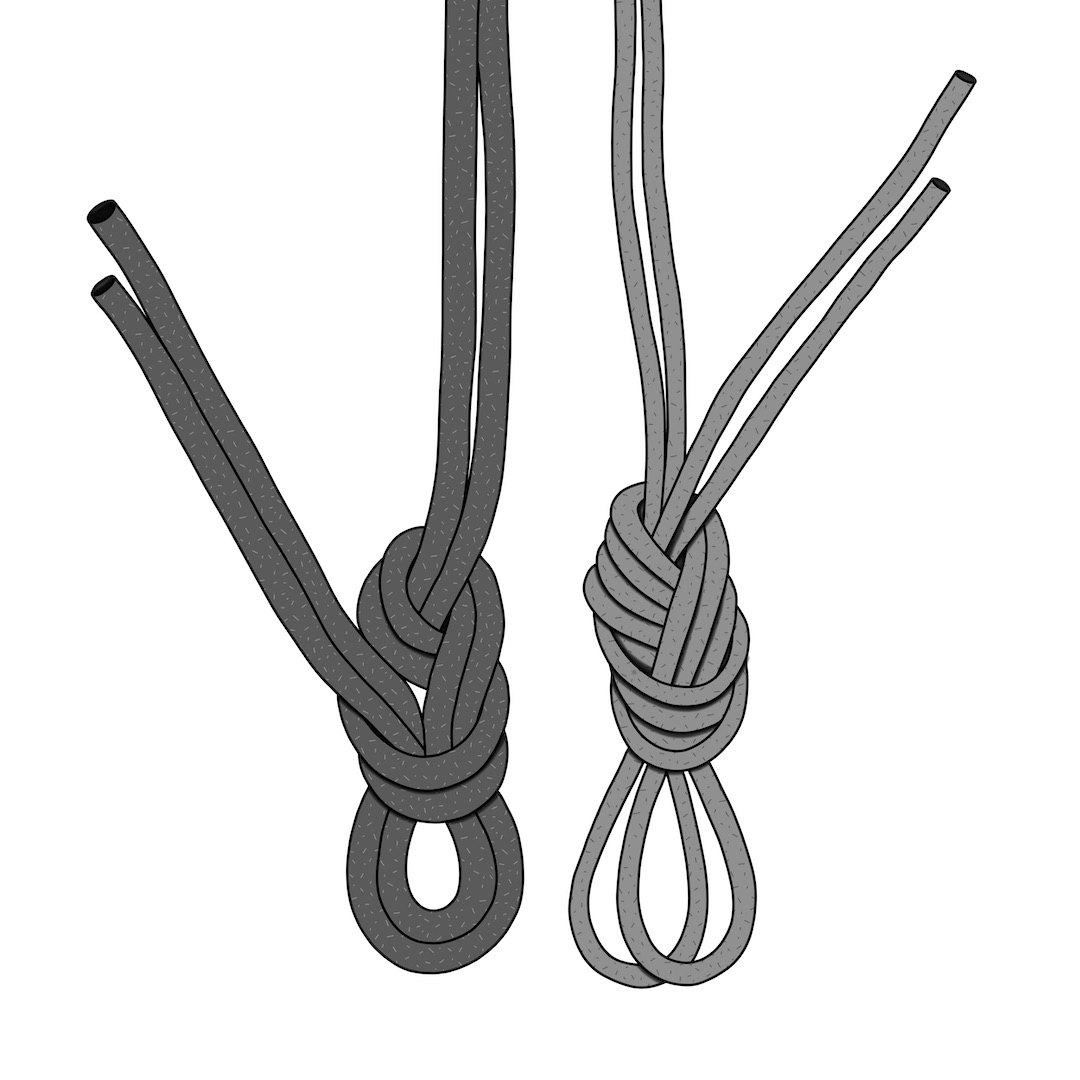
Accidents have occurred when climbers mistakenly fashioned Overhand and Figure Eight slip loops while tying slings and accessory cords for anchoring, some of which held when briefly tested (the leftmost knots in Figures 6a and 6b) but then failed under load, causing preventable tragedies. To remedy this, climbers might instead tie “big honking” Overhands or “whopping big” Figure Eights to create redundant loops (the rightmost knots in Figures 6a and 6b). However, with a bunch of strands and loops in hand, and/or while in an awkward position such as at a hanging belay, it is often difficult to track what has been included and excluded in the finished knot—the knot proper can contain multiple bights that are difficult to discern and count. A few preventative strategies include using a cordelette, quadelette, separate sewn slings, or pre-knotted cords, and‚ when tying big anchor knots with numerous bights, strands, and arms, taking the time to systematically check that they are correct.
Side Bends and Their Controversies
With their low profiles, side bends can reduce rope drag during rope retrieval and lower the chances of the knot getting snagged. However, all rope bends and long tails have been known to snag under certain circumstances. The consequences of the knot untying are immediate, and there is no chance for correction: Therefore, the knot’s primary characteristic must be security. (The consequences of a jammed rope are not as critical—you can always take corrective action via self-rescue techniques.)
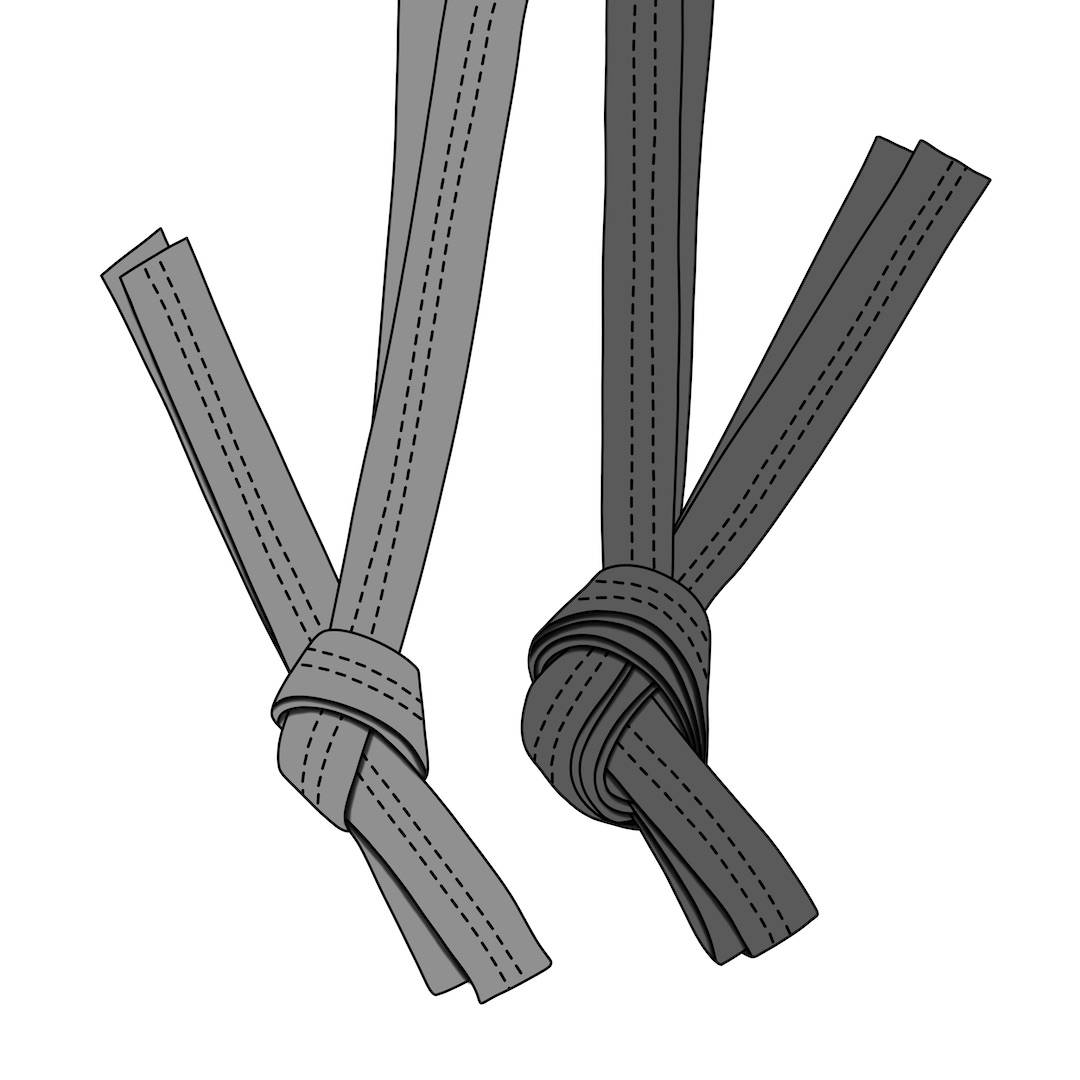
One of the least reliable side bends is the Figure Eight Side Bend (or Figure Eight Flat Bend). Meanwhile, the related Overhand Side Bend (or Thumb Bend, Overhand Bend, EDK, and other names) has been a topic of controversy and discussion for decades (Figure 7)—though, given ideal conditions, it works. On rare occasions, this knot has failed, with tragic results. Ironically, the rarity of failure is dangerous because it lulls climbers into a false sense of security.
If the Overhand Side Bend looks familiar, it’s because it has the same fundamental structure as the Water Knot, but with its ends adjacent rather than opposite (Figure 7). Mathematical modeling and M.A.R.K. (Minimum Allowable Resistance and Knotability) testing indicate the Overhand Side Bend is considerably less secure than the Water Knot; therefore, to increase security, it’s recommended that you add a second Overhand Knot, to create a Tandem Overhand Side Bend (Figure 7).
The tandem configuration is still simple and fast to tie, and relatively tolerant of sloppiness. If the first knot starts to reptate (migrate toward the ends), the second knot stops it. The addition of the second Overhand Knot does not alter the contact profile of the first knot. (Contact profile is that part of the knot that touches the rock and drags over it as the rope is being pulled.) There are other secure side bends, but they can be more complicated to remember and tie and are thus not covered here.
Top-Roping and Rappelling: Errors of Omission
Neglecting to knot rope ends when top-roping and rappelling has resulted in numerous accidents, as has the omission of a third hand when rappelling. As Table 1 indicates, accidents of this kind are among the most frequently reported. Security measures take a few extra moments of setup time, but they’re worth it. The downside of rope-end rappel knots is the possibility they can get snagged, especially when conditions are windy. Saddlebagging slack rope is one mitigating strategy. Meanwhile, a third hand, if used properly, is a belay substitute of sorts. Also, it facilitates a more rapid conversion into ascent mode or for performing a partner rescue. The theme throughout this article has been knot security. Lack of backup knots means reduced security.
FINAL THOUGHTS AND CAVEATS
When tying climbing knots, maximizing security and adding redundancy decrease the chances of injury or death. As the old adage states: “An ounce of prevention is worth a pound of cure.” Ultimately, climbers have to make their own choices about which knots to use and how to secure them. Keep in mind, however, that the consequences of our choices affect not only us but also friends, family, emergency personnel, and the larger climbing community. Some rescue and first-aid instructors use the phrase “Slow is smooth, smooth is fast” to convey the idea that haste can result in errors. Making a slower, more considered effort to do things right saves more than just time. When tying knots, always remember:
Research – Consult multiple reliable sources regarding knot applications
Security – Use the most secure knot for the job
Practice – Make sure you can tie the knot under different conditions and in
awkward positions
Redundancy – Add a backup
Check – Employ relentless vigilance and protect your partner
Improve – Regularly assess your safety practices and make appropriate changes
Author Bio: Robert Chisnall has been climbing and teaching safety and rescue for more than 50 years. For over 40 years, he has been a forensic consultant in criminal and civil cases involving knots and accidents. His research has been published in peer-reviewed journals, such as the Journal of Forensic Sciences, Forensic Science International, and the International Journal of Mountaineering and Climbing. He lives in Ontario, Canada, and has been the ANAC Canada correspondent since 2013.
*Citations
Bayman, B.F. (1977). Theory of hitches. American Journal of Physics 45, 185-90. https://doi.org/10.1119/1.10652.
Chisnall, R., (2006). The security of Bowlines and Figure Eight Loops as harness tie-ins: the principles of pre-knotting, post-knotting and concatenation. Knotting Matters, Part 1. pp. 14-20; Part 2. 91, 18-21.
Ibid. (2020). Analysing knots and ligatures: tying principles, knot characteristics and structural changes. Forensic Science International. https://doi.org/10.1016/j.forsciint.2020.110272.
Ibid. (2020). A brief review of side bends: Application, rationale, accidents and testing. International Journal of Mountaineering and Climbing 3(2), 38-52. https://doi:10.36415/dagcilik.831394.
Ibid. (2025). Evaluating climbing knot safety: A three-phase testing protocol prioritizing security.
International Journal of Mountaineering and Climbing 8(1), 29-45. https://doi:10.36415/dagcilik.1642561.
EN 892 (1996). Dynamic Mountaineering Ropes (UIAA 101). Knotability, Section 5, pp. 4-5.
Evans, T. (2016). A review of knot strength testing. International Technical Rescue Symposium. http://itrsonline.org/wordpress/wp-content/uploads/2016/11/Evans_Truebe.A-Review-of-Knot-Strength-Testing
Gommers, M. (2013). An analysis of bowlines (Version 2.1c). http://www.paci.com.au/downloads_public/knots/Bowlines_Analysis.pdf
Gommers, M. (2017). Analysis of offset overhand bends: An analysis of offset abseil rope joining knots (Version 1.1). http://www.paci.com.au/downloads_public/knots/Analysis_Offset_Joining_Knots.pdf
International Federation of Sport Climbing (IFSC). (2020). Job description for event organization team, https://ifsc-climbing.org/images/ifsc/Footer/Officials/
Leuthäusser, U. (2024). Frictional mechanics of knots. Archive of Applied Mechanics 94:1041-1053. https://doi.org/10.21203/rs.3.rs-3035395/v1.
Maddocks, J.H., Keller, J.B. (1987). Ropes in Equilibrium. SIAM Journal of Applied Mathematics 47, 1185-1200. https://doi.org/10.1137/0147080.
Moyer, T., Tusting, P., & Harmston, C. (2000). Comparative testing of high strength cord. International Technical Rescue Symposium. https://user.xmission.com/~tmoyer/tsting/EDK.html.
Patil, V.P., Sandt, J.D., Kolle, M., Dunkel, J. (2020). Topological mechanics of knots and tangles. Science 367, 71-75. https://doi:10.1126/science.aaz0135.
Plummer, W. T. (1973). Appendix B: Theory of the climbing knot. In R. Thrun, R. (Ed.), Prusiking (pp. 61-74). Huntsville, AL: National Speleological Society. (From: The Baltimore Grotto News VI (5) 94-107).
Šimon, J. & Ftorek, B. (2022). Basic statistical properties of the knot efficiency. Symmetry 12, 1926. https://doi.org/10.3390/sym14091926.
Media Gallery