
Avalanche — Partial Burial, Broken Leg
New Hampshire, Mt. Washington, Tuckerman Ravine, Hillman's Highway
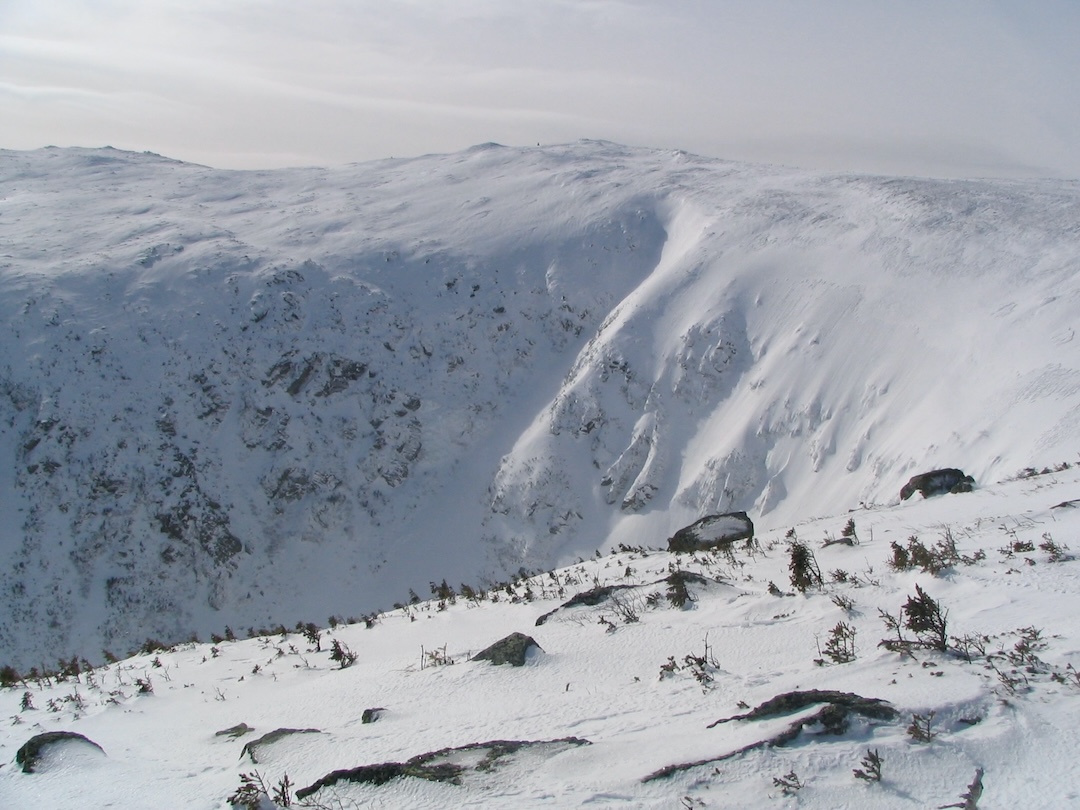
On February 26, a solo skier descended Hillman’s Highway in Tuckerman Ravine under CONSIDERABLE avalanche hazard—wind slabs rated possible up to D2 on northeast, east, and south aspects. The skier had a beacon, probe, and shovel and assessed conditions on the way up, noting small, isolated drifts with soft-over-hard structure. Believing warm valley conditions reflected conditions higher on the mountain, they continued to the top.
On the third turn, they felt a collapse. What they initially thought was sluff proved to be a soft slab avalanche. Knocked off-balance by successive waves of debris, they were immersed and cycled between the surface and burial. As the snow slowed they fought to the surface, cleared an obstructed airway, and created an air pocket—partially buried, broken leg, but alive.
A second solo skier in Hillman’s avoided the slide, located Skier 1 within minutes, and dug them out. Harvard Cabin and Hermit Lake caretakers had witnessed the avalanche and were already moving toward the slope. USFS Snow Rangers—who had just left the mountain for the day—were called back. Rangers packaged Skier 1 in a litter with a leg splint, chemical heat blanket, and hypothermia wrap. At 5:45 p.m., a snowcat transported them to meet Gorham EMS.
ANALYSIS
The avalanche was R3, D2, which is large enough to bury, injure, or kill. The posted hazard was CONSIDERABLE. Skier 1 later acknowledged they may not have read that day’s forecast and were rushing to ski after work, which likely impaired decision-making. Warm weather in the valley had created a false impression of conditions higher on the mountain—a recurring pattern in the Presidential Range, where spatial variability has caught experienced backcountry travelers and professionals alike off guard.
Skiing solo compounded the margin for error. Had Skier 2 not been present, Skier 1’s beacon signal would have been the only confirmation of a victim in the path, which is critical information for rescuers weighing exposure to hangfire and secondary avalanche risk. All skiers carried avalanche rescue gear; its presence was decisive. Solo skiing is not wrong, but it removes the margin that a partner provides. This applies to decision-making, rescue, and care. (Source: Mt. Washington Avalanche Center.)