

Short Fall — Slip, Ankle Injury
Canada, Alberta, Jasper National Park, Mt. Alberta
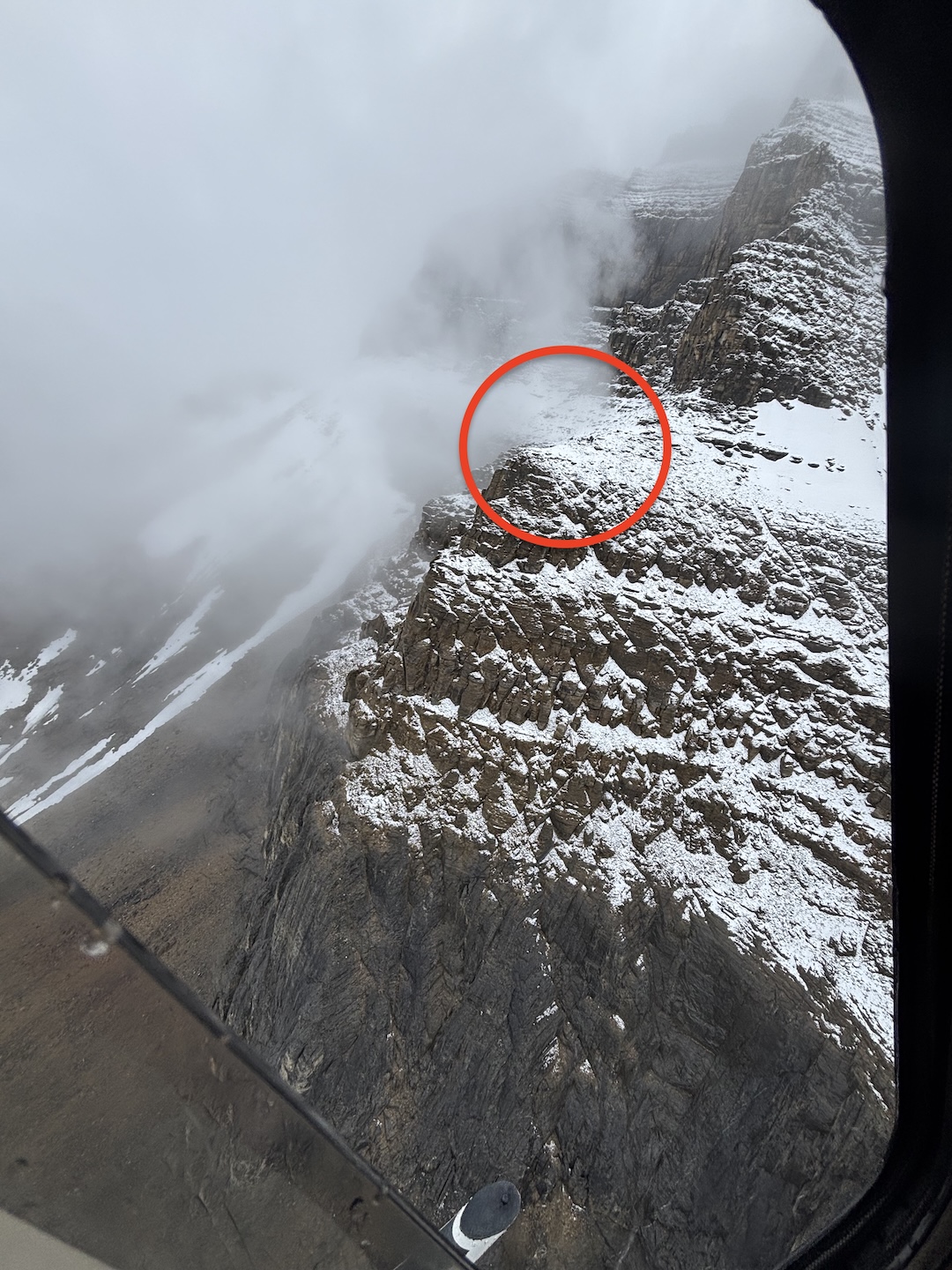
On July 25, a guided group of Japanese climbers successfully summited Mt. Alberta (3,619m) via the Japanese Route (3,000’, IV 5.6), and then began their descent via the same route. Conditions were difficult due to the snow- and ice-coated rock. The climbers began descending by a long ridge traverse before arriving at a short rock step. There, one climber slipped and sustained a suspected ankle fracture. The group assisted him down to their prior bivouac site at 2,900 meters.
The climbers were part of a larger group that had traveled from Japan to celebrate the hundredth anniversary of Mt. Alberta’s first ascent. During the previous week, a mural unveiling and various celebrations had been held in Jasper to mark the centennial. The formidable peak was first climbed in 1925 via the Japanese Route. Although it is the easiest route to the summit, it remains a serious undertaking, with loose rock and challenging route-finding. The Japanese Route is also the standard descent for most climbs on Mt. Alberta and is featured in Fifty Classic Climbs of North America by Steve Roper and Allen Steck (1979).
Parks Canada was called to assist with the evacuation. When the helicopter arrived, low cloud obscured the bivouac site, so the crew set down in a nearby meadow to wait. After approximately three hours, conditions improved and the party became visible. Parks Canada extracted the group, transporting some members to the Lloyd MacKay Hut (2,720m), and the injured climber to an ambulance at the highway.
ANALYSIS
Mt. Alberta contains extensive loose terrain and presents significant objective hazards. The guided group was well prepared: The initial call for help was made via iPhone SOS, the guides’ handheld radio proved invaluable during the helicopter extrication. The group also carried overnight equipment—tents, sleeping bags, and food. Having these items would have allowed them to shelter in place had conditions not improved. (Source: Parks Canada.)
Media Gallery