
Fall From Rappel Anchor — No Backup Knot
Canada, British Columbia, Squamish
I’m Seth Gross (56), and on August 2, I made perhaps the worst mistake you can make rappelling: I rapped off the end of my rope.
This accident was caused by complacency and a history of bad habits. I climb mostly at the Gunks, where I know every rap station and use a single rope with a visible middle mark. Over nearly two decades there, I had become so accustomed to the rappels that I frequently failed to tie stopper knots—a good habit that I knew should at least be my default practice for unfamiliar terrain or borrowed gear.
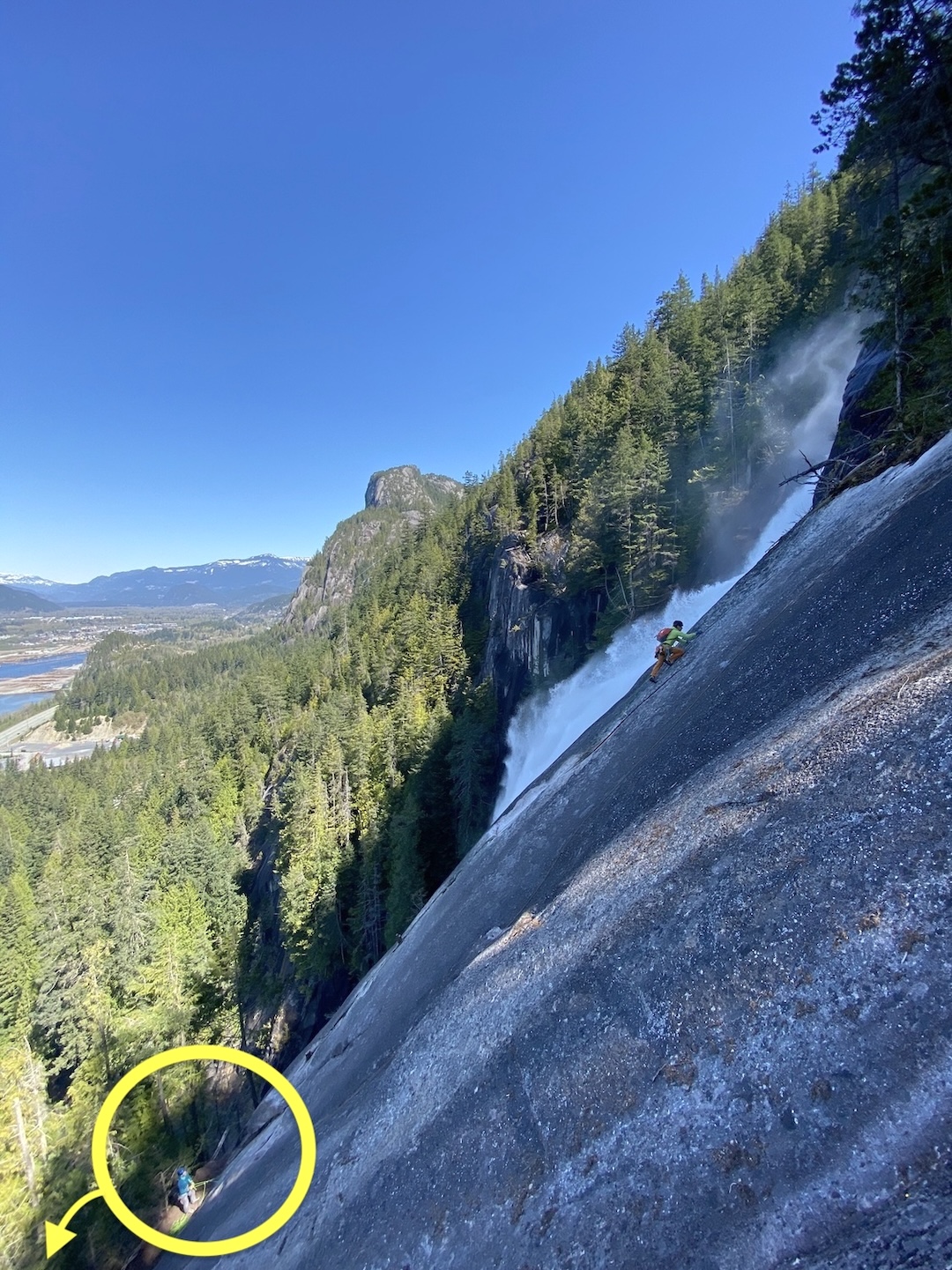
I was in Squamish with two partners, climbing on double ropes with no middle mark, when it happened. We did a six-pitch 5.11a near Shannon Falls. We then did the first five pitches of The Spirit of Squamish (8 pitches, 5.8). After I led the fifth pitch, my partners and I decided to rappel.
To avoid running my rappel rope through the gear, I pulled up one of the two double ropes—my second rope still ran through the gear and remained tied to my harness; I intended to clean the protection as I rappelled—and doubled it to rappel. The pitch was about 80 feet long, so my doubled 60m (200’) rope should have been long enough. I snaked one end down to the ledge below where the next rappel anchor was. It stopped short in a concave section of the face but looked close. I pulled through several more arm lengths of rope and visually checked the other end. Believing that both ends were down, I did not tie stopper knots.
I had other options: pull both ends through simultaneously to confirm the midpoint; use both ropes tied together; or untie from one rope, thread it through the anchor, retie, and have a partner lower me. But I did none of these, assuming that both ends of my single line were down.
They weren’t. As I rappelled and cleaned the gear, everything seemed fine. Then I heard a whooshing sound—one end of the rope flying through my rappel device. I was in free fall, a real-life Wile E. Coyote moment during which I was briefly suspended in midair, long enough to contemplate the full horror of what I’d done—rappelled off the ends of an unequalized rope without stopper knots. I dropped roughly 20 feet to the belay ledge, slamming into it on my left side. Then I kept falling. There was no opportunity to stop; I flew another ten feet before hitting a tree. Then a small stand of trees beneath the start of the fifth pitch stopped me. Without them, I would have fallen hundreds of feet.
I lay against the trees while my partners ran over. After a few minutes of hyperventilating, I took stock: I hadn’t hit my head, neck, or spine. My left leg was damaged—a huge gash and a line of bruising ran its full length—and my left shoulder had begun to stiffen. One climbing partner helped me crawl back up to the ledge. I apologized to my partners and climbers above—for making them witness it. Then I sat down and cried. Then we did three rappels to the base and hiked out.
I didn’t climb for two months. The leg healed without issue and an MRI revealed a full-thickness tear of the supraspinatus tendon in the left shoulder. The doctor recommended surgery; after physical therapy, the shoulder improved enough for me to resume climbing. (Source: Seth Gross.)
ANALYSIS
This accident shows why midway markers on ropes are important, as is making sure your rappel rope is equalized. Meanwhile, stopper knots, which take just seconds to tie, are the single most reliable prevention against rappelling off the rope ends. This climber identified that it wasn’t a single lapse in usage that triggered his accident, but rather a long-standing habit of not tying knots that didn’t matter until it did. Complacency built over years of uneventful rappels at a familiar crag transferred invisibly to an unfamiliar setting where the assumptions no longer held. He now ties stopper knots every time he rappels. (Sources: Seth Gross and the Editors.)
Media Gallery