
Fatal Fall or Exposure — Solo, Late Summit, Severe Storm
Wyoming, Bighorn National Forest, Cloud Peak Wilderness, Cloud Peak
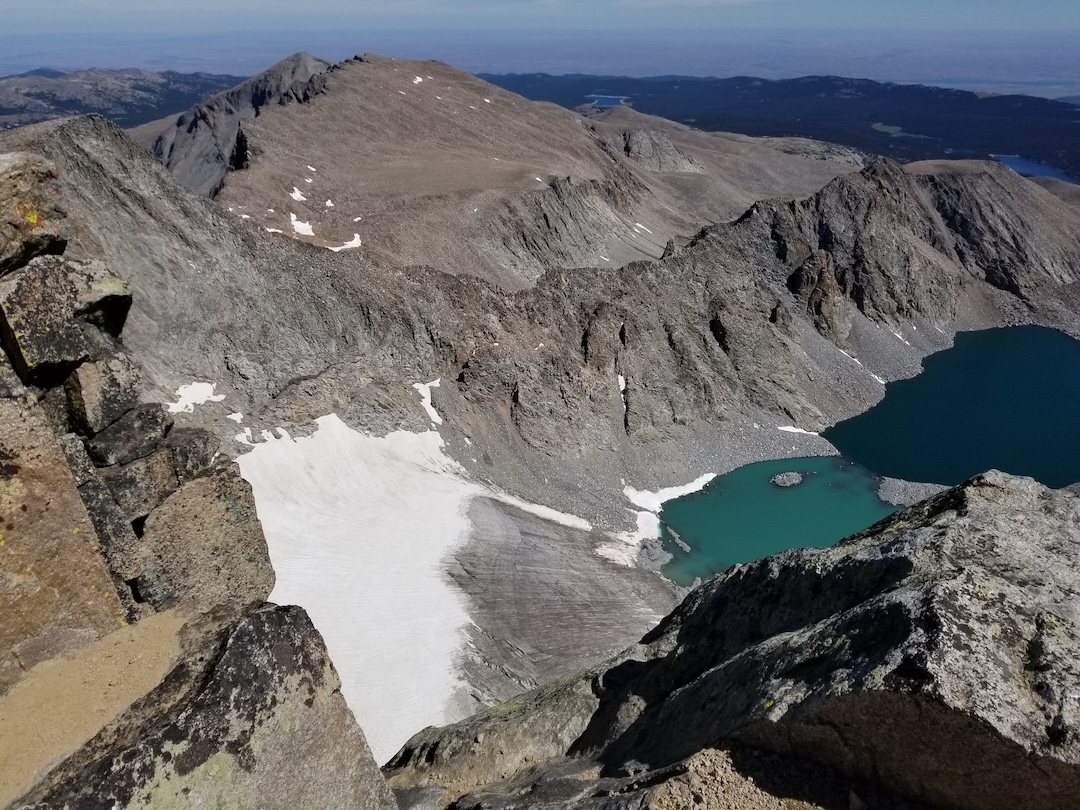
On July 29, Grant Gardner (38) of Minnesota summited Cloud Peak (13,175 feet) at 7 p.m. and sent a text to his wife from the summit. This was his last contact. The text noted the climb had been more taxing than he had expected and that he planned to descend to a lower elevation for the night. He never reached his vehicle. Overdue by several days, he was reported missing on August 1.
Gardner had planned a three-day solo trip through the Misty Moon Lake area of the Cloud Peak Wilderness, with Cloud Peak as his summit objective. In the hours after his final text, severe weather struck the area. A National Weather Service meteorologist in Riverton documented approximately 15 cloud-to-ground lightning strikes over the trail region around 3 a.m. on July 30; above 11,000 feet, conditions included snow and freezing temperatures.
This search was one of the most resource intensive in recent memory. Over 20 days, the Big Horn County Sheriff’s Office deployed multiple helicopters, fixed-wing aircraft, electronic tracking equipment, personnel from Teton County Search and Rescue, and Wyoming Army National Guard assets. Volunteer aviation organization First Flight of Wyoming also assisted. The wilderness terrain was composed of cliffbands, boulderfields, and timberline approaches. Gardner’s clothing closely matched the surrounding rock. This frustrated aerial searches.
On August 26, climbers descending Cloud Peak after summiting were preparing a high-altitude camp. They noticed a reflective shimmer several hundred feet above them. They notified the sheriff’s office. At first light on August 27, with a storm bearing down, a recovery team reached the site. Gardner’s body was found between two rocks under a ledge, near his backpack—the origin of the reflective shimmer. His remains were recovered and returned to his family.
ANALYSIS
Cloud Peak’s standard routes involve sustained class 3 terrain with route-finding demands that include poor visibility in bad weather and/or dusk. A 7 p.m. summit in late July leaves little margin before nightfall, and Gardner’s own text acknowledged he was more tired than anticipated.
What followed, between his summit text and the storm that reached the area several hours later, is unknown. Informed assessments may point to lightning, a fall on the descent, or hypothermia, or some combination; the body’s location under a ledge between two rocks is consistent with either a fall or an attempt to shelter in deteriorating conditions.
Gardner set out on a solo technical peak with appropriate experience—his wife noted he had been hiking for over a decade—but the summit came late and descent began in a wilderness area with no trails through cliffbands and boulderfields, in rapidly changing high-altitude weather. The margin between a hard day and a fatal one in terrain like this is often measured in an hour, a turn taken in the dark, and a storm that arrives when it was supposed to wait until morning.
Planning and adhering to time buffers and a turnaround time is a wise choice. It is prudent to carry a reliable emergency shelter and a communication device capable of two-way contact. Gardner had a two-way device and his final text got through, but there was no one in a position to respond before conditions closed in. (Sources: Big Horn County Sheriff’s Office, UPI, and the Editors.)
Media Gallery