
Leader Fall — Fixed Piton Broke
West Virginia, Seneca Rock, Southern Pillar-West Side
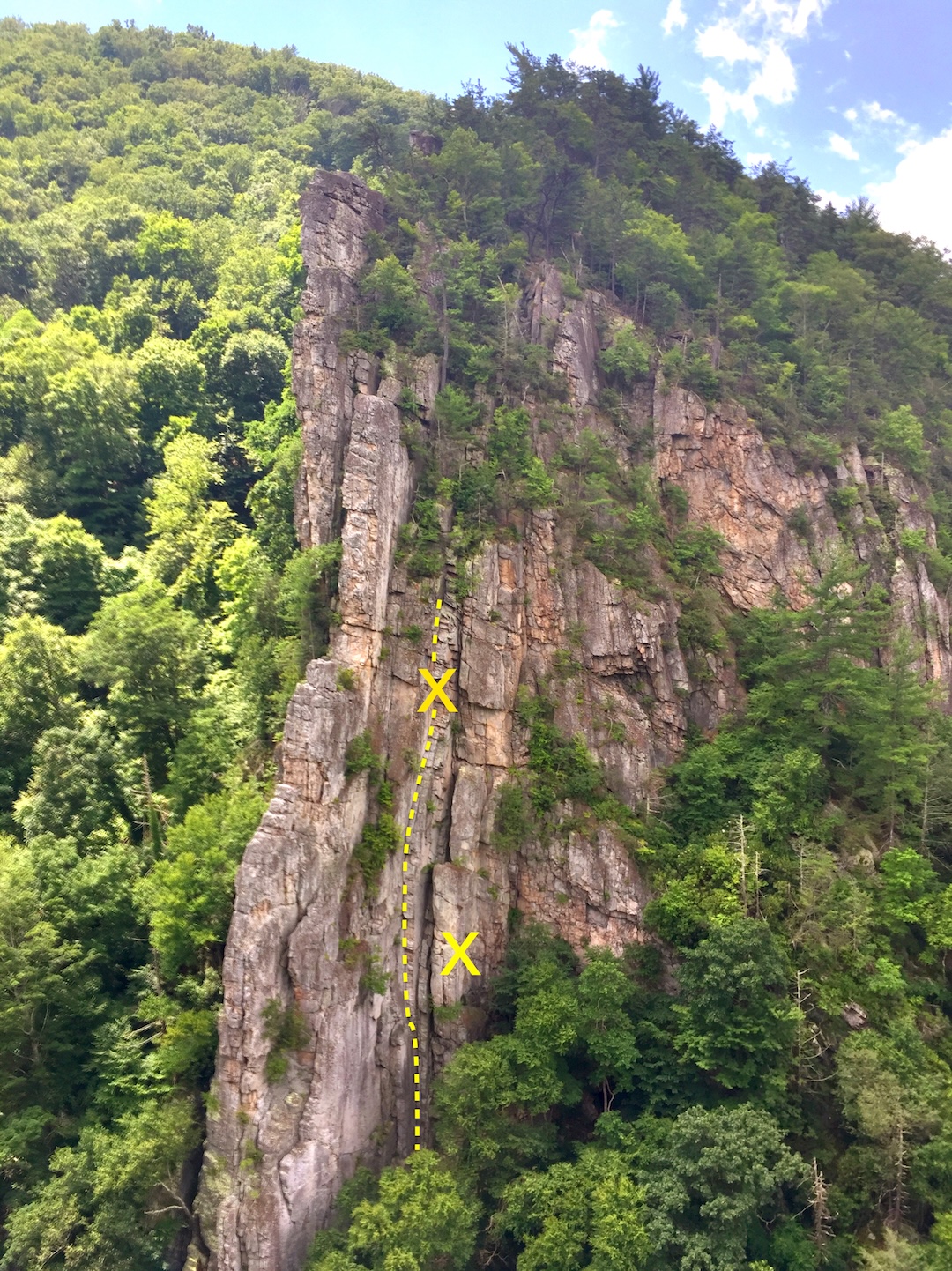
On April 20, Kennedy Miller (19) fell over 60 feet when a fixed piton broke during a leader fall. Miller was on the second pitch of his route. Being that high prevented a fatal ground fall. Miller spoke to ANAC in August 2025:
It was the last day of my first trip to Seneca Rocks. I had led a route the day before and felt comfortable. My buddy Zack led the 5.7 first pitch of Climbin’ Punishment (3 pitches, 5.8+), and then brought me up.
The second pitch—my lead—had a thin finger crack with good but slabby feet and a little bit of laybacking. As I got higher, I was running low on gear—then I saw a piton in the perfect spot. I would have backed it up if I’d had something that fit, but I literally didn’t. I clipped the piton and tested it by yanking on it. It held and didn’t look too rusted. Then I moved on, relying on the piton to protect a big section of the pitch.
I don’t remember falling. Maybe my foot slipped, but all I can recall is clipping the piton and climbing nine or ten feet above. Then nothing. The belay station was around a corner and Zack couldn’t see me, so it was all on feel. I think he might have been a little late to catch me: I fell 30 feet onto a ledge, rolled off, and fell another 35 feet. The piton might have started to catch me and then broke. Either way, all those kilonewtons went straight to that old iron and it snapped. I remember hanging upside down, spinning, screaming to be lowered (the pitches are short and the route can be climbed in a single long pitch). Once I was on the ground, I could not move.
We were a party of four—two teams. Zack and I had gone up first; our friends Ben and Gabby were still on the ground when I fell. They screamed for help. Nearby climbers got a call out to emergency services, and sometime later they arrived with a body board. They cut off my clothes and harness. Being lifted onto the board was the most painful moment—the four of them were unevenly timed and I tilted and screamed. I faded in and out of consciousness as they carried me. The vibrations from each step were going through my body. I passed out and came to in the helicopter.
I would learn that I had shattered my pelvis, broken my elbow, and broken my thoracic and lumbar vertebrae. I was hospitalized in West Virginia for two months with an external fixator—a half-halo with two-foot-long rods drilled into my pelvis. I then went home for another month in bed. As of late August 2025, I have been walking for two months. I still have the broken piton. I carry it on my pack every day.
ANALYSIS
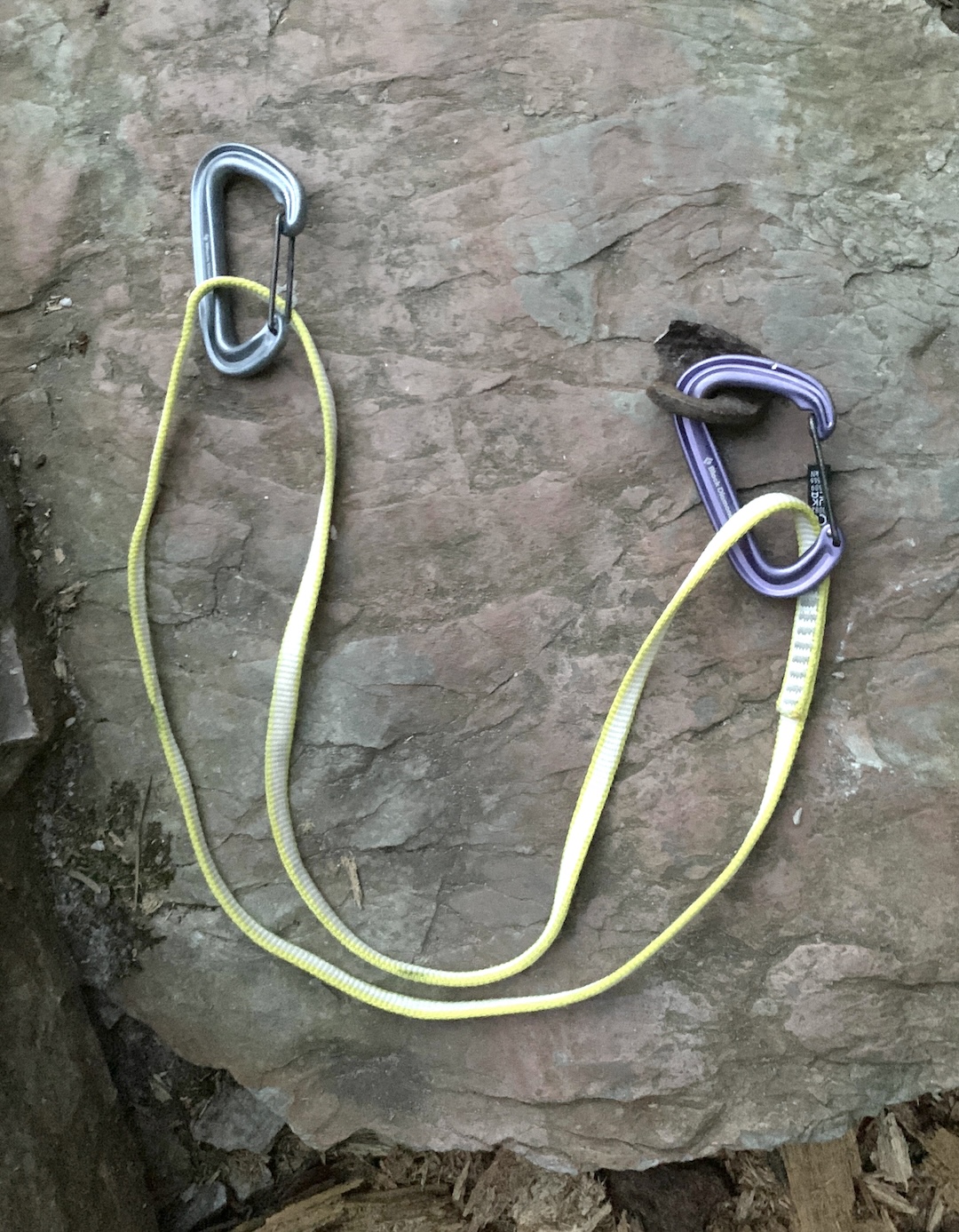
This is the third accident in the 2026 ANAC involving a broken fixed piton. Fixed pins at historic crags like Seneca Rocks have been in place for decades, and these relics sometimes comprise the crux protection despite being upward of 50 to 60 years old. They are subject to ongoing weathering and stress. A piton that looks solid and passes a tug test can easily fail under a dynamic load. In the past, testing pitons with a hammer was suggested protocol. Now with hammers abandoned, there is no reliable way to test. On occasion pitons are removed and replaced, but rare is a modern-day climber who is expert at that craft.
Many climbers do not understand that a fixed piton bears no comparison to the security of a bolt. If you’re at a belay station, on a big wall, or on lead, back up pins with additional gear. Never trust a single pin as a belay or rappel anchor.
Miller carried a double rack of cams and a complete set of nuts. By his own account, he did not place any nuts on the pitch, though in hindsight, placements were available. Nuts are less intuitive and less cool than cams, but their strength and simplicity should make them go-to gear. A nut placement saves a cam for later—an issue for Miller when he ran out of pro.
The pitch turned a corner and the belayer could not see the leader. This is where communication and belay sensitivity become more critical. A late catch perhaps compounded an already serious fall. Arthur Kearns of the Seneca Rocks Climbing School suggests that on most popular traditional routes, a climber can build a belay in a non-guidebook spot to maintain visibility and conserve dwindling gear. There are no rules as to where one should put in a belay, especially if safety becomes a concern. (Sources: Kennedy Miller, Arthur Kearns, and an interview by the Editors.)
Media Gallery