
Ground Fall — Unprotected Face, Cam Pulled
Washington, Leavenworth, Tumwater Canyon, Castle Rock
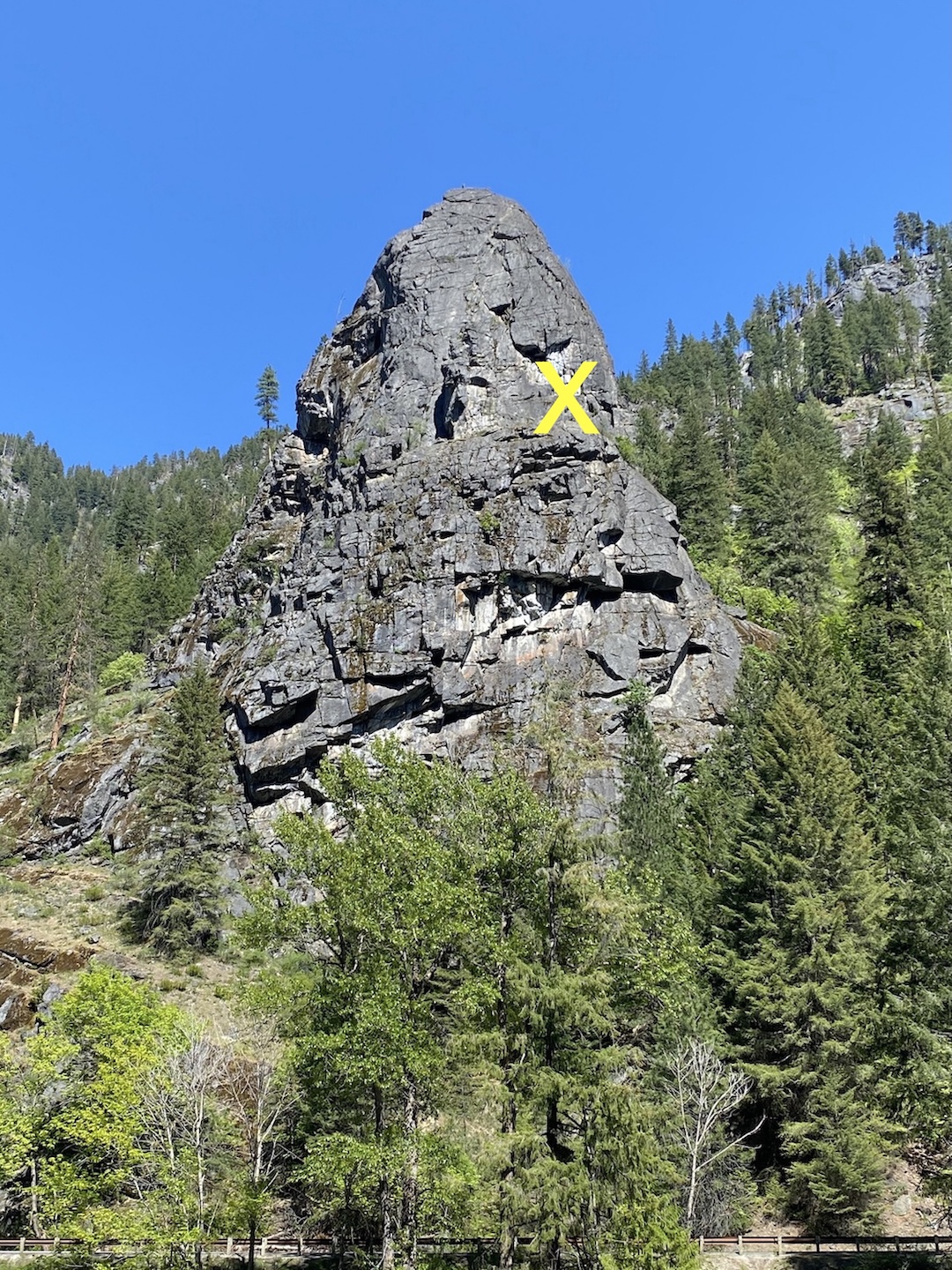
On June 18, my climbing party of three set out to climb six pitches to the top of Castle Rock near Leavenworth. We have climbed a lot together, including routes in the area. We started up The Fault (1 pitch, 5.6) and joined Catapult (2 pitches, 5.8). This put us at the formation’s midpoint on Logger’s Ledge. Our plan from there was to climb Canary (3 pitches, 5.8+) to the summit.
Two incidents followed. The first involved my partner (34, four years of experience). He tried pulling onto the face from a starting boulder. The start was undercut and the holds were small and greasy in the morning sun. After three or four attempts, each ending with downclimbing, he committed—and his hands slipped. He fell five feet and hit the starting boulder with both feet and bounced off. Our belayer was spotting, her stance secured by a second boulder behind her. Without her, his head and thoracic spine would likely have impacted the rock.
His first concern was his brand-new helmet. He felt no immediate pain but expected a head injury given the fall height. A few minutes later he felt significant pain in his ankle, which he’d been nursing after an indoor bouldering injury. The pain subsided after about ten minutes and he was able to walk and climb.
We tried the crack to the left. I placed a No. 0.75 Camalot, initially marginal but repositioned to a better seat. Higher, before turning the corner onto the face, I placed a No. 0.2 in a horizontal crack. I didn’t feel confident in it, so I backed off. I had our belayer take and began lowering. It held my weight at first—then with a slight jerk of the rope it popped. I fell onto the No. 0.75 and stopped level with our belayer. I’d never had a cam pull like that. We climbed Midway (3 pitches, 5.6) instead.
ANALYSIS
We later found numerous Mountain Project comments describing the first section of Canary as a “free solo.” A fall from higher on the unprotected face, or without a spotter, could easily have been much worse.
We also could have walked away sooner. We hadn’t had trouble leading this grade before and felt we were missing the right beta, perhaps forgetting that Leavenworth is notoriously stout.
The pulled cam in the second incident was a poor placement. The No. 0.2 was sitting in small grooves in smooth rock with poor contact. While it held a static load, the slight jerk during lowering popped it out. The No. 0.75 prevented a ground fall.
Together, these incidents are a reminder that well-traveled moderate routes can still bite and that conditions — morning sun, greasy holds—can push beyond the published grade. We always wear helmets, and the first fall was a direct demonstration of why. (Source: Kelsey Hollenbaugh.)
Media Gallery