
Leader Fall — Failure to Clip
Oregon, Smith Rock State Park, Smith Rock Group, Northeast Face
On September 20 at 1:48 p.m., I was dispatched to a leader fall on Hawks Nest, a 60-foot 5.9 sport route at Smith Rock State Park. A group of friends from Seattle was visiting for a climbing trip. The subject (33, M) had three years of indoor climbing experience and three months of outdoors; a friend described the route as near his limit.
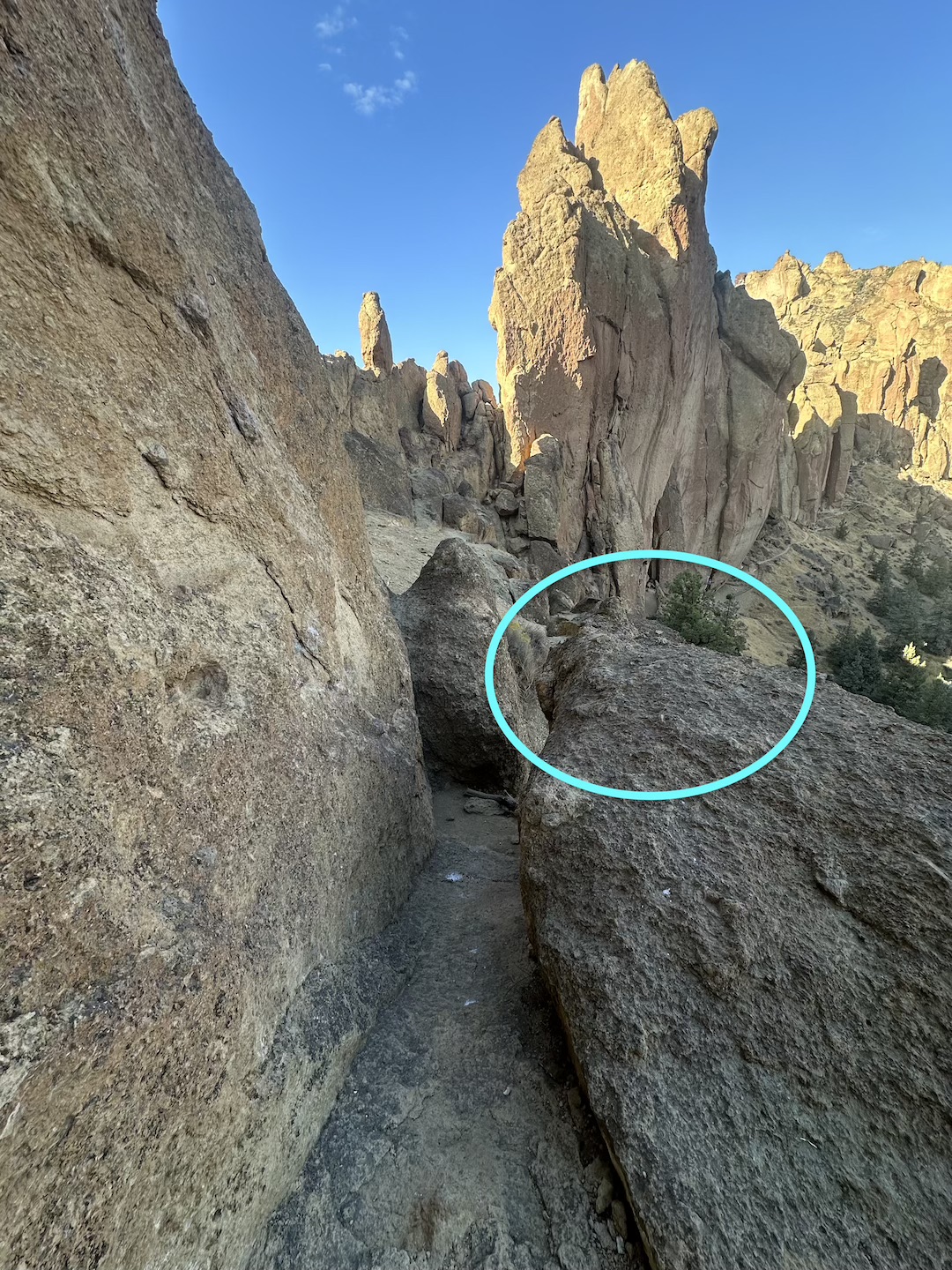
The subject was leading and clipped the third bolt with a quickdraw, but for some reason did not clip the rope to the draw before attempting the crux. He fell around 20 feet and struck his head on a large block behind the belayer. He had, as was reported to a responder, a seizure lasting three to four minutes and was dangling two feet off the ground, bleeding from the back of his head. His party then lowered him to the ground, where he was attended to by friends who had medical training.
A Life Flight helicopter arrived at the nearest landing zone. Redmond Fire & Rescue and a state-park employee were the first on scene; they packaged the subject into a litter and transported him via low-angle belayed rope system to the SAR mountain rescue team, who loaded him onto the helicopter. He was flown to St. Charles Medical Center. His helmet was crushed at the rear. He sustained a serious concussion, fractured humerus, fractured opposite scapula, and rope burns and abrasions; no skull fracture was found.
ANALYSIS
I spoke with several of the patient’s friends who were there when the accident occurred. They too were confused by his failure to immediately clip the rope into the quickdraw on the third bolt. I climbed the route to retrieve the quickdraws. The large boulder immediately behind the belay was in just the wrong spot during the fall, as the climber struck this first before the rope began catching his weight.
The subject’s helmet is what almost certainly saved his life. The rear of the helmet shell was crushed; without it, he would have taken the same impact directly on the skull. His friends’ medical training was also a significant factor in the quality of immediate care. (Sources: Caleb Bryce, Deschutes County Sheriff’s Office Search and Rescue.)
Media Gallery