
Leader Fall on Rock — Low-Angle Slab
North Carolina, Pisgah National Forest, Looking Glass Rock, Sundial Crack
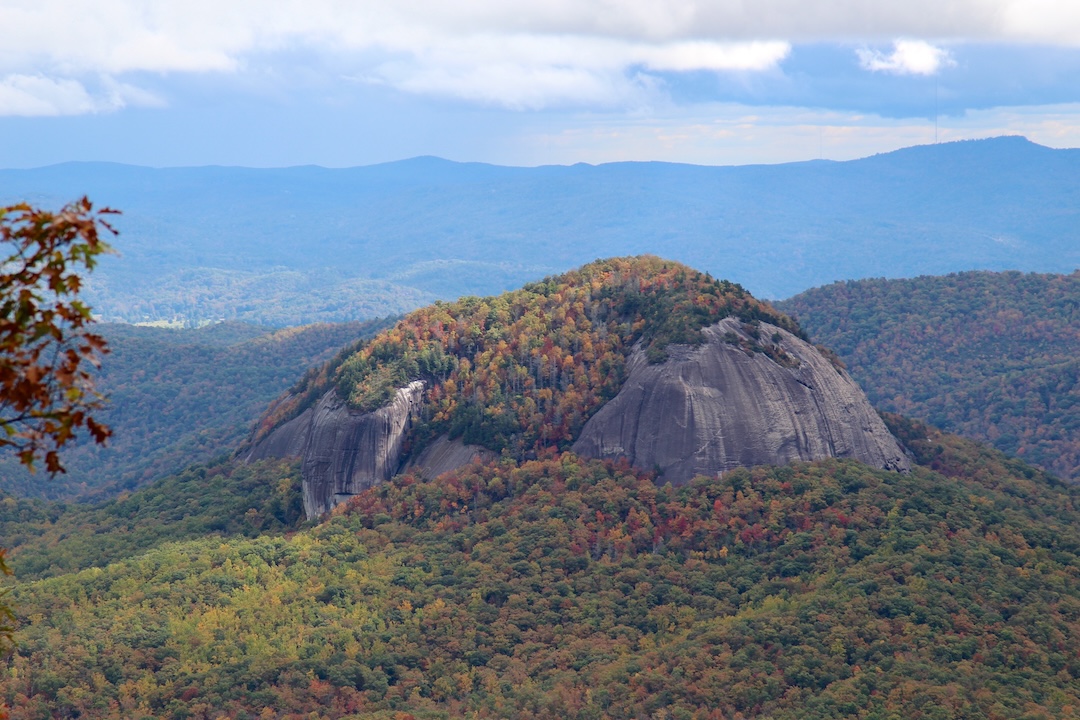
On March 29, Lauren Hierholzer and Kelli Talley (both AMGA-certified Single Pitch Instructors) set out for a casual day on Sundial Crack (4 pitches, 5.8-) on Looking Glass Rock. Both were familiar with the route and live within 30 minutes of the crag. By coincidence, their mentor—IFMGA mountain guide Karsten Delap—was guiding an adjacent route, the Nose, when they arrived.
Hierholzer led the first pitch and most of the second without incident. Near the top of pitch two, she felt slightly off the easiest line, backtracked to her last piece, and found what she believed to be a better sequence. That is her last memory before the fall.
Witnesses report she fell and impacted the rock upside down, losing consciousness for one to two minutes. Her last piece—a No. 0.5 Black Diamond C4 in solid rock—held. She was approximately 12 feet above it when she fell. Due to rope stretch, slack, and an extended runner, Hierholzer fell close to 40 feet. Her injuries included a minor head injury, a broken left forearm, and an open, comminuted dislocated talar neck fracture of the right ankle that would ultimately require complex surgical fixation and three months non-weight-bearing.
Delap heard the fall from the Nose. He rappelled and traversed to Talley’s position, took over the belay, and ascended to Hierholzer. He then lowered her to the ground, passing a knot near the end. Hierholzer was carried out in a Stokes basket and flown to an Asheville trauma center.
ANALYSIS
Mechanics of the Fall
The most likely sequence: Hierholzer’s right ankle struck a small ledge in the fall, causing the fracture. Her other leg caught the rope, flipping her inverted. Her head impacted the rock when the rope came tight. She likely extended her left arm reflexively and broke her ulna in the process. This was a properly belayed and properly protected fall that nonetheless resulted in serious injury—a reminder that doing everything right does not eliminate risk on low-angle slab.
Helmet
Hierholzer was wearing a helmet. By her own account, it may have saved her life or prevented severe brain damage. There are no exceptions to this on lead.
Rope Dynamics on Slab
Even with adequate protection, low-angle slab produces long falls. Rope stretch, slack, and extended runners quickly compound “give” in the system. Climbers should carefully account for fall distance on this type of terrain, and always place protection with ledge-fall consequences in mind.
Self-Rescue Preparedness
The presence of Karsten Delap on an adjacent route significantly accelerated the rescue. Climbers should be proficient in self-rescue, partner rescue, and basic first aid, and should carry appropriate communication devices on committing routes.
(Sources: Lauren Hierholzer, Karsten Delap, and the Editors.)
Media Gallery