Preventive Search and Rescue in the Gunks
New York, Shawangunks
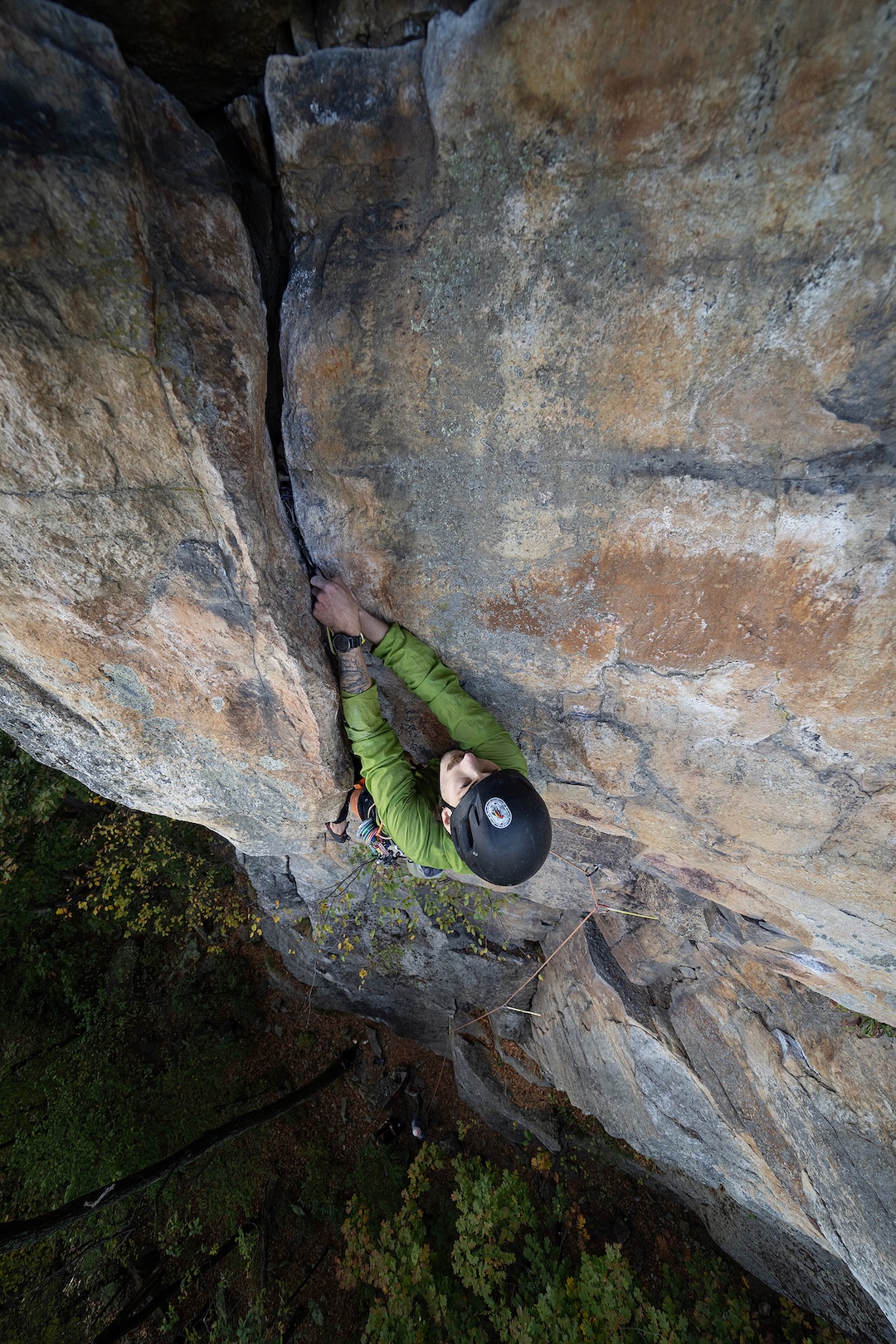
I write this on the cusp of the 2026 climbing season in the Shawangunks. It’s spring—Gunks climbers are putting away skis and dusting off racks. The climber in me gets psyched. When the season arrives, the Carriage Road is like a high school hallway, filled with familiar faces, news, and excitement.
The ranger in me, though, starts hearing alarm bells. A common refrain from climbers psyched after a long winter: “I was leading 5.11 last fall and I’m ready to get back on my project (usually 12a).” That’s when nine years of Gunks rescues reminds me that stoke plus overconfidence can equal accidents.
For five and a half decades, the Mohonk Preserve Ranger team has assisted thousands of climbers. Over that time, rock climbing’s popularity—and accident frequency—has grown exponentially. The Gunks is no exception; these quartzite cliffs that birthed cragging in North America are among the country’s most heavily visited areas.
In 2012, I was a psychology student at SUNY New Paltz, getting invested in the tight-knit local climbing scene. Five years later I took on a seasonal ranger job at the Mohonk Preserve. Within a few years I’d witnessed, more than once, the shock and pain that reverberated each time a climber had a major accident—seeing climbers, whether patient or witness, on the worst day of their lives. I wondered: How can I make a change?
I started by being present and compassionate as a responder. I held injured climbers’ hands on the carry-out, looking them in the eyes with humanity, not just as a rescuer. I told them I was there and that we’d get them swiftly to the next link in the medical chain. This gave me purpose, a niche, and an outlet for empathy.
Climb Smart
Still, there was more I could do. I came across an old sticker, likely created by a previous Mohonk ranger, that declared: CLIMB SMART! On the peel-away backing was a tick list of warnings and system checks—something I could expand on. I went to work advocating, lobbying, and researching, seeking input from the community and colleagues and searching for existing accident-mitigation programs. Eventually, I found a useful model in Grand Canyon National Park’s Preventative Search and Rescue (PSAR) program.
Loosely defined, PSAR is a proactive strategy in which land managers and SAR teams work together to minimize accidents through targeted education, signage, and on-site visitor engagement.
The Grand Canyon program was extensive: With high hiker volume, they focused on hyperthermia, dehydration, and exhaustion, and had created a dedicated PSAR ranger team. It was an excellent model—but hard to adapt, as no existing PSAR program specifically served climbers.
In 2022, I began developing a rock-climbing-specific PSAR program tailored to the Gunks, but general enough to apply broadly, should other areas adopt the model. We plan locations and install all fixed rappel anchors in the Mohonk Preserve. This engenders safety through consistency of anchor type, length of rappel, and creating top-down access. So one of my first projects was installing a fully functional Gunks-style rappel-anchor model at ground level.
Learning Stations
The inspiration came from a kiosk in the Rumney parking lot with pigtail anchors bolted to plywood, and a similar model used by Gunks guides to demonstrate anchor systems. A ground-level learning station addresses the all-too-common scenario of a novice struggling at an anchor while an experienced climber shouts up instructions from below. Learning complex transitions at ground level is safer and more effective.
We installed the first Gunks Learning Station in August 2022 at the Trapps. It has now seen countless guided parties, novices, and newcomers learn or refresh their skills—there’s a line at times to use it. A second station followed in fall 2025.
Outreach
I began developing PSAR clinics at local gyms and climbing events, drawing on the Mohonk Preserve’s accident database, the Grand Canyon program, andAvalanche.org to build a rock-climbing-specific curriculum for climbers of all levels. In 2024, a grant from the New York State Conservation Partnership Program provided funds to create more permanent materials and support staff time for clinics and presentations.
Public Presentations
Our SAR program, clinics, and related public presentations consist of several parts, including:
SAR Program
*. Break down a rescue operation from initial call through equipment retrieval, team assembly, patient access, transport, and EMS transfer.
*. Present recent accident data on common injury patterns and causes, followed by open discussion of attendees’ personal experiences.
*. Walk through techniques to reduce accidents, including: Know Your Limits, Come Prepared, Plan Ahead, Heed the Environment, Double-Check Systems, Back Up Systems, Wear a Helmet, and Learn from Others.
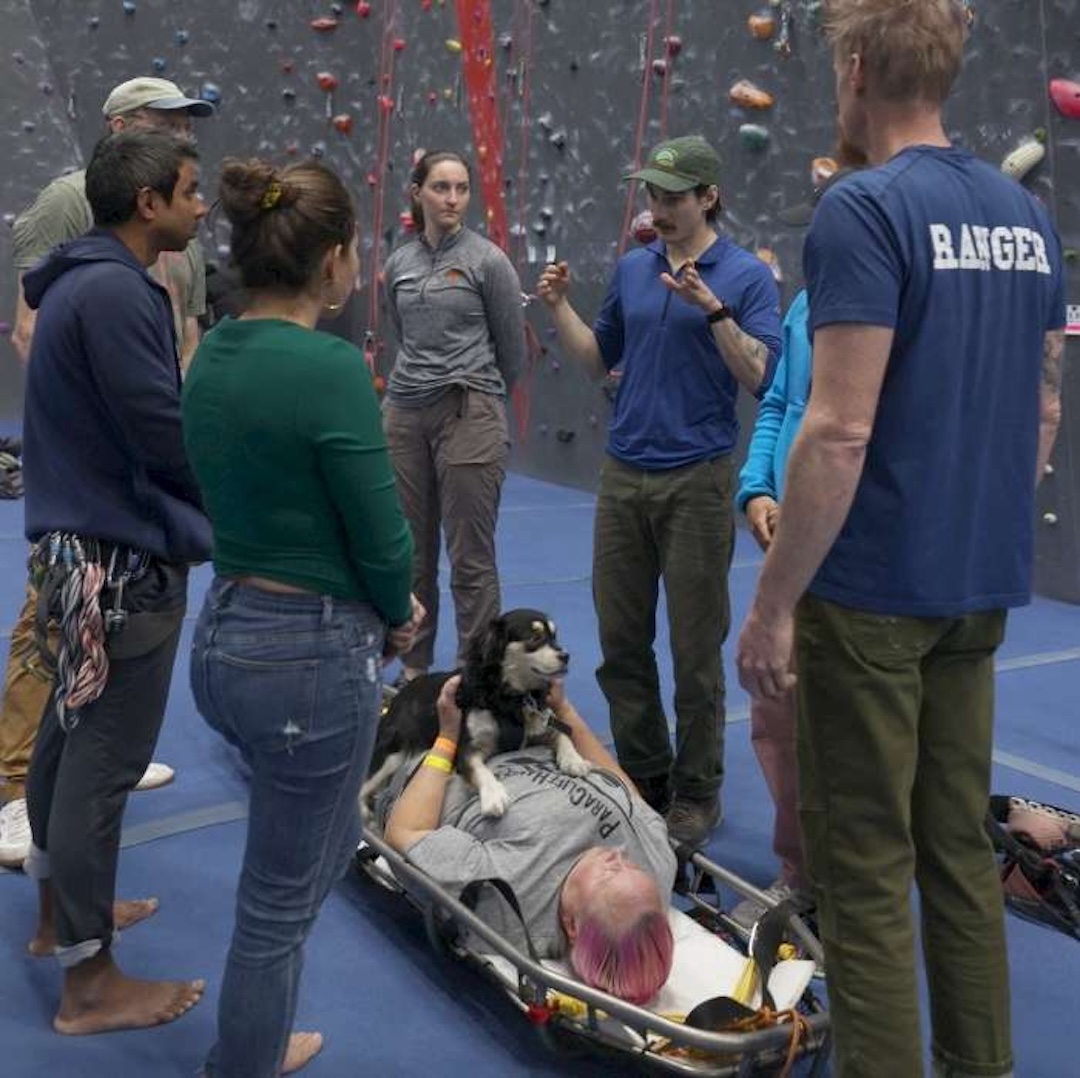
Follow-Up Clinic
“Emergency! Now what?” covers what to do at an accident scene, emphasizing that calling 911 is the quickest way to get a rescue moving, keeping in mind the following:
*. Key information rescuers need: patient respiration, state of consciousness, presence and volume of bleeding, number of injured, and location (ground
or cliff).
*. Clear the area around the patient, protect the patient, and avoid becoming another patient.
*. How to gently immobilize the patient and recruit bystander help if a carry-out is needed.
*. Demonstrate the caterpillar-style litter carry-out, giving attendees hands-on experience carrying an adult patient.
Our PSAR program came full circle during an accident response in early 2026. A climber had taken a ground fall requiring litter extrication. One ranger asked bystanders if anyone had attended a PSAR clinic—one person raised their hand. While the ranger completed a medical assessment, the PSAR graduate demonstrated litter handling and assembled a caterpillar carry-out. It went smoothly. I wasn’t there, but I felt I’d done my part.
Author Bio: Dan Cassidy is Chief Ranger at the Mohonk Preserve, where he has worked since 2017. In addition to his regular duties, he developed the preserve’s PSAR program for the Shawangunks. He holds a degree in psychology from SUNY New Paltz and is an active cyclist, trail runner, and snowboarder. He has been the Gunks regional correspondent for ANAC for five years.
Media Gallery