
Lowering Error — Ground Fall
New Hampshire, Rumney, Upper Darth Vader Crag
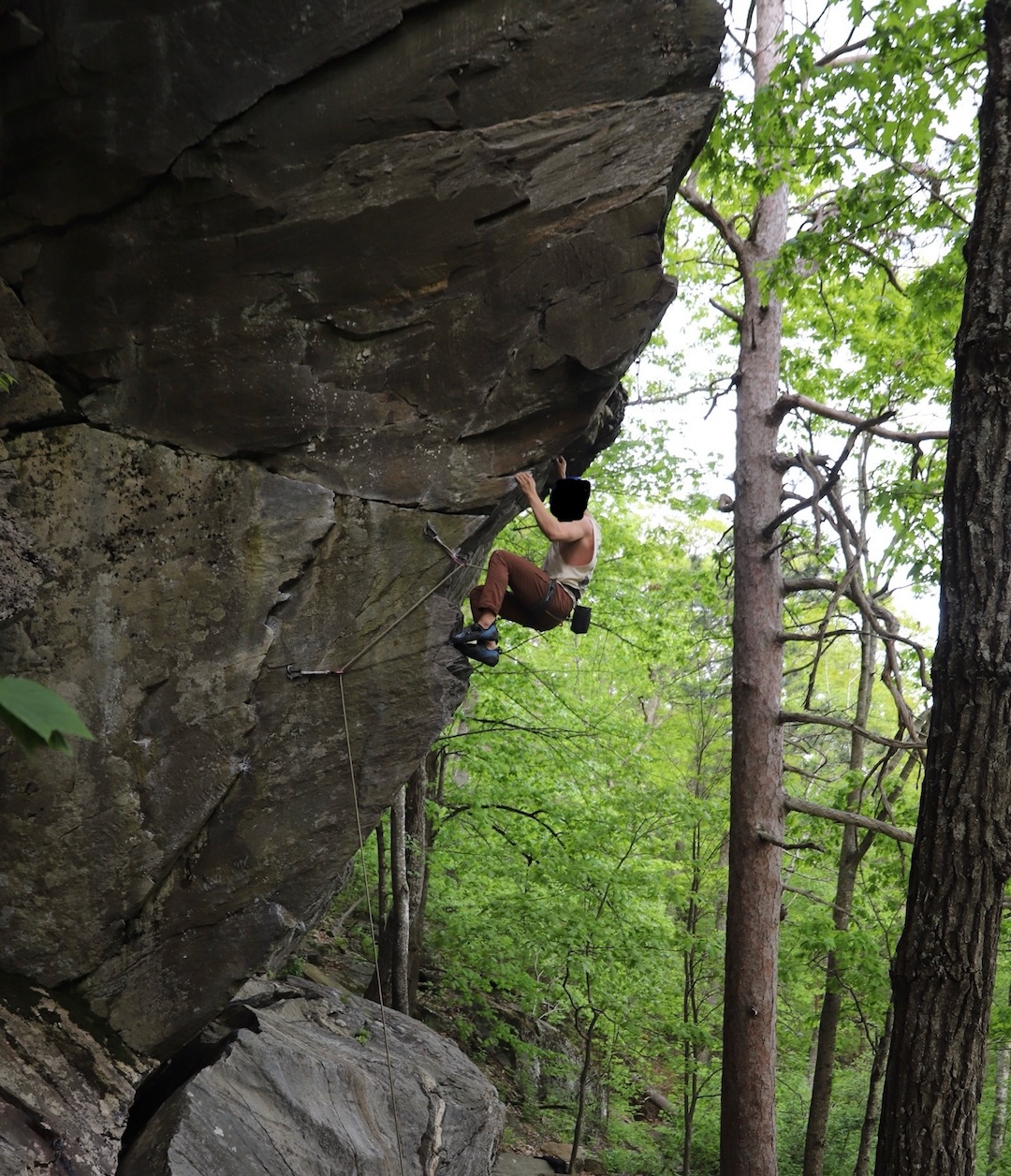
On May 28, a climber (male, one year of experience) led the sport route Three Easy Pieces (5.11a) at the Upper Darth Vader Crag at Rumney. The route is overhanging and wandering, with three protection bolts and a two-bolt anchor. The climber experienced significant rope drag on the ascent.
After the climber clipped the anchors, the belayer (five years of experience) instructed the climber to clip his belay/rappel loop with a quickdraw to the belay side of the rope (the side hugging the wall and clipped into the protection bolts). Tension on the now-weighted rope could be used to pull the rope out of the small corners, grooves, and other obstructions that had caused the rope drag. However, the climber had no a quickdraw, so instead used a single carabiner to clip his belay loop to the rope.
This is similar to a technique called “tramming” used to clean quickdraws off steep routes. (See ANAC 2021, “Know the Ropes: Cleaning Sport Routes.”) The climber complied but did not fully understand the purpose of the technique—he lowered and tried unclipping the rope from the highest quickdraw before the belayer instructed him to instead leave the quickdraw clipped to the rope and release the tramming carabiner from the rope and then reclip it below the quickdraw. In so doing, however, the climber unclipped his carabiner from his belay loop before reclipping it back into the rope below the draw—he ended up holding the carabiner with his fingers while lowering.
Lower down, a horizontal offset between a higher bolt and a lower bolt made it impossible for the climber to pull himself in. His belayer lowered him below the level of the second bolt, where the climber found himself still maintaining possession of the rope by his fingers in the carabiner. The rope remained under tension, but several feet of excess slack had been created in the rope as the climber continued lowering. When his fingers eventually gave out, he released the carabiner, expecting a minor swing. Instead, the sudden release of slack in the system sent him 15 feet to the ground. No one in the group recognized the danger until after the fall.
The climber landed feetfirst on rocks and dirt. He sustained a bone bruise to his heel severe enough to prevent walking, along with back bruising and muscle strains. A medical professional in the party assessed him at the scene. The climber descended the approach trail for 30 minutes by crab-walking and sliding and was then driven to a nearby hospital. A full recovery is expected.
ANALYSIS
The immediate cause of this accident was an improvised lowering technique—holding weight on a carabiner clipped to the lowering side of the rope—instead of staying trammed in, a technique the climber had neither learned nor practiced previously.
The correct method for cleaning—or, in this case, pulling the rope away from the wall to reduce drag—is to clip a quickdraw or trad draw to the belay loop and clip the other end into the rope, unclipping from the rope to pass a bolt and reclipping below. (On severely overhanging climbs or ones in which a swing out could be catastrophic, you can also safeguard this maneuver by using a second draw to go in hard to the bolt or draw before transferring your tramming draw back to the rope.) As we see here, attempting to do this by merely hand-holding a carabiner is physically taxing to the point of failure.
The deeper cause involves a pattern of mixed-experience partnerships: In this case, the less experienced climber deferred to the more experienced one, suppressing confusion and attempting to execute an unfamiliar technique. Other members present observed the climber’s confusion but did not intervene. The climber himself noted afterward that his instinct to question the technique was overridden by trust in his partner’s greater experience.
This is a well-documented dynamic in climbing accidents and extends well beyond the novice context: Overly relying on a partner can reduce a climber’s independent risk assessment, regardless of all party members’ experience levels. Two principles follow from this case: First, no climber should execute a technique that has not been explained, demonstrated, and understood before leaving the ground, regardless of the would-be instructor’s experience level. Second, visible confusion in any member of a climbing party—climber, belayer, or bystander—is a signal to stop and resolve the issue before proceeding.
More experienced climbers climbing with less experienced partners bear particular responsibility for recognizing when their partner may be deferring to them rather than genuinely understanding what is happening. Both the climber and his belayer have requested anonymity. (Sources: Anonymous and the Editors.)
Media Gallery