
Free Solo Fall — Solo Rock Climbing
New Hampshire, Mt. Washington, Pinnacle Buttress
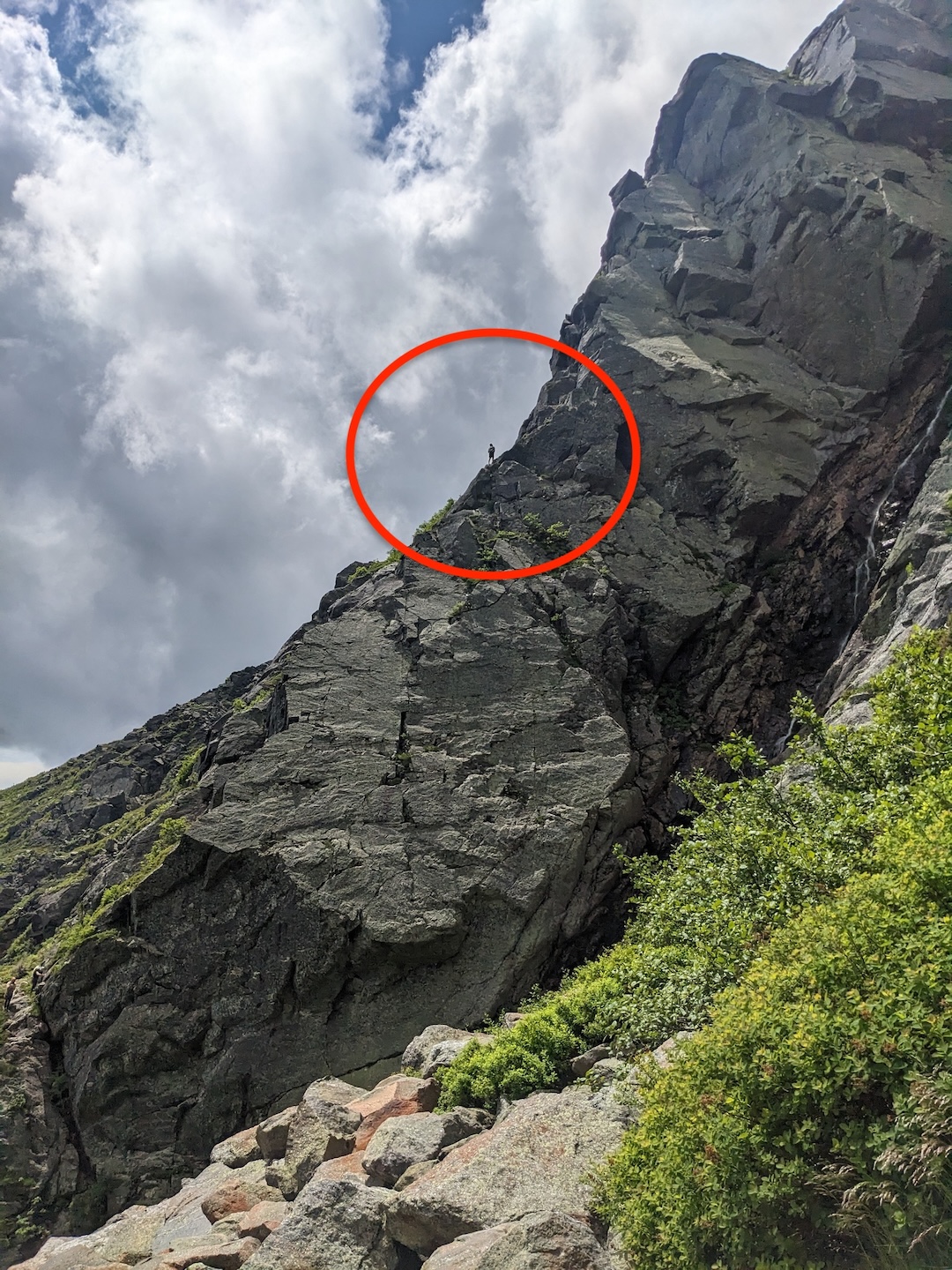
On July 2, Lukas Lamb-Wotton (31) was free soloing the Northeast Ridge of Pinnacle Buttress (III 5.7) in Huntington Ravine, Mt. Washington. First climbed in 1910, the 900-foot ridge offers a spectacular route with variations between 5.7 and 5.9. In seven pitches, the blocky ridge reaches an exposed summit known as the “Pinnacle,” where climbers typically pack up their gear and then scramble off to reach the Alpine Garden Trail for the descent. The route was well within Lukas’s ability—he’d climbed up to 5.12 outdoors and had free soloed the route twice in previous years.
At 1 p.m., near the end of the actual climbing, Lukas slipped while climbing around a wet seam. He spun 180° in the air and free-fell about 25 feet onto a slanted ledge, landing on his right side, then flipped forward and tumbled about another 35 feet down through a vegetated, rock-laden gully. Lukas was conscious and suffering serious facial fractures and bleeding. Hikers across Central Gully on the Huntington Ravine Trail saw him fall and scream, and were able to contact other climbers on the buttress by shouting. Those climbers rappelled down to Lukas, secured him, gave first aid, assisted him to a more stable position, and called 911.
New Hampshire Fish and Game officers, Mt. Washington State Park, Mountain Rescue Service, and New Hampshire ANG responded. By 3 p.m. Lukas had been evacuated by helicopter to Dartmouth Hitchcock Medical Center.
ANALYSIS
Lukas sustained two broken ribs, a broken wrist, a left ankle avulsion, a broken and dislocated jaw, multiple orbital and naso-cochlear facial fractures, four teeth either knocked out or broken, and lacerations/abrasions on his face and knees. Fortunately, after three surgeries and eight straight days in the hospital, Lukas’s prospects were for a full recovery. He believes that his initial impact on a slanted ledge kept him from breaking his legs and pelvis, while his backpack prevented him from breaking his neck or back.
Lukas understood that his life was on the line. The route’s technical difficulty was not the accident’s primary cause; however, his prior success free soloing the route likely factored into his miscalculation around the wet seam. It’s always difficult to fully anticipate the risk posed by adverse route conditions.
There is essentially zero margin of safety in a free soloing fall. Lukas is extremely fortunate that his fall was arrested by a gully, observed by nearby hikers, and that a skilled technical rescue was readily available. (Sources: Lukas Lamb-Wotton, Sgt. Matthew Holmes, N.H. Fish and Game.)
Media Gallery