
Rappel Fatality — Rappel Device Attached to Wrong Strand
Nevada, Red Rock Canyon National Conservation Area, Pine Creek Canyon, Community Pillar
On January 18, Micah Manalese (30) of Aliso Viejo, California, and her partner were descending the Community Pillar (790’, 6 pitches, 5.8+) on the Magic Mountain formation in Pine Creek Canyon when Manalese fell approximately 120 to 130 feet to the ground. She was declared deceased at the scene.
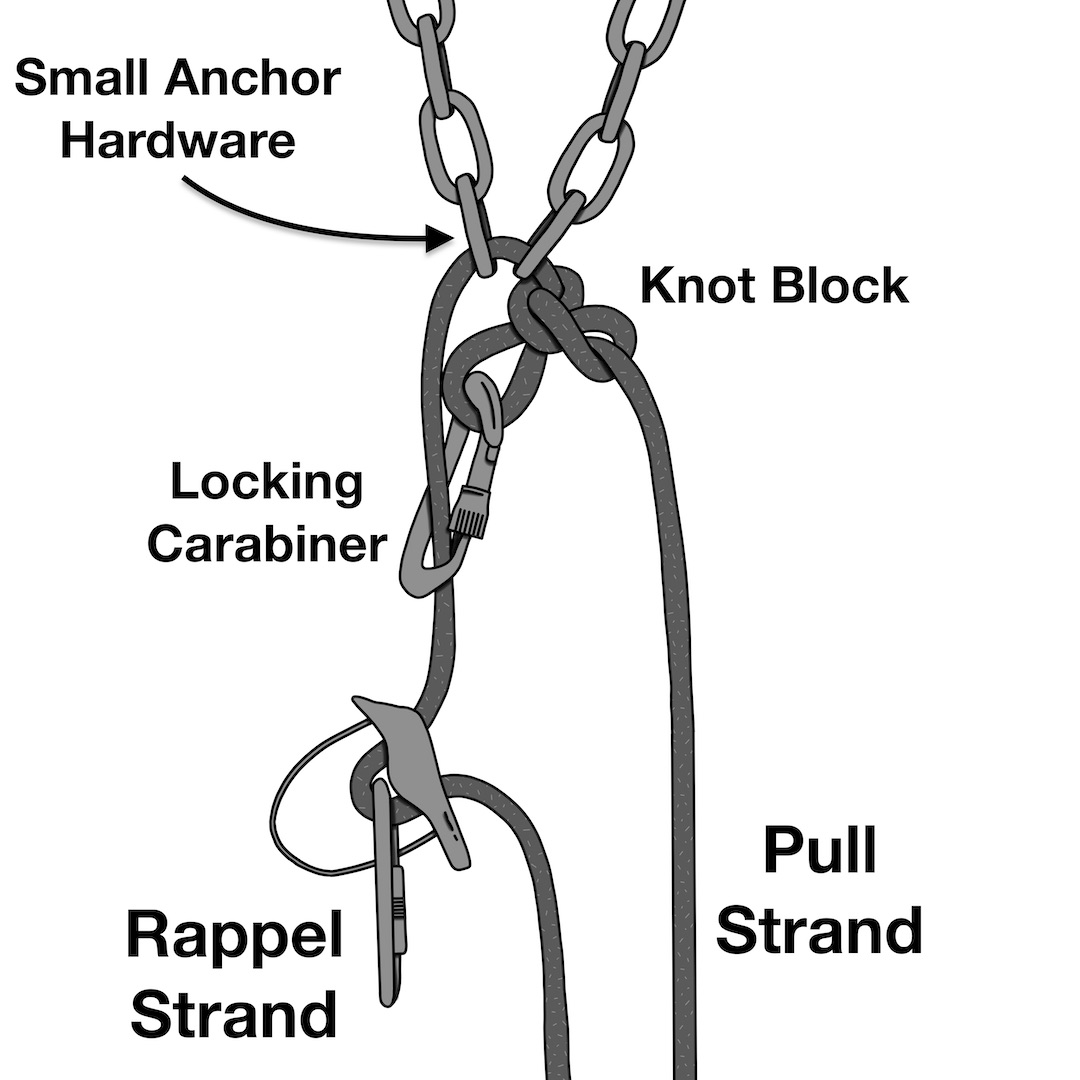
The accident occurred at approximately 5:30 p.m.—roughly a half hour after sunset. Temperatures were around 45°F and dropping. Both climbers had just turned on their headlamps. The cause of the accident appeared to be a misused Reepschnur rappel: Witnesses and others familiar with Manalese reported that she had attached her Grigri to the “pull” strand rather than the “rappel” strand. When she weighted the device, the rope pulled through the anchor and she fell past her partner, who had already rappelled the pitch.
The fall was witnessed by Joe De Luca, who was stranded with his party roughly 400 feet up the adjacent Mescalito formation after their ropes became stuck while descending Cat in the Hat (7 pitches, 5.6). Two Las Vegas Metropolitan Police Department SAR volunteers were already climbing up to assist De Luca’s party when the accident occurred. They heard Manalese’s fall but were out of sight and earshot of both parties.
De Luca, who had cell service, was able to serve as an intermediary—relaying information between the SAR team and Manalese’s stranded partner, who had no cell service nor satellite communicator. (Manalese had on her person a SPOT satellite communicator, which was destroyed in the fall.) A new rescue plan was coordinated to reach the Community Pillar party, and sometime later, SAR reached Manalese by helicopter, finding her deceased at the base of the wall. Had De Luca’s party not been in the canyon, the surviving climber may have been stranded overnight (or longer) in below-freezing temperatures—De Luca later learned that no other parties visited the canyon for the following three days.
ANALYSIS
Reepschnur—also called a rope block, carabiner block, or knot-block rappel—allows a doubled rope rappel on a single strand thanks to a knot, backed up with a carabiner, blocking one side of the rope at the anchor: the load strand, that the climber then rappels on. The other strand is the pull strand, which can be extended at the bottom of the rappel with slings, a cordelette, etc. to lengthen the potential rappel distance. Attaching a rappel device to the pull strand—versus the load strand—results in an immediate, unobstructed fall as the rope runs through the anchor.
Conditions
The accident occurred after sunset, in the cold and dark, on a north-facing wall. The climbers were almost certainly in a hurry. Low light, dropping temperatures, and time pressure are a dangerous combination when executing a technical rappel system. Complex techniques demand extra care; urgency works against that. When conditions deteriorate and pressure mounts, slowing down is the correct response, even when everything in your body is telling you to move faster.
Communication Devices
Manalese carried a SPOT communicator; her partner did not. On a big route in a remote setting, both climbers should carry independent means of calling for help. A single device can be lost, damaged, or end up separated from the person who needs it. (Sources: Joe De Luca, Climbing Magazine, and the Editors.)
Media Gallery