
Long Leader Fall — Inadequate Protection
Colorado, Eldorado Canyon State Park, Redgarden Wall
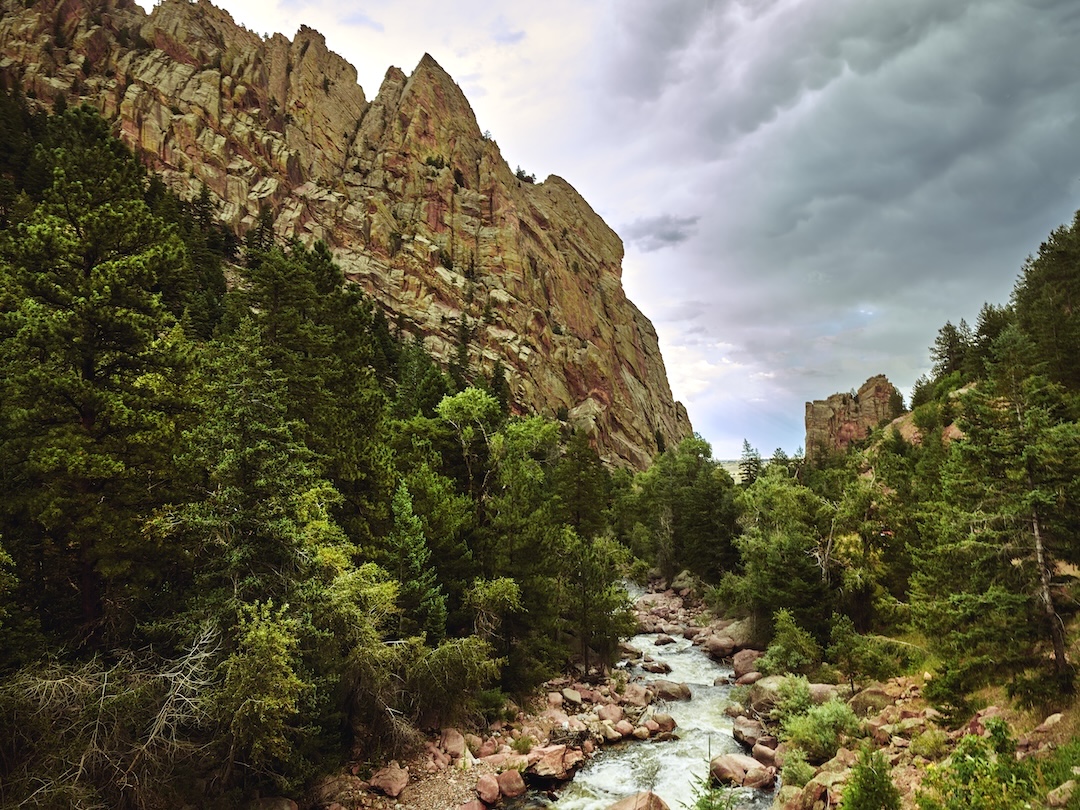
On May 13, my partner Shawn Wall (31) and I (Daniel Kay, 32) arrived at Eldorado Canyon to climb Rewritten (5.7) on the Redgarden Wall. Two parties were already on it, so we switched to the Green Spur (5.9+), which joins Rewritten’s upper few pitches.
In the guidebook, the first pitch was listed as being about 40 feet long, and the second about 140, so I decided to combine them. Around 140 feet off the ground, I reached the apex of a roof (crux) and placed a solid nut, clipped to the rope with a double-length sling. I moved right onto a runout slab, stopping to place a yellow Totem Cam in a small, friable pocket. I knew it was not the right piece and that it likely wouldn’t hold a fall, but I felt confident having just climbed through the crux and having already done the route several times. I had other gear options, but they required downclimbing, which I opted not to do. I clipped the cam as a directional and climbed into the easy runout.
About 15 feet below the bolted belay above pitch two, I had both feet on a good stance. I was contemplating the next moves when I felt myself losing my balance without warning. I tried to pull into the wall, but there were no handholds and I fell. The Totem popped. The nut at the roof caught me, and I came to a stop in midair, well out from the wall.
My Garmin GPS watch registered a drop of 33 meters (108 feet)—perhaps farther than I actually fell, though, regardless, I’d taken a good, long whipper. I was aware my head was bleeding. Shawn lowered me as far as he could, and then scrambled up the initial 30 feet of easy climbing to get me to the ground. His Grigri helped manage the long fall. He was tied into the rope.
My left foot hurt badly and was swelling, and I had two lacerations on my forehead. Shawn cleaned my face with sterile gauze from the firstaid kit in my pack and applied butterfly closures to the cuts. I wrapped my foot in an ACE bandage and took four ibuprofens. We pulled the rope and left our gear in the wall. I crutched out on two tree branches while Shawn supported me.
At the ER, I was diagnosed with a fractured fifth metatarsal in my left foot and received five stitches to my left eyebrow and five to my forehead. I also got six staples to my forehead and a tetanus shot for all the scrapes. My helmet spared me from a concussion or spinal injury. A follow-up exam revealed a non-displaced calcaneus fracture in my left heel—no surgery required, but ten weeks in a boot.
ANALYSIS
I became inattentive because I was comfortable, familiar with the route, and convinced I wouldn’t fall on moderate terrain I had climbed before. I knew the Totem was inadequate but climbed above it anyway; I likewise opted to skip out on better protection options lower down because downclimbing didn’t feel worth the effort. That was the wrong call. Reliable gear would have shortened the fall and changed the outcome. The nut I placed at the crux roof is the only reason I’m writing this.
This is a textbook example of the kind of complacency that leads to inadequately protecting a runout. The loss of balance on a good stance came out of nowhere. My backpack weighed about ten pounds and might have thrown me off-balance, but the consequences of such a large fall had been mine alone to prevent. (Source: Daniel Kay.)
Media Gallery