
Ice Dam Collapse — Near Miss
Colorado, Lake City, Mt. Sherman
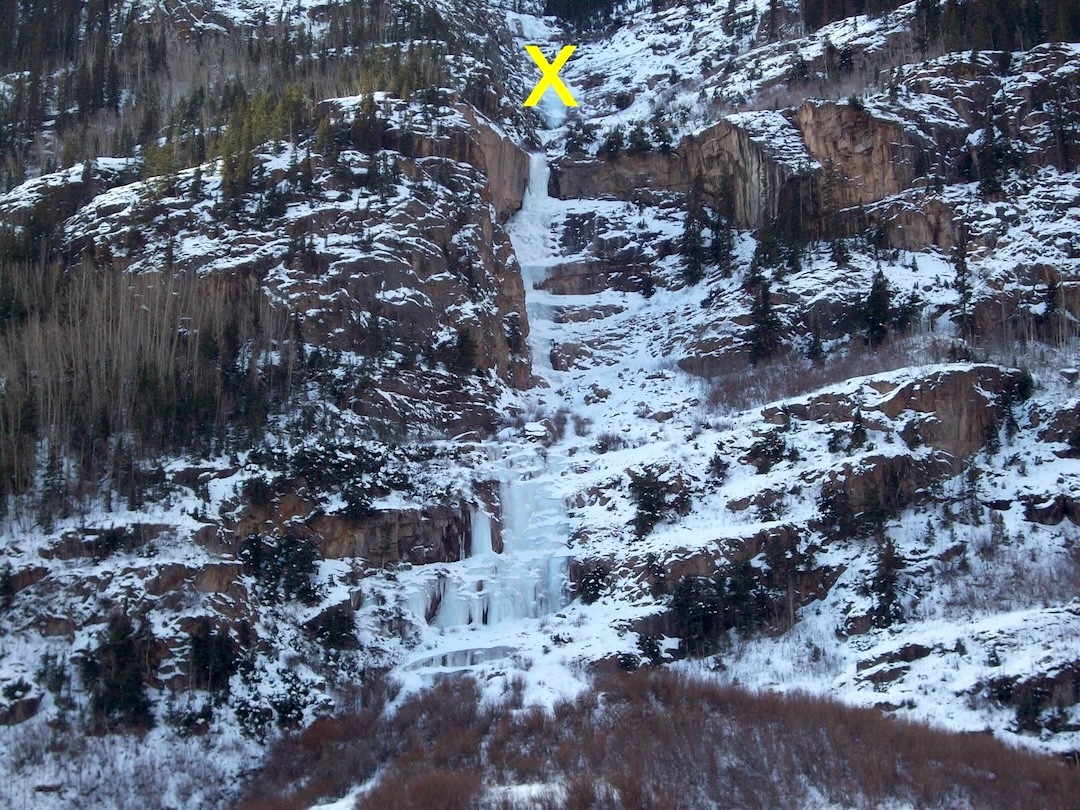
On February 13, my belayer Cameron Reade and I (Ryan Leonard, 45) arrived at the parking lot at 9 a.m. to climb Sherman Climb (4 pitches, WI4) at Mt. Sherman. The temperature that morning was 12°F; the forecast for nearby Lake City was for the upper 30s, with clear, sunny skies.
The first three pitches were in good condition, with ice ranging from plastic to dinner plate. By 12:50 p.m., we were on the final pitch (WI2). I was placing gear every 25 feet just as a precaution. Toward the top, I securely set a 16cm screw about four feet below a bulge. Using alternating tool positions to move efficiently, I swung my right tool into the ice, which dinner-plated away. I swung again, and this time it was a bomber placement. When I moved up and hit the ice with my left tool, the wall suddenly collapsed, releasing hundreds of gallons of water along with plywood-sheet-sized ice chunks one to eight inches thick.
My left tool blew; I barndoored as the ice sheets hammered my right arm and legs, and sheared my feet off. Somehow keeping my grip on my right tool, I avoided a fall. I then desperately swung with my left tool, sinking it to the hilt and looking down to see massive sheets of ice and water cascading down the climb. After ensuring my belayer was unharmed, I climbed to a safer spot on the incut stauchwall (the lowest part of a slab fracture below the crown) about two feet higher. I collected myself, anchored, and belayed my partner up. We rappelled the route with no other issues.
I was soaked; my drenched shells flash-froze and my internal layers were damp. After rappelling, I was unable to unzip my zipper until I warmed up, I had to use my ice tool to untie my knot, and it took some effort to unbuckle my pack. Everything was frozen, including carabiner gates. The temp was probably in the teens.
ANALYSIS
At the time of the collapse, I was 175 feet up; had I fallen, I would have gone 10 to 15 feet with rope stretch, maybe more. The initial fall would have been clean, but the landing would have been on a slope canted at 70° to 80°. Had the ice and water carried me down, it likely would have involved a twisting fall from left to right while being pushed by water and plywood-sized sheets of ice. Best case would have been landing on my hip or ankle on lower-angle ice; the worst case would have been very bad.
I had minor bruising, a fair amount of swelling, and some abrasions to my legs and right arm—nothing a little vitamin-I didn’t take care of. The most important factor that prevented this incident from being much worse was experience: Years of learning from hundreds of small mistakes had helped refine my judgment and skills.
*Route research—including conditions, escape options, history, and weather/avalanche awareness.
*Preplanning—gear needs, keeping a dialed kit, timelines, return plans, and solid communication with your partner.
*Honest self-assessment of both yourself and your partner, including things like sleep, nutrition, and physical condition. Always be willing to turn back.
*Expect the unexpected—build in flexibility and margin for error.
*Approach/descent kit: Extra base layers and gloves, a small tarp that doubles as a shelter or sled, a shovel, avalanche gear, stove, food, and an inReach.
*On-route: Carry a shared pack (under five pounds) that includes a first-aid kit, handwarmers, an extra layer, mitts, food, and water.
*On the harness: A puffy, belay gloves, self-rescue kit, bail gear, knife, headlamp, and a balaclava or neck gaiter.
(Source: Ryan Leonard.)
Editor’s Note: This accident occurred in 2024. We have included it here due to its unusual nature—ice-dam releases are only occasionally reported. See another such incident in ANAC 2024.
Media Gallery