

Fatal Rappelling Fall — Rope Too Short, No Stopper Knot
Colorado, 10 Mile Canyon, Officer's Gulch, Hasta La Vista Amichi
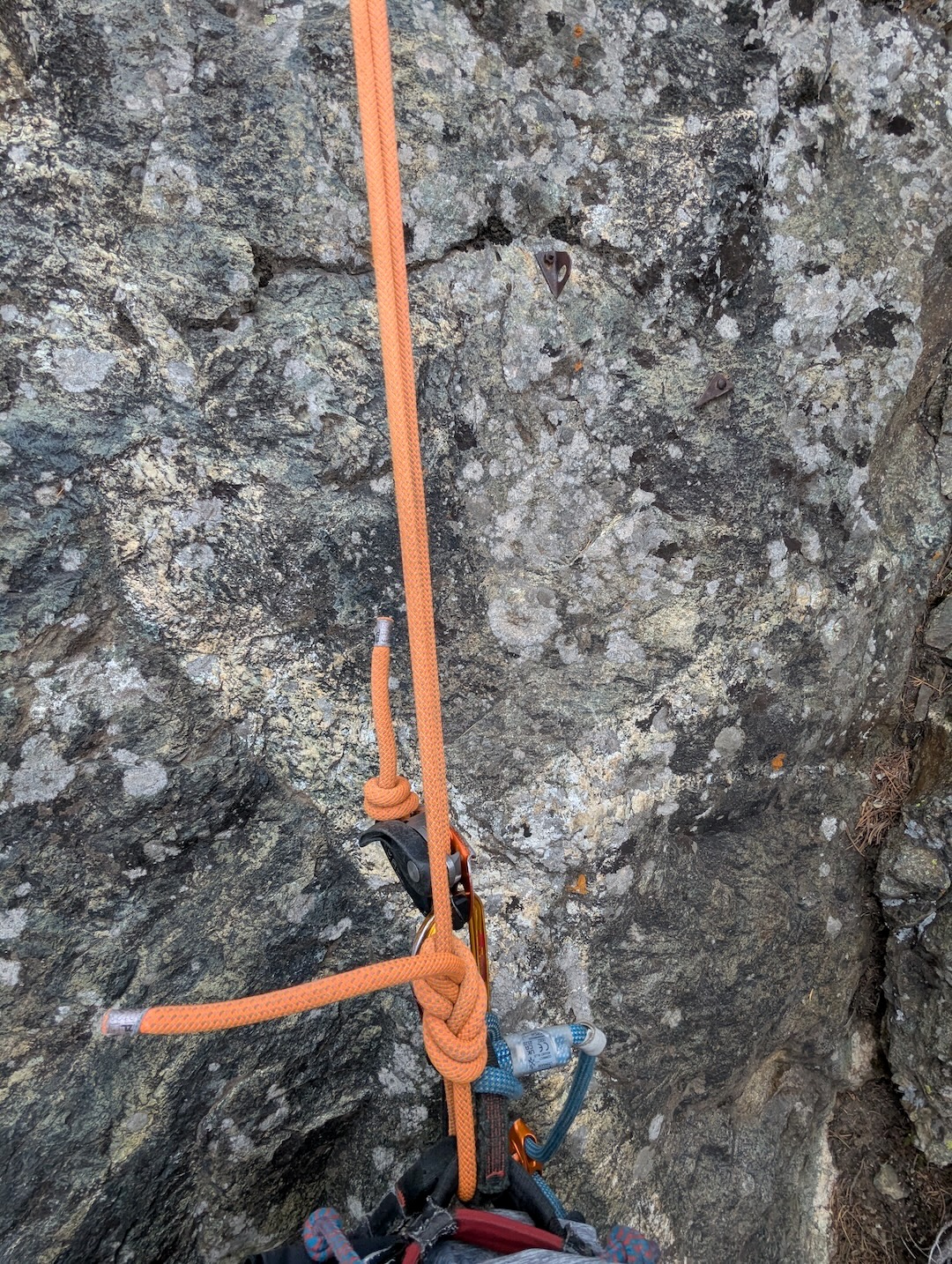
On July 29 at 11 a.m., Rick Karden (56) was guiding two clients on Hasta La Vista Amichi (4 pitches, 5.7+) in Officer’s Gulch. This high-country area is in Colorado’s I-70 corridor and has become recently popular with Front Range climbers and destination visitors looking to escape summer heat. It offers multi-pitch sport climbing, something relatively unusual for the area. He had two ~60m ropes, one attached to each client. At the top of the route, Karden lowered both clients a full rope length from the pitch-four anchors, bypassing the pitch-three anchors and getting them all the way to the pitch-two anchors. Karden’s plan was to descend to the pitch-three anchors, and then make a second rappel to rejoin his clients.
Karden chose to self-lower—tied into one end of the rope, while counter-lowering himself on the other—on a Grigri from the pitch-four anchors to the pitch-three anchors, using one of the ropes; he did not tie stopper knots in the rope other end. The rope ran through the device and he fell to the ground. He was pronounced deceased at the scene. His two clients were stranded at the pitch-two anchors, as Karden had the second rope clipped to his harness. The clients were evacuated by Summit County Sheriff’s Office deputies and the Summit County Rescue Group in a four-hour operation. They were uninjured.
ANALYSIS
A post-accident investigation by Colorado ANAC reporter Nick Ridley identified a likely mechanism. Ridley and a colleague climbed the route and measured the rope length needed for a doubled self-lower from the pitch-four anchors to the pitch-three anchors; their mark fell approximately one foot short of a true 60m rope—meaning a doubled 60m barely reaches the station.
Karden had previously guided the route and would have known the descent was tight when rappelling on a single 60m rope. When Ridley examined both of Karden’s ropes, one was a factory-standard 60m; the other had been cut at some point and measured 56 meters. The probable sequence: Karden believed he was using a 60m rope on his descent, did not tie a stopper knot because he knew a true 60 meters would just reach the station, and unknowingly chose the 56m rope. Two meters short of where he expected the rope to end, it ran through the Grigri.
A stopper knot takes seconds to tie. On any lower or rappel, a knot on one or both ends is the last safeguard against this failure mode—not only when a rope is unexpectedly short, but when its length is thought to be known and isn’t. Ropes that have been cut, damaged, or repurposed from a longer length can be difficult to distinguish from full-length ropes. (Sources: Nick Ridley, Rocky Mountain Guides, and Summit Daily News.)
Media Gallery