
Ground Fall — Multiple Pieces of Protection Pulled
California, Joshua Tree National Park, Dihedral Rock
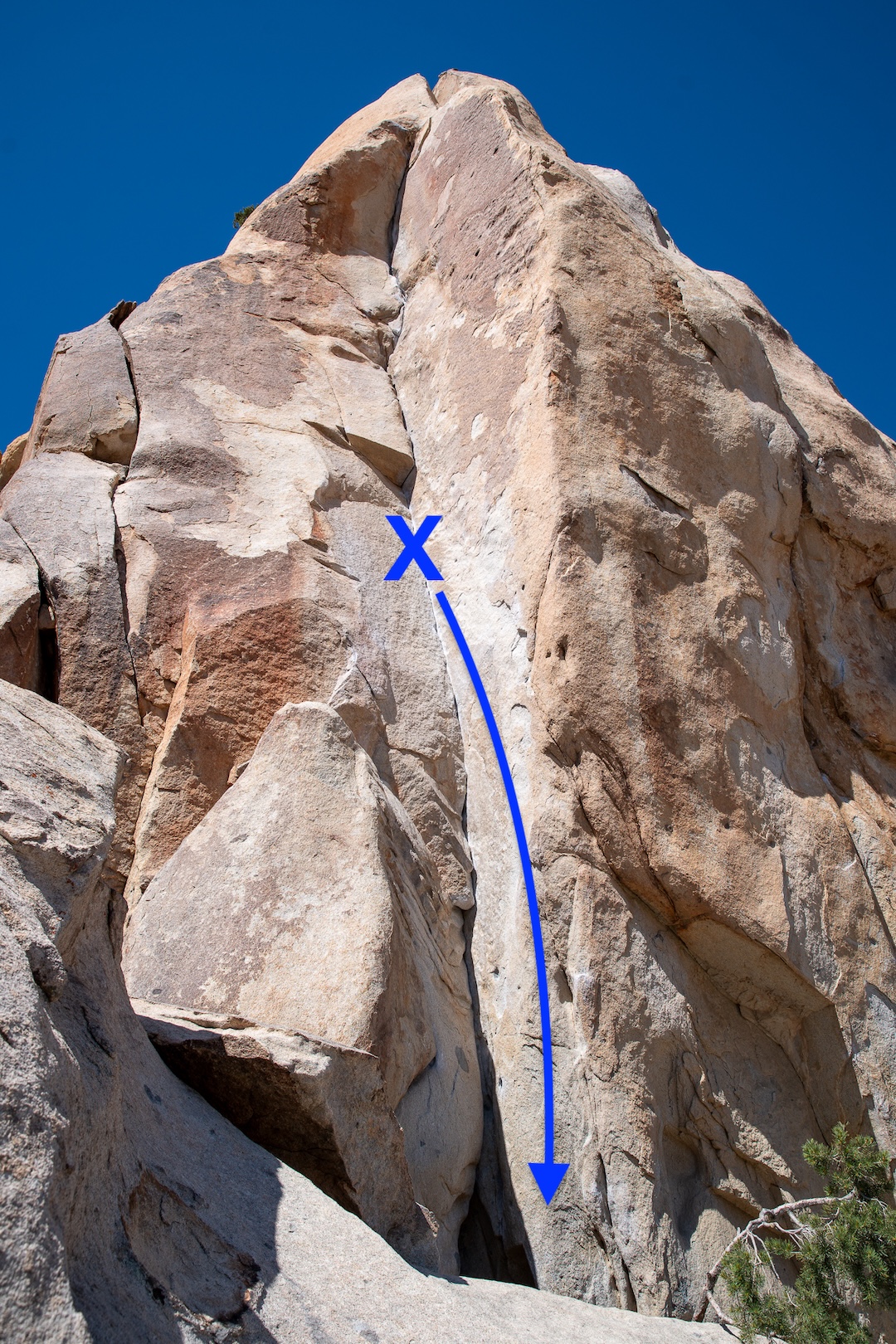
On November 10, I attempted Coarse and Buggy (5.11a/b) at Dihedral Rock in Joshua Tree National Park. I am 32, with considerable trad experience, and I had done thorough research, reading through multiple guidebooks and Mountain Project comments. I borrowed extra black Totems from friends. My belayer (mid-30s, moderate experience) was set up in the cave at the base, sheltered from the loose flake above that the route is known for.
The plan was for me to lead Coarse and Buggy and set a top-rope. I placed several good pieces at the start. As I began the dihedral, I wasn’t able to place the cams I had brought. I had several micro-cams (BD Z4 Nos. 0, 0.1, 0.2, and numerous black Totems) but they all seemed too big. I settled for some DMM Peenuts as the next three pieces—sizes 3, 4, and 5. Each time I placed one, I thought I saw a better placement higher. Each time that “better” placement turned out to be too flared or too small. Each nut was about three to five feet above the prior nut.
I could see a cam placement under the roof above, which would have been bomber, but my calves were burning and I knew I was at my limit. I decided it was safer to take a controlled fall than to press on. I called “Falling!” and came off.
I watched in slow motion horror as one by one, the three marginal nuts pulled. I took a ground fall of about 40 feet onto the large boulder below the dihedral. My feet stayed on the wall slightly longer than my top half so I fell butt first, hitting the ground in a seated position. On impact, my upper body whipped backward and the back of my head whiplashed the rock. Thanks to my helmet, I remained conscious.
I’m a WFR and conducted a self-assessment and discovered that I had no serious trauma. As we didn’t have cell service, my belayer radioed to friends on another formation to ask them to call 911. Fortunately, Dihedral Rock is close to the road. When paramedics arrived I was stable, but the decision was made to move me via a litter and take an ambulance to the hospital. There, X-rays said I had four vertebral fractures in my lower mid-back. My helmet probably saved my life.
ANALYSIS
I didn’t bring the right gear. More smaller cams would have been helpful in protecting the route. When I fell, because I fell butt first, my feet pushed me further away from the wall, loading the offset micro-nuts at an outward pull not down. Thus the nuts ripped out and never took the full force of the fall. Using brassies or RPs maybe would have let the nut bite the rock and sink in differently than the hard aluminum Peenut offsets. I think brassies or RPs or non-offset micro-nuts would have been better as they’d have had more surface area in contact with the rock and would have been stable.
Just because Mountain Project doesn’t list a climb as dangerous, doesn’t mean it’s safe. Every climber needs to consider the risks. That requires examining the route and being willing to bail if things get sketchy. Having watched multiple POV videos of people climbing this route, it seems I lacked a mix of skill in placing tiny gear and familiarity with the route. On that last note, I got back on the route four months to the day after my accident and top-roped it. (Source: Mark Ritterpusch.)
Media Gallery