
Fatal Fall on Snow — Inadequate Equipment for Conditions
California, Sierra Nevada, Mt. Whitney, Main Trail
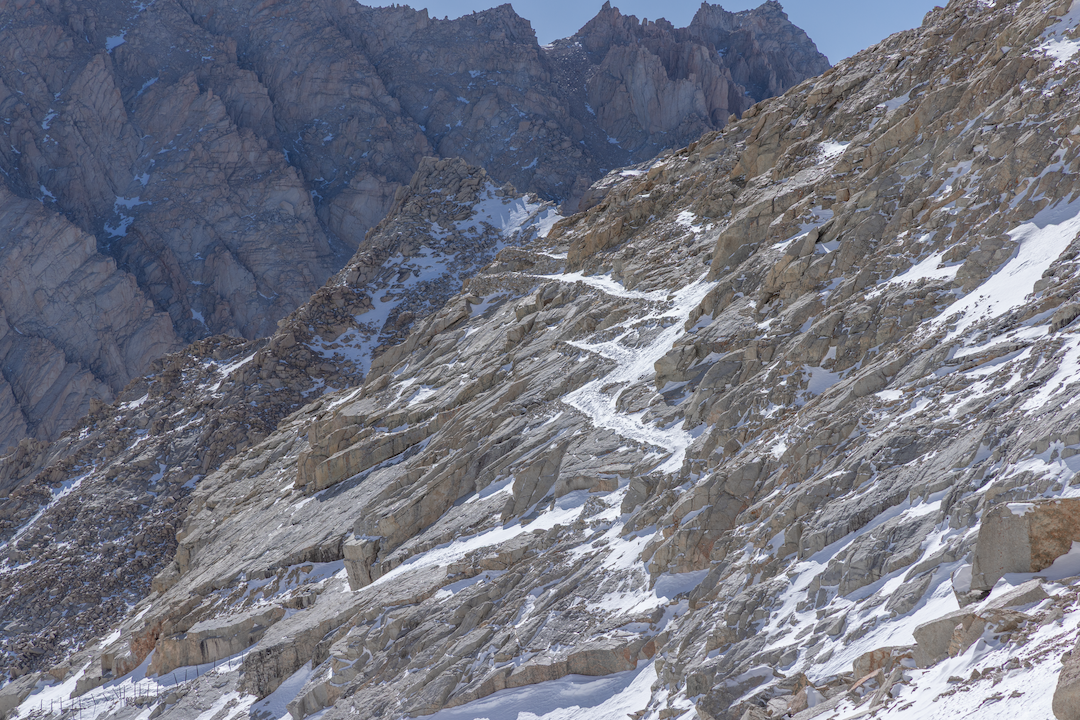
On October 25, Paul Jonathan Ortiz Jr. (29) slipped from the 99 Switchbacks on the Mt. Whitney Main Trail and fell to his death. A storm cycle from October 14 to 15 had deposited approximately 20 inches of snow above 11,000 feet; by October 25, ten days of melt-freeze cycles had consolidated it into firm névé in many areas. Ortiz slipped near switchback 52 and fell approximately 350 feet down granite slabs.
Witness Wes Ostgaard—an experienced Whitney hiker, who discovered Ortiz’s body on his descent and raised the alarm—described Ortiz as having slid above the cables in the Cable Section, contacted them, and continued another 70 feet below. Ostgaard’s party had turned back before reaching the upper switchbacks due to conditions.
Intense winds and blowing snow obscured the trail. In places it was invisible. High winds were a major factor. A ground response on October 26 required a seven-mile hike; high winds halted that attempt as well. On October 27, conditions improved sufficiently to reach Ortiz and lower him to a recoverable location.
ANALYSIS
Ortiz’s death was the third of five fatalities on Whitney in 2025, and the second on or near the 99 Switchbacks within two months—Joseph Brambila died on the same terrain on November 11 (see below). Both incidents share a common thread: a hiker equipped for summer encountering a mountain in early winter. Accounts from other hikers indicate Ortiz carried trekking poles but no ice axe, crampons, or helmet—appropriate for the Main Trail in stable summer conditions, inadequate for consolidated névé and ice on steep granite in wind strong enough to make the trail invisible.
The gear requirement on October 25 was crampons, mountaineering boots, ice axe and a helmet. Ostgaard recognized conditions as beyond what he was willing to commit to and turned back. That judgment—and the willingness to act on it—saved his life. (Sources: Inyo County Sheriff’s Office, Inyo County SAR, and Brandon Riza.)
Media Gallery