
Lead Fall — Femur Fracture
California, Lake Tahoe, Highway 50 Corridor, Lover's Leap, Dear John Buttress
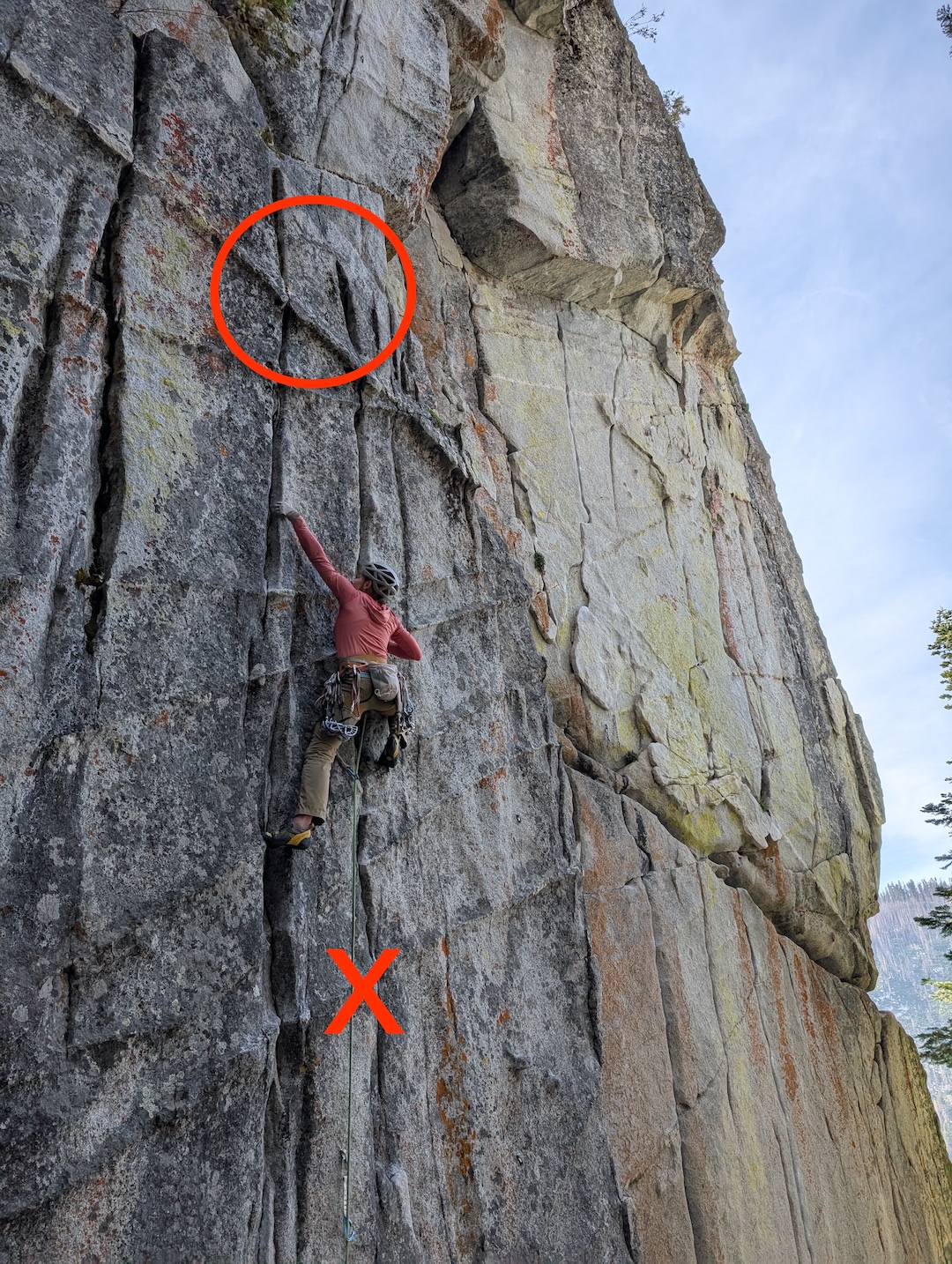
On September 7, I was leading Rehab (5.11a) at Lover’s Leap, the last route of the day. With my 18 years of experience, it was well within what I typically onsight. My belayer is more experienced than I am.
Rehab is bolted with a flared crack about 20 feet up. I clipped the first two bolts and placed a black Totem Cam several feet above bolt two. Attempting to clip the third bolt, I fell—12 to 15 feet with a modest pendulum. As I swung back into the wall above the first bolt, my right leg struck a granite dike protruding about an inch. I hit it perfectly wrong and broke my leg: a displaced spiral fracture of the proximal femur.
As I was lowered, my leg hung sideways at an unnatural angle. On the ground I couldn’t move it at the hip, and weighting it was agonizing. We deduced a broken femur and feared that movement might nick the femoral artery. My friends called 911, activated a Garmin inReach, and requested a helicopter. I began to go into shock. As SAR littered me to the ridge, I could feel bone pieces shift with every movement—immensely painful. I was lucky to be near a road. Fire crews and a helicopter hoisted me out.
ANALYSIS
My belayer and I discussed the catch afterward. She is five to ten pounds lighter than me and said she neither gave nor took slack, uncertain of the Totem’s integrity. Had the cam pulled, there was groundfall potential. Given the weight differential and limited friction in the system, her instinct was sound—I would have done the same. When I fell, I wasn’t concerned—I hadn’t seen a danger, let alone a life-threatening one. Neither had my friends.
I categorize this as a rare accident. The protection held, the belay was good, and the fall distance was average. The dike was in exactly the wrong location at the moment of impact, focusing force to a single point.
That said, the section between bolts two and three has a documented history of falls at that spot. Multiple Mountain Project comments note the third-bolt clip as the crux for many, and two climbers told me they fell in the same place.
Weight differential between climber and belayer affects how a fall resolves, particularly with limited rope in the system. Discuss this before leaving the ground—both parties should understand how the catch will play out on a low fall. A more dynamic belay allows the belayer to be pulled up or forward, softening the catch and reducing peak impact force. Neither option eliminates risk, and the same can be said of dikes at Lover’s Leap generally.
The rescue cost is worth noting: fire crew, helicopter evacuation, air ambulance, surgery, a four-day hospital stay, and follow-up appointments totaled approximately $250,000 before insurance. Wilderness rescue insurance is inexpensive relative to that exposure and worth carrying if you are underinsured. (Source: Anonymous.)
Editor’s Note: The American Alpine Club Leader membership ($250/year) includes $300,000 in medical evacuation coverage for accidents.
Media Gallery