
Glissading Accident — Leg Injury
California, Mt. Shasta, Avalanche Gulch, Red Banks
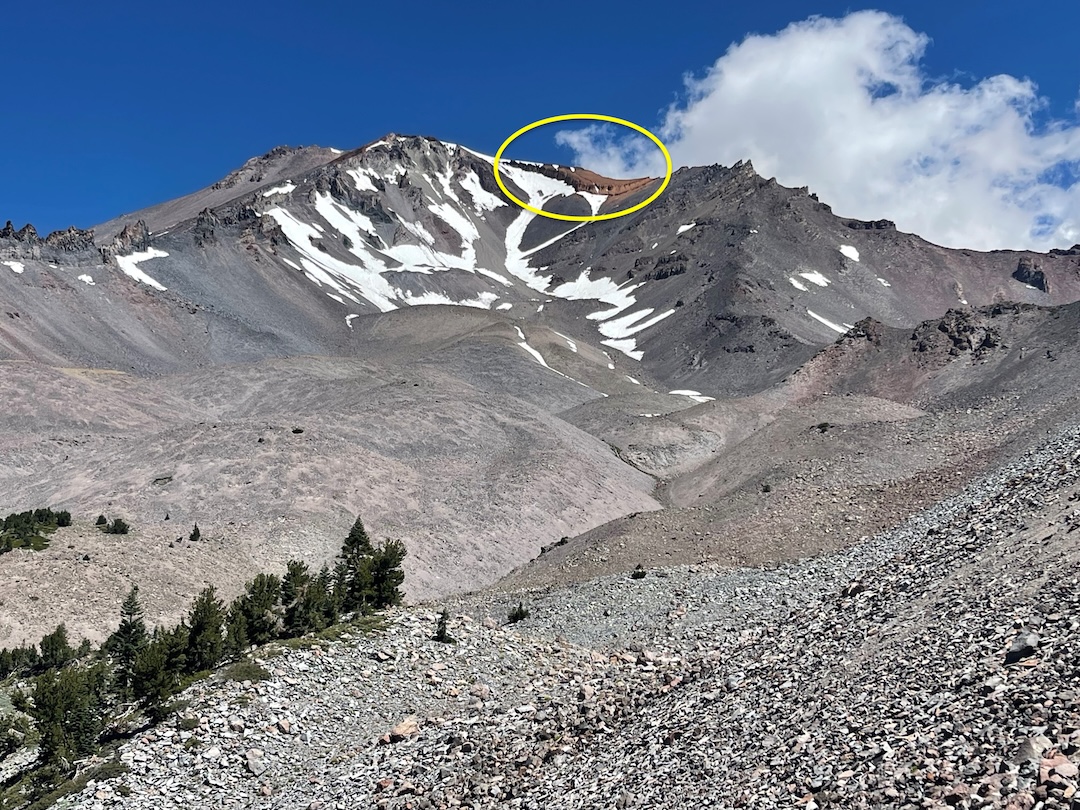
On August 10, a solo male climber lost control while glissading on steep snow in upper Avalanche Gulch near the Red Banks, at approximately 13,000 feet—the steepest section of that route. His ice axe was ripped from his grip as he attempted to control his speed. He tumbled several hundred vertical feet, sustaining a leg injury, contusions, and lacerations that left him immobile.
The Siskiyou County Sheriff’s Office notified USFS Climbing Rangers and CHP air operations. A CHP helicopter crew inserted one climbing ranger, who assisted in packaging the patient for a hoist evacuation. The climber was transported to a hospital in Mt. Shasta City.
ANALYSIS
Glissading is an efficient and enjoyable way to descend snow slopes—when conditions and technique align. The combination of firm snow, steep gradient, and a runout that terminates in rocks or cliffs eliminates the margin for error. Crampons should be removed before glissading; they catch on snow and can violently flip a climber. The ice axe must be firmly gripped and in position before the slide begins—not grabbed for during an accelerating fall. A visible, clear runout is nonnegotiable. When conditions make a controlled stop uncertain, walking down is not inefficient: It is correct. (Source: Mt. Shasta Climbing Rangers.)
Media Gallery