

HAPE — Frostbite
Alaska, Mt. McKinley, West Buttress Route
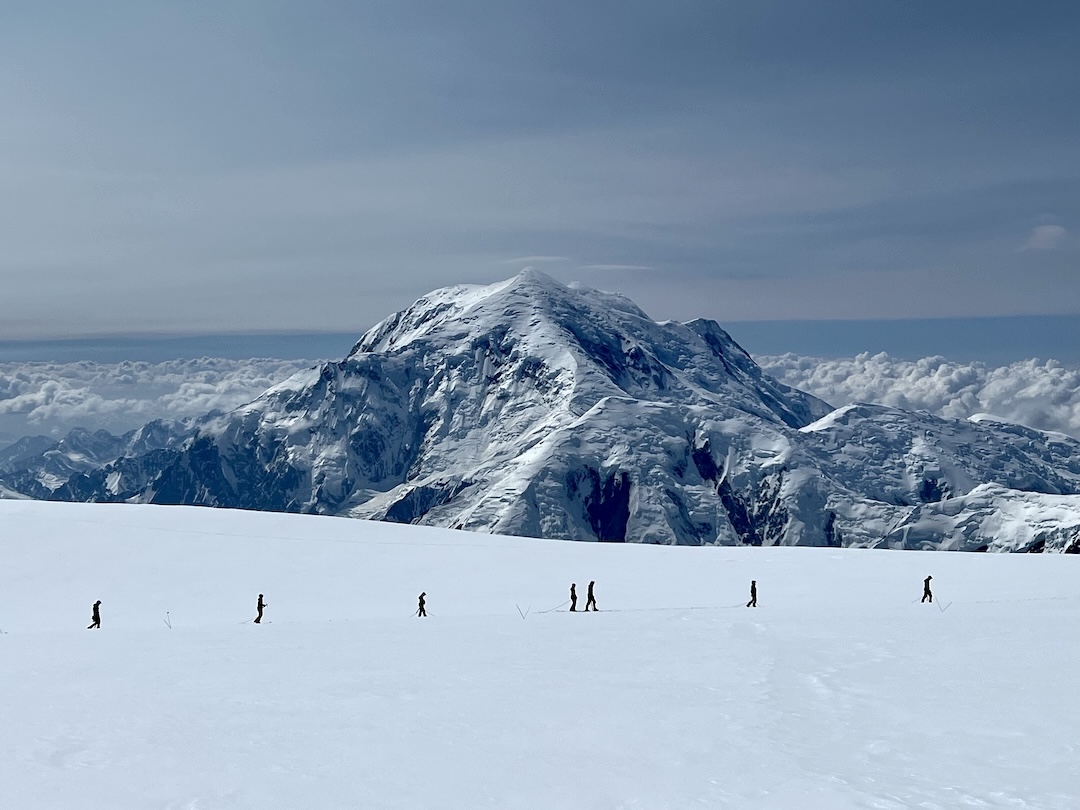
On May 20, a guide service reported to NPS personnel at the 14,200-foot camp that one of their guides was suffering from high altitude pulmonary edema (HAPE) and frostbite. The injuries were sustained on the move from the 11,200-foot camp to 14,200 feet. The patient presented with Grade 2 frostbite on one finger, low oxygen saturation (SpO2), and poor lung sounds. He was treated with altitude medications, supplemental oxygen, and periodic sessions in a portable hyperbaric chamber. Two days later, weather improved sufficiently to allow helicopter evacuation to Talkeetna, where the patient declined further care.
ANALYSIS
HAPE is caused by excessive fluid leaking from capillaries within the lungs and most often occurs two to three days after ascent to high altitude. It can occur in conjunction with acute mountain sickness (AMS) or high altitude cerebral edema (HACE), or by itself. Early recognition is critical; symptoms include shortness of breath with exertion, followed by shortness of breath at rest, persistent cough, excessive fatigue, and very low pulse oximetry readings. Prompt descent remains the best treatment. The frostbite in this case—sustained on an active ascent between camps—is a reminder that cold injury can occur at any elevation on the mountain during periods of low temperature or high wind, even on well-traveled terrain. For a detailed discussion of HAPE assessment and treatment, see “Mountain Medicine: Acclimatization and High Altitude Illness,” ANAC 2024. (Source: Denali Mountaineering Rangers.)
Media Gallery