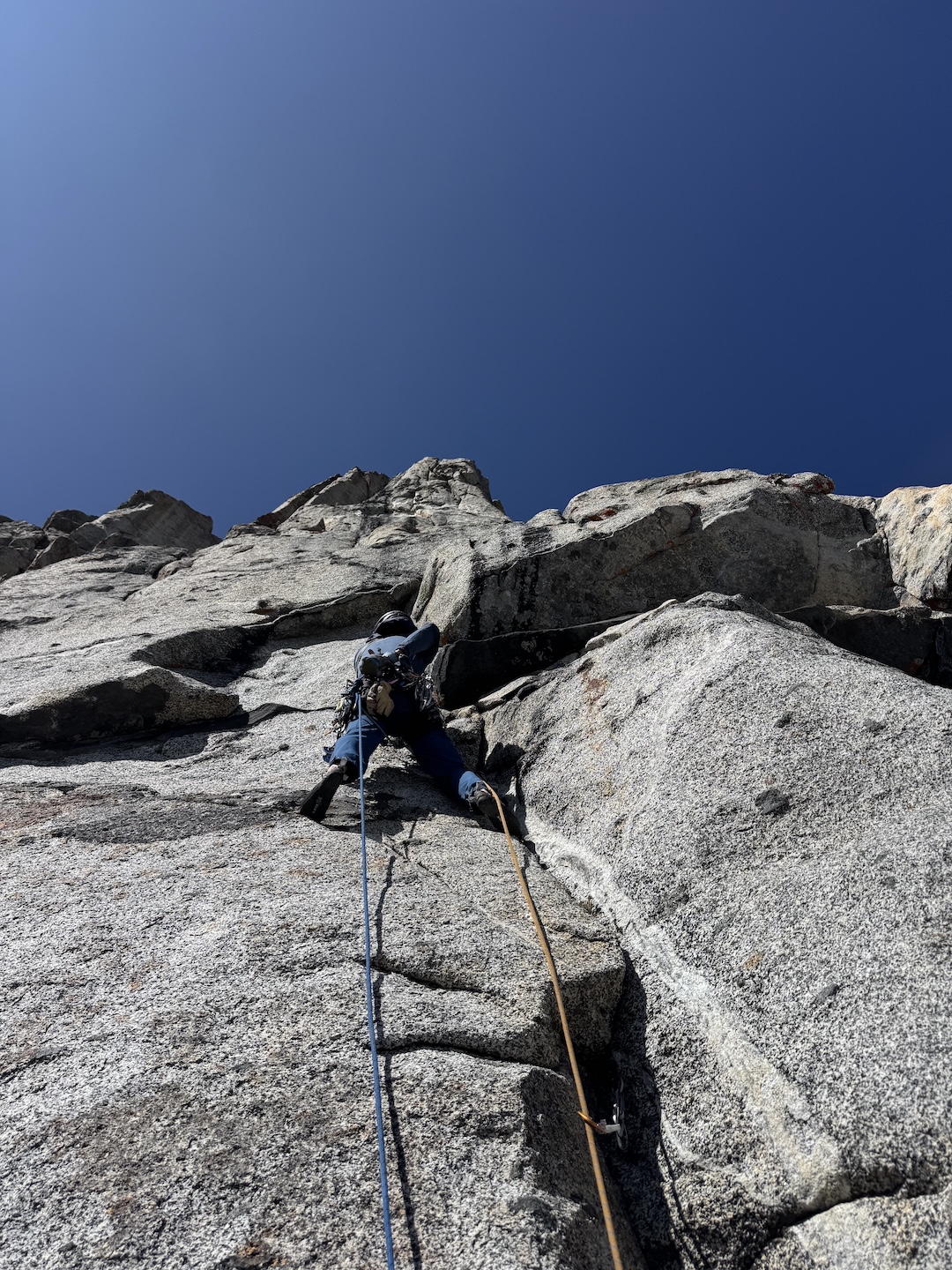

Goat Mountain, East Face
Idaho, Pioneer Mountains
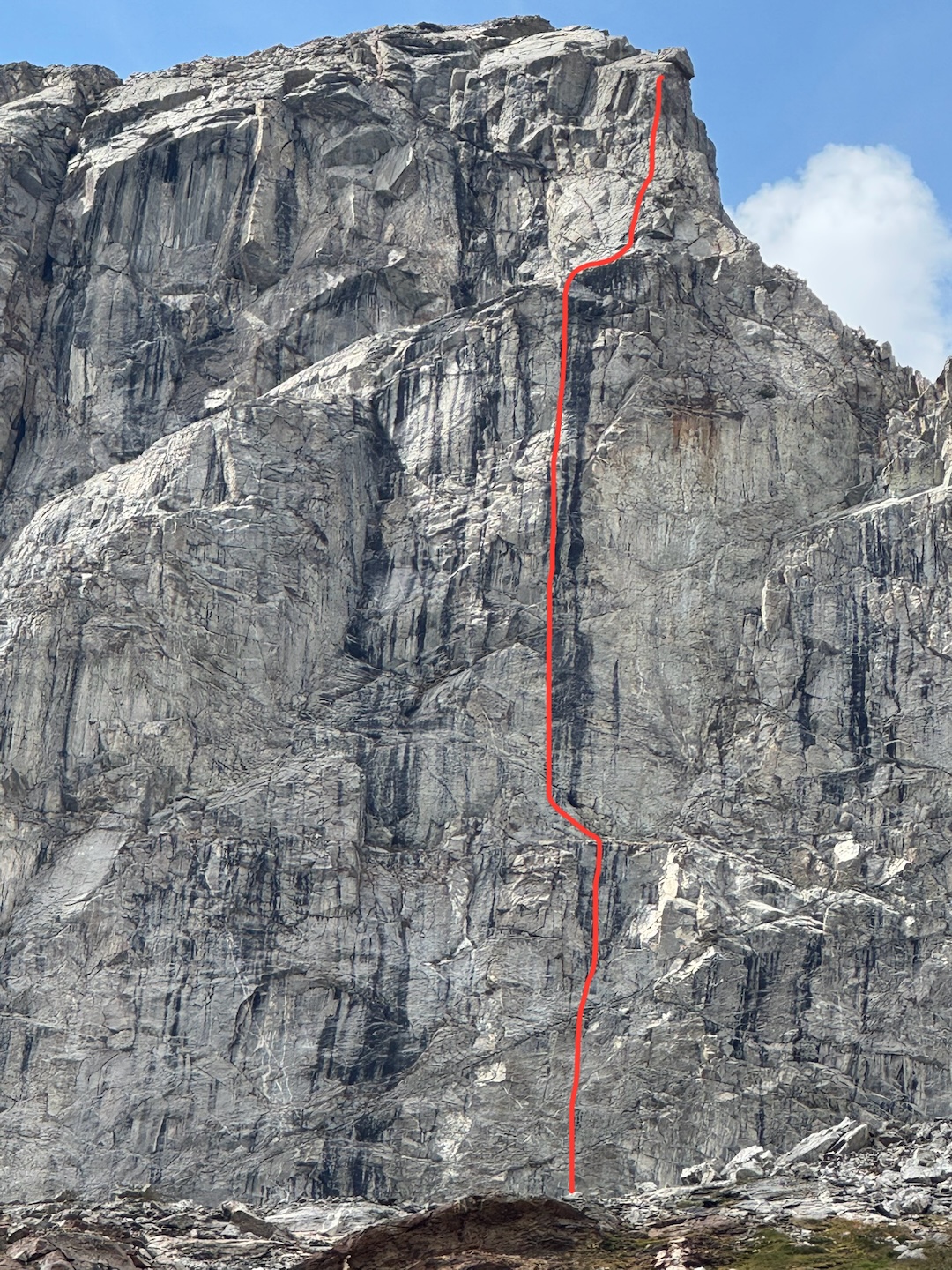
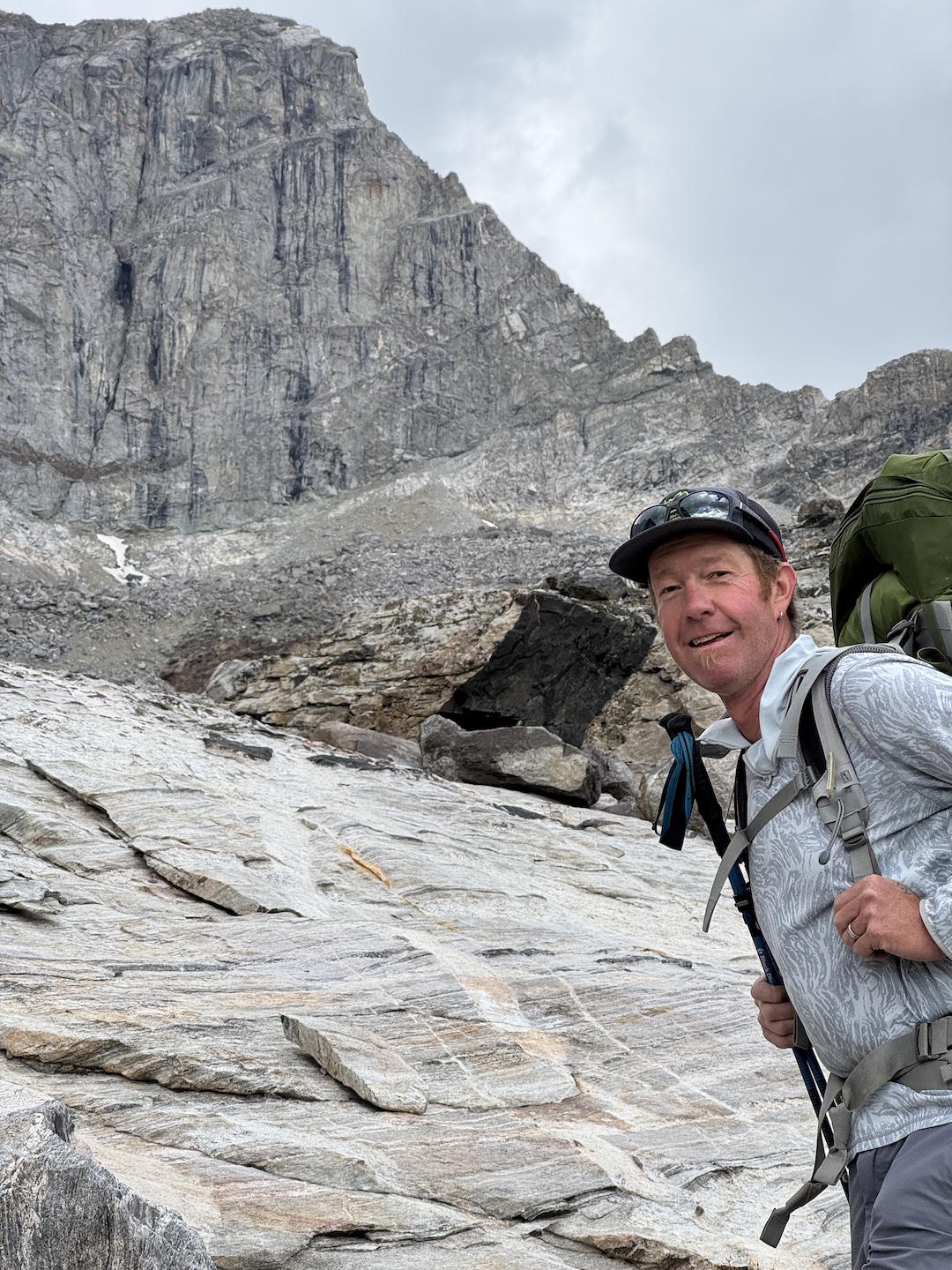
After nearly two decades of exploring easy to moderate ridge routes in Idaho’s Pioneer Mountains, in 2012 Drew Daly and I set our sights on the steep, 800-foot east face of Goat Mountain (11,913’, 43.77416, -114.14192). We ventured up in approach shoes, with a 60m rope and a light rack, and selected a diagonaling corner system on the left side of the face. A handful of pitches up to 5.6 and a fair bit of simul-climbing brought us to the summit. We named the route Goat Roper and descended steep, loose scree for 1,000 feet to the base. On that outing, we noted the quality of the rock and vowed to return one day.
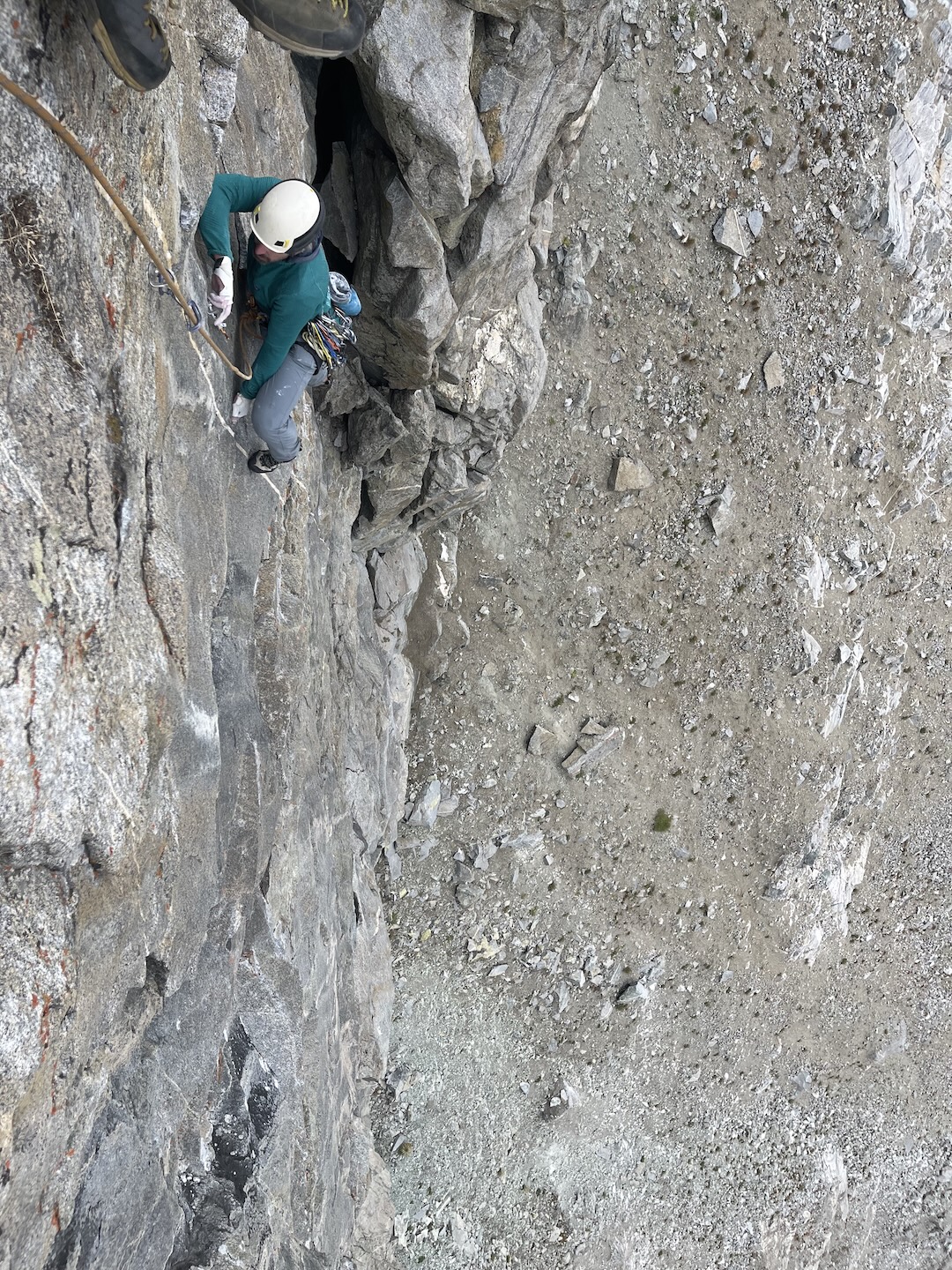
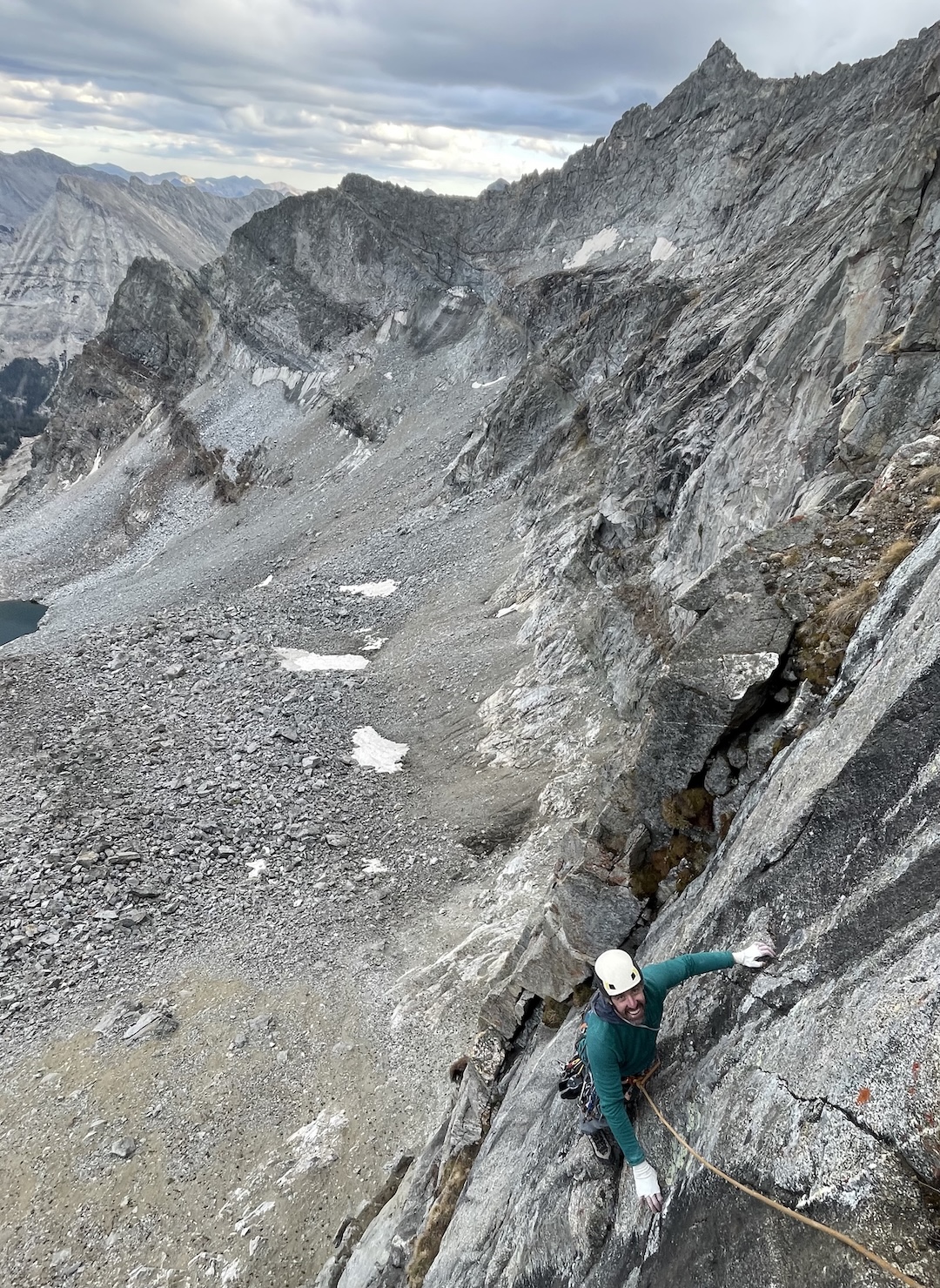
That day came in the summer of 2024. After the approach—nearly four miles of off-trail hiking with 3,500 feet of vertical gain—we set to work. Over two trips and four days total, we established the first three pitches (5.11c, 5.11a, and 5.10a) of our new route, bringing us to a broad ledge. The rock on these pitches was generally outstanding, with discontinuous cracks and face features.
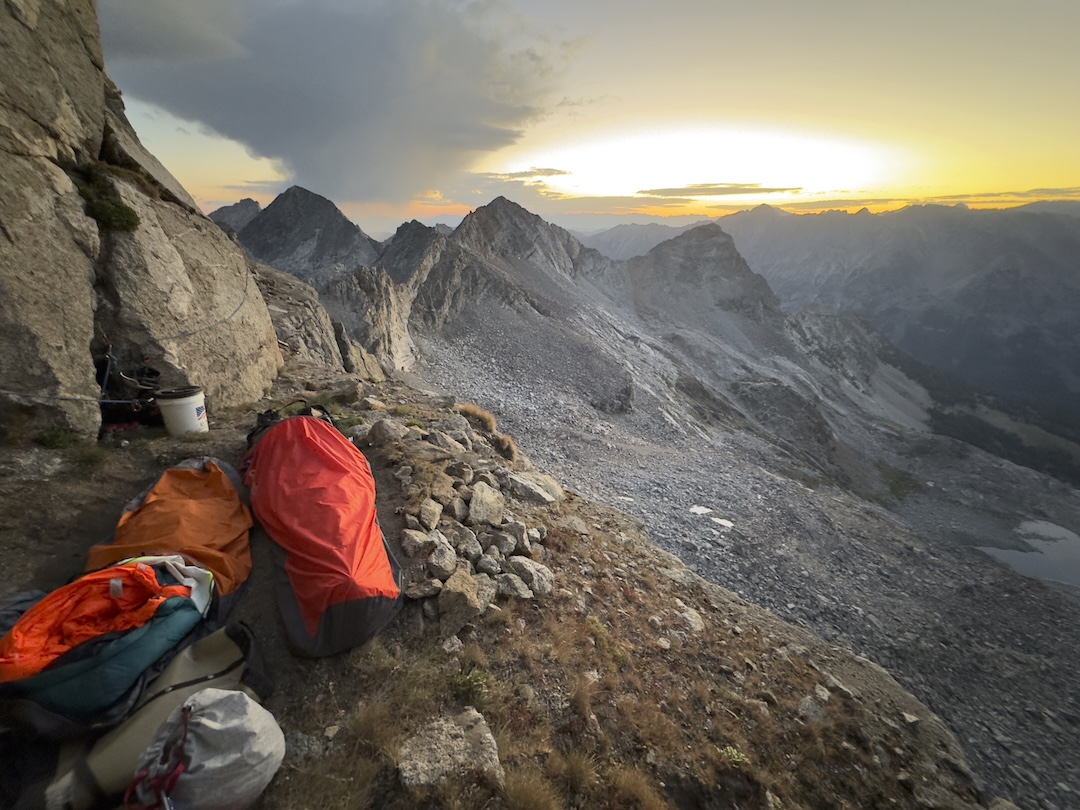
We returned in August 2025 and hauled loads up to the bivy ledge while we worked the upper pitches. Over the course of this and one additional trip in September 2025, we pushed the line to the top via four more pitches.
From September 16 to 18, we redpointed the route for a team-free ascent. On day one, we freed pitches one through three. The next day, we finished equipping pitch four, then worked out the moves of the crux fifth pitch, which goes through a roof and punches straight up the black-streaked headwall on thin edges and knobs, ending on the most amazing grassy belay ledge. We continued by equipping and redpointing two 5.10 pitches, followed by a 100-foot scramble to the summit. On the third day, we redpointed the fifth pitch (5.12b). A continuous free ascent remains up for grabs.
A Beast the Color of Winter (800’, 7 pitches, IV 5.12b) has a mix of bolts and gear protection. The name is a reference to Douglas H. Chadwick’s excellent, out-of-print book about his field studies of mountain goats in the 1970s, which helped game managers create the policies that have kept these animals from disappearing from North America.
We’d like to thank the AAC for a Live Your Dream Grant, which helped with the costs of equipping this route. The east face of Goat Mountain has a lot of steep, featured stone—we hope our efforts encourage others to explore its potential. [Idaho: A Climbing Guide notes a route on the east face of Goat Peak climbed in 1991 but says no details of the ascent are known.]
—Marc Hanselman
Media Gallery