
Jebel Um Ejil and Jebel Rum, Many New Routes
Jordan, Wadi Rum
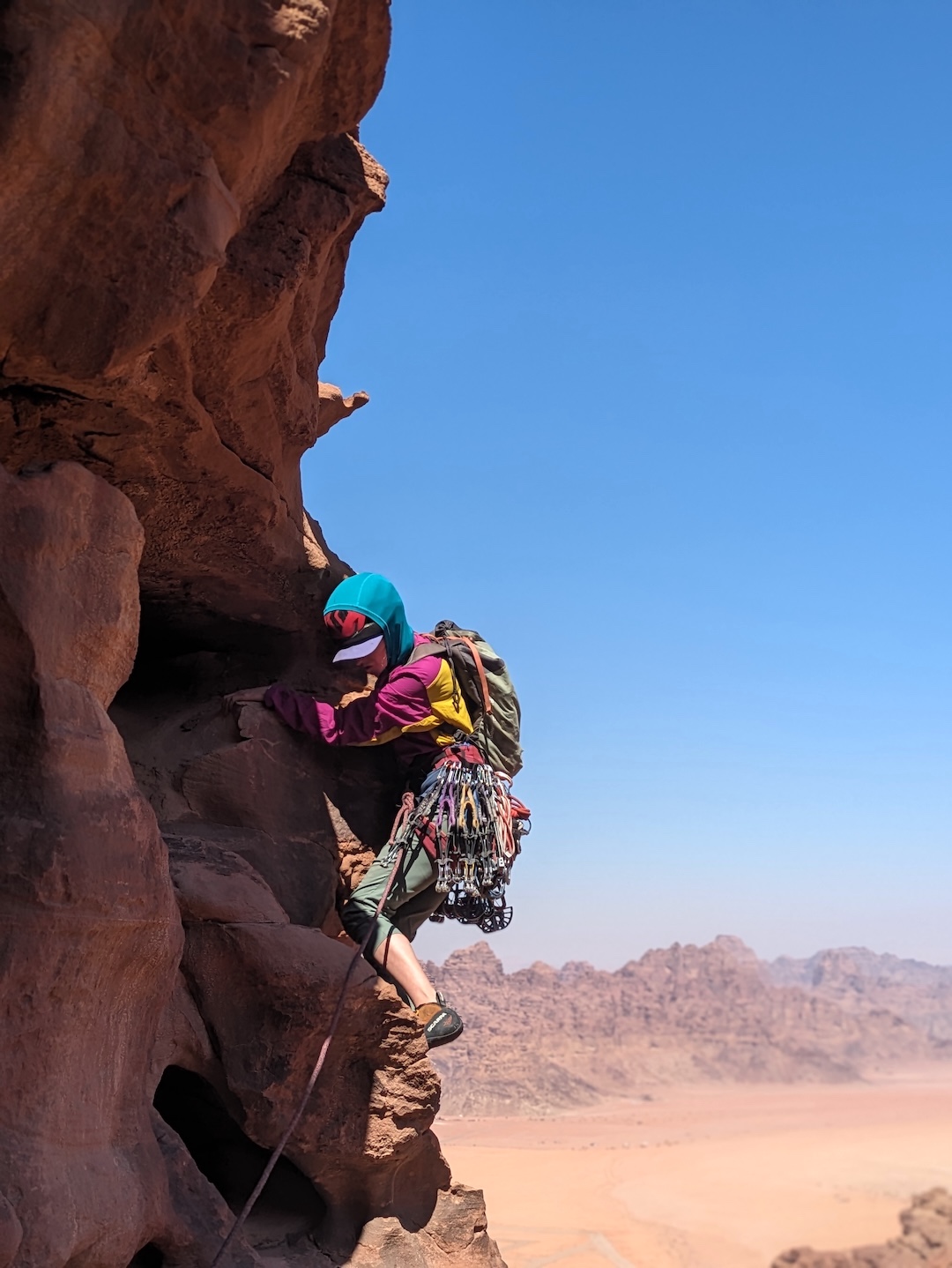
Lani Chapko and I first visited Wadi Rum in 2023 and were immediately enamored with the climbing. Since then, we have made a number of extended visits and have begun to offer guided trips there. Information for the climbing in Rum is piecemeal, with an old guidebook and online sources in a half dozen languages. It can be challenging to determine whether something has been climbed, in part because the history of bold climbing in Wadi Rum means that even imposing blank faces might have been ticked.
By the spring of 2025, we finally felt confident enough in our experience in Rum to entertain the idea of putting up new routes. Our goal was to add high-quality and well-protected climbs to the area surrounding Rum village, using traditional protection wherever possible and bolts where it is not. After talking with local Jordanian climbers, we learned this is the ethic they abide by and prefer visiting climbers to follow. All our new routes were climbed ground-up.
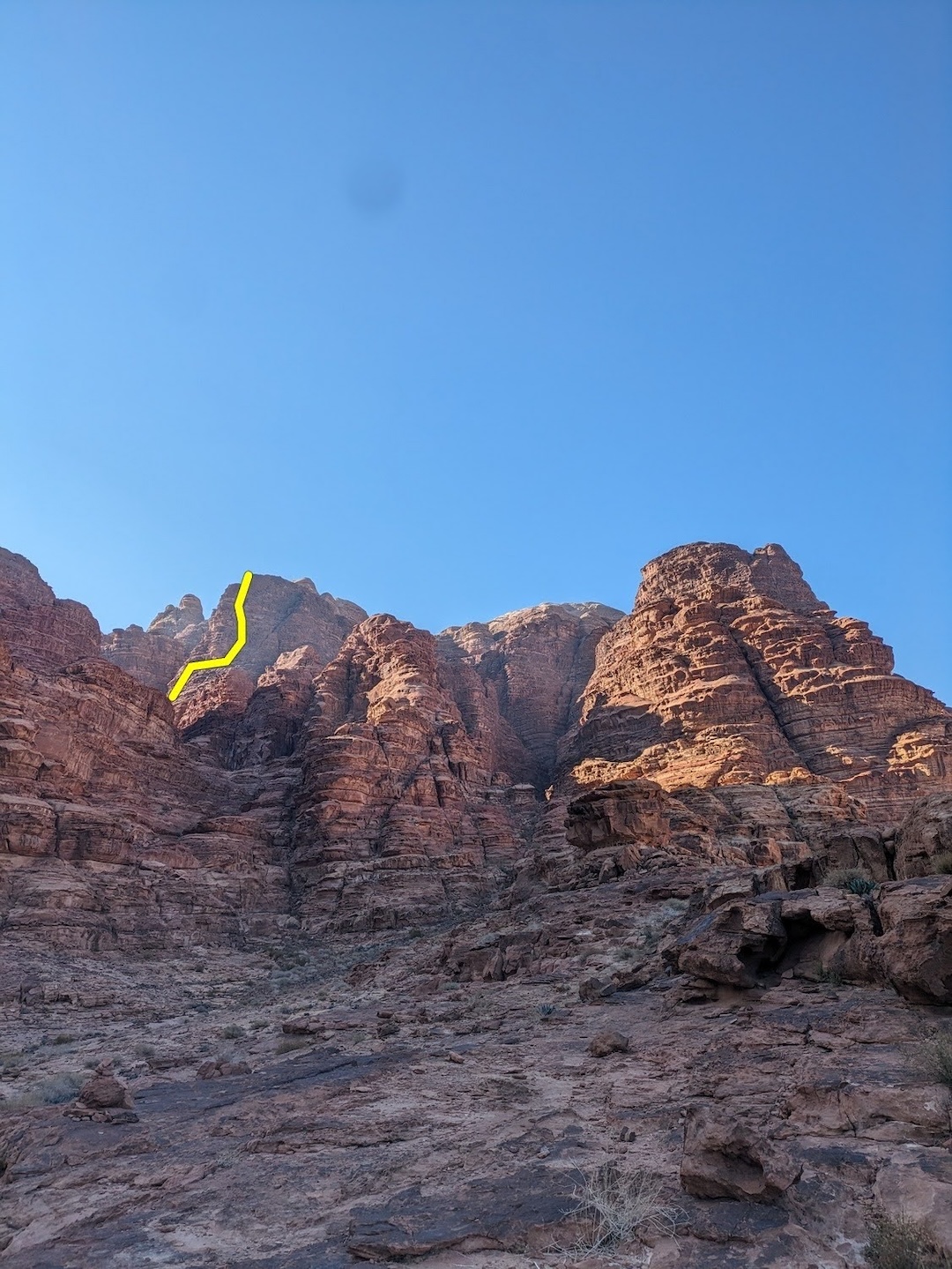
We decided to start our March trip with an “easy” route to get a feel for the virgin rock, and for this we scouted around Rakabat Canyon. Rakabat splits the many summits of the Jebel Um Ejil massif and is a traditional Bedouin passage and a “shortcut” between Wadi Rum and Wadi Um Ishrin. The rock in this zone is generally a deep red, softer rock that weathers into incredible huecos, mushrooms, and threads.
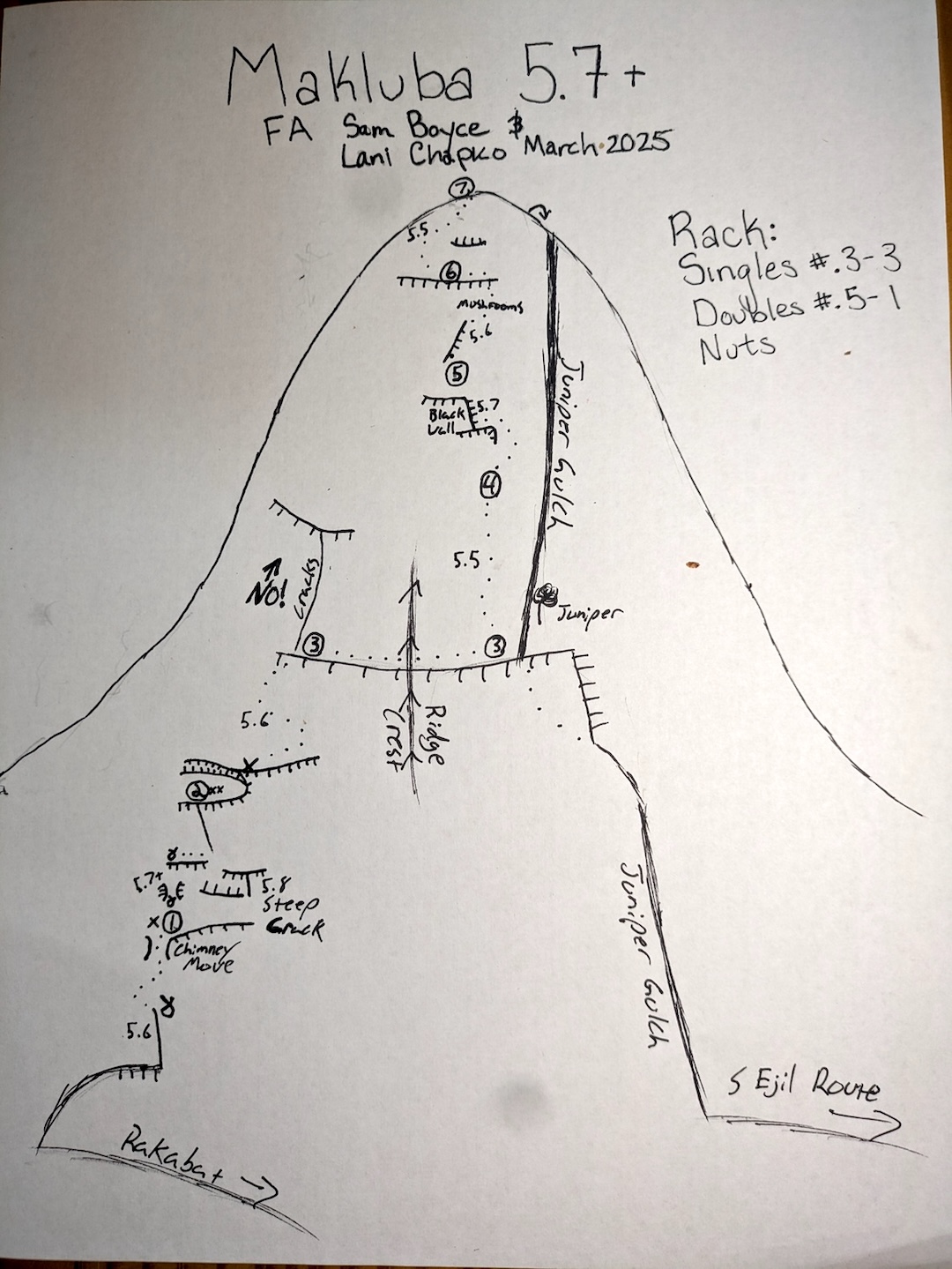
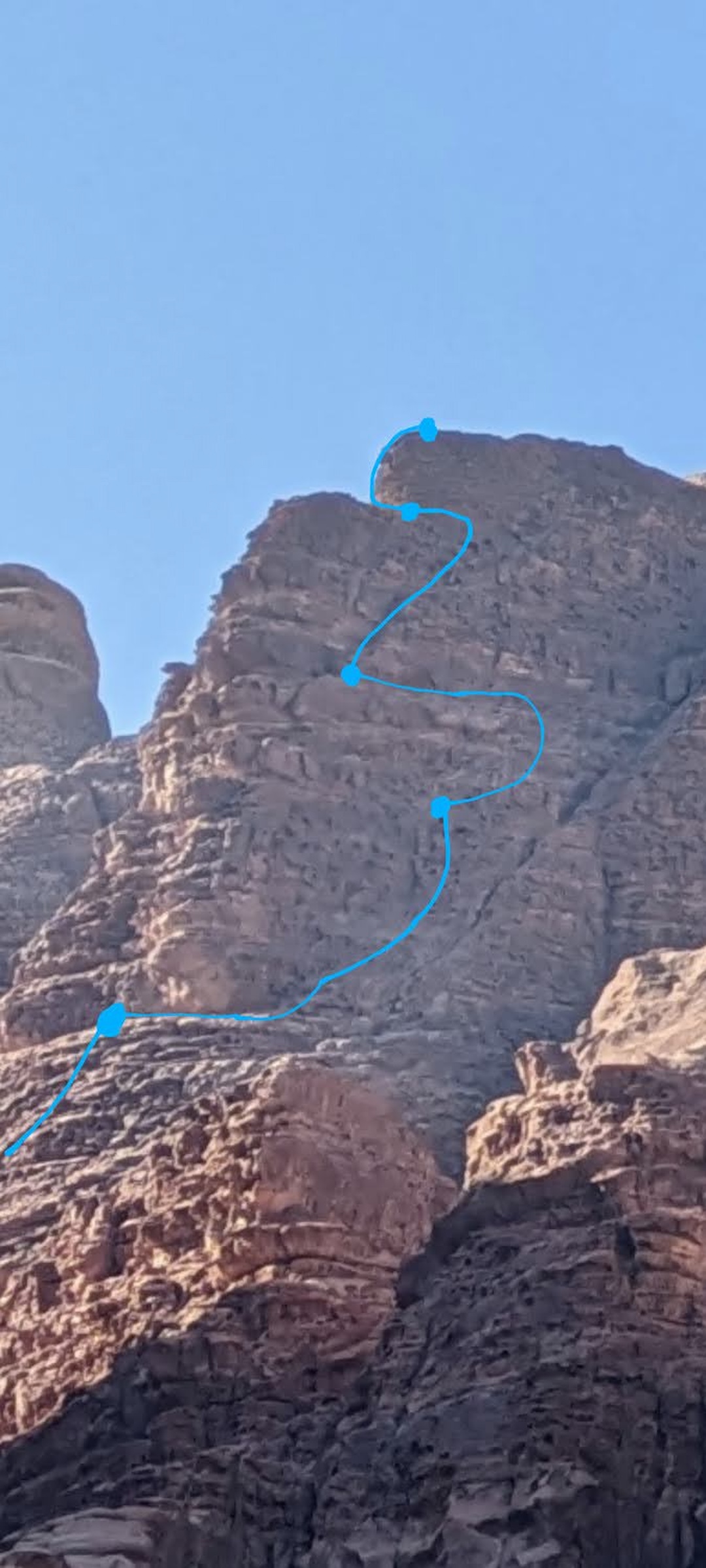
We identified a low-angle buttress we believed to be unclimbed that is on the unnamed subpeak where an old line called Juniper Gulch (II 5.4, Howard-Taylor) resides. Juniper Gulch climbs an obvious large crack on the west face of the formation. We started on the east side, transitioning to the north ridge for the last few pitches. We named the route Makluba (6 pitches, III 5.7) after the traditional Bedouin dish. Makluba turned out to be an excellent and sustained line, adding a rare moderate to the climbs of Wadi Rum.
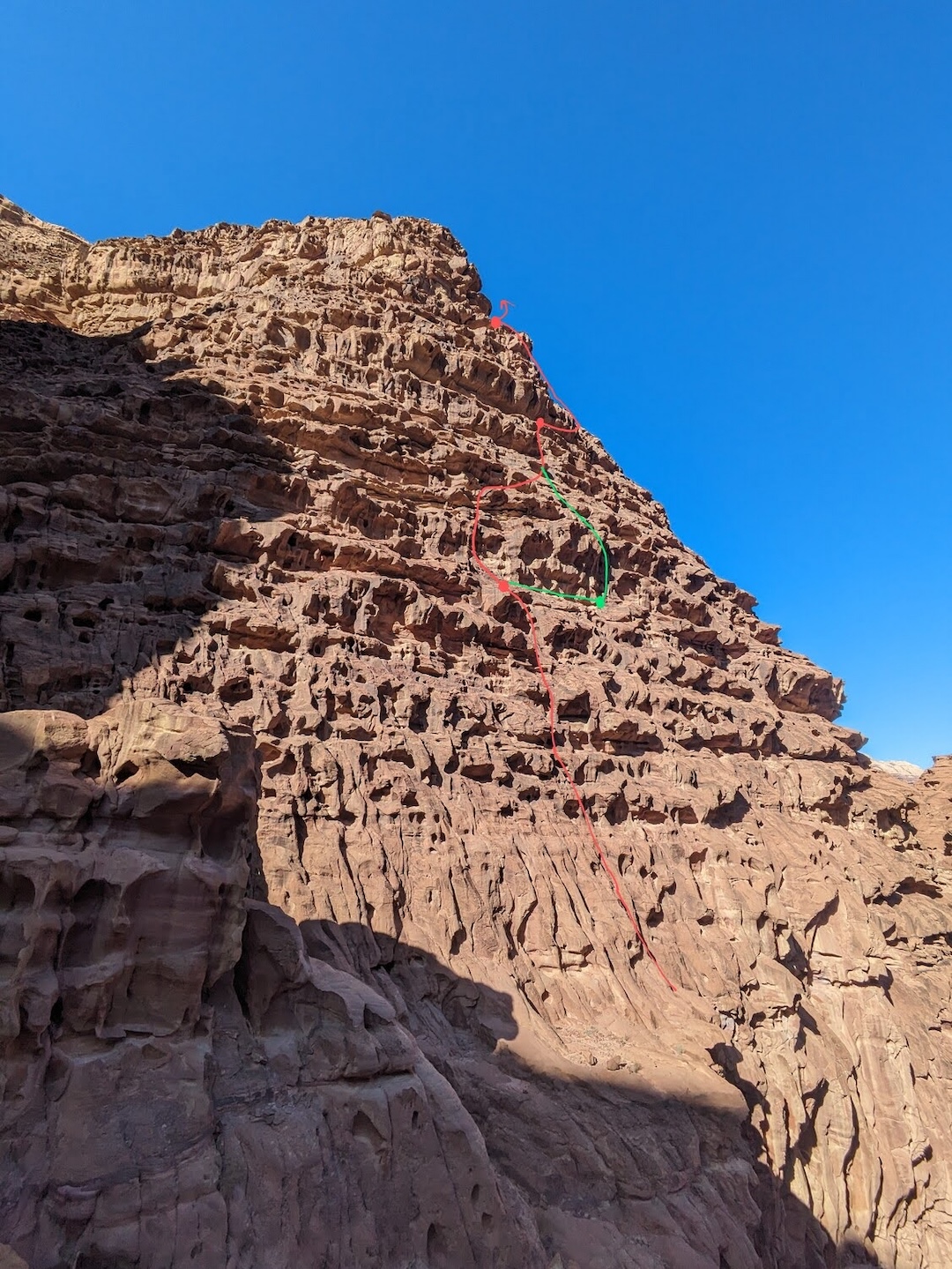
Many of the lines we had previously scouted were on the east side of Jebel Rum, so we decided to focus our next efforts there. These broad walls hold many of the area’s classic climbs. We added four multi-pitch lines, listed from left to right below:
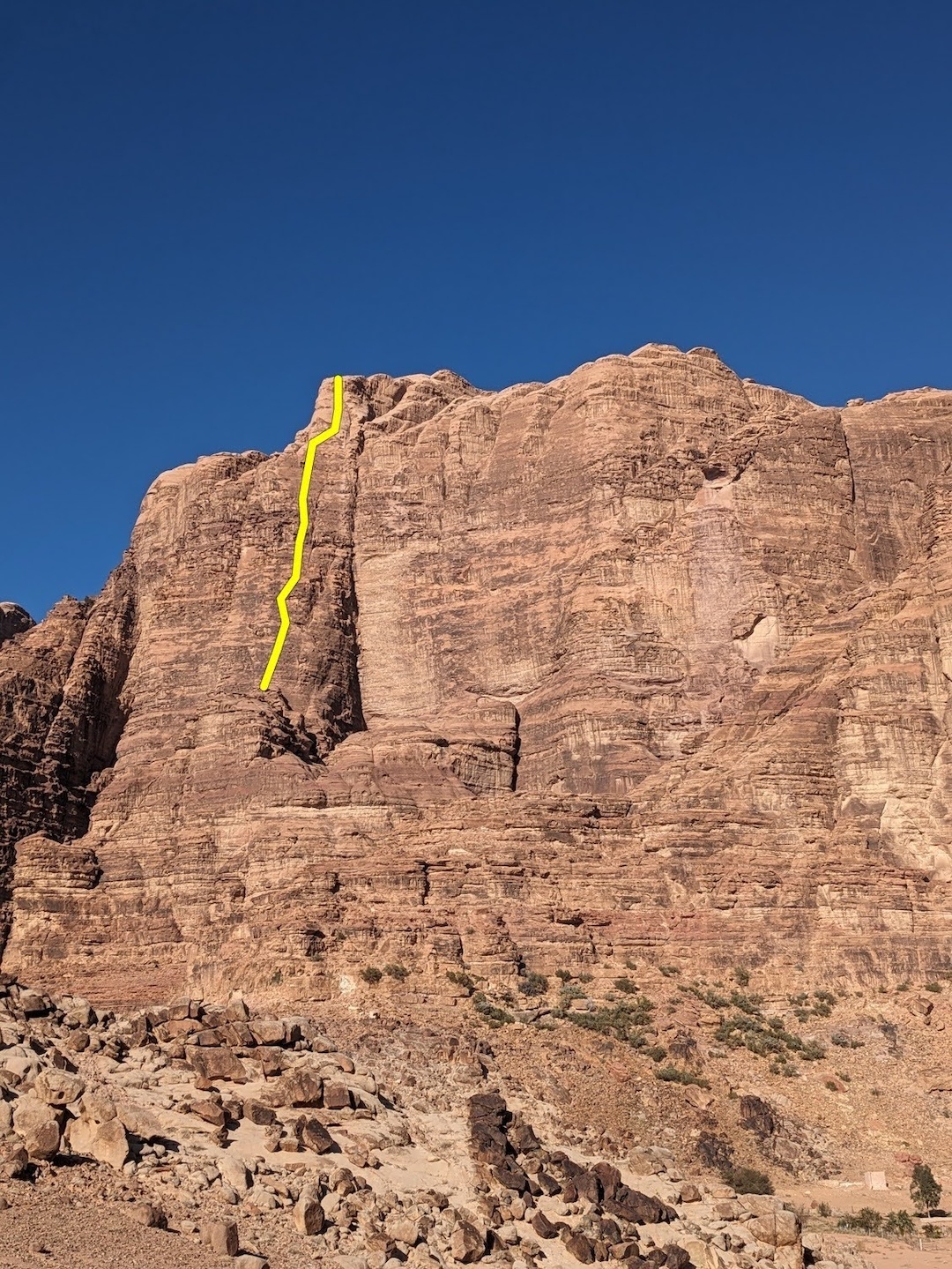
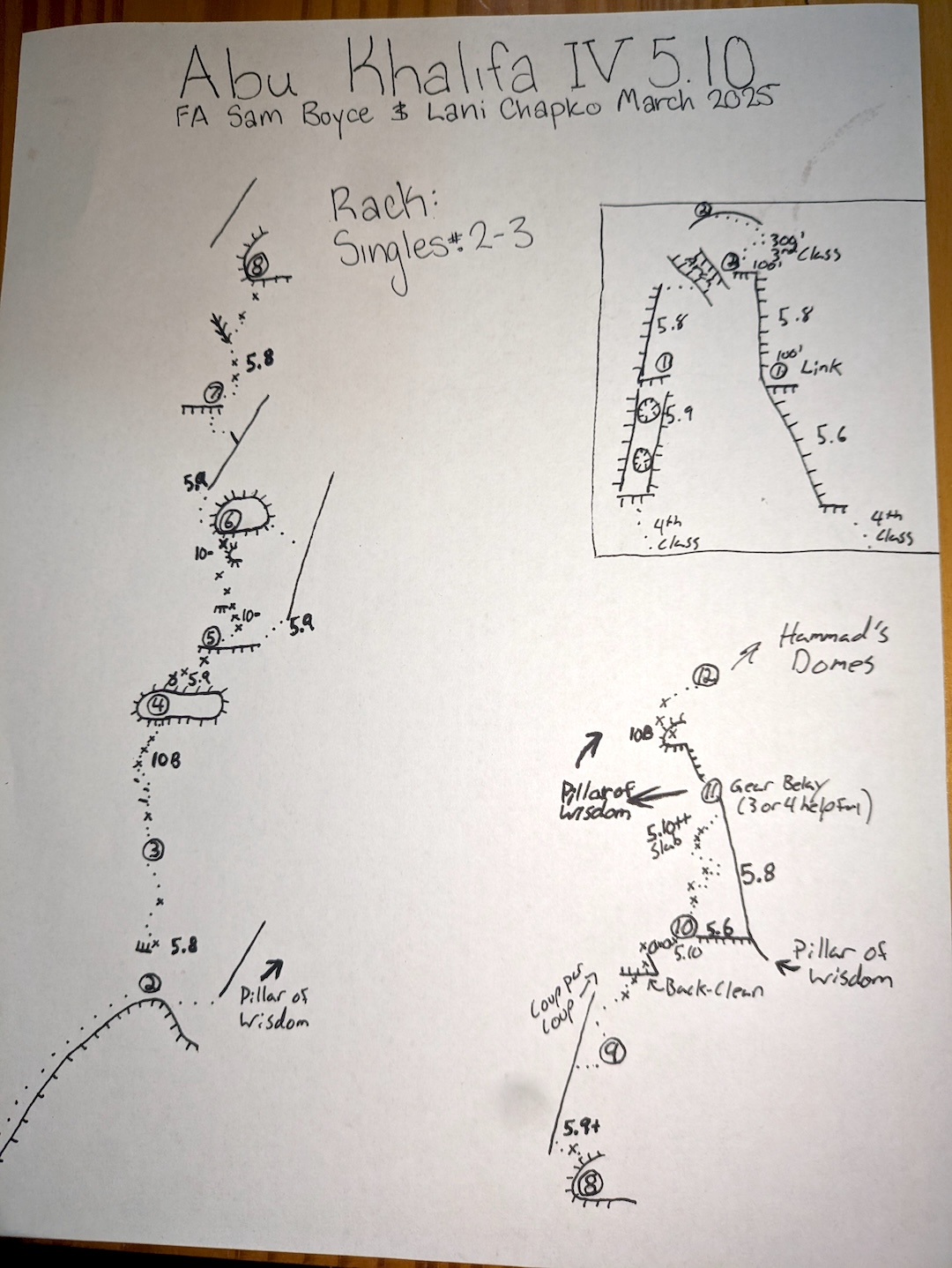
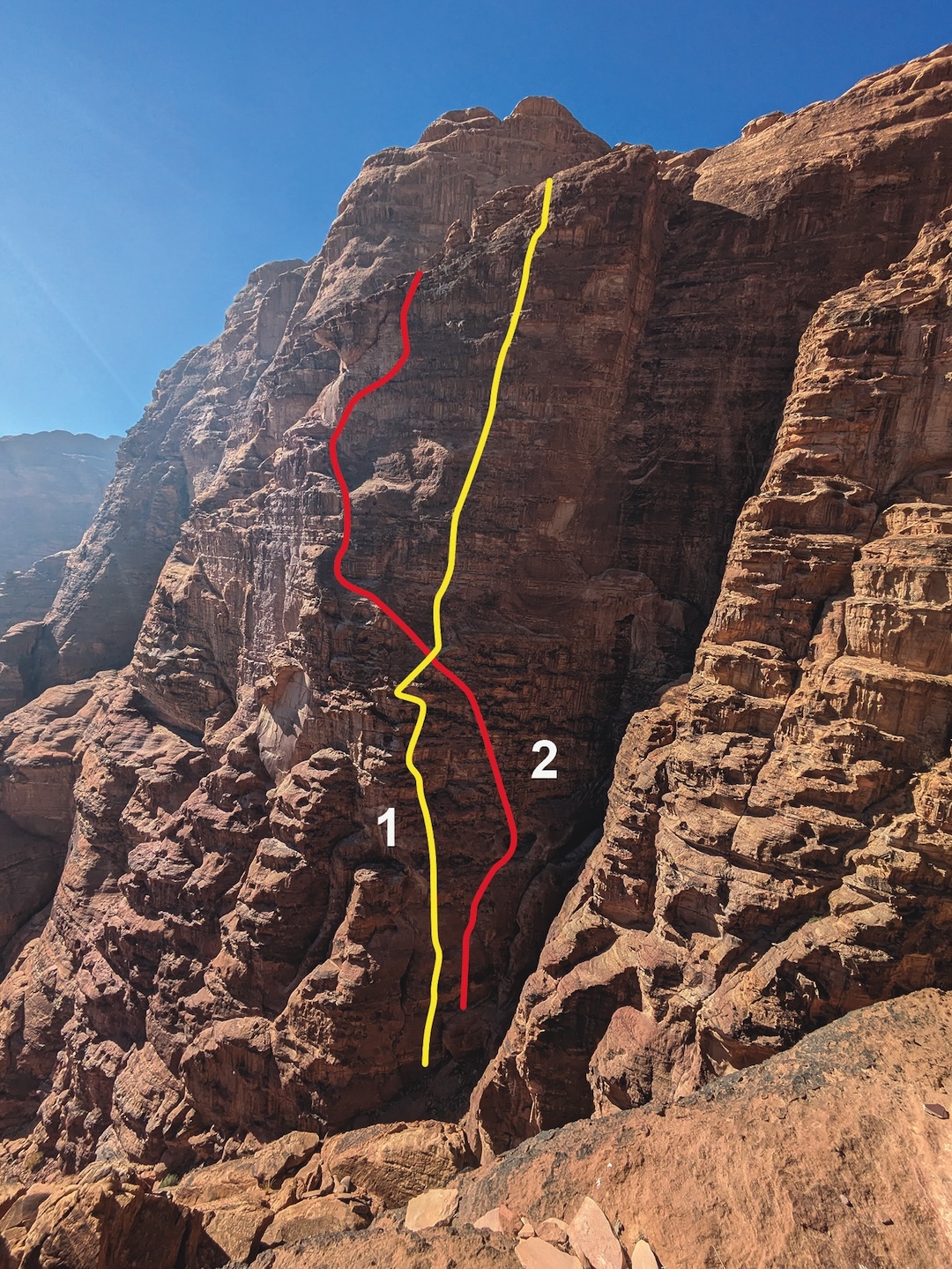
• Abu Khalifa (1,200’, 12 pitches, IV 5.10+) shares two approach pitches with the original Pillar of Wisdom route (IV 5.10+, Colonna-Howard-Taylor), then moves left and adds ten new pitches up a plumb line between that route and Coup par Coup (IV 5.10 R, Christie-Remy-Remy). It is a nice step up in difficulty to the neighboring lines, with a wild and exposed roof pitch near the top.
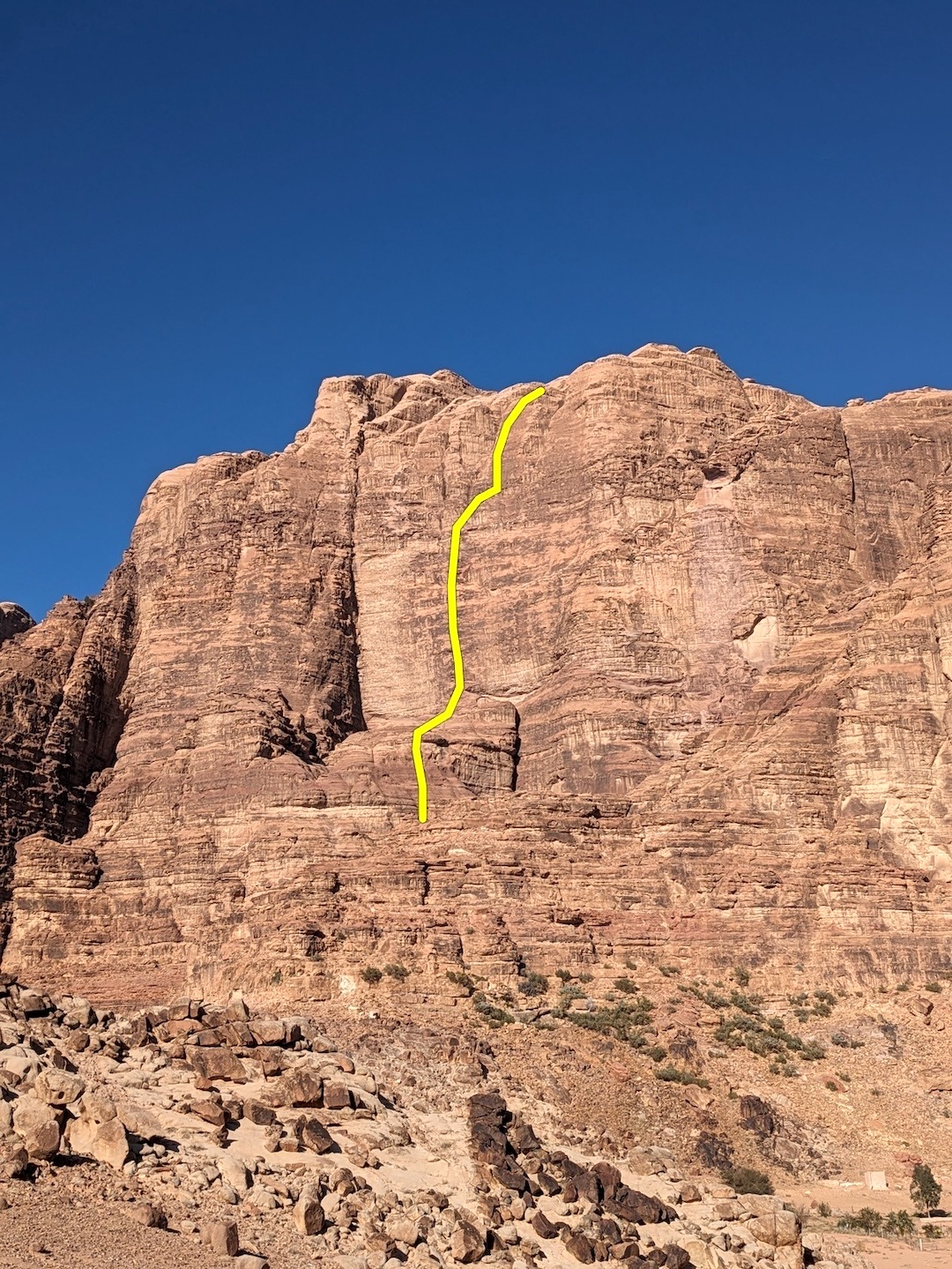
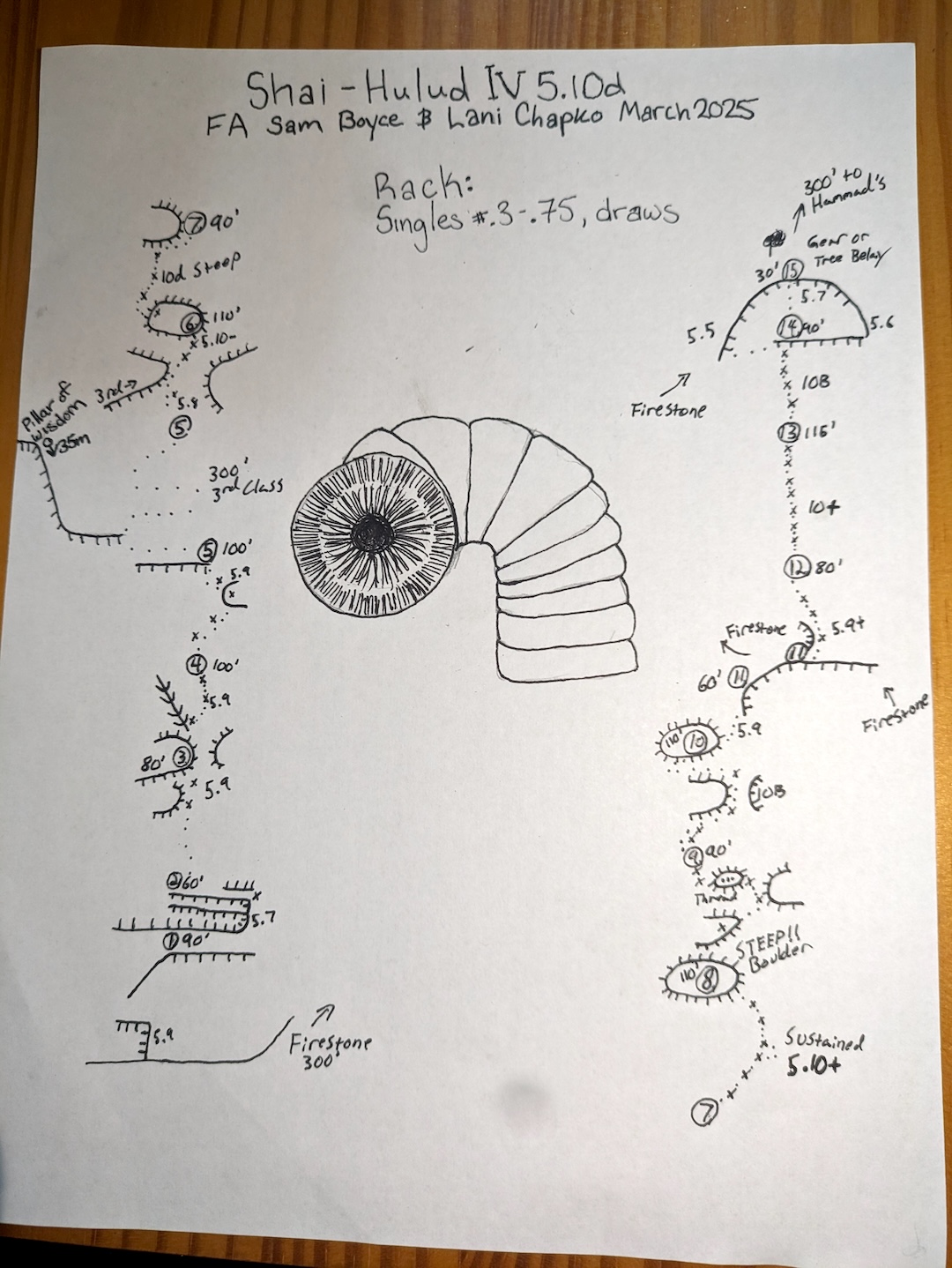
• Shai-Hulud (1,400’, 15 pitches, IV 5.10+) climbs an independent line up the expansive wall to the right of The Pillar of Wisdom on high-quality rock. It follows huge hourglass features to the left of the route Firestone (IV 5.10b, Remy-Remy).
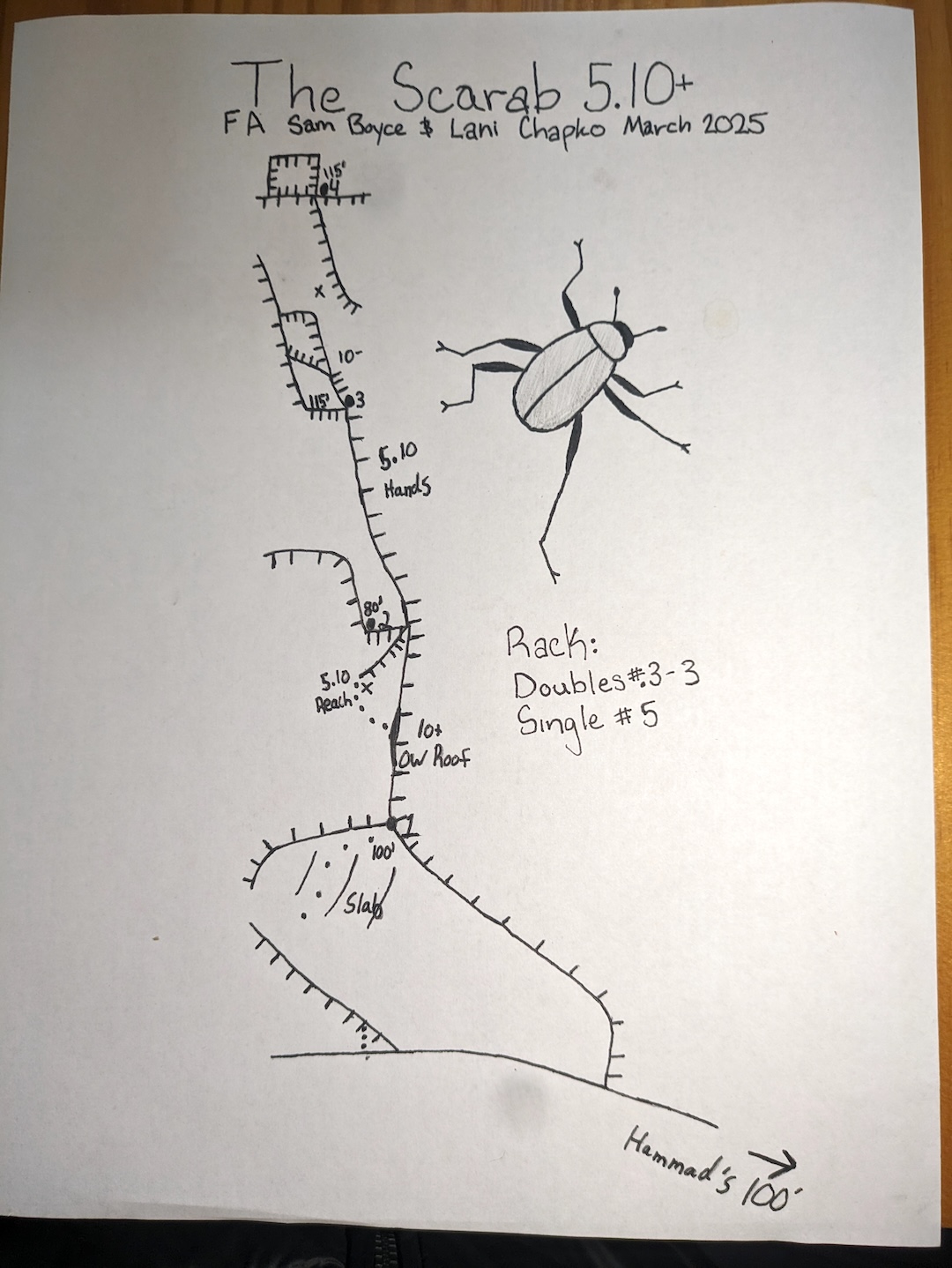
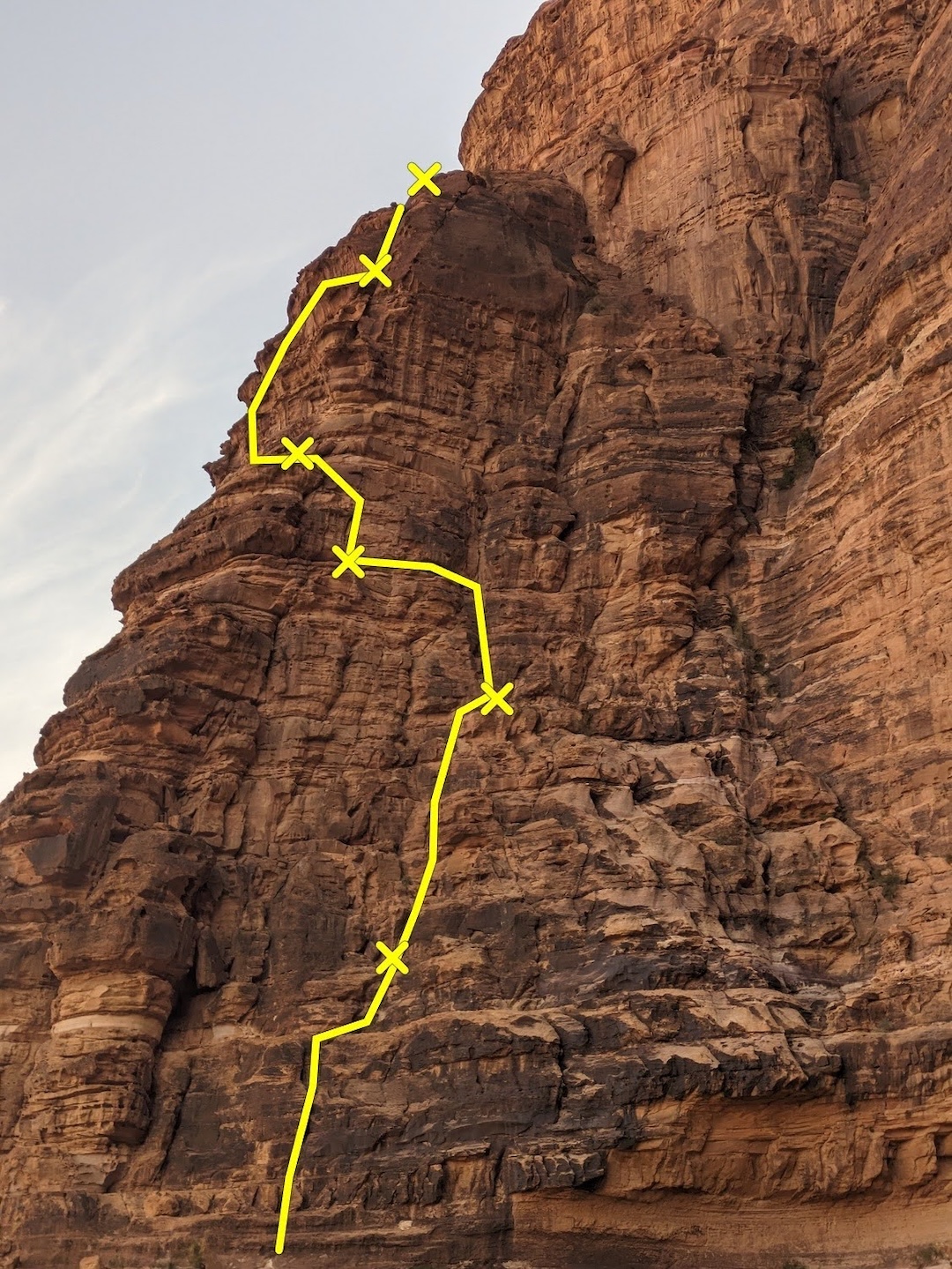
• The Scarab (450’, 4 pitches, II 5.10+) ascends a series of stellar Indian Creek–style splitter cracks up the southwest face of Hammad’s Ridge. The route starts just uphill of Hammad’s Road (IV 5.9, Bedouin climbers).
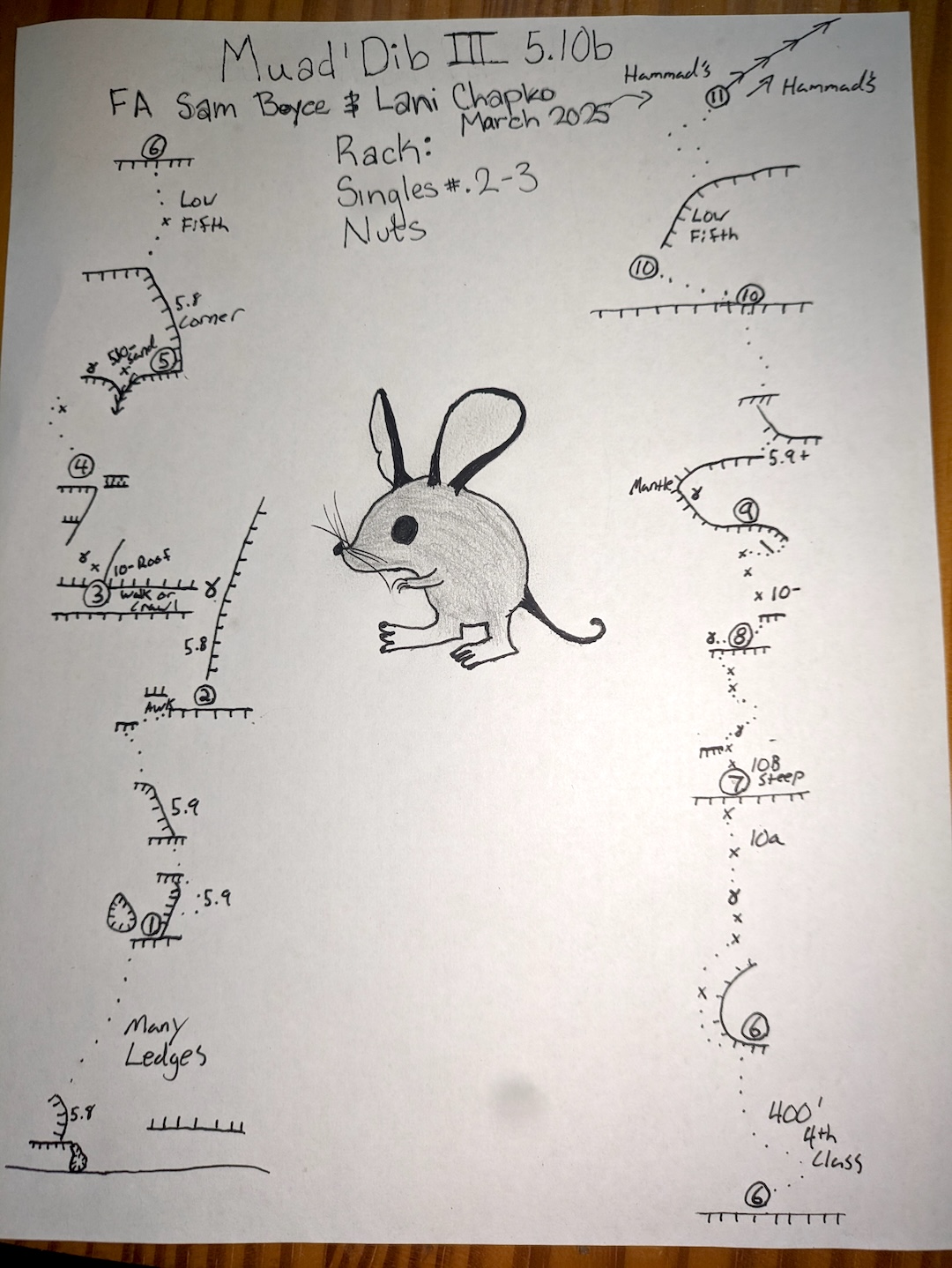
• Muad’Dib (1,000’, 11 pitches, IV 5.10b) shares a start with Les Premices (III 5.10+ R, Remy-Remy) before splitting off to the left after two pitches and adding nine pitches of new terrain up the steep and wild eastern flank of Hammad’s Ridge.
Before we’d even left Jordan last spring, we were planning a return trip. For our December visit, one goal was to establish a sport crag near Rum village. There are a few single-pitch sport crags in Rum, but they are spread out in the desert and guarded by expensive Bedouin taxis. After scouting for multiple days, we settled on a series of cliffs at the base of North Dome on Jebel Rum, near the start of King Hussein (IV 5.10+ R, Remy-Remy). Over the first week of our trip, we established nine well-protected routes ranging from 5.8 to 5.11+.
We then set our sights on a steep tower to the right of Shai-Hulud on Jebel Rum. The rock held almost no options for trad gear, leading to our decision to equip the entire line as a sport route. The climbing is steep and sustained, with several truly wild pitches on sandstone tufas. We named it Salam (IV 5.11c). Salam crosses Roumi Soit Qui Mal y Pense (IV 6b/5.10+, Guillaume-Ravier, 2003) at mid-height. Rope drag forced some short pitches, giving Salam 11 pitches on the 900-foot wall.
—Sam Boyce, USA
Media Gallery