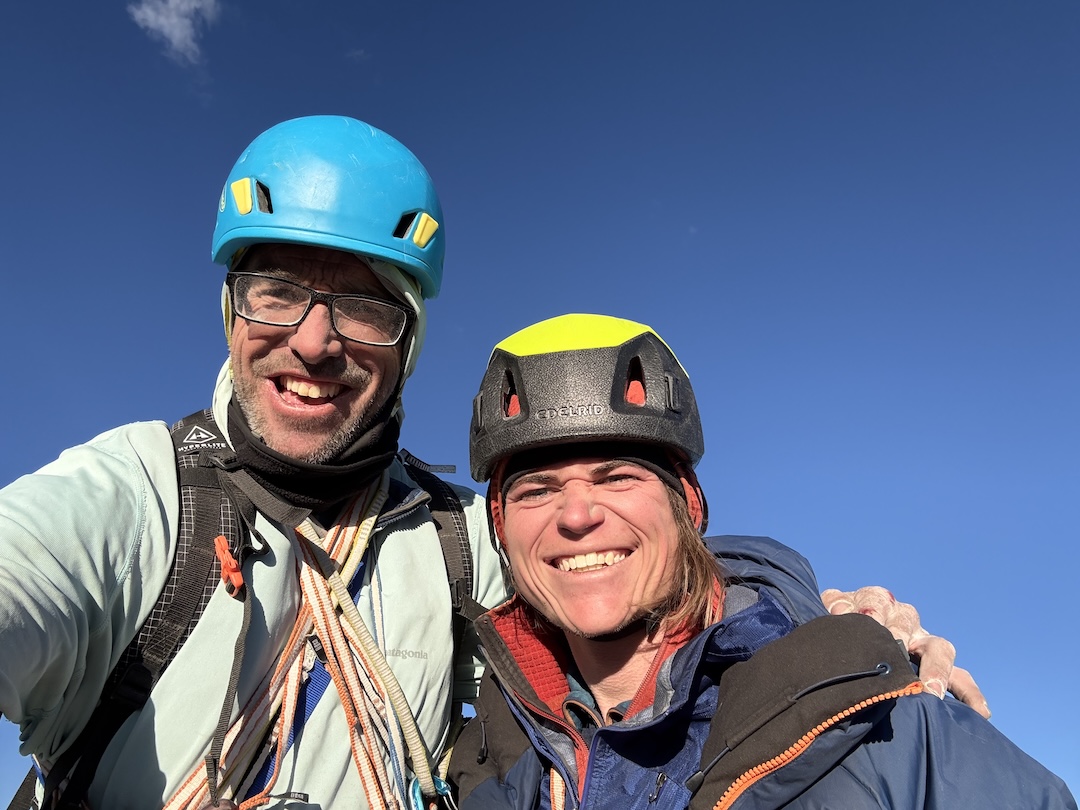

Keeler Needle, Stoned Ape Hypothesis
California, Sierra Nevada, Mt. Whitney Area
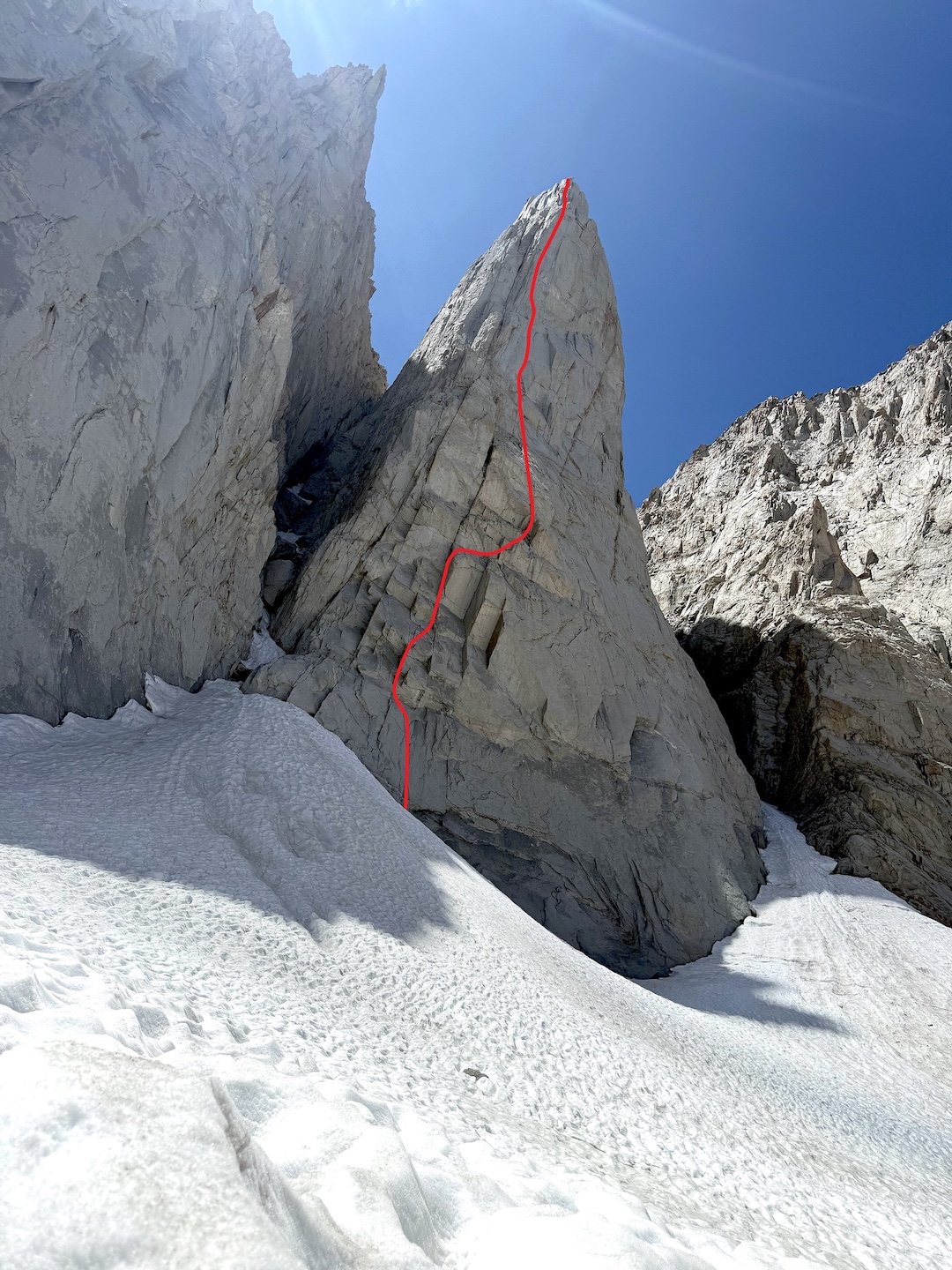
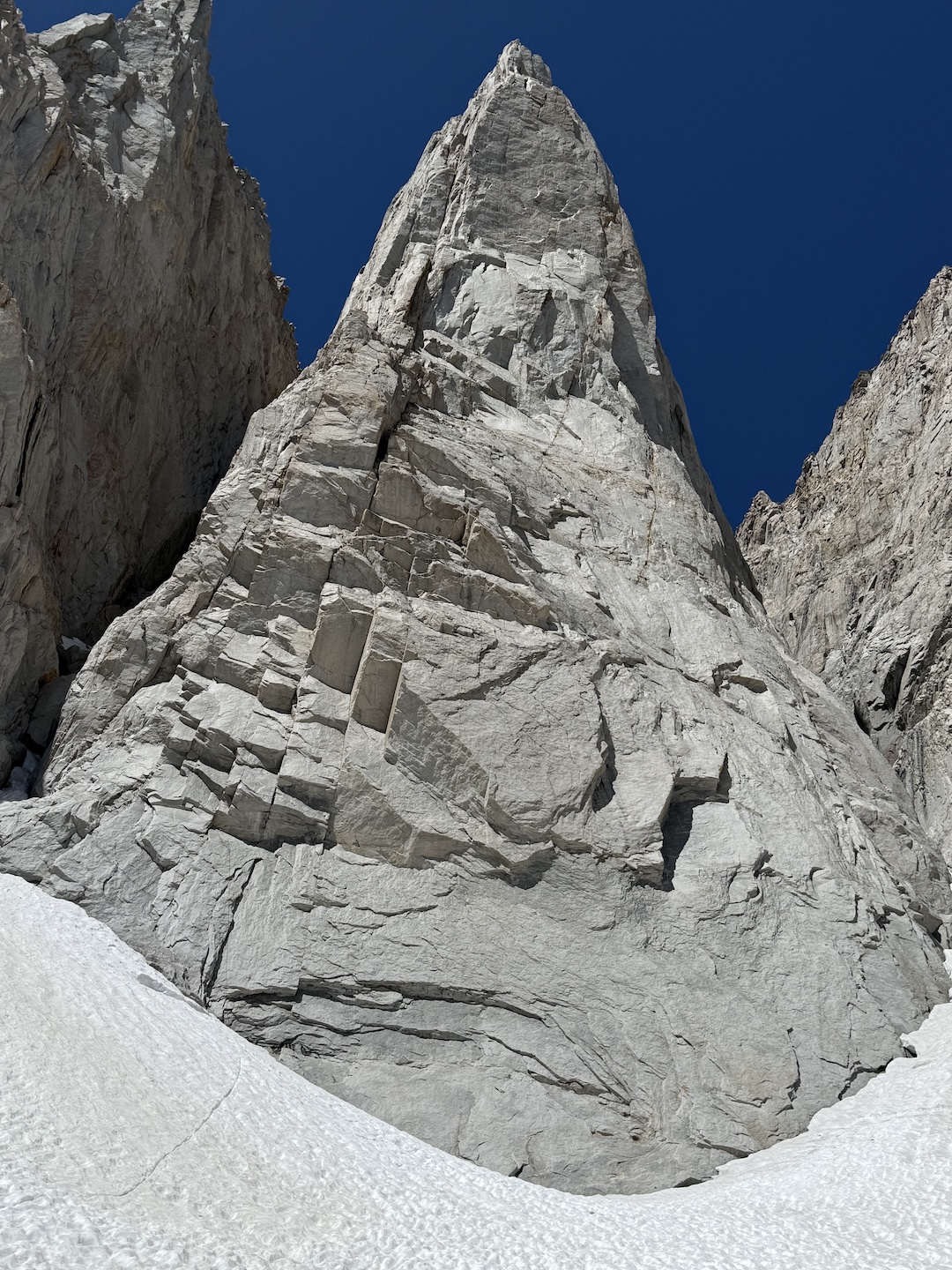
On July 7, Harry Kinnard and I stepped onto the 2,000-foot east face of Keeler Needle in the Mt. Whitney Massif to begin a route I’d contemplated for at least a decade. Starting to the right of the Harding Route (Denny-Frank-Harding-McKnight, 1960; FFA at 5.10+ by Rowell-Vandiver-Wiltsie, 1976) and running mostly parallel to it, the line appeared quite plumb. What had grabbed my eye was a stunning headwall and several beautiful red dikes.
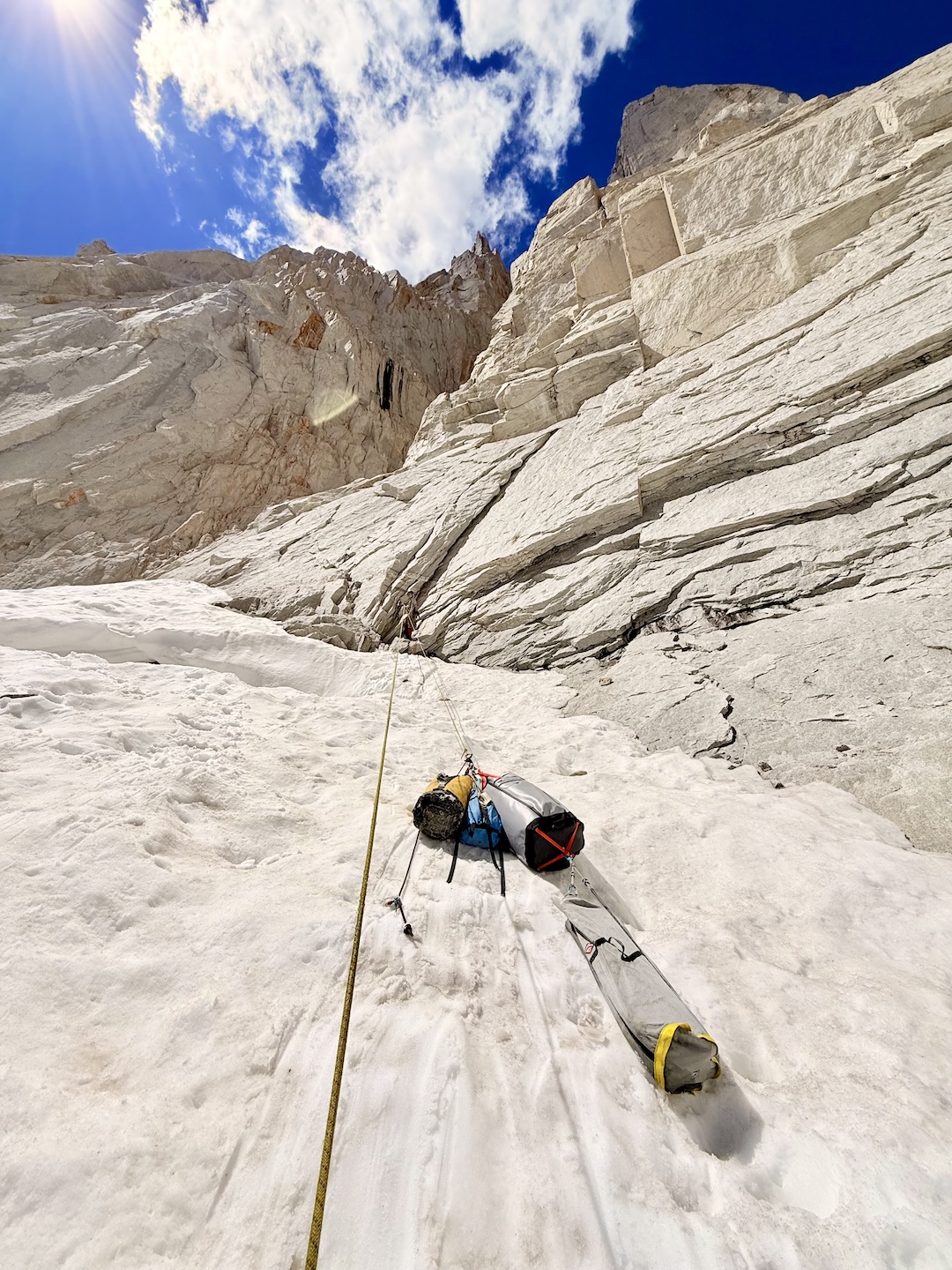
Over the next five days, we worked ground-up, sieging the lower portion of the wall until we passed a potential bivy site—at the top of pitch six, about 800 feet up—just below the incredible headwall. On our last day of this first stint, Harry was in stirrups for three hours, swinging a hammer in the dark as he pounded in beak after beak. It was a full-blown A3+ pitch—the ninth pitch we established on this foray. By July 12 we were back in Lone Pine for work and a reprieve from the route.
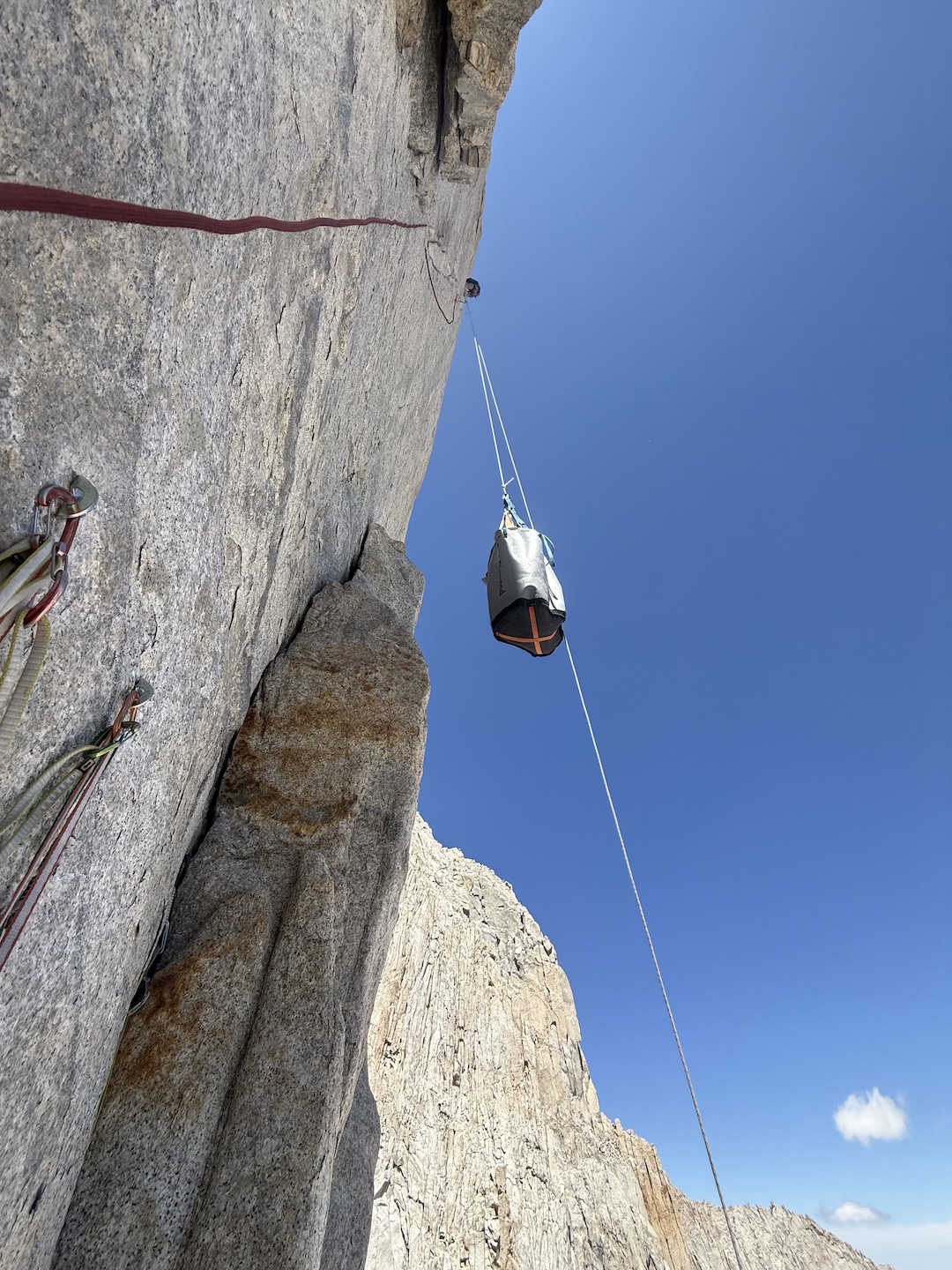
We returned ten days later, ferrying a final load of supplies from our base camp to the wall. The following day, we hauled all our equipment to what we later dubbed the Pika Bivy, atop pitch six. Over the next six days, we pushed our ropes a little farther every day. On rappel, we equipped the top of the A3+ pitch for safe free climbing; we had decided to split this section of the crux headwall into two pitches.
On July 29, we finally crested the headwall and pioneered the southern arête leading directly to Keeler’s 14,260-foot summit. (Our line crosses the Harding Route where that route moves to the north and climbs cracks or easier terrain up a mini headwall.) Our 18-pitch line clocked in at around VI 5.11 A3+. Aside from the rap-bolted pitch ten, we had placed all 62 lead bolts and 14 pitons from stances.
A month and change later, we were back in the cirque for more, this time aiming for a capsule-style free ascent of the line. On September 3, we committed to the wall once again.
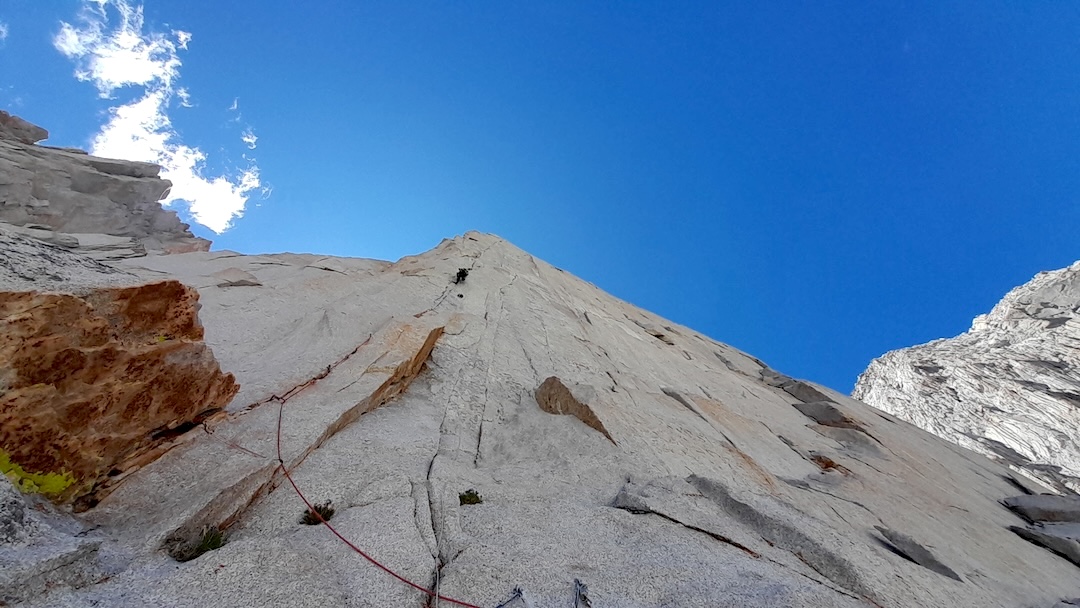
We worked, whipped, and jumared for the next six days. During our time in the vertical, we sat out two monstrous hail and lightning storms on a single portaledge (Harry’s accommodations) and a two-by-six-foot stone ledge (my digs). During breaks in the storms, Harry and I did some unbelievably good climbing (the belayer always frigid down below). The five days we spent working the overhanging headwall were exhausting and rewarding.
Our highlights on the route are too many to list, but a few stand out. The Toxic Offwidth, pitch four: This pitch will leave your body with lactic acidosis. Soiled Drawers, pitch ten: Originally part of the A3+ pitch, this is now 5.12b; after pushing as hard as I could on my first attempt, I returned to the belay and told Harry, “I think I shit myself.” The Fragile Art, pitch 16: This follows a flake that wind, rain, and time have sharpened to a blade. The Red Staircase, pitch three: granite steps leading to an ever-steepening dihedral.
Out of 18 pitches, only one did not go entirely free. Pitch 11, Full Tilt, is in the realm of 5.13a. Harry put in a tremendous effort on this pitch, but due to time constraints and overall fatigue, neither of us led it clean. We pinkpointed all the headwall pitches except for one, Ride the Lightning, which we redpointed.
We walked away content, proud of our commitment and the quality of the line. Stoned Ape Hypothesis (18 pitches, VI 5.13a A0) is entirely independent except for 50 feet where the line kisses The Crimson Wall (V 5.12-, Brown-Carville-Steele, 1991) near the very top of the headwall. It has five pitches of 5.11, five pitches of 5.12, one pitch of 5.13, and some wonderful moderate pitches to round it out.
—Myles Moser
Media Gallery