
El Capitan, Cardiac Arrest, Solo First Ascent
California, Yosemite National Park, Yosemite Valley
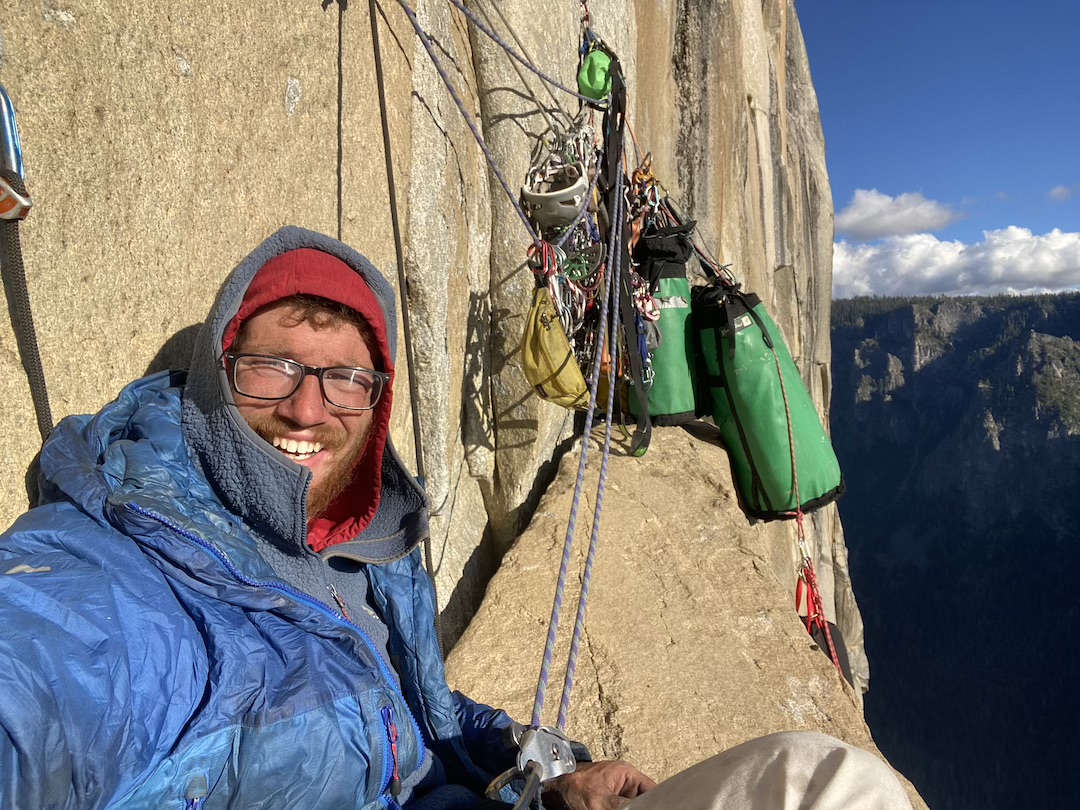
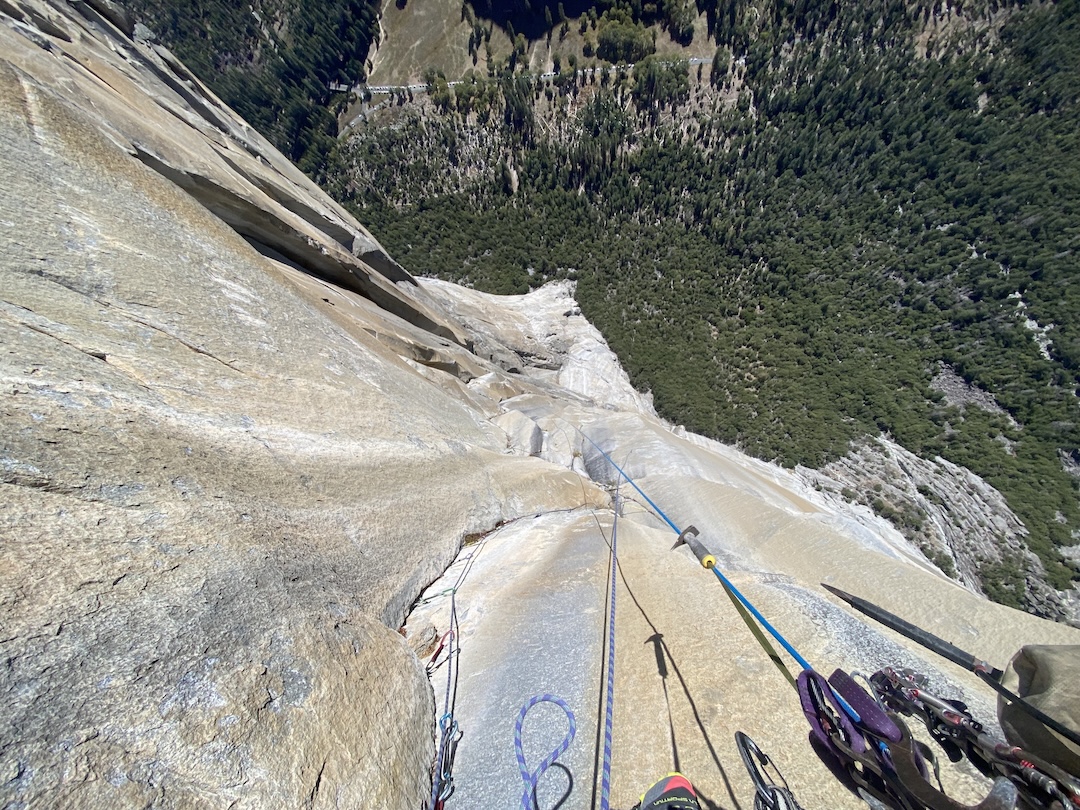
The white noise of rain on the fly gradually turned into an all-encompassing deluge as the runoff became a waterfall washing onto my portaledge. I didn’t sleep much. The next morning, I peered out to see the Valley covered in snow. Icicles clung to the underside of my haul bags, thousands of feet separating them from the earth below.
This was getting dangerously close to alpinism for my liking. Establishing a new route alone on El Cap, it turned out, would not be straightforward. I sheltered in my ledge for two days, thinking about how I’d gotten to this point.
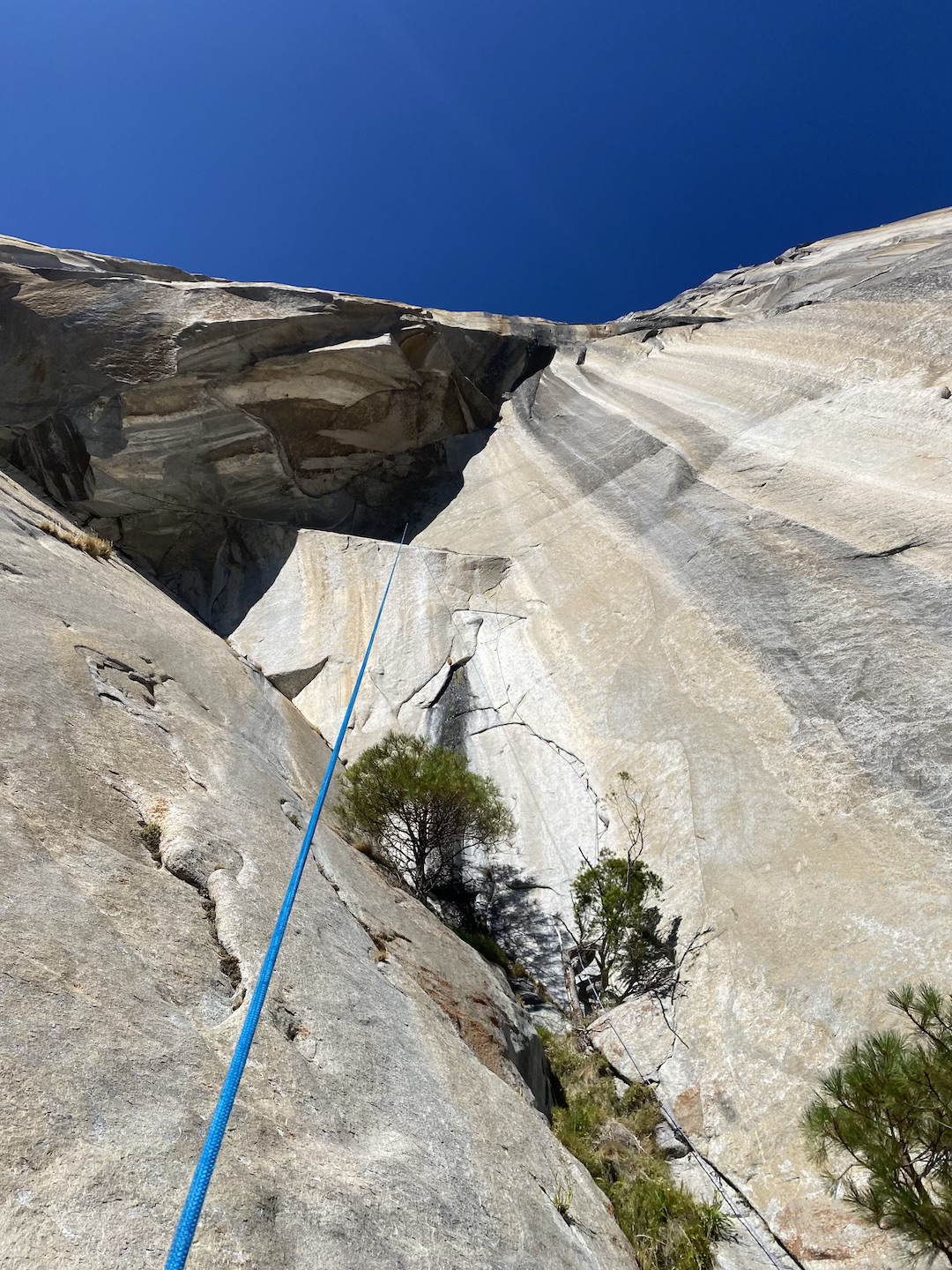
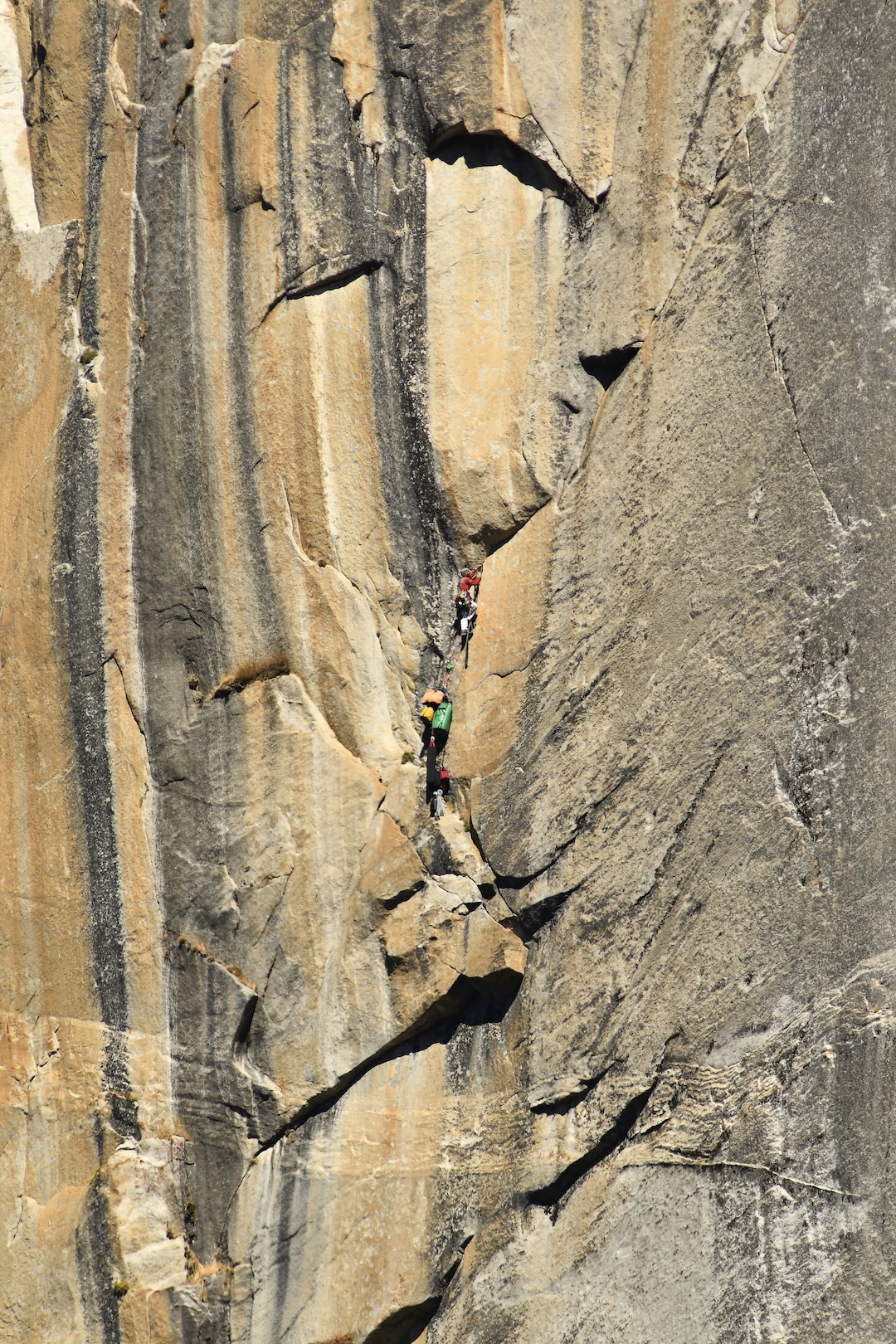
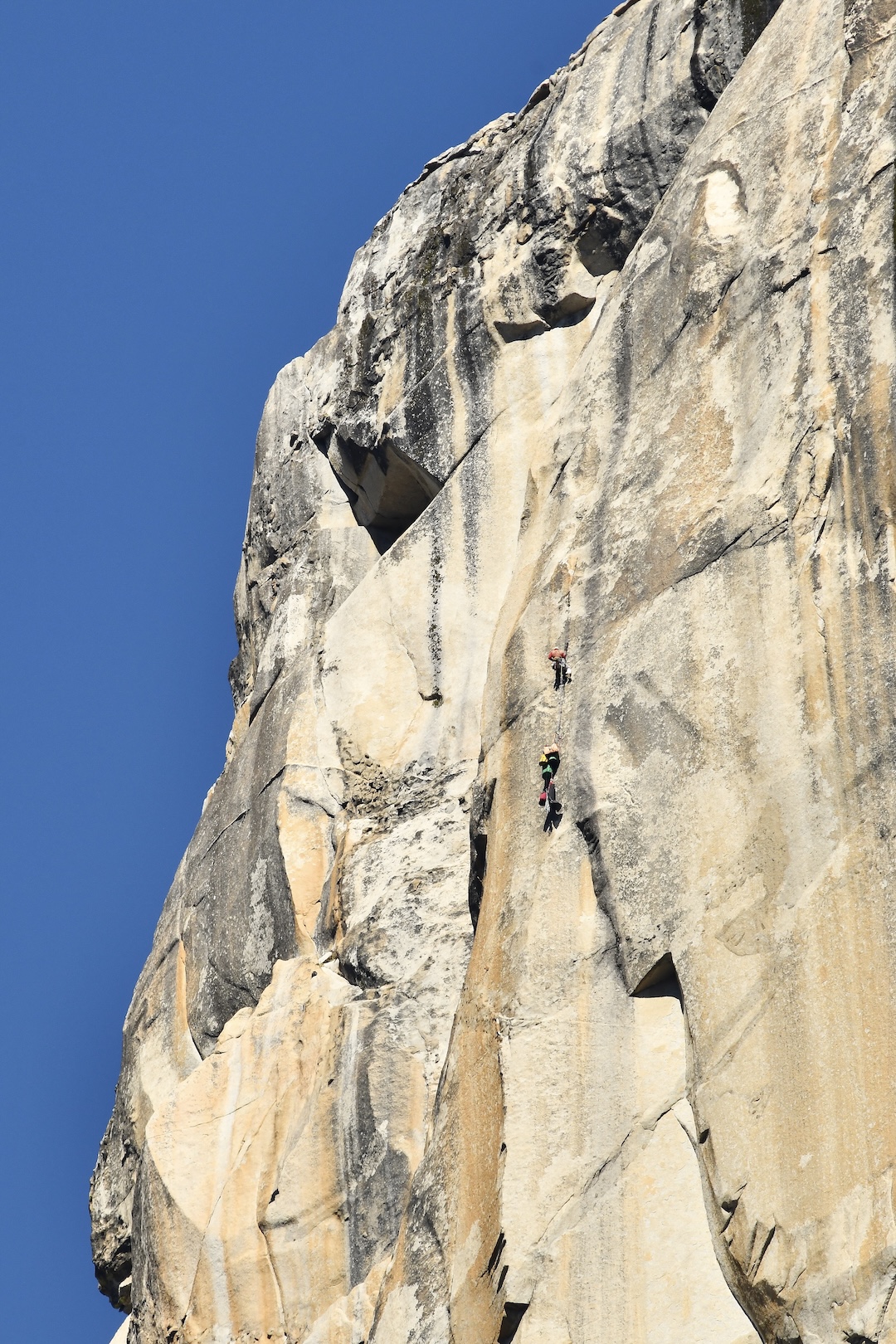
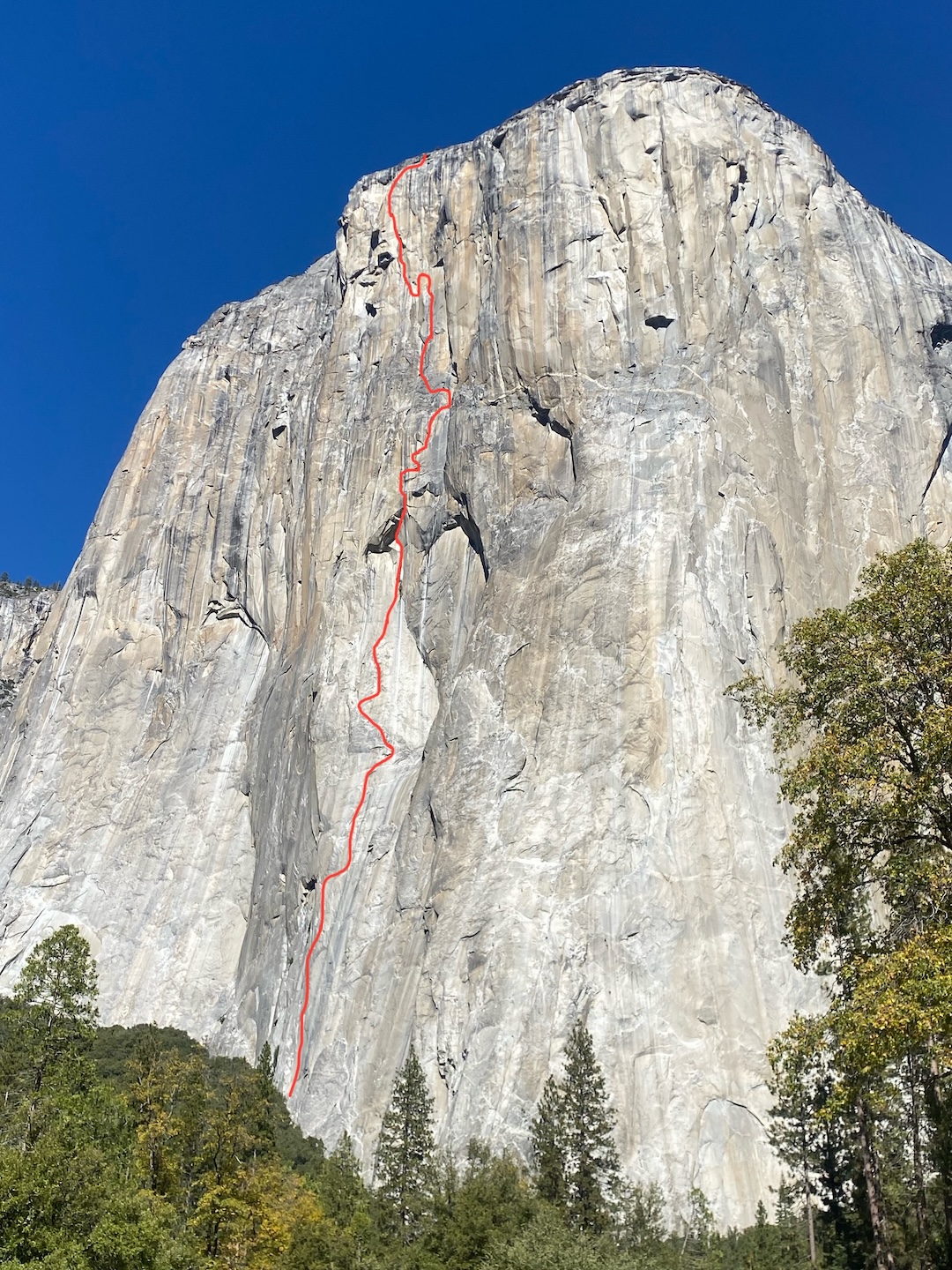
The combination of a few strong beers and a scope in El Cap Meadow in spring 2025 had opened my eyes to the shocking realization that El Capitan was not, in fact, completely climbed out. During every free moment of working in a London climbing gym over the ensuing summer, I pored over a high-resolution picture of El Cap, and I identified four or five unclimbed lines that looked like they could be worthwhile. The most promising was a series of features that seemed to link naturally from Heart Ledge up through the left roof of the Heart and then continue to the top. According to the guidebook, I’d cross the Heart Route (Davis-Kroger, 1970) a couple of times—and I’d intersect other routes—but I expected to find more or less 2,000 feet of independent, unclimbed granite.
I arrived in the Valley in late September and got to work. Initially, I climbed the Heart Route for five pitches to reach my planned new terrain, but along the way I realized there were some spectacular unclimbed features closer to the ground that seemed too good to miss, so I bailed and restarted.
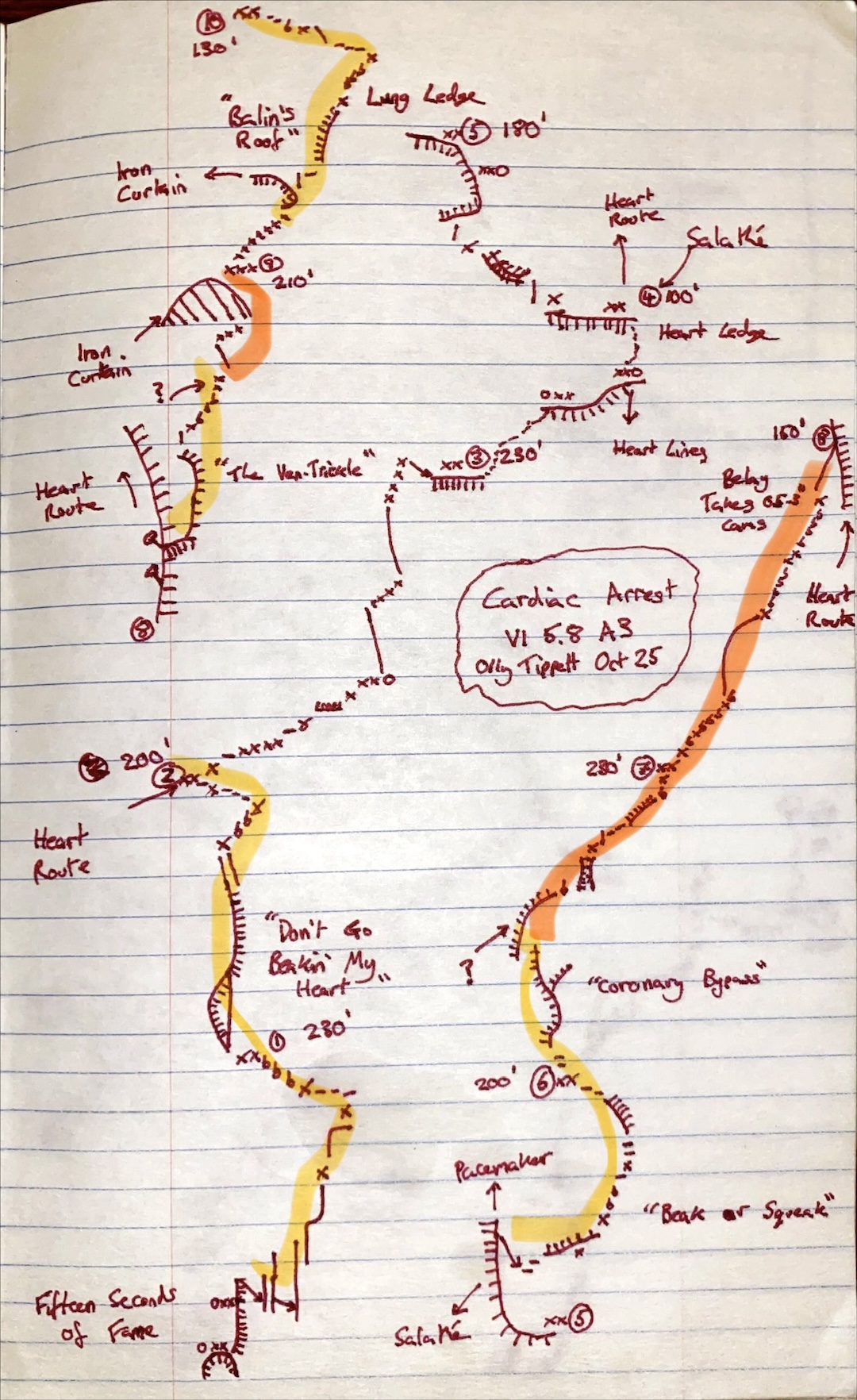
I began on Fifteen Seconds of Fame, a single-pitch 5.9 route, before continuing above on beaks, then made a hard series of pendulums to the right. One of these involved a short but aggressive pop to a precise four-inch hook placement. The hook ripped several times before I could get a beak into the seam beside it. As soon as the tip of the beak was in, the hook ripped again, but the torquing action of the beak kept me in place long enough to get something better above.
These features eventually petered out, so after several hours on lead in the sun, with no water, I drilled a bolt and finished for the day. I came back the next morning to finish bolting the pitch.
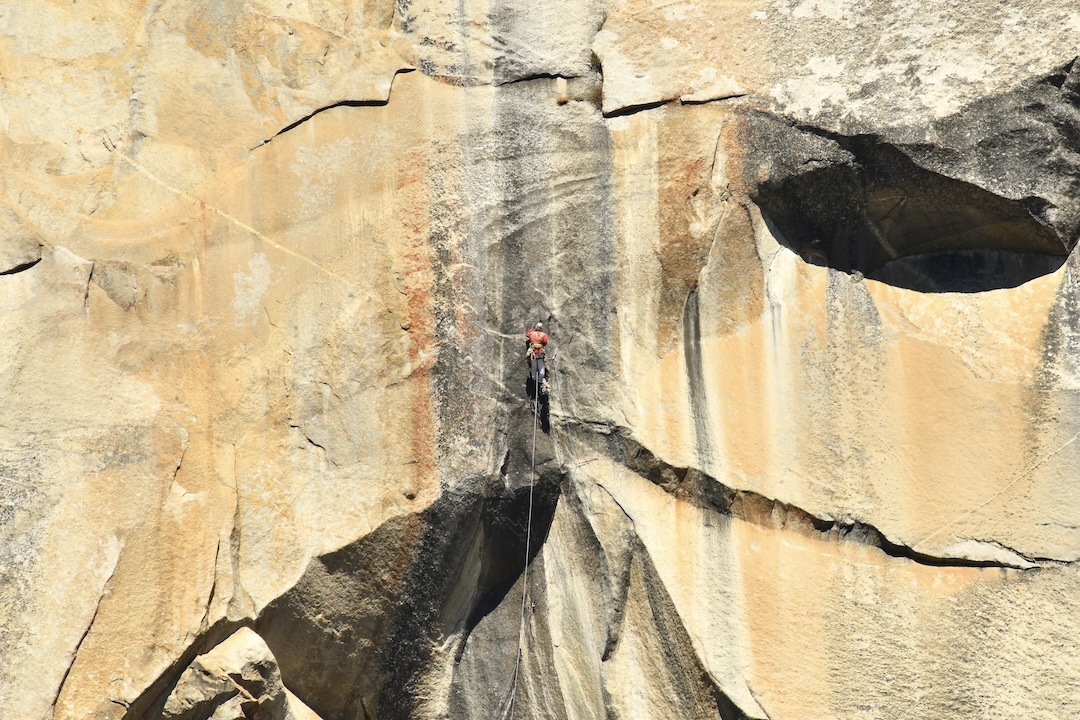
A missile-shaped flake guarded a 200-foot beak crack on pitch two, and the crack signaling the flake’s detachment was the only place for protection. After drilling a belay anchor just out of the firing line to the right, I used a spare 100-foot rope and clipped the middle into the belay, then tied into both ends. I didn’t clip either of these spare strands into the protection; if the flake ripped and cut my primary rope, it wouldn’t cut these backups (though it would be quite the 100-foot, factor 2 fall). I top-stepped each creaking placement to minimize the number of beaks I’d have to hammer into the flake. Above, I stretched the rope to join the Heart Route, placing over 30 beaks as I went. I named the pitch Don’t Go Beakin’ My Heart.
I fixed to Heart Ledge on my fourth day on the route, then spent a couple of days on the ground buying supplies for a two-week push.
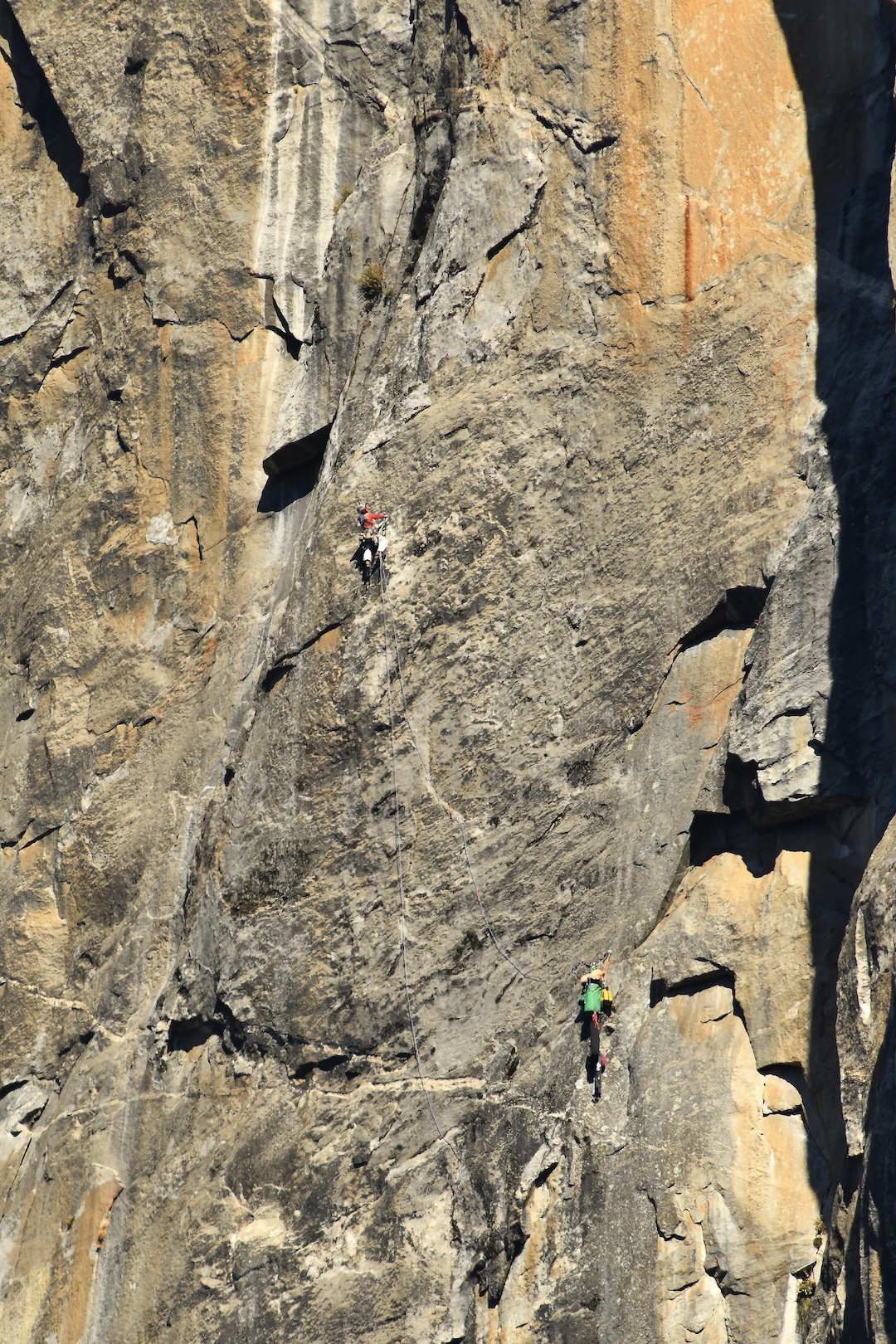
Back on the wall, I hauled my stuff up and rattled off a Salathé Wall pitch to arrive at Lung Ledge. The pitch off Lung was slightly contrived: There were obvious grooves in the slab above that I wanted to climb, and I wanted to minimize drilling to get there. I also didn’t want to drill bolts anywhere near the Salathé. As such, I ended up climbing straight up Pacemaker for 30 feet, to the point where the Salathé veers left into the Hollow Flake. I then swung from a cam in the opposite direction, using fragile microhooks to claw myself to a thin overlap that required shallow, upward-driven beaks. Traversing right, I was soon in a position where a fall might result in a nasty ledge slam, so I drilled a bolt to protect the second half of the overlap.
The next afternoon, after leading the pitch up the grooves, I was chilling on a ledge when a friend called me. Balin Miller had fallen to the ground from Sea of Dreams (VI 5.9 A4, Bard-Bridwell-Diegelman, 1978). We’d been staying at the YOSAR site together, and I’d talked to him a lot about his route. Immediately upon hearing the news, I’d never wanted to be off a wall more. I bailed to the ground and spent a few days processing. Eventually, I decided I needed to distract myself, so I jugged back up and kept going.
Higher up the wall, I joined the grassy corner pitch on the Heart Route before climbing a tree and following the unclimbed, arching flake above. I briefly joined the Iron Curtain variation to the Heart Route, then continued up through the crest of the roof on new terrain where the Iron Curtain exits left. It was the wildest, most spectacular part of the route. Naming it “Balin’s Roof” seemed fitting.
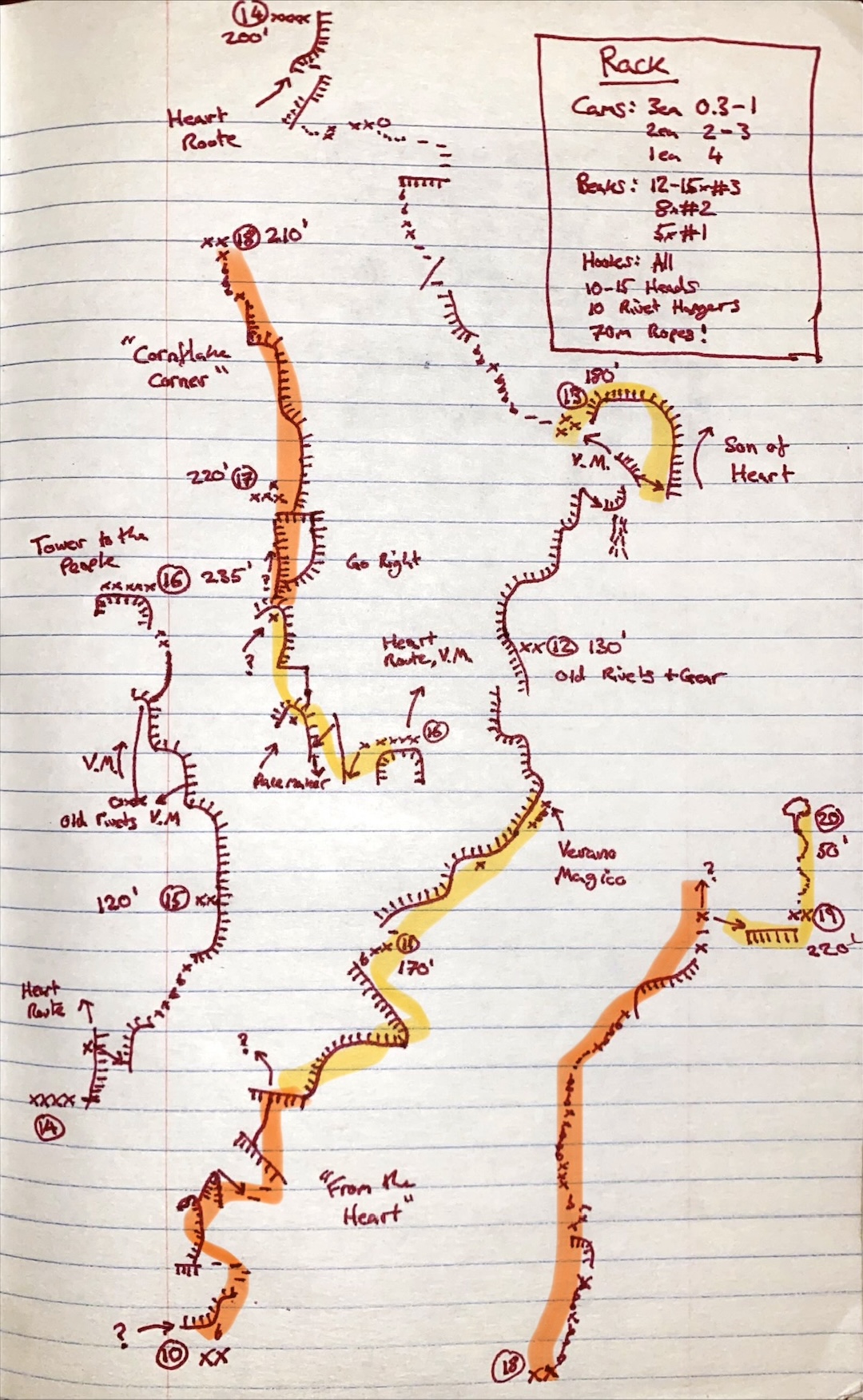
Above the Heart, a maze of winding, boltless climbing led to a right-slanting corner system. Partway through, I unexpectedly intersected with Verano Magico (VI 5.10 A4, Gallego-Gallego, 1985). I had mixed feelings about this. On the one hand, my drilling arm would get a rest; on the other, I had to settle for making the second ascent of the next four pitches. I followed Verano Magico, with some minor variations, to Tower to the People, where I waited out a storm for two days and recovered after nine days straight of nailing and drilling. It turned out that this “alpinism” was in fact a welcome break from the proper climbing below.
When the storm abated, I climbed a long, steep corner to the right of the roofs on Bermuda Dunes. At the top of my 18th pitch, I found a long rivet ladder—possibly from another little-known Gallego route. I followed this, too tired to spend an extra day bolting and penduluming around the corner to reach unclimbed but grassy, slabby cracks. I ran out of rope 30 feet from the summit. The next day, the 14th day of my push, I finished via easy free climbing over the rim.
In the end, I climbed about 1,000 feet of new terrain, 700 feet on Verano Magico, 350 feet of the Heart Route, Salathé, and variations, and about 1,000 feet on undocumented routes.
Cardiac Arrest (20 pitches, VI 5.8 A3) might not be the best route on El Cap, but I found that climbing new terrain or unrepeated terrain with no topo was an incredibly adventurous experience. The route taught me much about my craft. There were times I thought about either finding a partner or bailing, but I’m glad that I persevered.
A note on aid climbing grades: I called Cardiac Arrest A3 based on my experience on Neptune (Adams-Wickstrom, 2021), which I soloed in 2024. That route is rated A4, and you’re far more likely to take long falls on it. Overall, the grading system feels inadequate for the game of modern aid climbing. For one thing, the grades measure only danger; it’s a bit like giving only an R or X rating to a free route without offering a YDS grade. Second, the system is a closed scale, and Zodiac, arguably one of the easiest El Cap aid routes, falls right in the middle, at A3. Some form of two-part grade could give an idea of both the danger and the technical difficulty. Adopting that, along with downgrading most routes by a couple of notches, would be a good start to fixing the system.
All that said, the lack of information conveyed by the current grading system does add to the adventure. Just please don’t expect my route to feel similar to Zodiac.
—Oliver Tippett, U.K.
Media Gallery