
Skalisty Range Limestone, Overview and Recent Ascents
Russia, Ingushetia, Northern Caucasus, Skalisty Range
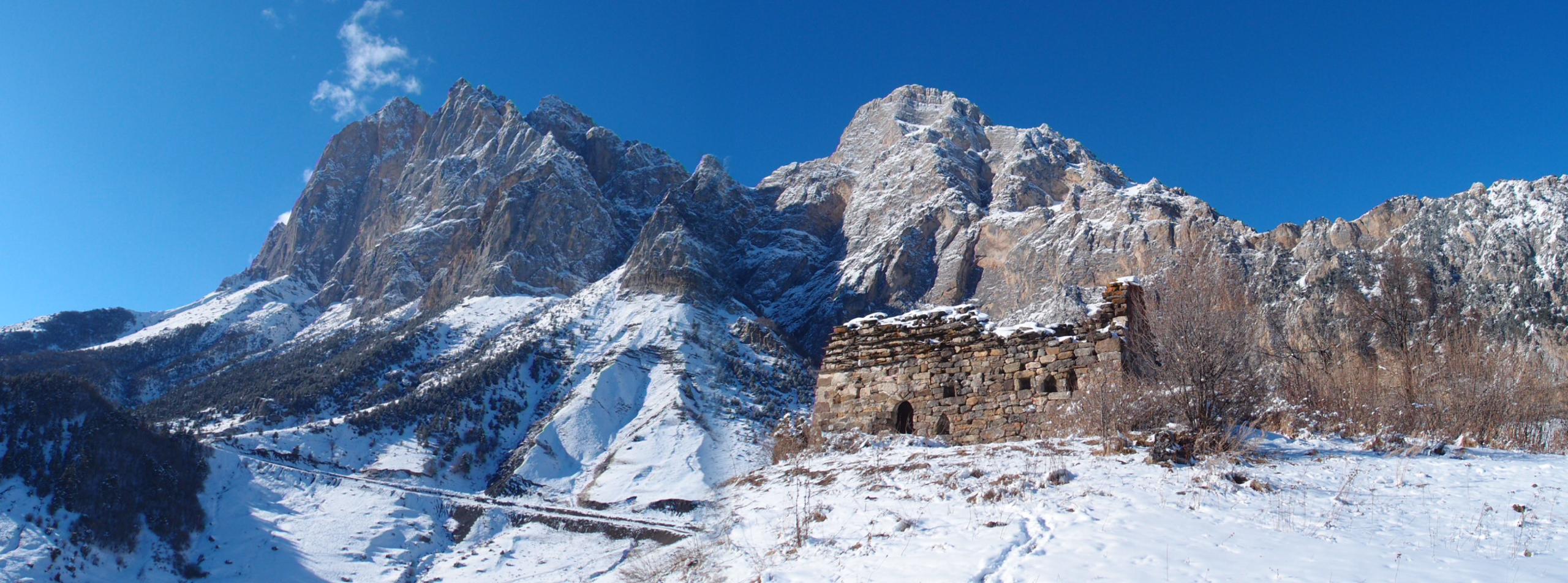
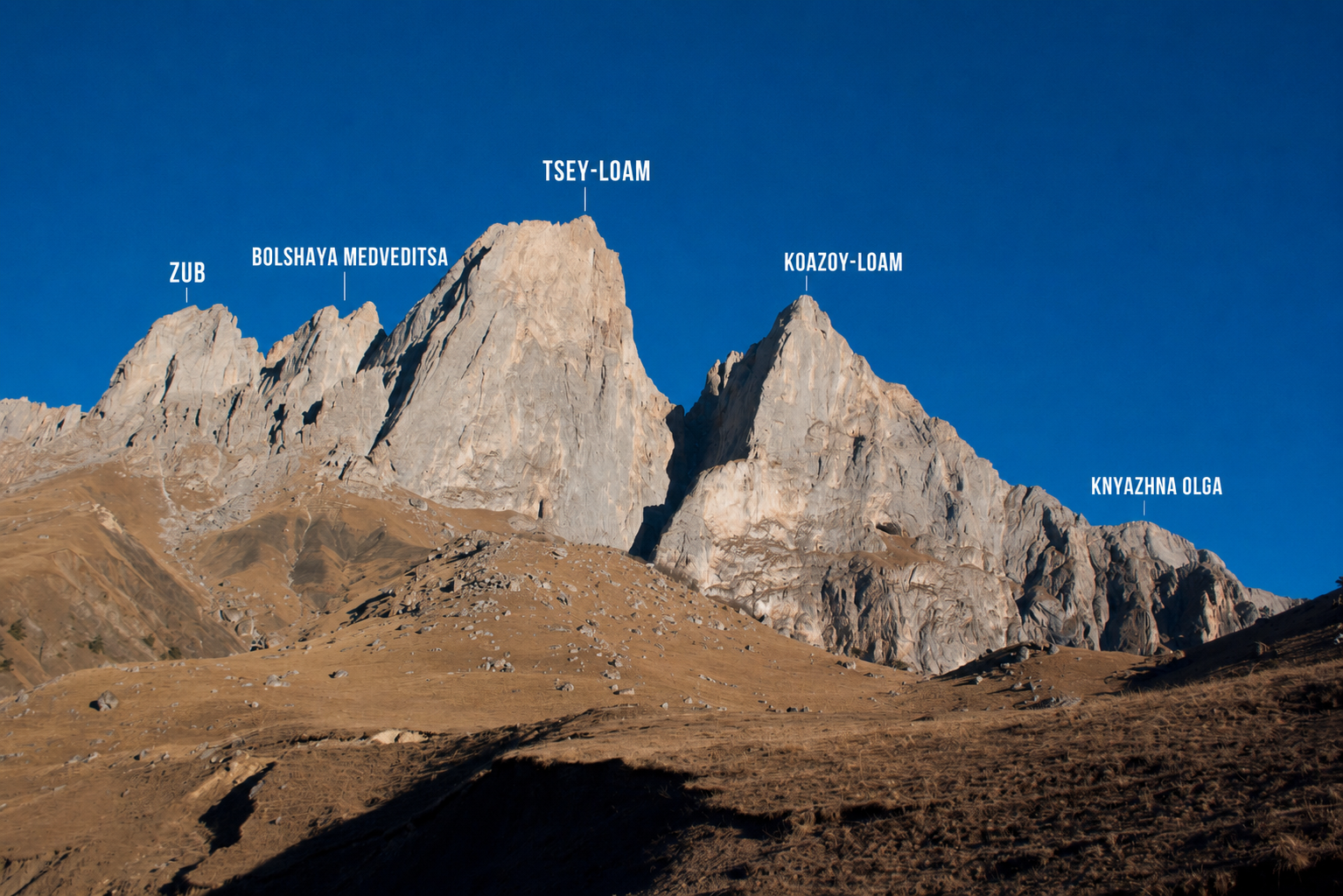
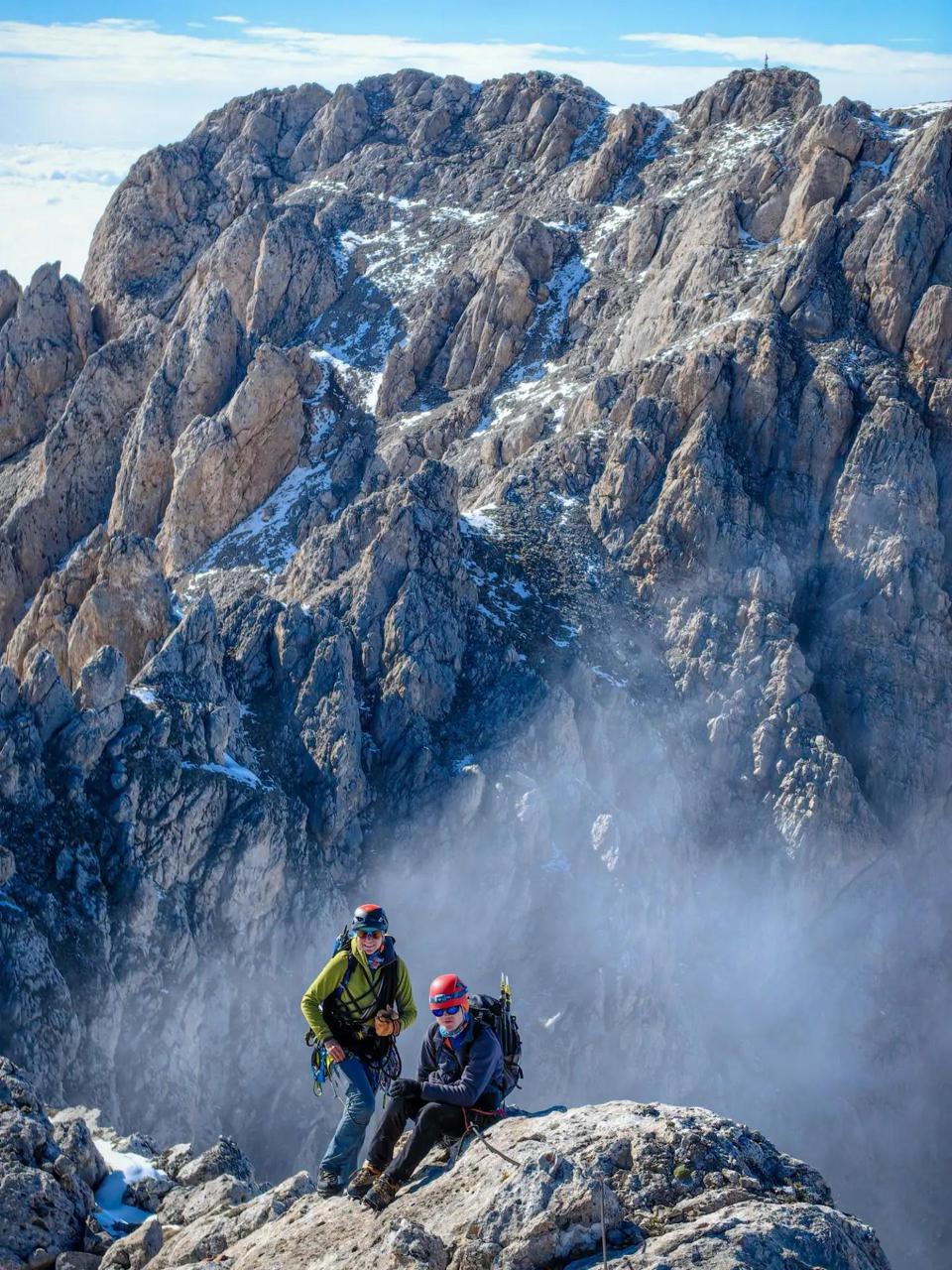
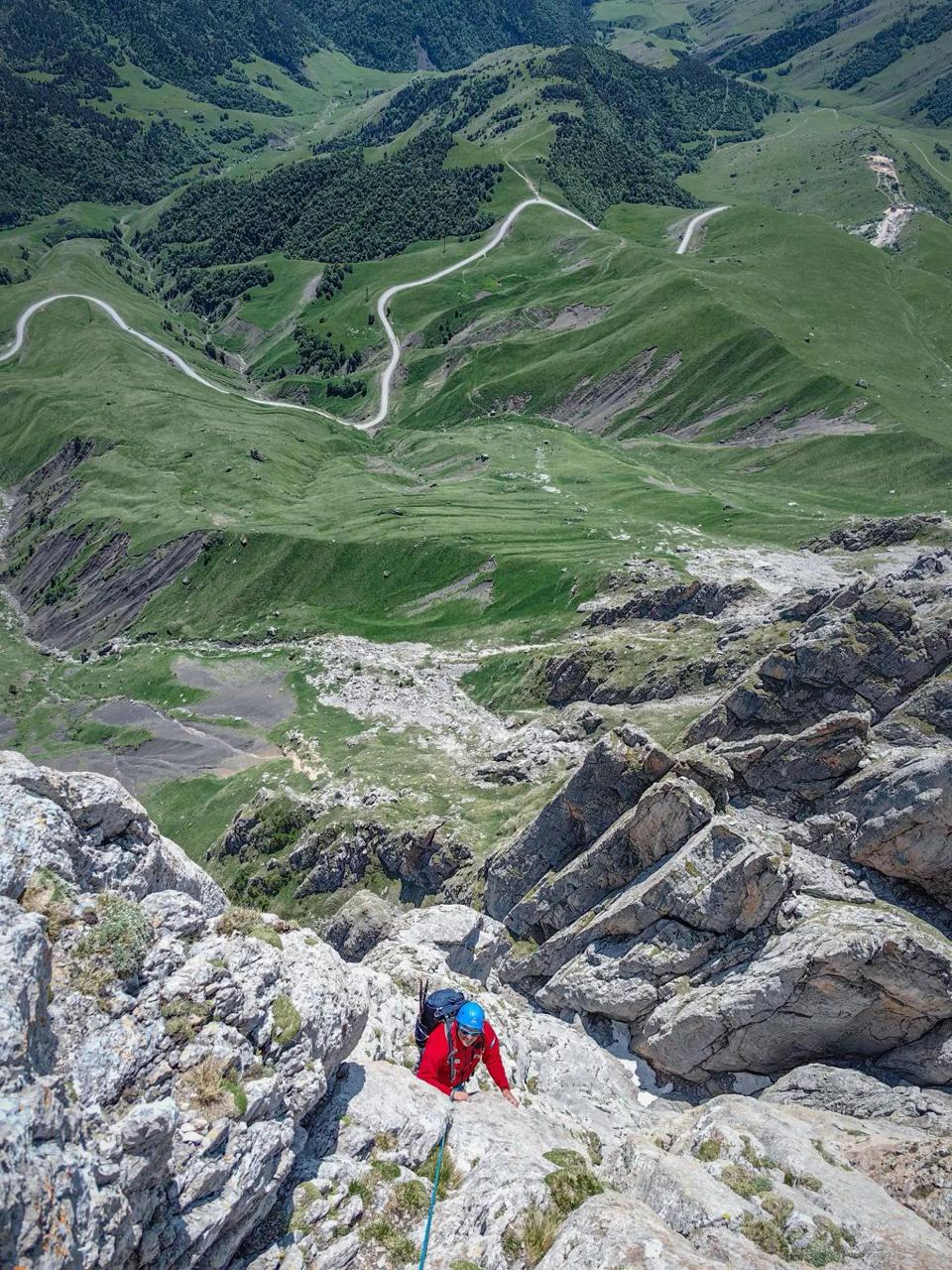
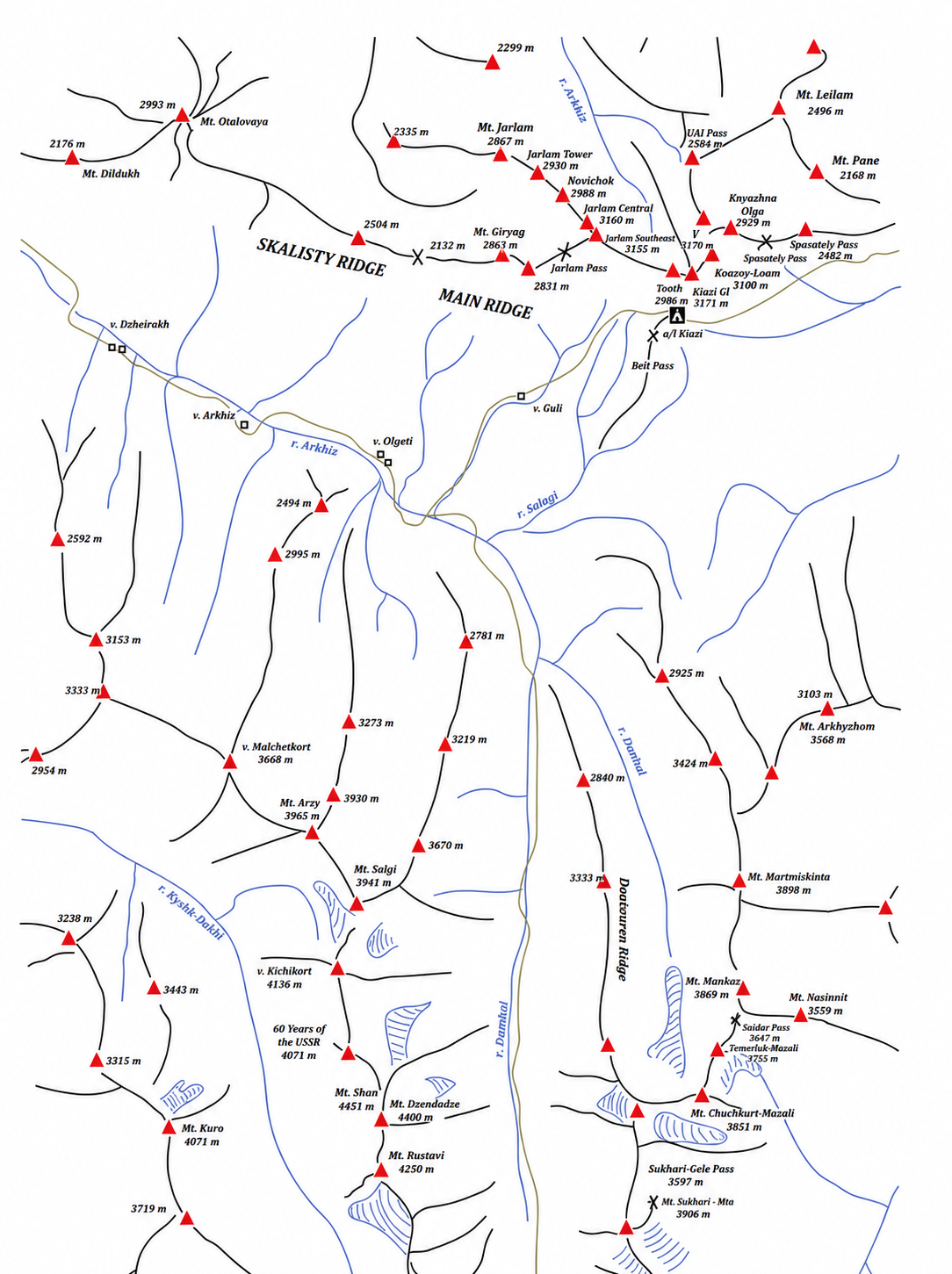
The limestone group above the Dzheyrakh Valley in Ingushetia’s Skalisty Range forms one of the most compact and technically concentrated climbing zones in the northern Caucasus. The ridge presents a sequence of summits running west to east: Zub (“Tooth”), Bolshaya Medveditsa (“Great Bear”), Gaikomd, Koazoy Loam, and Knyazhna Olga (“Princess Olga”). The main technical interest is concentrated on the walls of Gaikomd and Koazoy Loam.
Approaches to routes on Gaikomd and Koazoy Loam begin at the Kyazi alpine camp, a short distance below the junction for the local border post. Kyazi camp offers road access, mobile coverage from several Russian networks, and wi-fi. The area lies in Russia’s regulated border zone near the frontier with Georgia. Although no special permit is required for climbing on these summits, parties are expected to inform the border post of their plans. Foreign parties should confirm current border zone rules before travel.
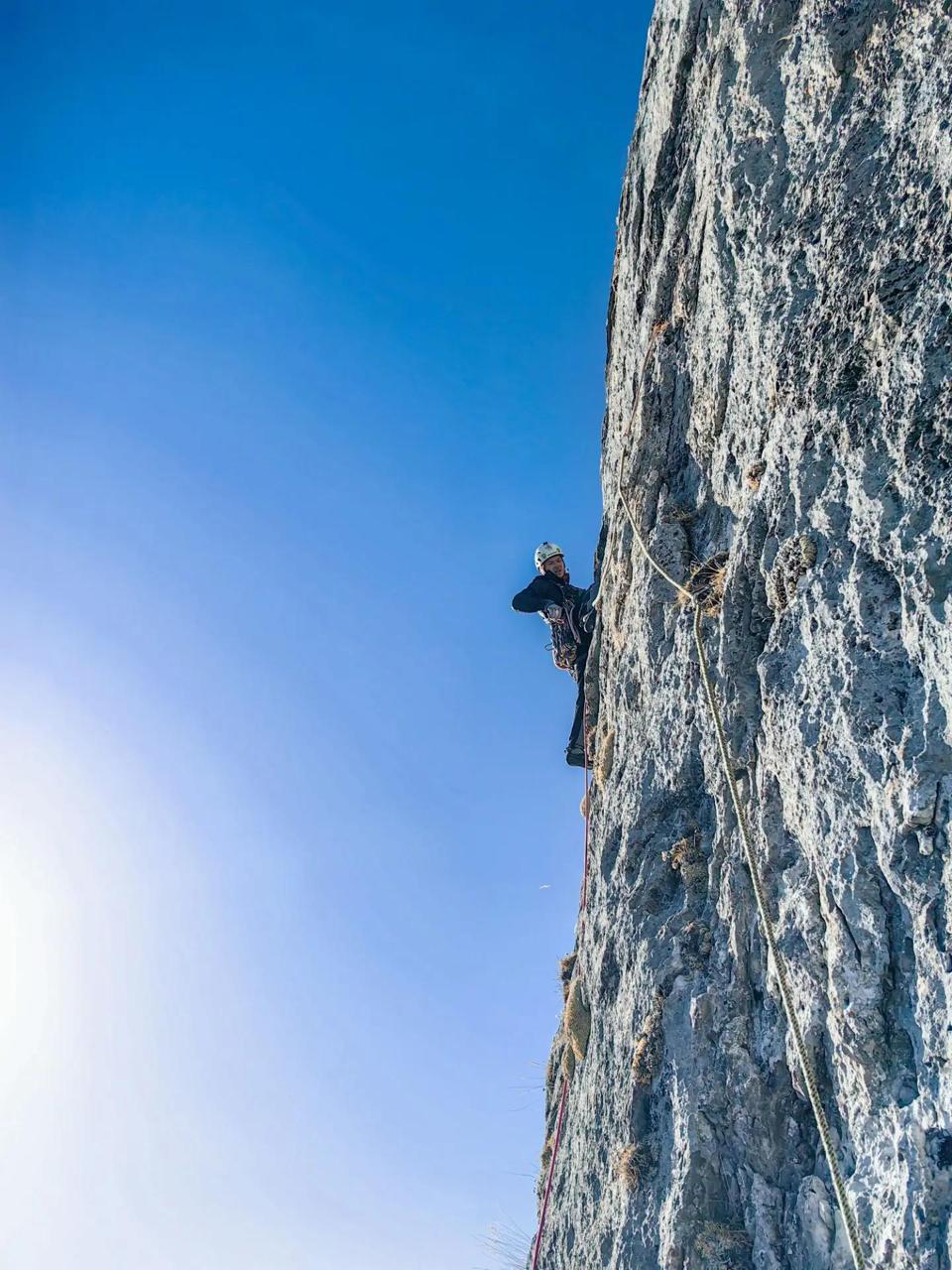
The weather is comparatively stable for the northern Caucasus. Snowfall cycles often last two or three days. New snow typically clears rapidly from the walls, which favors longer rock routes during spring and autumn periods. In winter and following heavy storms, gullies and sheltered slopes can load with snow and may present an avalanche hazard.
The ridge is composed of sedimentary limestone with localized metamorphic features. The lower sections of the main walls show compact gray limestone with distinct cracks and corners. Higher on the faces, the rock changes to lighter yellow and white bands that are more fractured and contain loose blocks, soft chalky zones, and turf-filled cavities. Protecting these sections often requires extensive cleaning and precise placements. Water is absent on the walls in summer.
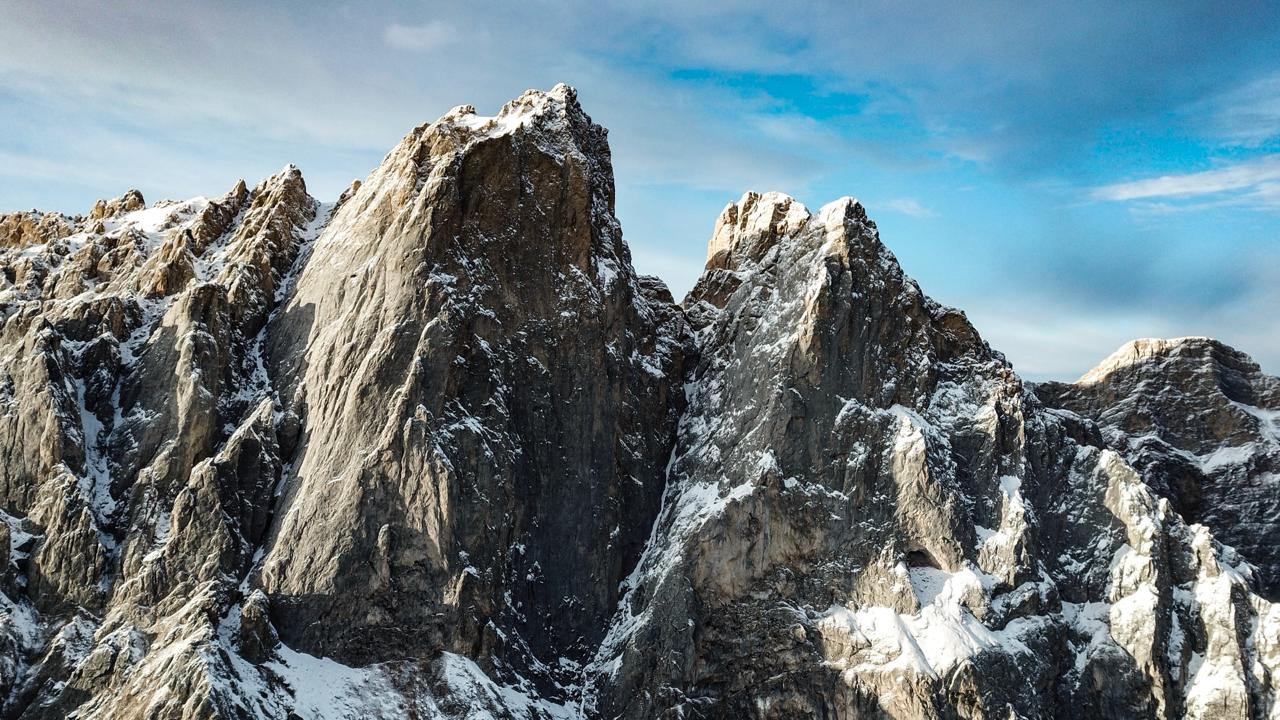
Gaikomd (3,171m, 42.83429°N, 44.85099°E) is the central and highest summit of the group, a peak with more aliases than 007: Kyazi, Girich, Giryag, and Tsey Loam Main, as well as Gaikomd.
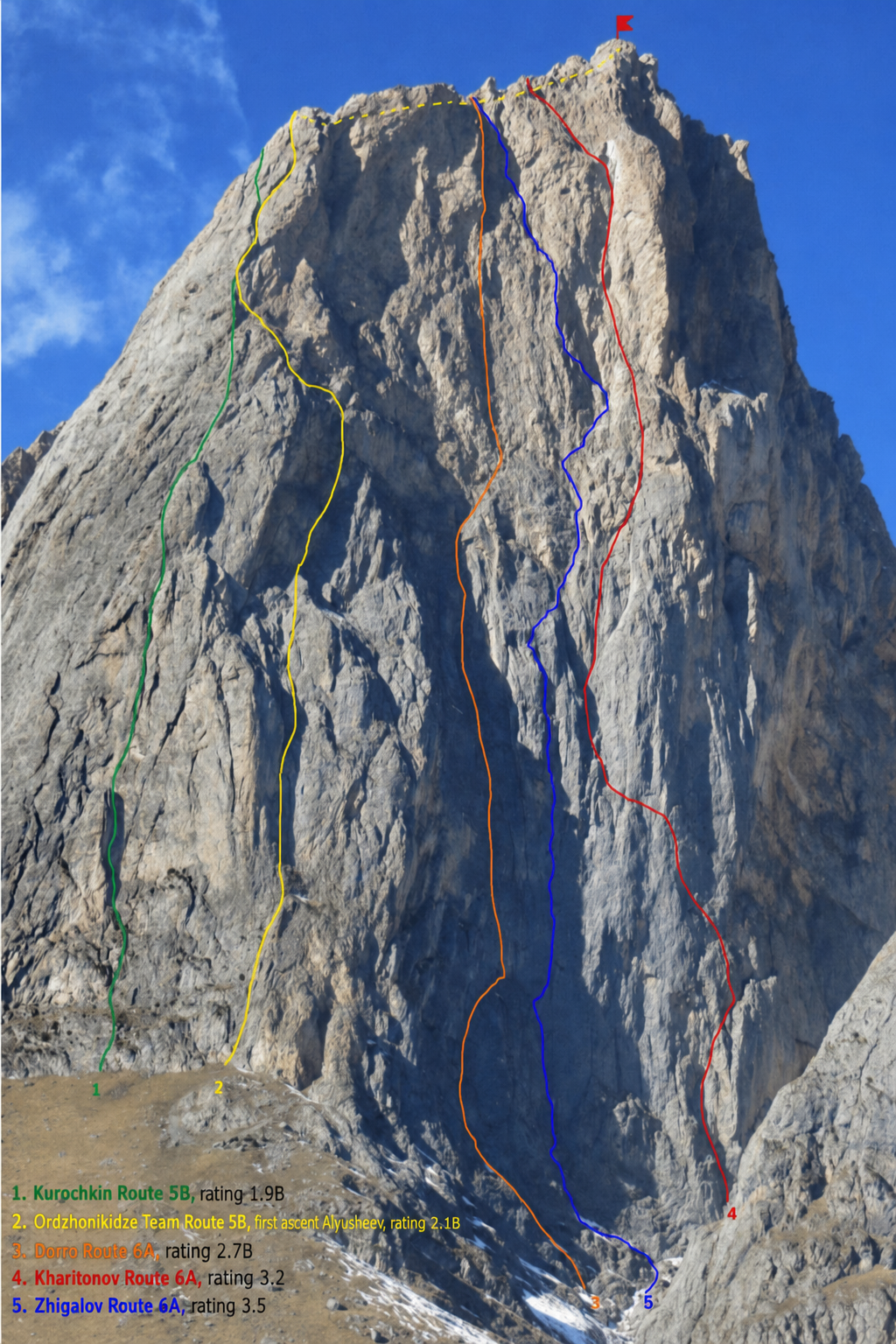
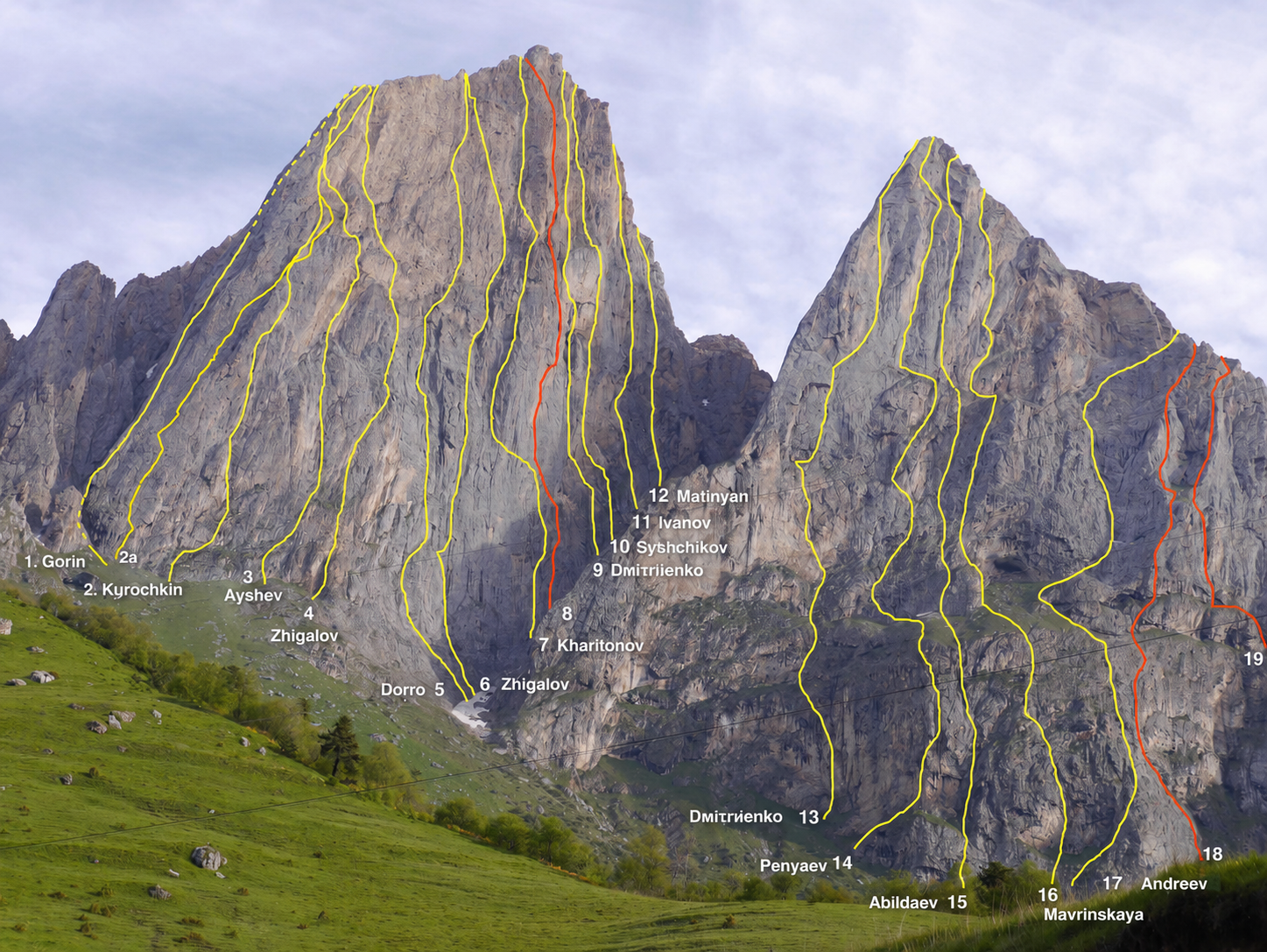
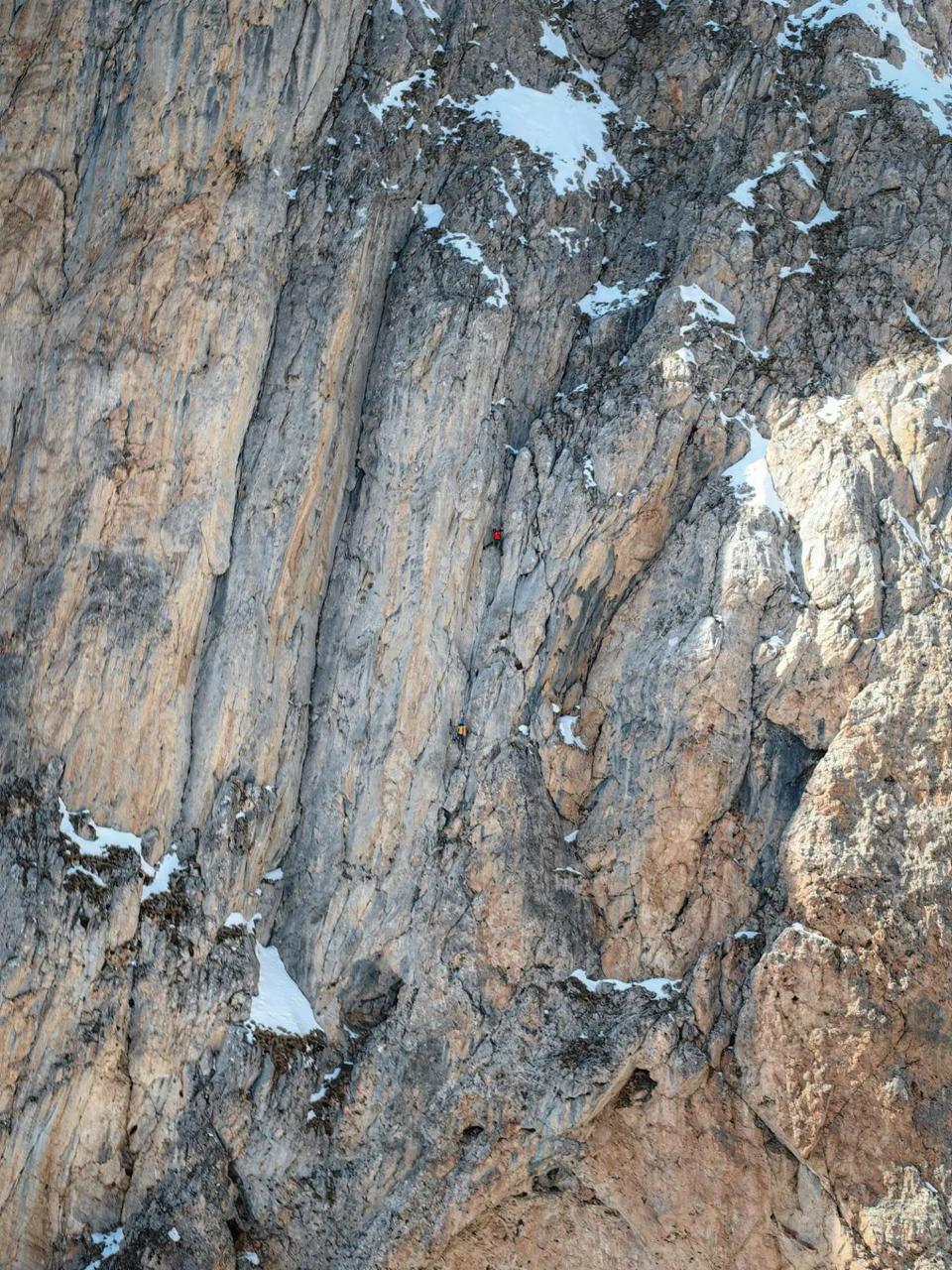
The south and southeast faces, about 700 to 800 meters high, form the primary arena for long routes in the sector. On the southeast face, several routes reach the Russian 6A and 6B standard and are usually climbed over two or three days. The Dorro Route, first climbed in 2003, follows the left side of the face and remains one of the most repeated lines. The Haritonov Route, established in 1986, and the Zhighalov Route, completed in 2017 and later used during Russian national championships, take independent lines through the central part of the wall. Additional 6A lines by Katanaev and Solovey complete the current set of established climbs on this aspect.
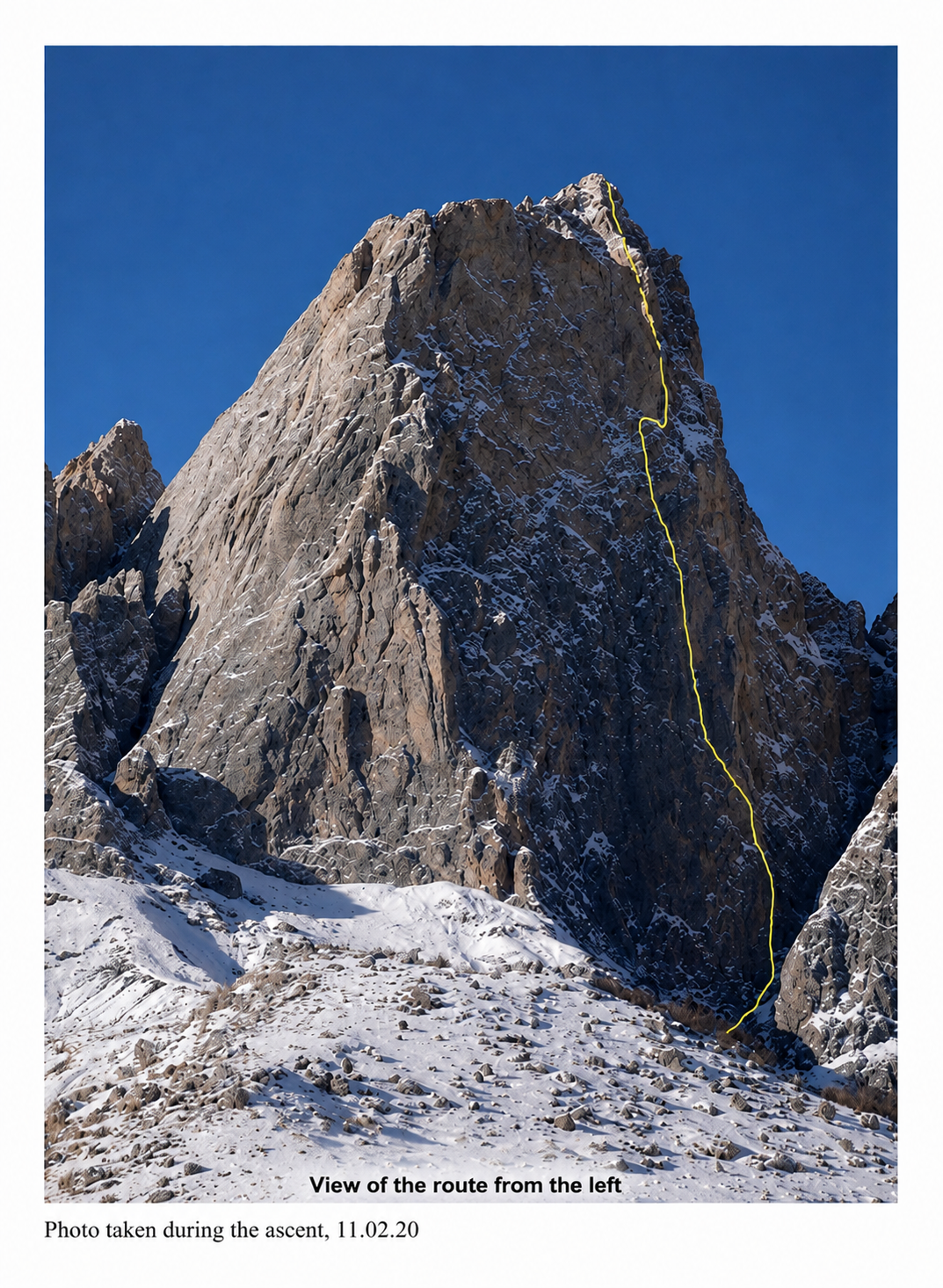
The most demanding route to date is the 6B completed by Ratmir Mukhametzyanov, along with Egor Matveenko and Mikhail Teplykh, in 2020. The lower pitches are on relatively solid limestone, but the character of the wall changes higher up, where protection often requires cleaning cracks and placing gear in fragile rock. The ascent included aid to A4 and four bivouacs, and stands as the current benchmark for difficulty on Gaikomd.
Beyond the major 6A and 6B climbs, the area offers a set of easier ridge and summit routes graded 1B to 4B. Parties use these lines both as independent ascents and as practical descent options from the upper parts of the main walls.
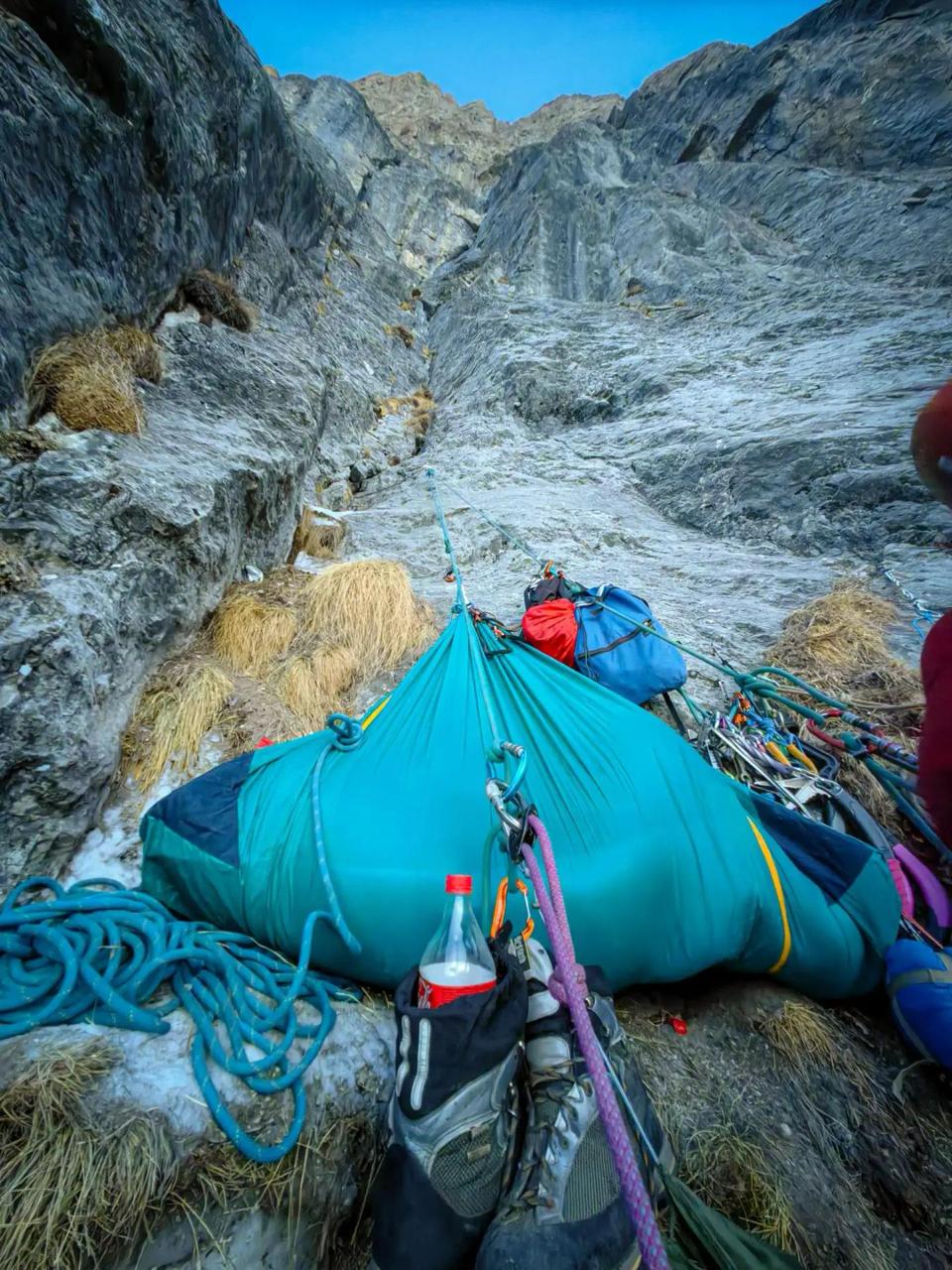
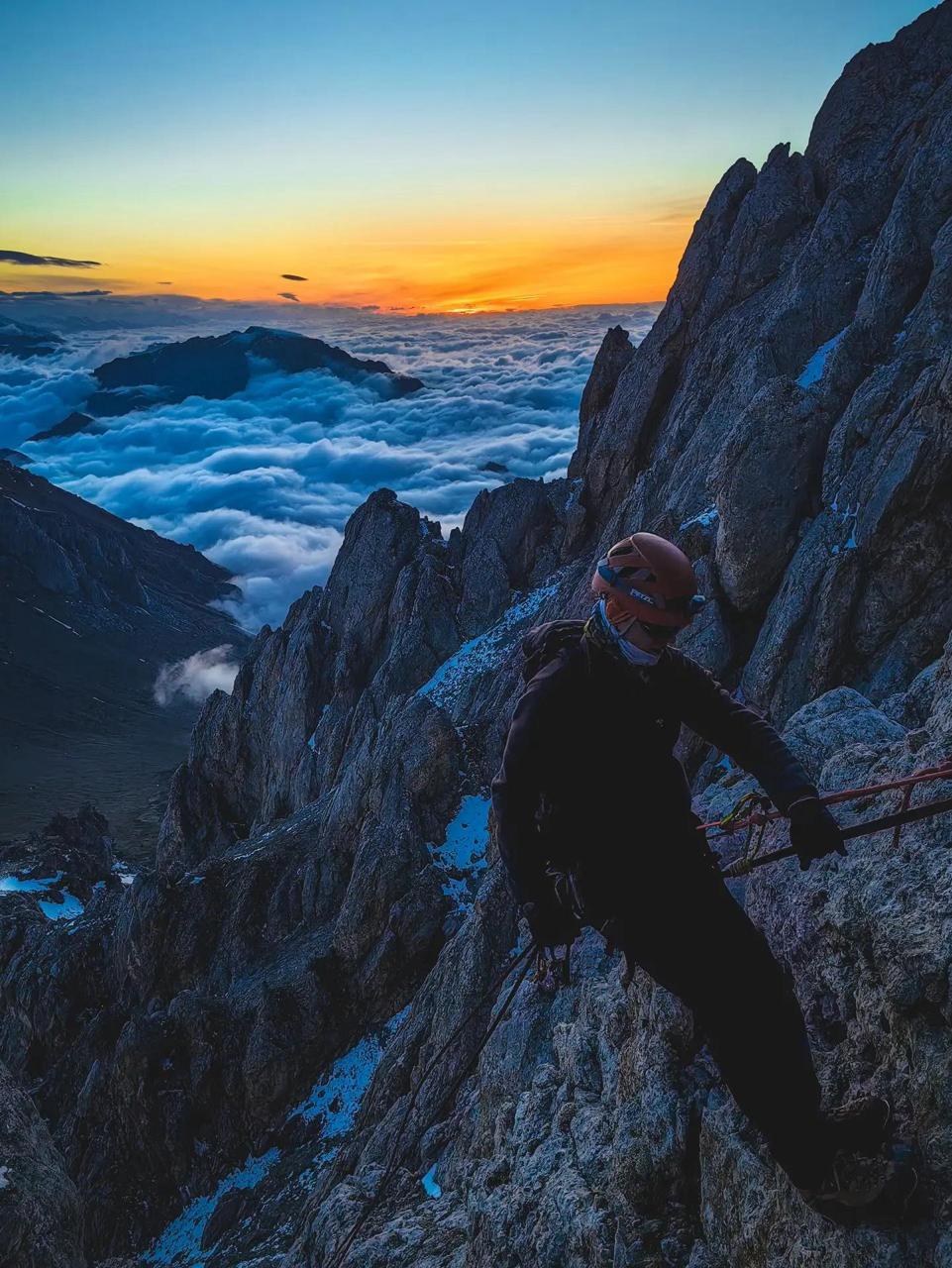
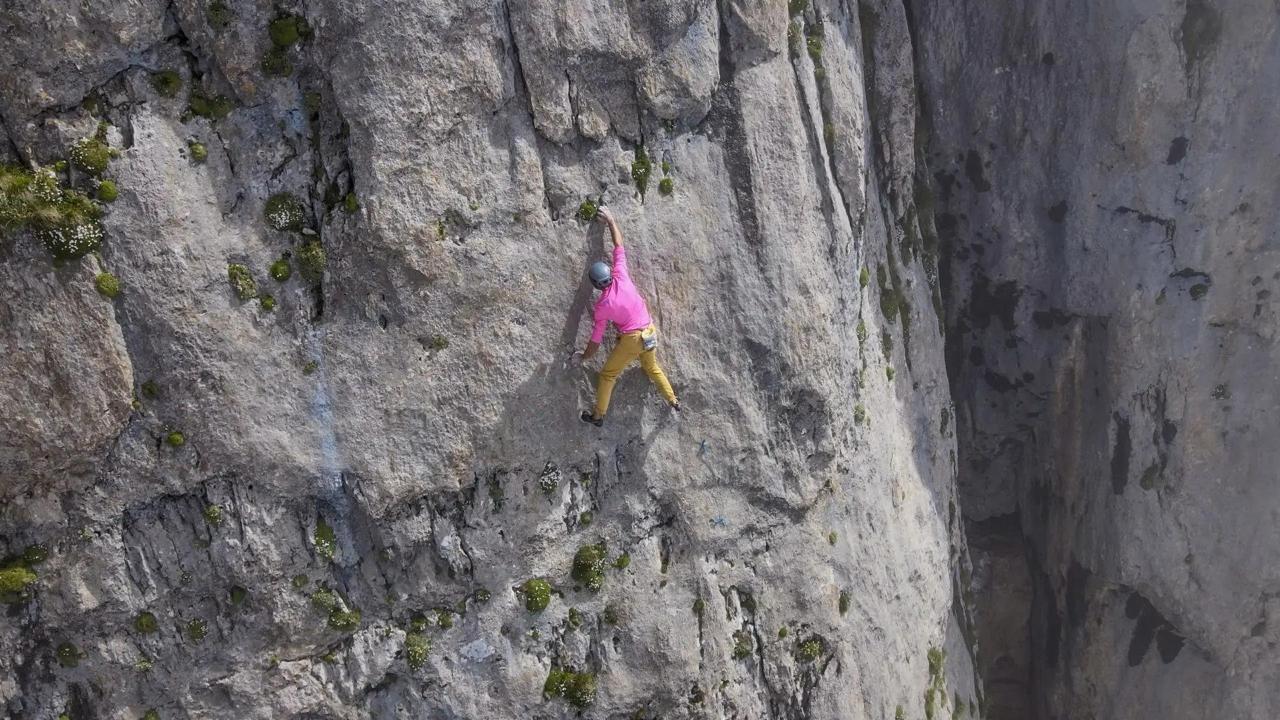
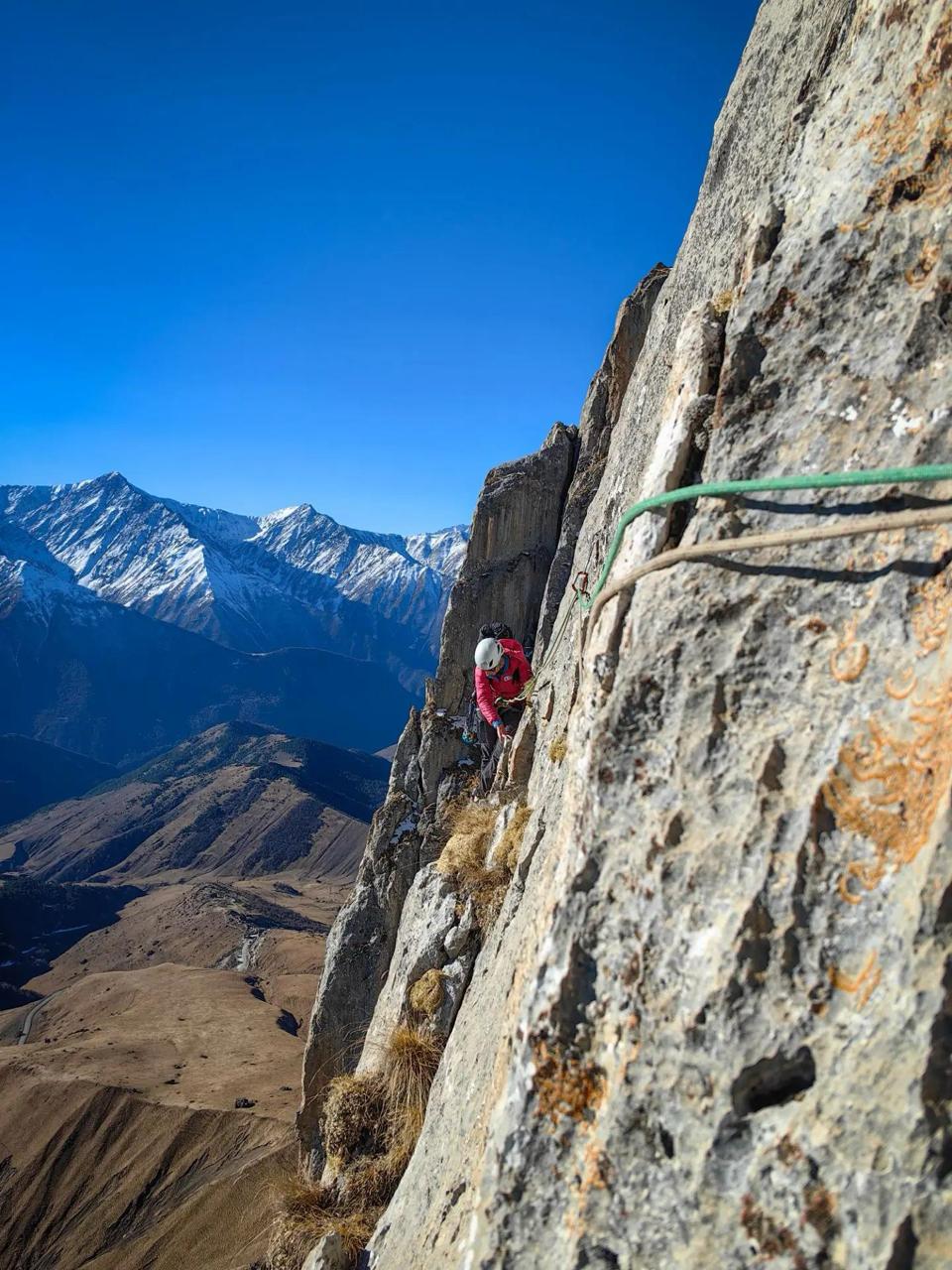
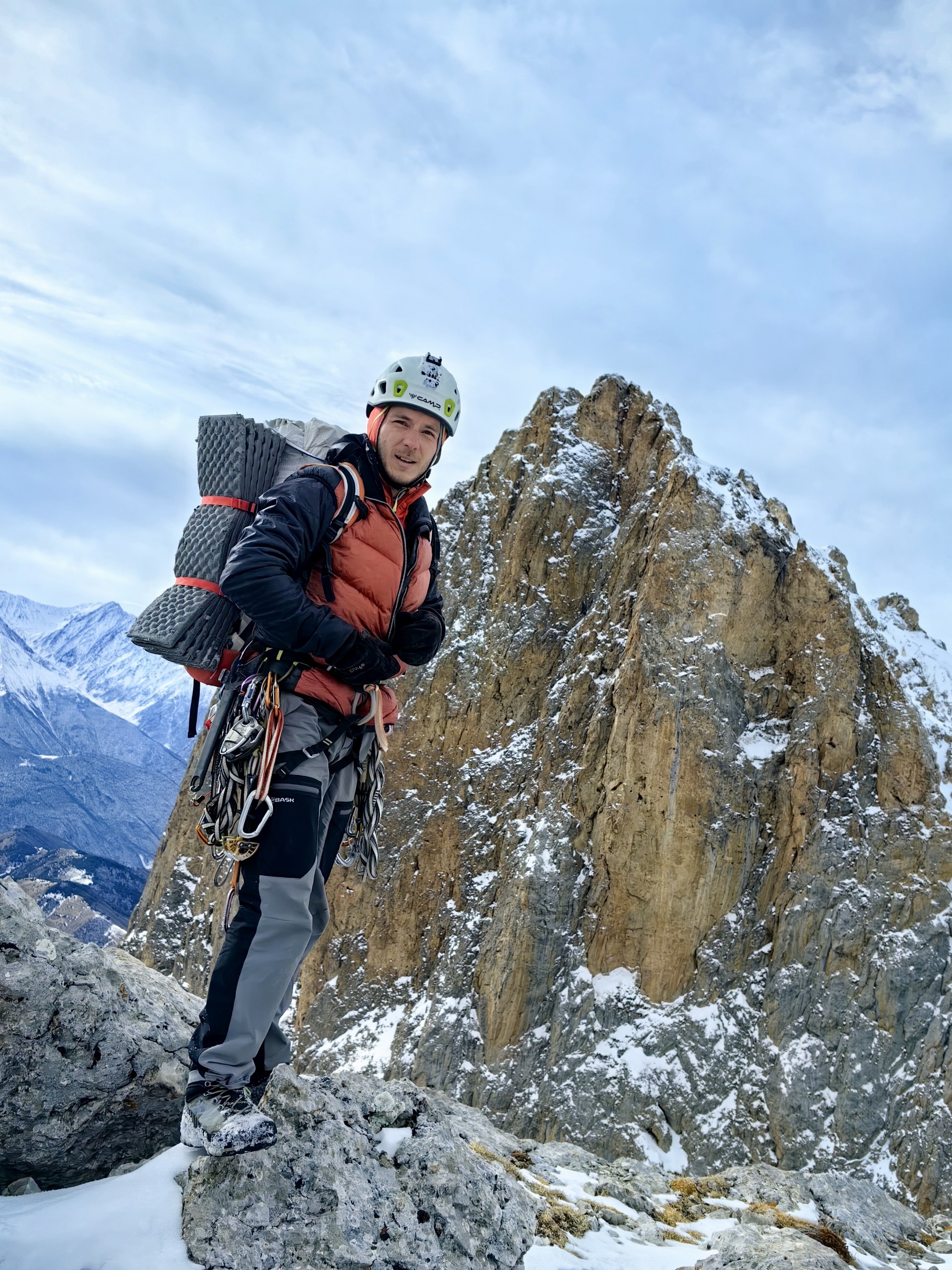
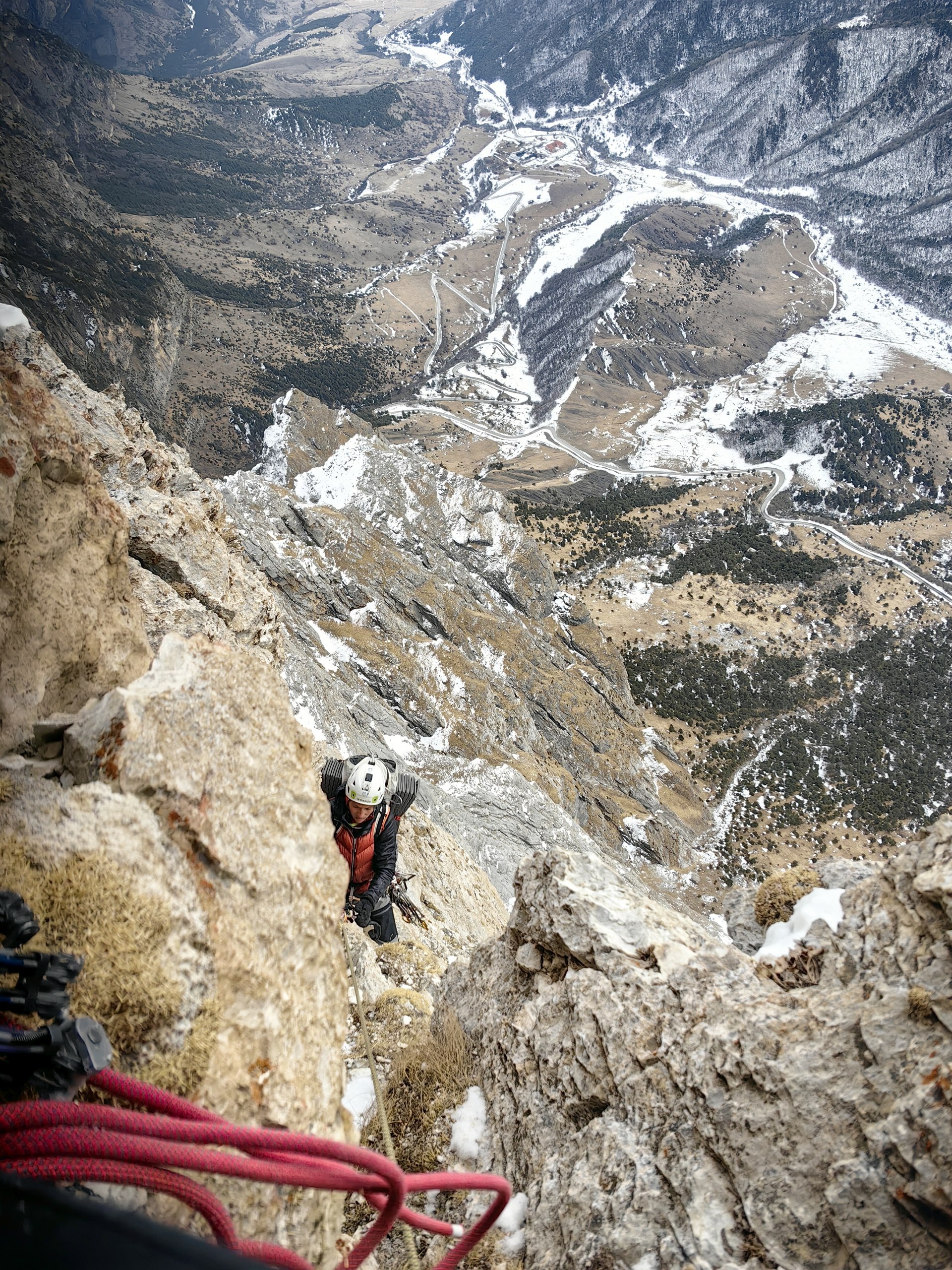
The Dorro Route (Russian 6A), first climbed in 2003, follows the left side of the face and remains one of the most repeated lines. From January 8 to 10, 2025, on his second attempt, Ratmir Mukhametzyanov completed the first free ascent of the route. Maria Lysenko provided belay support and photo and video documentation. They spent three days on the route and bivouacked twice.
The 18-pitch Dorro Route gains 792 meters and has a total length of 1,180 meters. The crux (7a) lies around the fifth pitch, but the psychological difficulties were more extensive: sparse protection, unreliable rock, and complex route-finding.
Mukhametzyanov noted that winter conditions offered several practical advantages, including cooler temperatures and the ability to melt snow for water. He also reported that winter does not improve safety on this wall, as snow and ice are minimal and do not stabilize the loose upper terrain. Conditions during the ascent were mild, with daytime temperatures between +6° and +8°C and no significant precipitation.
In 2020, Mukhametzyanov, along with Egor Matveenko and Mikhail Teplykh, climbed the most demanding route to date on the southeast face as part of the Russian Mountaineering Championship. The direct route was rated Russian 6B.
Koazoy Loam (3,100m, 42.833233°N, 44.845774°E) stands just southwest of Gaikomd, forming the next major summit on the ridge. Its southwest face holds the hardest climbing inthis part of the group, with several long limestone routes at the Russian 6A standard.
Approaches to Koazoy Loam begin from the Kyazi camp. The bases of the southwest and west walls are reached in about an hour and a half. There is a large niche at the foot of the southwest wall that offers a sheltered place to wait out weather or spend the night before starting a route.
Teams attempting Koazoy Loam’s southwest face describe steep limestone with more solid gray bands low on the wall and progressively more fractured yellow and white layers higher up. Climbing on these routes combines long stretches of grade VI limestone with sections of more fragile rock, where protection often requires cleaning and precise placement, and aid up to A3 or A4.
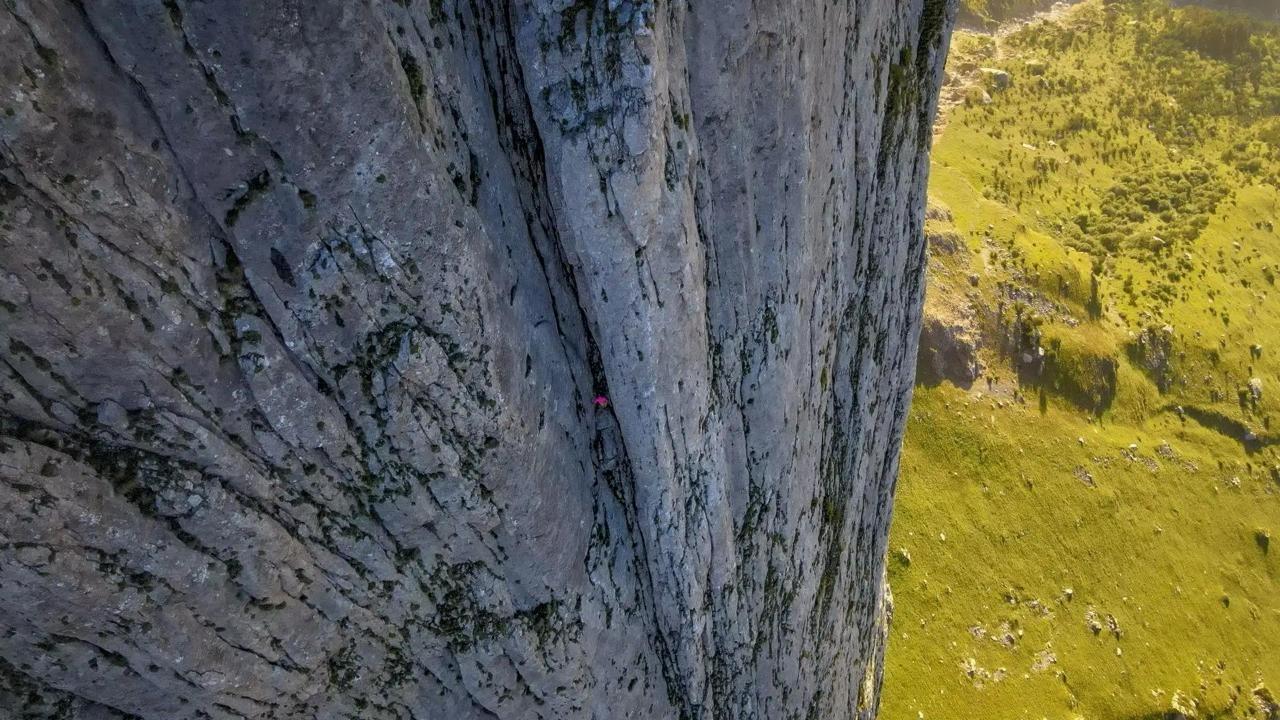
The Livinsky Route climbs the left side of the wall for about 830 meters of height and 1,040 meters of total climbing, with sustained VI ground and aid to A3. The Penyaev Route follows the central face, gaining roughly 735 meters of wall and about 830 meters overall, with long VI sections, A3 aid, and bivouacs on ledges and in the large niche near the start. The Pivovarchik Route, completed in 2024 by a Krasnoyarsk and Voronezh team, runs directly through the central southwest face, with 850 meters of height and 1,021 meters of climbing. The team reported more than 690 meters of VI terrain and aid to A4, and considered it comparable in difficulty to the hardest 6A lines on Gaikomd. They advised that parties choose it only after significant experience on serious Caucasus limestone.
All routes on the southwest face descend by the 4B ridge line. This ridge is also listed as an independent climb and offers a much easier line of ascent compared with the big routes on the main faces.
In addition to the more technically demanding objectives described above, the Kazi area offers numerous peaks suitable for introductory and intermediate mountaineering. In the Skalisty Ridge these include Stolovaya Mountain (Miat Loam, 3,003m), the Jarlam Massif (also spelled Djarlam, 2,867m; Jarlam Central, 3,160m; Jarlam Southeast, 3,155m), Novichok Peak (2,988m), Bashnya Peak (2,820m), Giryag (2,863m), Zub (2,986m), and Knyazhna Olga (2,929m). Farther south, along the Shavana Ridge between the Kistinka and Shan Don valleys, are Arzi (3,963m), Salgi (3,944m), Kichchechkort (4,133m), 60 Years of the Chechen-Ingush ASSR Peak (4,071m), and Shan (4,451m). These mountains are climbed via routes ranging from Russian 1B to 4B and are widely used for training and instructional ascents. The area also contains numerous crags and several bouldering areas.
The area has become increasingly active in recent years, as Russian national championships have brought multiple high-level teams to the Kyazi camp, leading to new routes, second ascents, and timed repeats on the main walls. For climbers seeking a technically demanding but logistically straightforward objective in the northern Caucasus, this sector offers road access, a functional base camp, long limestone walls, and the chance to climb on some of the least known big walls of the Caucasus.
—Anna Piunova, AAJ, with information from Ratmir Mukhametzyanov, Russia
Media Gallery