
Meru, West Face, Variations and Historical Notes
India, Uttarakhand, Western Garhwal, Gangotri
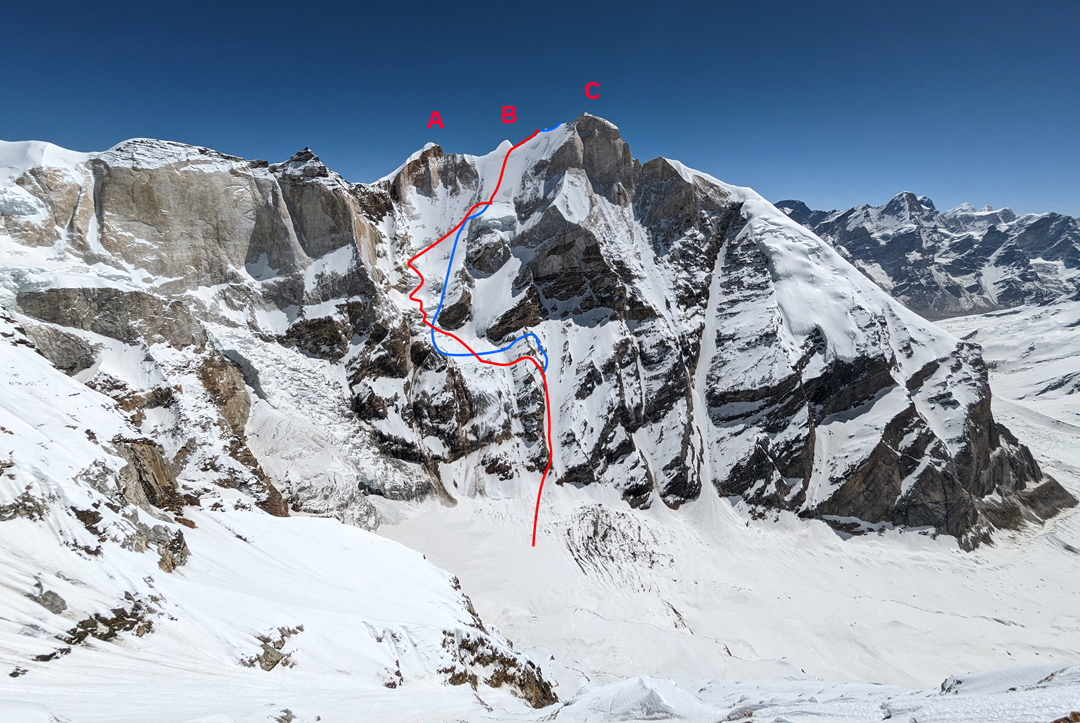
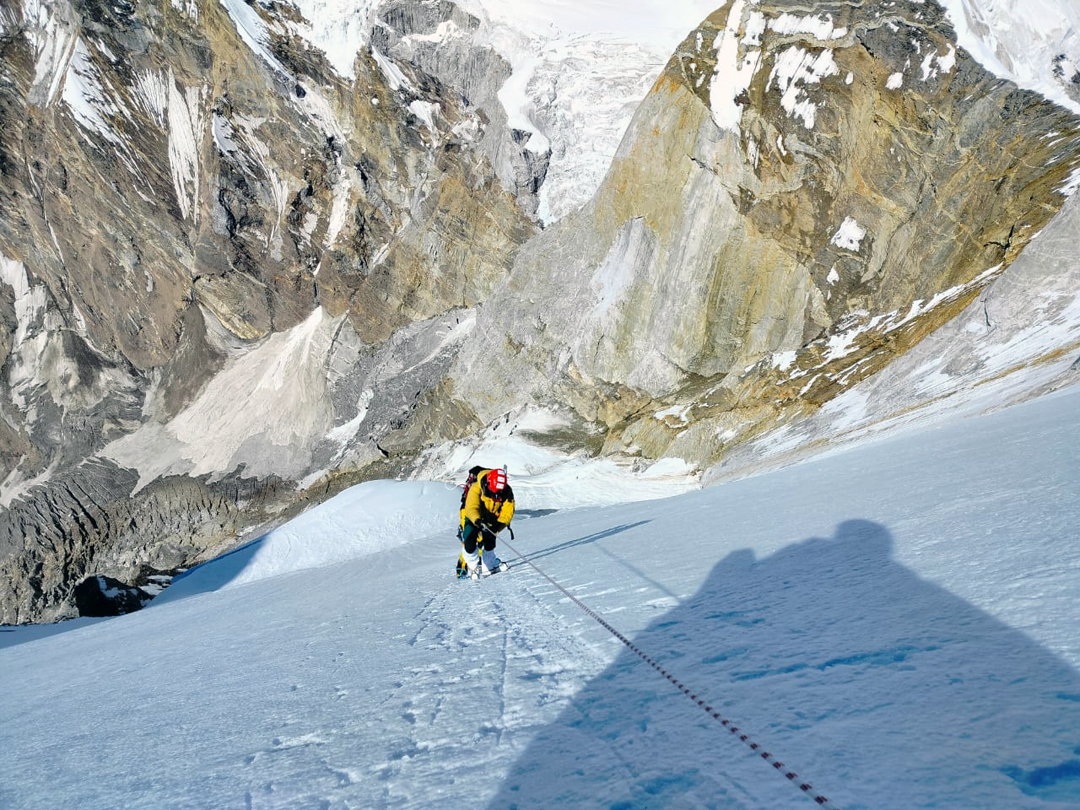
The story began in September 2021, when members of our club—Giripremi—climbed Manda (6,510m). On that expedition was Mingma Sherpa. In 2006, Mingma had been with Glenn Singleman and Heather Swan when they climbed the west face of Meru to a high point (probably around 6,590 meters) on the ridge between Meru Central (6,310m) and Meru South (the main summit, 6,672m), then BASE jumped the northeast face (AAJ 2009). We hatched a plan to climb and fix a route on the west face to Meru South, then try to complete the climb to this summit from the east side.
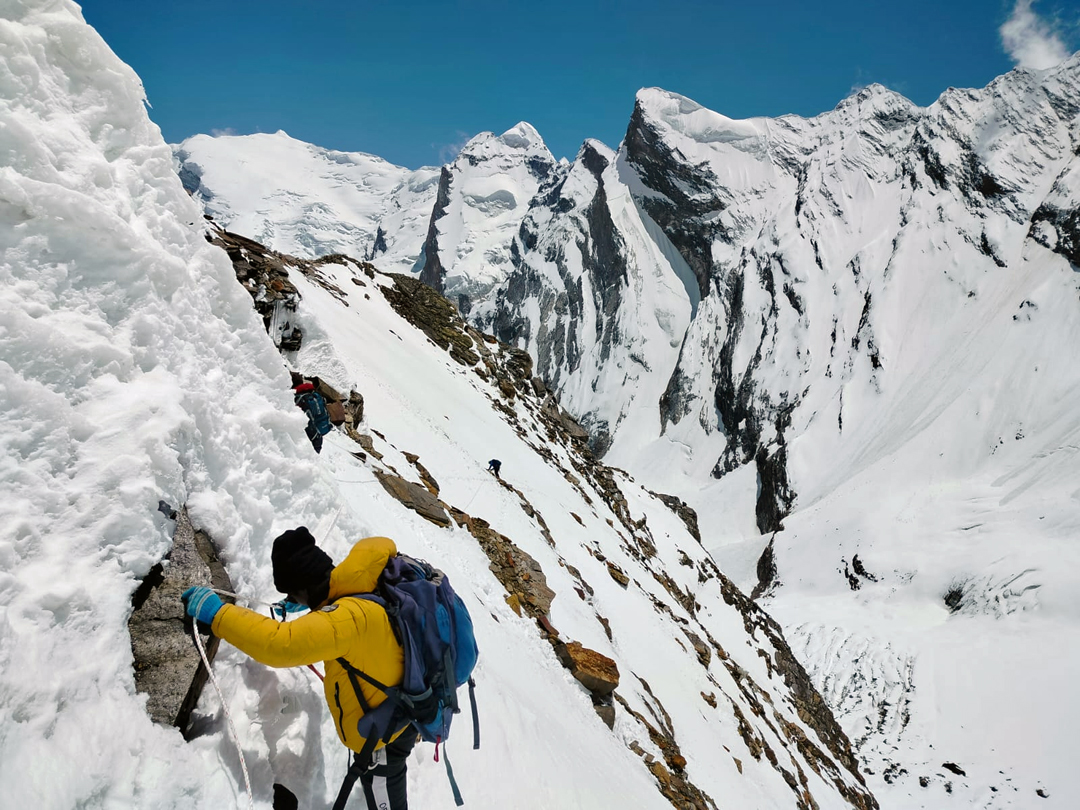
In the early summer of 2023, we established base camp at 4,400 meters and spent 35 days on the mountain, fixing the route and ferrying gear with high-altitude porters. However, the weather that late spring and early summer proved to be unusually bad, with heavy snowfall. On our last attempt, reascending the fixed lines, we found pitons bent and ropes missing. In the end we were forced to retreat from 400 meters below the top. We returned to our homes in Pune, but deep down I knew we had to face this mountain again.
Less than 50 days later, on August 20, we were on our way back to the Gangotri. Arriving at base camp on the upper Kirti Glacier, we saw the mountain much drier than during our previous visit. Rockfall was frequent. However, our acclimatization and reopening of the route went well.
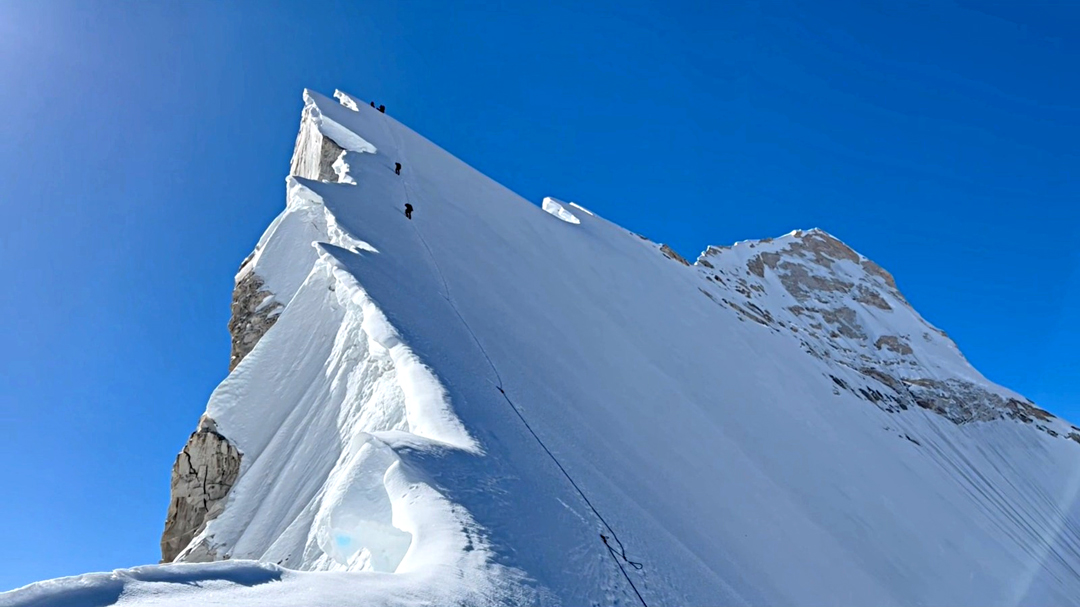
We had decided there was no real possibility of establishing a higher camp on the face, so on the night of September 1 a team set out from Camp 1 at 5,500 meters for a summit push. The sky was clear, but the wind strengthened, intensifying the cold. At 8 a.m. on the 2nd, Varun Bhagwat, Vinod Gusain, Ganesh More, Vivek Shivade, Bihari Rana, Ajit Rawa, Dawa Sherpa, Mingma Sherpa, and Phurtensi Sherpa reached the top of the face. [There are a couple of snowy tops on the ridge leading toward the main summit of Meru, and the climbers appear to have continued to the one closest to the summit, making their route about 1,500 meters high.] The blessings of nature are as important as preparation. On our first attempt, nature gave us lessons of experience. On the second, she offered her grace. Even on our return journey, near Rishikesh, a massive landslide crashed onto the road. Had we left just 20 minutes later, we would have been buried beneath it.
—Umesh Zirpe, Expedition Leader, India
Editor's Note: In 2006, the BASE jump team climbed and fixed to the col below the southeast ridge of Meru Central. Their top camp was at 6,200 meters in two snow caves below the final slope on the west face. They fixed a few more pitches up the north-northwest ridge of Meru South as far as the jump site and also to the top of Meru Central, which they used as their filming site for the jump. They did not climb to the main summit. The 2023 team climbed similar ground, with some significant variations, then continued past the jump site and along the north-northwest ridge to the last snow top before the main summit (likely the same top reached by the multinational team that climbed the southeast face—see AAJ 2024). Only one team has so far reached Meru South: a Japanese expedition in 1980, via the southeast ridge.
Media Gallery