
The Alps: New Routes on Forgotten Faces
Europe, The Alps
Recent years have seen ever-increasing traffic on the well-known peaks of the Alps, but 2025 also brought significant new routes on what might be termed “forgotten faces.” One of the main protagonists has been Silvan Schüpbach.
The Swiss guide has remarked that, fueled by social media, the “six great north faces of the Alps” are now regular meeting places for large numbers of mountaineers, pursuing a form of alpinism focused on competition, times, and collecting famous routes. Schüpbach’s stated aim is to climb new routes up six other, relatively obscure north faces, which present different and often greater challenges while highlighting the potential that remains in the Alps. His preferred style is mixed climbing during the winter months, accessed by public transport where possible. In 2025, Schüpbach completed new routes on four big north or northwesterly walls, the first in February on the Nesthorn.
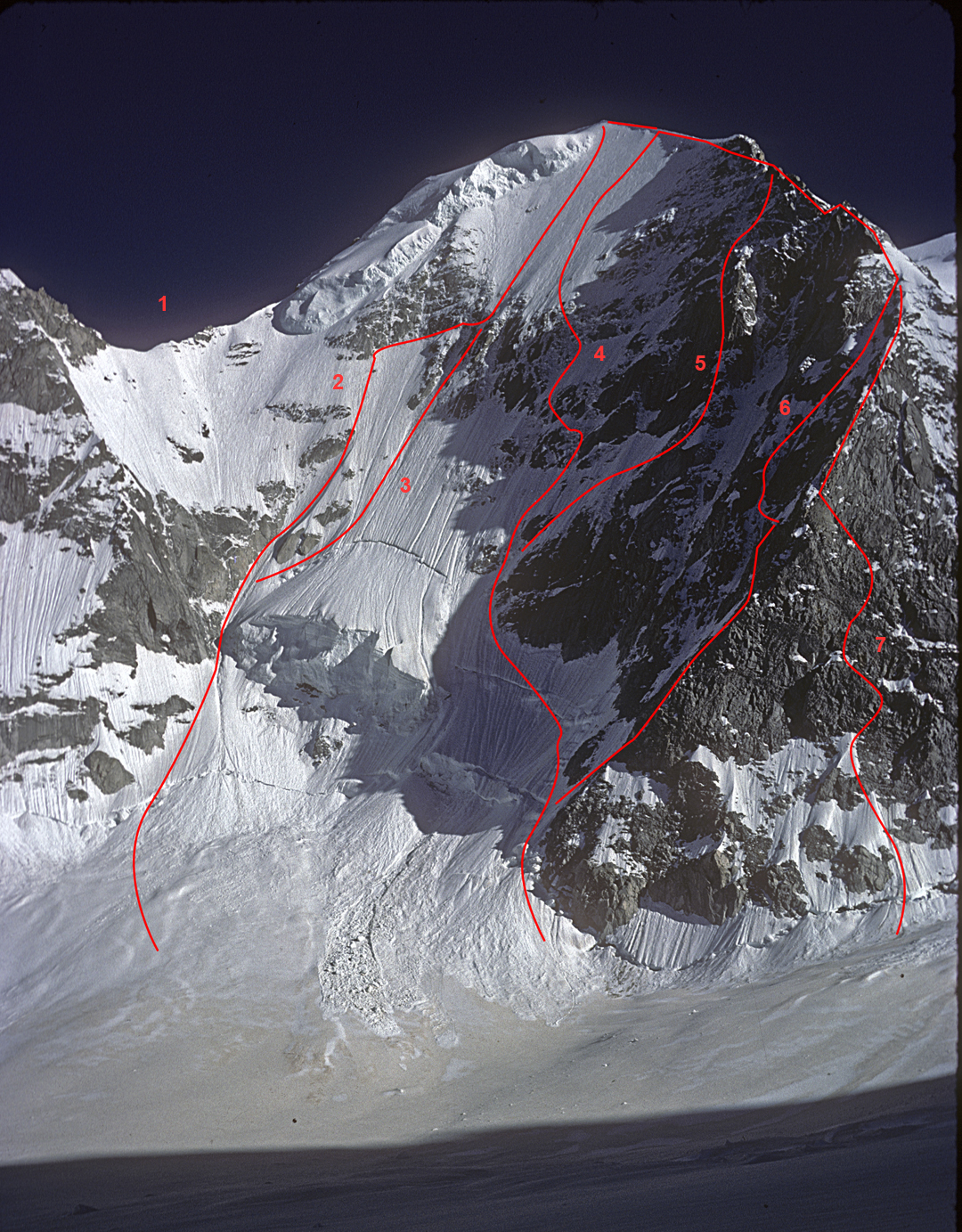
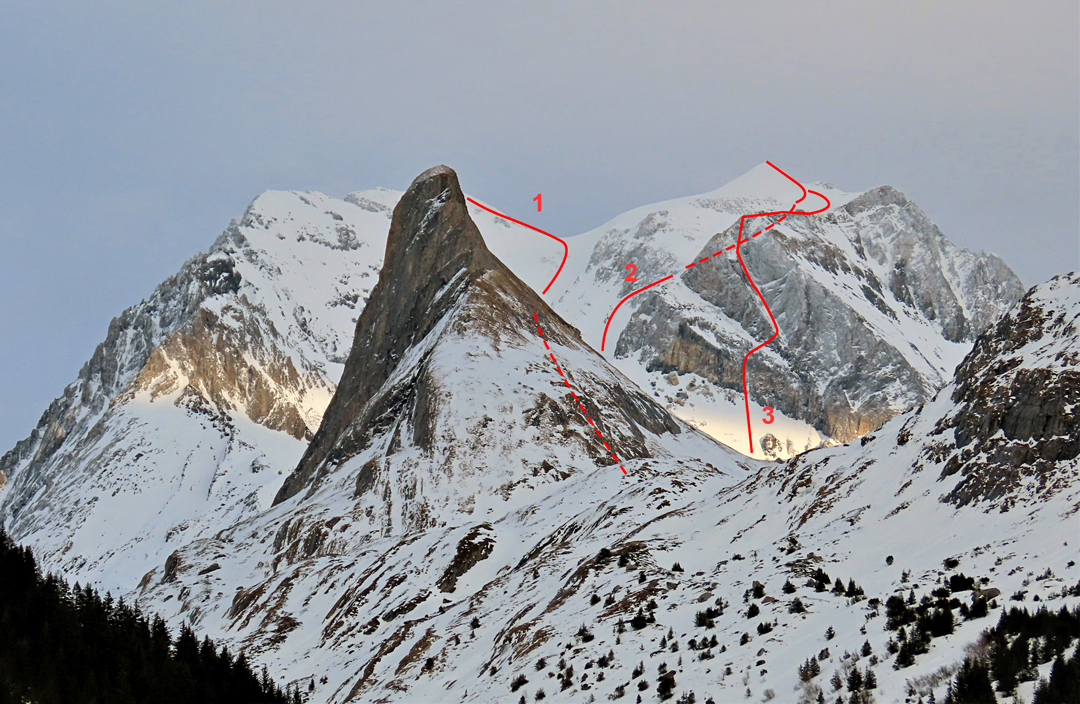
The Nesthorn (3,842m) is a remote and mostly hidden mountain in the Bernese Oberland. It is most famous for its now-neglected north face, first climbed in 1933 by Alfred Drexel, Erich Schulze, and Willo Welzenbach (900m, TD). Several more difficult lines were added later, mostly in the 1970s, when the mountain had more snow cover.
The right side of this face is bounded by the north-northwest ridge. In 1905, U.K. alpinists William Kirkpatrick and Roger Philip Hope started up this ridge, but after climbing for only one hour, they left the crest for a gully on the left flank before regaining the ridge at around 3,300 meters. The pair completed their route in a round-trip ascent from the Oberaletsch Hut in just over 24 hours. In dry conditions, it is a rock climb on generally sound granite (IV), but it is rarely done. To the right of the lower ridge is the steep and rocky northwest face, which until 2025 appears to have been untouched.
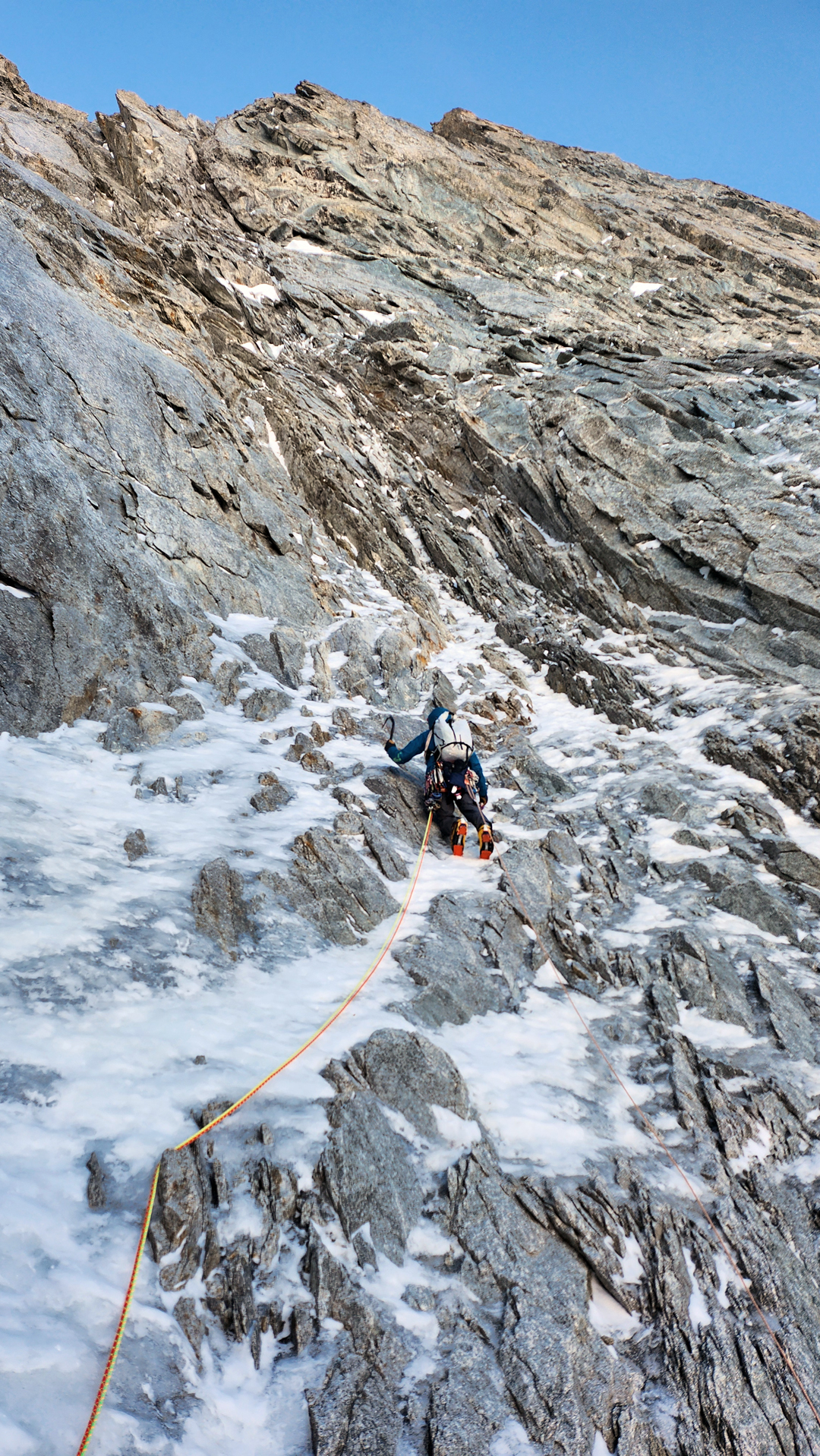
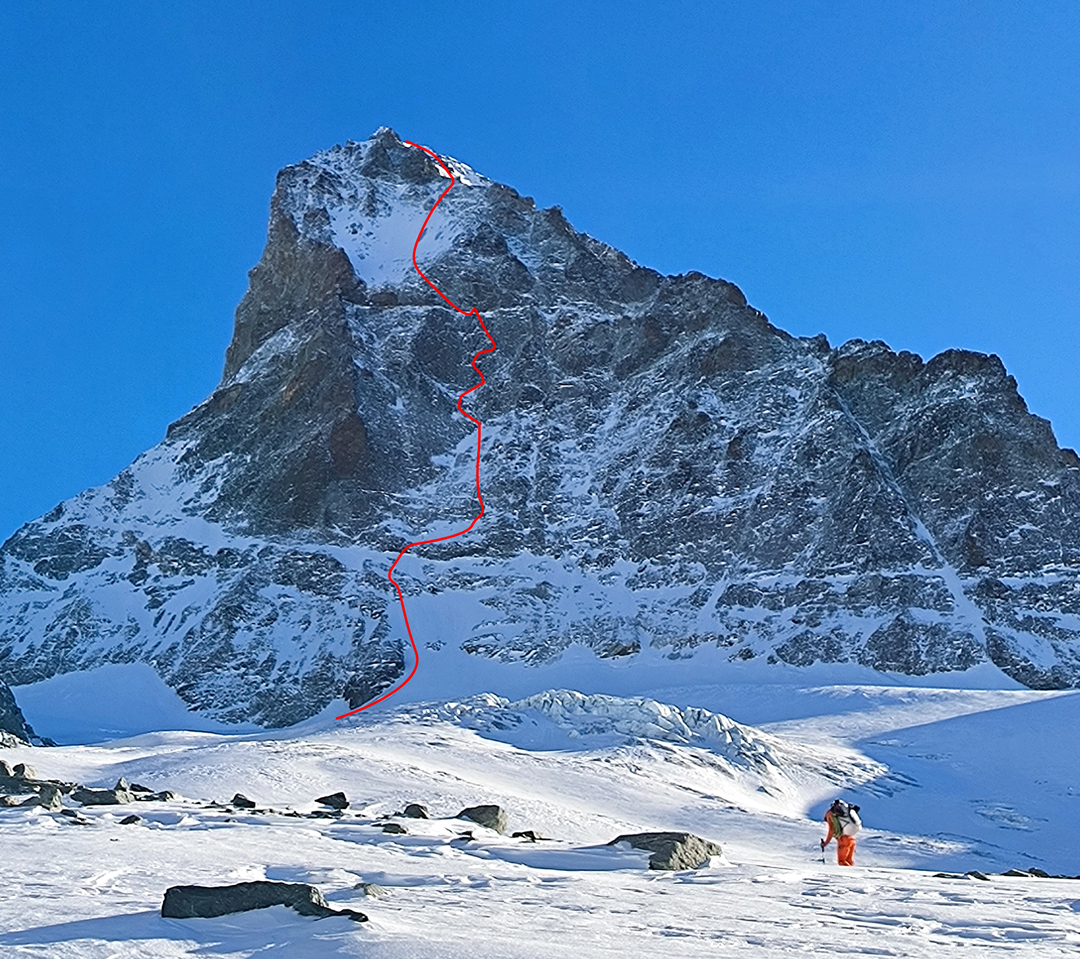
On February 19, Carlos Molina, Schüpbach, and Peter von Känel reached the foot of this face after a long approach on skis from Belalp via the Beich Glacier. They camped at 2,900 meters and the next morning started up the left side of the northwest face on ground that was surprisingly friendly and easy to protect. They reached the north-northwest ridge and continued on the crest for a few hundred meters before joining the 1905 route and following this, on the east flank of the crest, to the summit. The 900-meter route was named Cuckoo’s Nest and had approximately 500 meters of new ground and difficulties up to M6 (though mostly M3/M4 60°). They descended part of the west ridge (the Nesthorn’s normal route), then short-cut back to their tent, which they reached in the dark 13 hours after leaving.
This ascent caught the attention of the couple Doro and Silvan Metz, who in May made a long approach on foot to camp at the base of the mountain. The next day, they climbed the pillar forming the right side of the northwest face, joining the upper section of the north-northwest ridge after around ten pitches, where more time-consuming climbing, largely on the west flank of the crest, brought them to the summit. The 900-meter route Nesthäkchen (about 500 meters of new ground) had difficulties of M5+ AI4 60°.
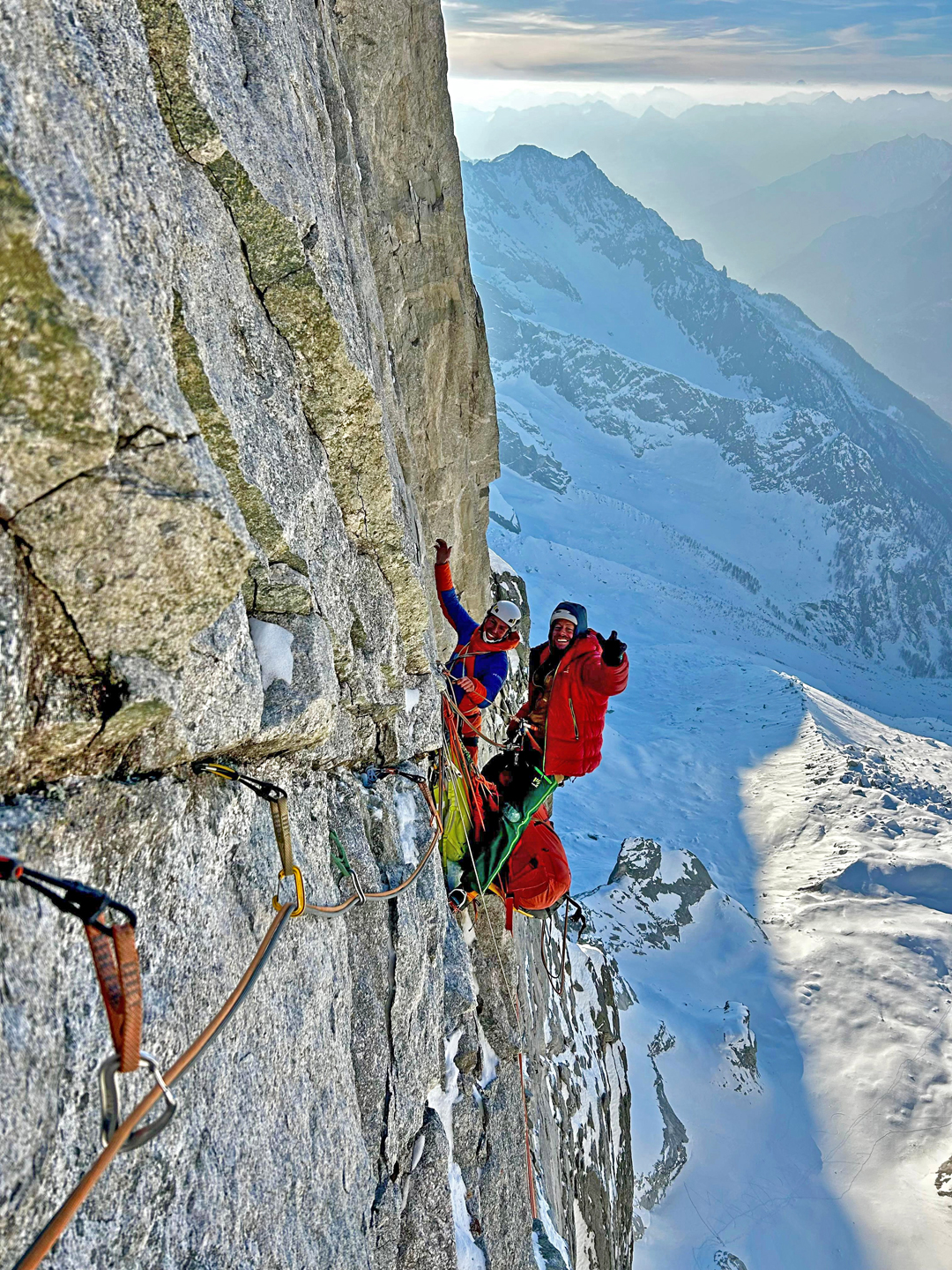
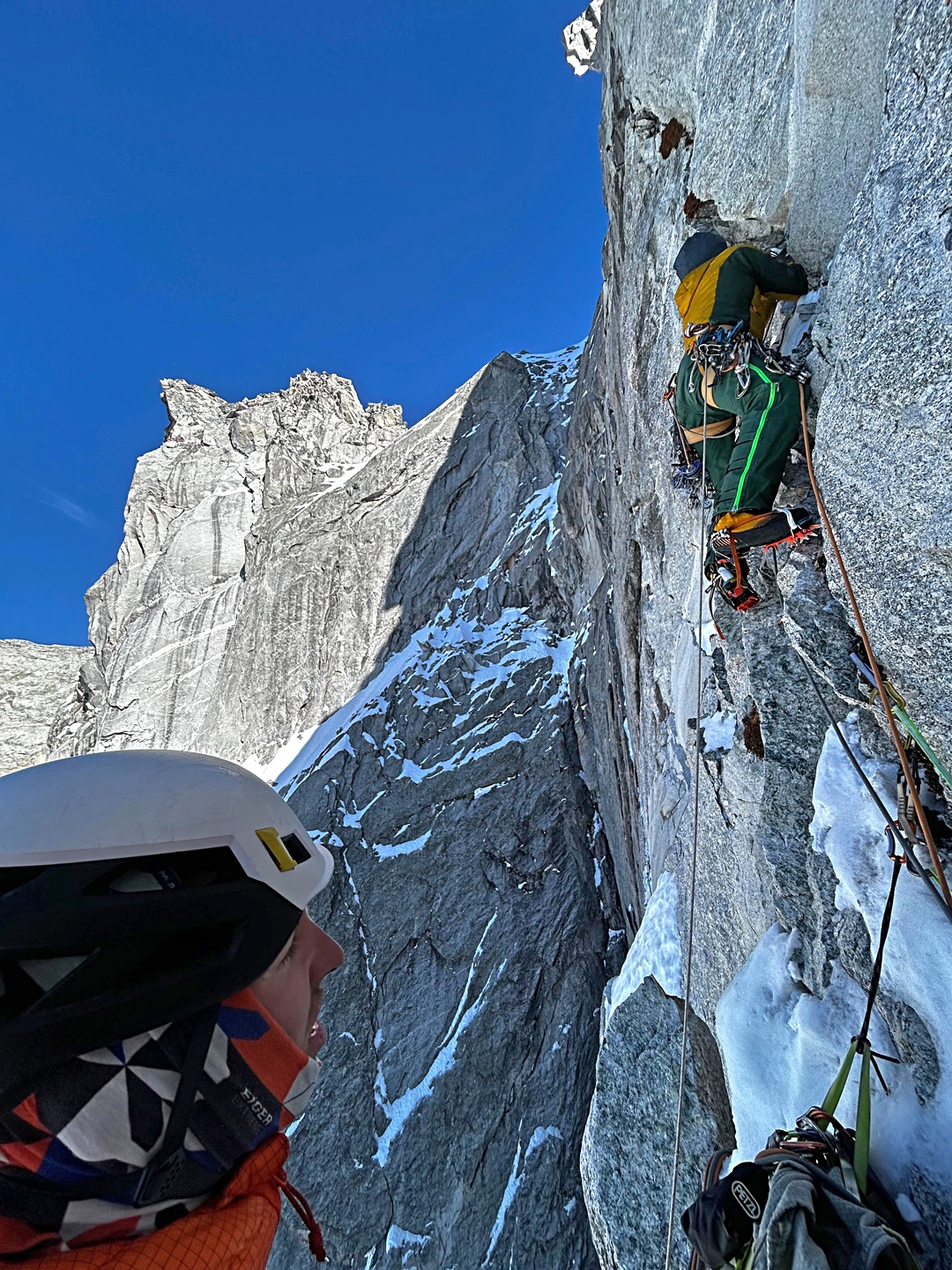
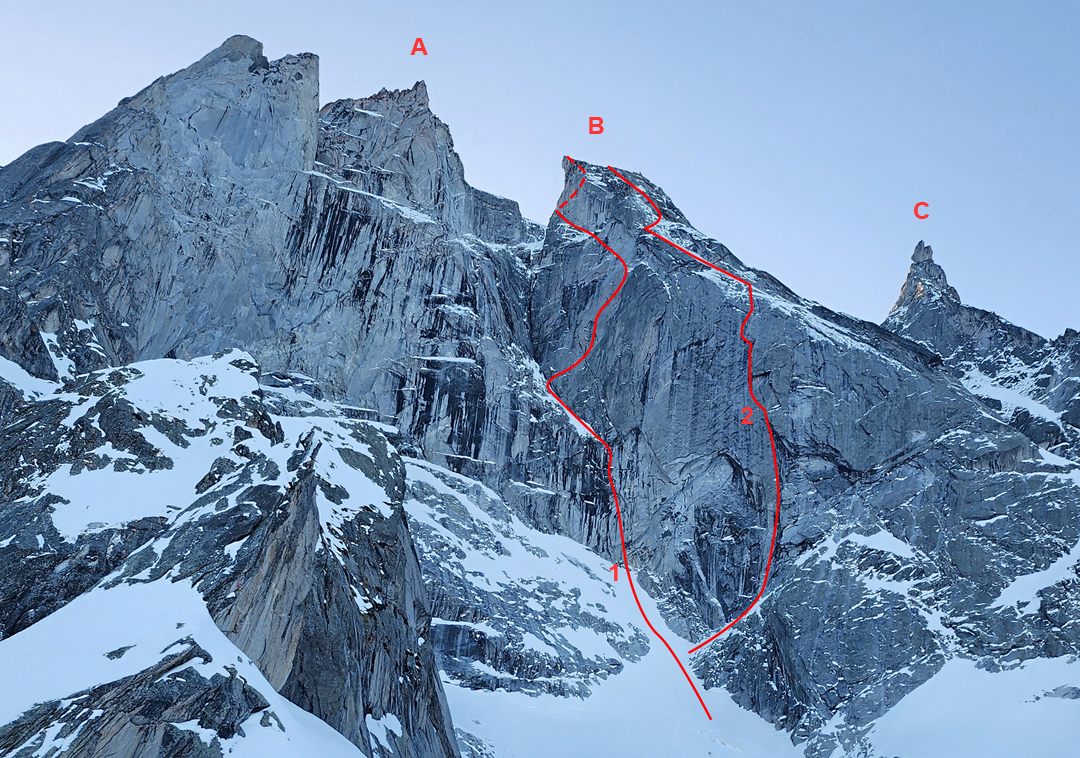
On March 6, Schüpbach traveled to the Bregaglia in Switzerland, where he joined Filippo Sala and Roger Schäli for an attempt on the north face of Punta Pioda di Sciora (3,238m), left of the 1980 Belica-Obuch route. Reaching this face in winter was far from easy, and the climb itself took four days. After climbing the initial section on the first day, the climbers returned to the Sciora Hut for the night, then completed the route with two bivouacs, reaching the summit on March 9. Most pitches were long and taxing, requiring mixed free and aid. Together with sections of loose rock and cold temperatures, this made for a demanding climb: Luce e Tenebre (700m, M8 A3 70°). Notably, it was the first time all three had climbed together.
In December, Schüpbach visited the Mont Blanc Range, where the north face of the Aiguille de Triolet (3,870m), which once held a benchmark ice climb, has received almost no media attention for decades. On the large rock wall to the left of the classic 1931 Gréloz-Roch route, Schüpbach, Tom Livingstone, and Sala established a difficult variation to Jin-Go-Lo-Bar (ED2 6a A2 M6/M7, Pellissier-Pessi, February 1998) on December 13. High on the face, where Jin-Go-Lo-Bar moves out left, the trio climbed a direct line up a steep headwall. This gave two hard pitches (M6+ and M7+) and an uncomfortable bivouac. They continued up to the northeast ridge in the morning. The variation is called You Didn’t Ask (M7+ 80°).
Remarkably, just as they were descending, Philippe Bruley, Amaury Fouillade, and Olivier Kolly also started up the Triolet face, with a similar idea for a first ascent but one day late. They climbed a runnel parallel and left of Jin-Go-Lo-Bar, then joined it for a pitch (M6) before reaching the start of You Didn’t Ask, which they followed to the top, calling their line Inédite (also M7+).
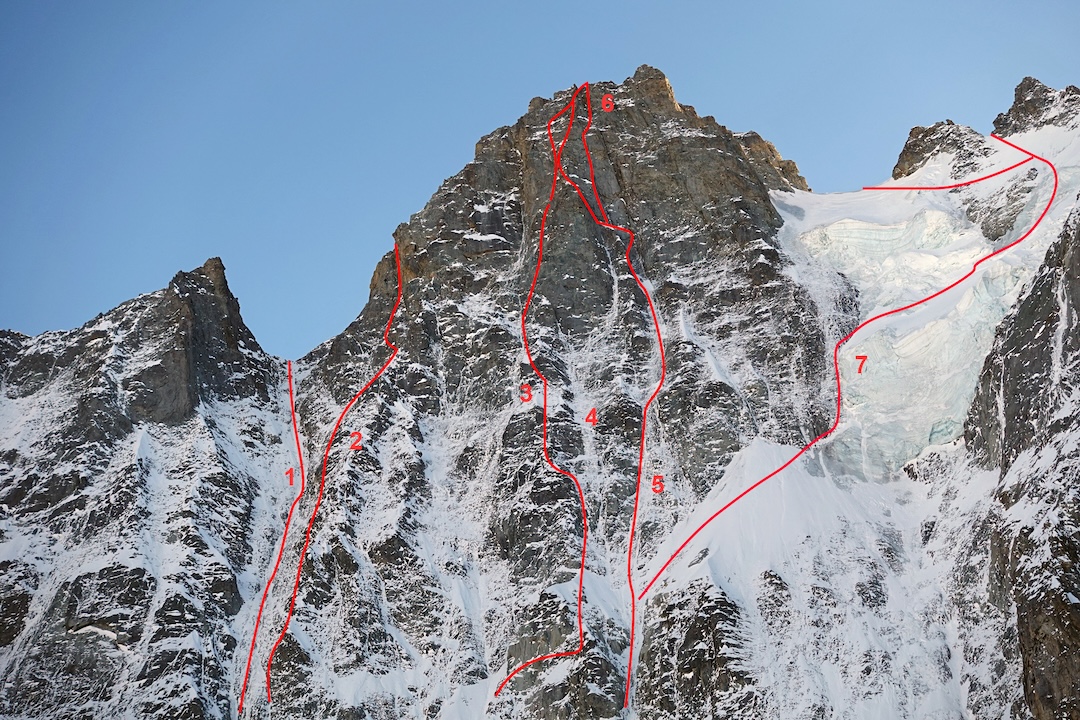
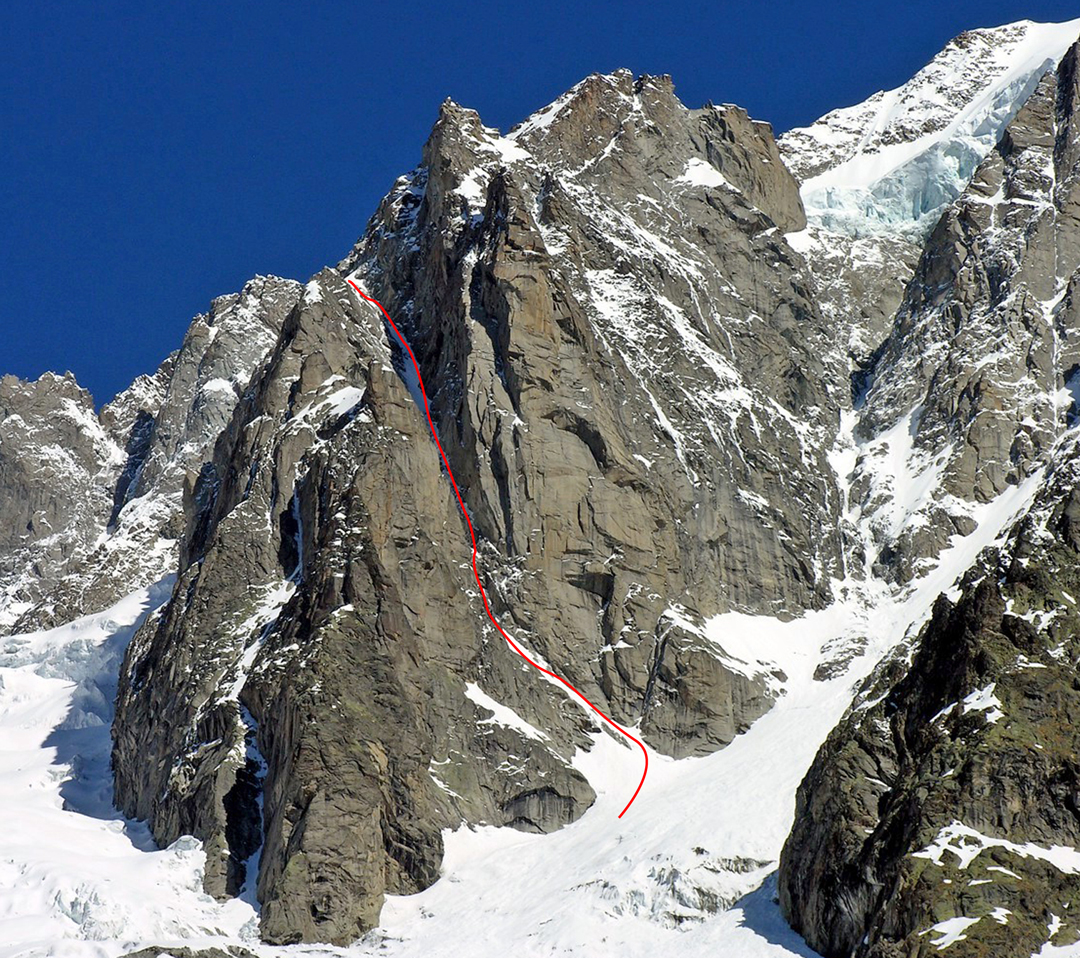
The last little-visited wall on Schüpbach’s agenda for 2025 lay on the Dent Blanche (4,357m) in Switzerland. The 800-meter-high northwest face has at least half a dozen routes, three of them by the prolific Patrick Gabarrou, and are rarely if ever repeated. This is one of the most remote big faces in the Alps (to put up one route, the first ascensionists reached the glacier below by airplane), but the Dent Blanche Bivouac Hut (3,540m) is nearby.
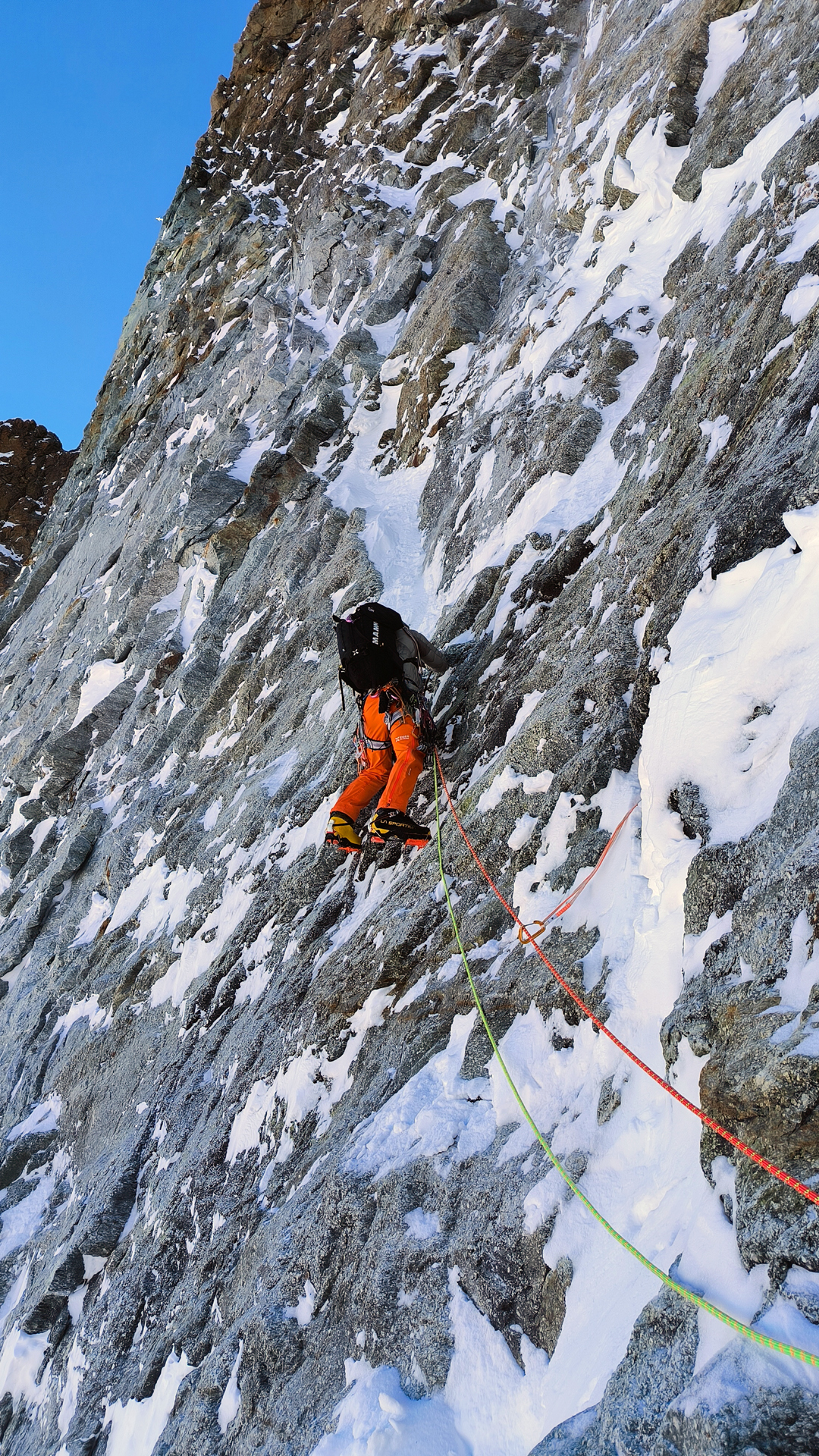
Starting from this hut on December 28, Kolly, Sala, and Schüpbach started up the original route on the face (TD, Schneider-Steinauer, 1934), then moved right to climb very steep mixed ground between this route and the Gabarrou-Jond route Romain (TD+/ED1, 1995). Just below a large snow slope that leads to the summit, the three made a cold, uncomfortable bivouac with very little sleep. The next day, they reached the snowfield and were on the summit by 2 p.m. The steep section of the face resembles an eye, so the three named their route Le Clin d’Oeil (“The Wink,” M7 WI3).
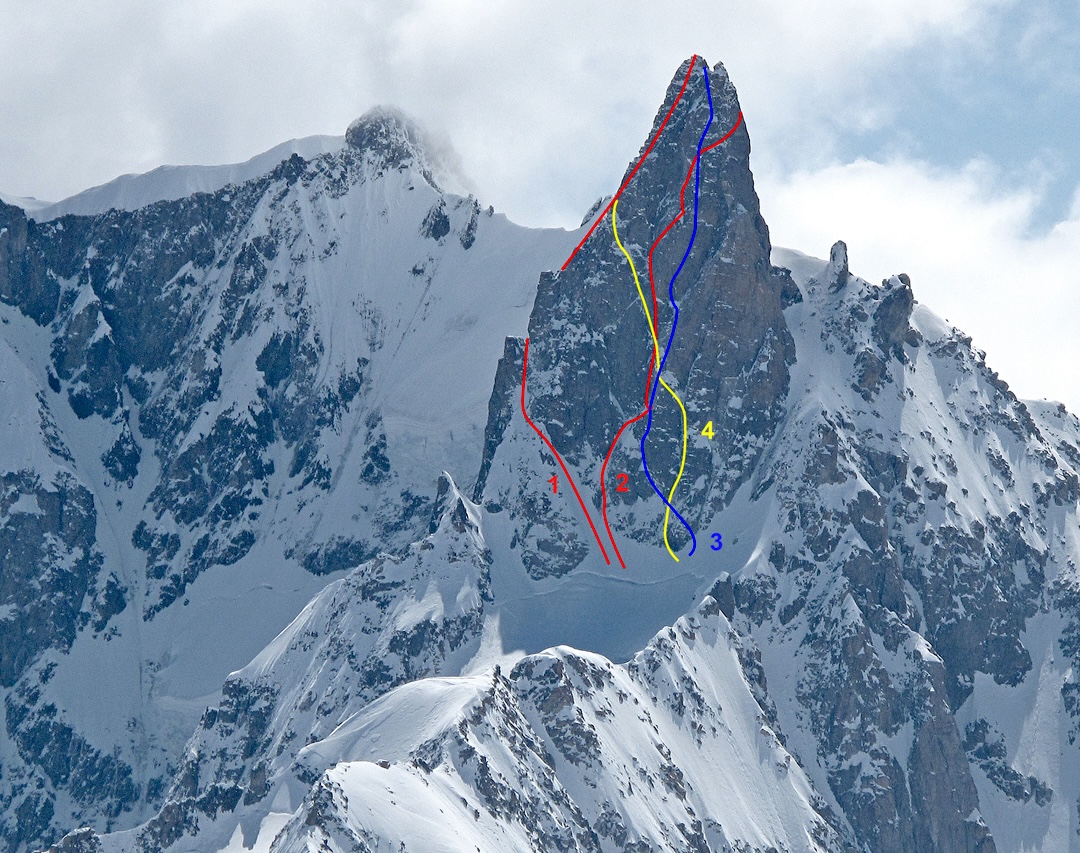
Schüpbach was not the only activist exploring little-traveled faces during the year. On April 11, 2025, Mathis Garayt, Kilian Moni, and Arthur Poindefert climbed a new route up the north face of the Dent du Géant in the Mont Blanc Range. This roughly 370-meter face is visible from many places, so it is perhaps surprising that no route was recorded here until the mid-1980S, when the face was climbed by Renzo Luzi and partner. In June 2014, Christopher Baud, Brice Bouillanne, and Jonathan Charlet put up a second route, Coeur de Géant (10 pitches, M5+).
The April 2025 route is a direttissima, just right of center on the face, crossing Coeur de Géant at around half height. The three climbers found difficulties up to M6+ on the lower wall and M8+ in the steep middle section. They then changed into rock shoes to climb a few pitches up to 6a+ with bare hands. Completed in nine pitches, the route was named Géant dans l’âme.
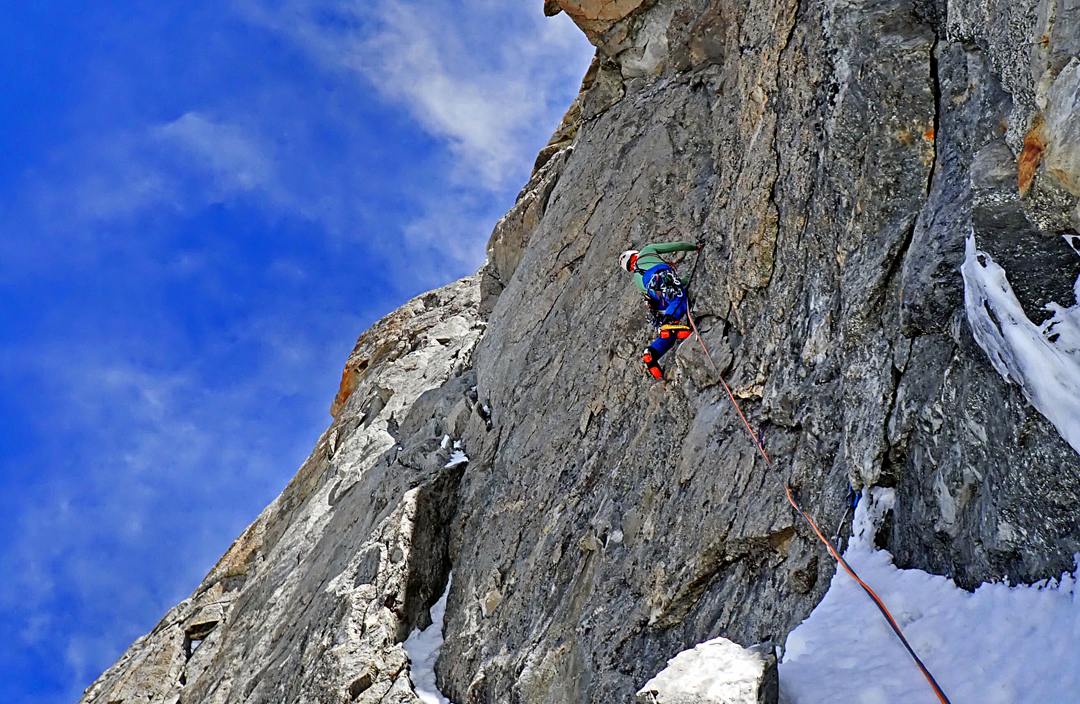
Emanuele Andreozzi and Santi Padrós also had eyes on this face. On June 10, the two followed obvious snow and ice ramps to the left of previous routes to reach a large crack system in the center of the wall. Three pitches here provided the most difficult technical climbing (M7+), before another three pitches up to M5+ AI4+ led out right onto the upper southwest face. The final 120 meters of the normal route took them to the top. Their route, which has not been named, had eight new pitches, but in the middle of the crux pitches they found two old slings over a spike. Having made a late start, they topped out at 7:30 p.m. to be rewarded with the spectacle of a large group setting up an 800-meter slackline between the summit and nearby Mont Mallet.
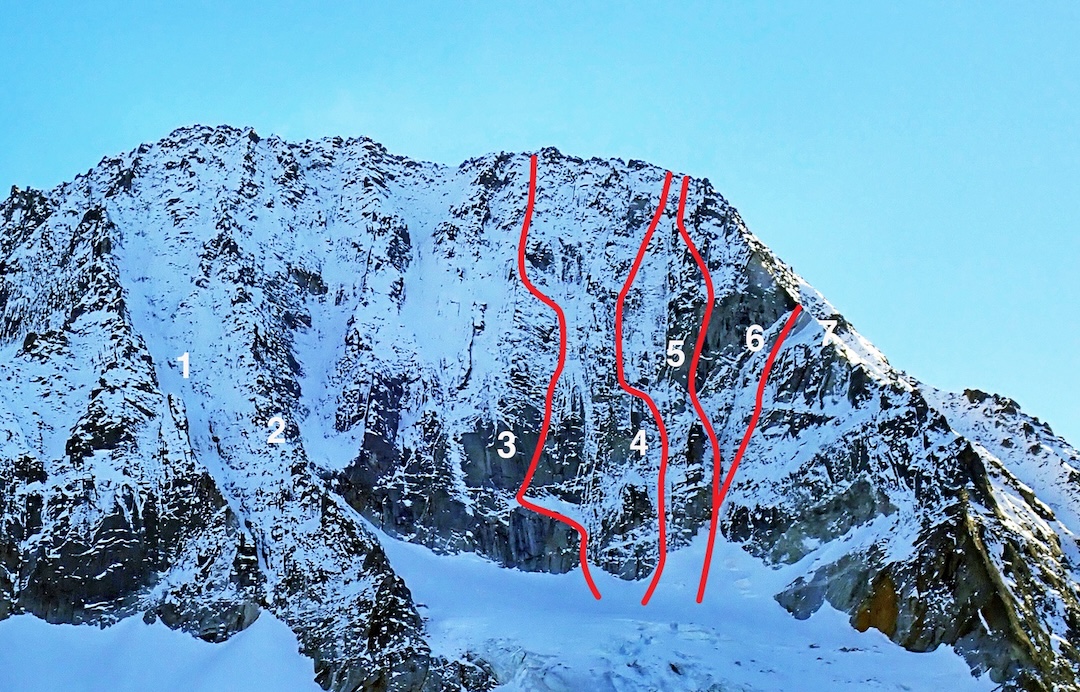
The last of the esoteric north faces described here is on the Cima Busazza (3,326m), which lies west along the watershed ridge from the more famous Presanella (3,558m) in the Adamello-Presanella Range, southeast of the Bregaglia-Bernina in northern Italy. (This is not to be confused with the well-known Busazza peak in the Dolomites.) The 400-meter north face is home to several old summer routes, now unattractive because of climate change. In winter, however, the face has seen significant activity by locals, especially Emanuele Andreozzi.
Back in 2012, Silvestro Franchini and his brother, Tomas, put up the difficult mixed route Sogni e Incubi on Cima Busazza. Tomas Franchini lost his life in Peru in 2024, and on January 16, 2025, Silvestro teamed up with Andreozzi to climb a new route, named Tomas for his brother, toward the right side of the north face. The seven long pitches gave difficulties up to M5+ AI4+, and the pair completed it in a round trip of 11 hours from the car.
On February 15, Andreozzi returned with Stefano Falezza to add the 380-meter A State of Trance (M7+ A0 AI3), which climbs the steepest part of the face through a vertical to overhanging rock buttress on the right side of the wall. The crux was three demanding but well-protected pitches of dry-tooling. Rest points were used, leaving the first free ascent up for grabs.
The same pair returned on March 7 to make the first winter ascent of the Dell’Eva-Taddei route, first climbed in the summer of 1969 at V+. The main difficulties were found on a thin, right-slanting crack through a compact rock wall, but there were also excellent ice sections. The route was climbed in ten pitches at M6+ AI5.
Andreozzi and various partners also added three shorter lines on the northeast flank of the northwest ridge, an area now dubbed the Scottish Sector. The left side of this sector had already been climbed in 2021 at M4+ AI3+, with a finish up the Dibona Route on the northwest ridge above (M4+ in winter). In 2025, Andreozzi and various partners added three more lines: Via Teti (M5 AI4), Maledetta Primavera (M6), and Natural Logic (M7+). All of the routes are around 200m and four or five pitches. Apart from Via Teti, which has rappel anchors, Andreozzi has left almost all these routes completely clean, with neither protection nor belays in place. He encourages others to do the same but notes this style of climbing is generally uncommon in Alpine regions, where he feels “it is all about a race to fill our mountains with in-situ gear.”
It was not only north faces that have attracted some attention. Remotely located on the south side of the Grandes Jorasses stands the Tour des Jorasses, known for its fine granite. A recognized unclimbed objective was the highly conditions-dependent corner system left of the southeast face. Niccolò Bruni, a guide from Courmayeur, noticed the corner was iced up toward the end of March, and on March 31, he and Giovanni Ravizza left Planpincieux at 5:30 a.m., and by a combination of foot and skis reached the base of the southeast face of the Tour at 9 a.m.
The two discovered the line to be well formed, with good ice and mixed sections up to AI5 M6+. They climbed ten pitches to the end of the difficulties, just below the notch on the south ridge of the Tour. They named the 550-meter route Grand Couloir Milleottocentocinquanta, for the 175th anniversary of the Courmayeur guides association.
Another remarkable ascent took place on the west side of the Grande Casse (3,855m), the highest summit in the Vanoise (the massif between the Mont Blanc and Écrins ranges, with ski resorts such as Val d’Isère and Courchevel). The Grande Casse’s southern summit is Pointe Mathews (3,783m), and in April 2025, a French party, who wish to remain anonymous, added a hard mixed route that climbs the west face of Pointe Mathews directly.
Approaching by the broad couloir climbed for the first ascent of the Grande Casse (Croz-Favre-Mathews, 1860), the party broke out right to reach the west face of Pointe Mathews and climbed three 60- to 70-meter pitches (M5, AI5+, M5+), then four more mixed pitches (35m to 90m, M3 to M7). Easier ground took them to the summit, mostly via the Messimy Couloir. The ephemeral line was named The Honey Monster (1,100m, M7 AI5+) as a tribute to the late Scottish alpinist Andy “Honey Monster” Nisbet.
There remains considerable scope for new ascents on forgotten faces in the Alps, and as of this writing, Schüpbach had already added his fifth. On the rarely climbed north face of the Klein Fiescherhorn (a.k.a. Ochs, 3,895m) in the Bernese Oberland, Kolly, Sala, and Schüpbach climbed Zébu (1,100m, M8/M8+ 70°) over three days in March 2026.
HIGH PERFORMANCE ON FAMOUS FAMOUS
In contrast to the above, let’s now visit the most famous faces of the Alps, where young climbers made remarkable ascents, not least on the north face of the Grandes Jorasses.
The rock on the north spur of Pointe Whymper is notoriously bad. In the summer of 1964, Walter Bonatti, who had previously tried this line solo, convinced Michel Vaucher to accompany him on an attempt on the crest of the spur. The two endured four days of rockfall, shredded ropes, and some fairly awful weather before reaching the summit, the experience so bad that Bonatti was said to have been convinced it was time to start toning down his alpine ascents. Originally requiring much aid, the route has rarely been repeated, though climbed free at around M6.
A decade later it had become obvious that the steep left flank of the spur was a worthy challenge, and during the harsh winter of 1974 this became Directe de l'Amitié. Highly criticized for the use of all-out siege tactics, repeated jumaring, and an evacuation from the top by helicopter, Louis Audoubert, Michel Feuillarade, Marc Galy, and Yannick Seigneur persevered for 20 days through miserable conditions to create the most difficult route on the Jorasses. On the second ascent, in late summer 1977, Nick Colton and Roger Baxter-Jones took five days to complete the route in alpine style. On the third ascent, in the summer of 1994, a French team, climbing light and fast in dry conditions, reported difficulties of 7a A1, although later ascents have not found the aid so easy, the crux pitch being an overhanging detached flake originally graded A3.
In January 2022, Léo Billon, Sébastien Ratel and Benjamin Védrines freed the whole route at around M8, except for the crux, which at the time Védrines reckoned would be at least 8a. The young, talented team of Esteban Daligault, Virgile Devin, and Simon Martinet made a completely free ascent from November 10 to 13, 2025. Devin was able to climb the crux pitch using rock shoes and axes at M9+, noting that, overall, the route has poor or sandy rock and thin cracks, making it significantly more suitable for dry tooling than free rock climbing.
One month later, from December 27 to 30, the talented French team of Léo Billon, Amaury Fouillarde, Nicolas Jean, and Enzo Oddo added a hard new mixed route to this face. On such a well-explored wall as the north face of the Grandes Jorasses, which now has over 30 routes, it is a question of what defines new. Almost inevitably, an addition to this face will share common ground with previous lines in order to access untouched terrain. The new French route, Basique (1,100m, 5+ A2+ M5), is no exception.
Armed with haul bags and portaledges, the four climbed the right side of the starting snow slopes of the central couloir between the Walker and Whymper spurs. They then entered the rarely climbed Japanese Couloir (1972) and progressed up it a short distance before breaking out right onto the rock of the Whymper Spur. This was shortly below the point where Valery Babanov, climbing solo, also broke out right and forced a line up the left flank of the spur: Eldorado (1,100m, 6b A2/A3, 1999).
The French alpinists continued to slant up and right to join Directe de l'Amitié below the overhanging aid pitch. They climbed this, then kept moving right up the headwall to finish via the upper section of the Bonatti-Vaucher. The climb was sandwiched into an excellent weather window that would end with very high winds just a day or two after they reached the summit.
After making the first one-day ascent of the Lafaille Route on the west face of the Petit Dru in 2024, Léo Billon and Enzo Oddo returned in 2025 to complete the first free ascent. They made three attempts over the summer and added two new pitches above the original finish of the route, climbing delicate slabs, technical cracks, and overhanging walls, all on excellent granite. With 1,000m of climbing up to 8b+, this route can now claim—arguably—to be the hardest free rock route in the Mont Blanc Massif.
Originally climbed solo over nine days in winter 2001, with considerable media coverage, the Lafaille Route finishes up the spectacular overhanging arête left of the 90-meter Dièdre to exit onto the north face. With grades of 5+ A5 M7, it was the hardest aid route climbed in the Western Alps at that time.
Billon and Oddo climbed around 20 pitches to reach the upper section of the north face and finished up the classic route to the summit, completing the ascent with two bivouacs. Apart from the crux, there were two pitches of 8a and four pitches of 7c/7c+.
In late summer 2021, François Cazzanelli, Marco Farina and Francesco Ratti climbed a rock pillar on the left side of the triangular facet taken by the 2002 Gabarrou route, Padre Pio, on the south face of the Matterhorn. They proposed naming this pillar the Pilastro Roberto Ferraris, after a good friend who had died in an avalanche, and the new 16-pitch route L'Amitié. They climbed all but two pitches at 6c/7a and hoped to return for a free ascent, but the opportunity didn’t arise and the route remained unrepeated until August 26, 2025. On that day, Marco Ghiso and Marco Sappa reached the start, where, to the right of the 1983 Slovenian line Trije Musketirji, the route ascends relatively easy slabs and short walls, gradually steepening to the base of the triangle.
With Ghiso in the lead, they progressed quickly, climbing through a 7a corner to reach what they knew would be the crux pitch, three leads from the top. The more rested Sappa now took over, as planned, and after a couple of attempts and one fall, he solved the boulder problem start and the long, sustained corner above to complete the pitch, runout in parts, at 8a. On a roll, he onsighted the next pitch at 7b, which left just a 6a pitch to finish. The two reached the top of the pillar at 1:30 p.m., then made a rappel descent, having climbed perhaps the highest 8a pitche in the Alps.
While there were many extreme ski descents during the year, a significant “first” took place on June 20, when Vivian Bruchez climbed to the top of Pointe Marguerite (4,065m) on the Grandes Jorasses and skied down from lower on the summit ridge. This made him the first person to climb and ski all the 82 tops designated on the UIAA’s official list of 4,000-meter summits.
To be clear, only about half of these peaks had traditionally been considered skiable—Bruchez's ethic was to climb to the top of each one and begin his descent on skis at the highest feasible point. Some peaks would involve sections where rappels would be necessary; others, such as the Marguerite, have a rocky, unskiable summit ridge. Four of the summits had never been skied, and Bruchez notched up 22 first descents of individual routes in completing this project, 21 years after first skiing Mont Blanc.
—Lindsay Griffin, AAJ, with assistance from Rodolphe Popier and the climbers
Media Gallery