
Nevado Yerupajá, East Face, Attempt; Jirishanca, Southeast Face, Kolibri
Peru, Cordillera Huayhuash
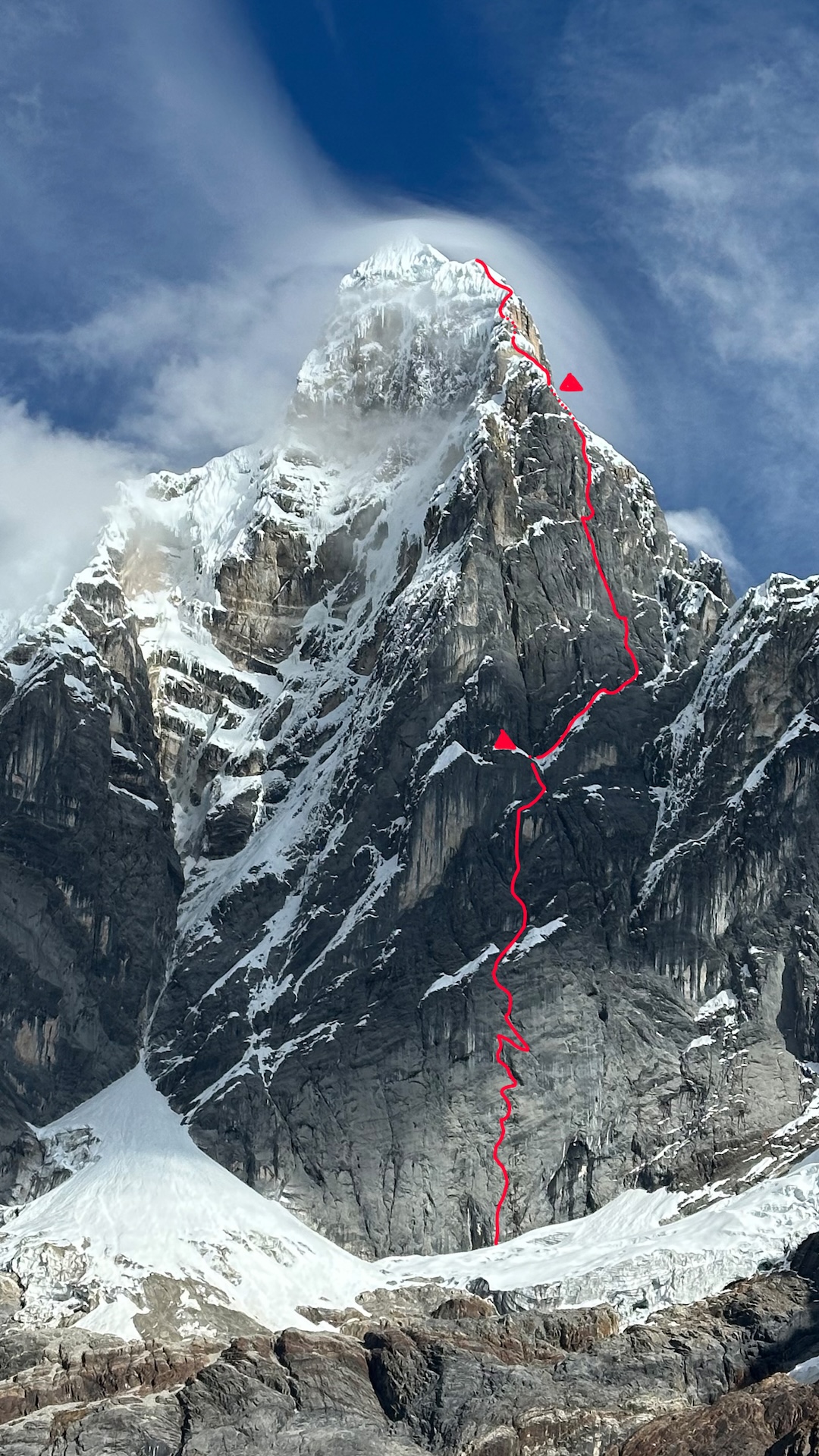
Photo: Alexander Huber Collection
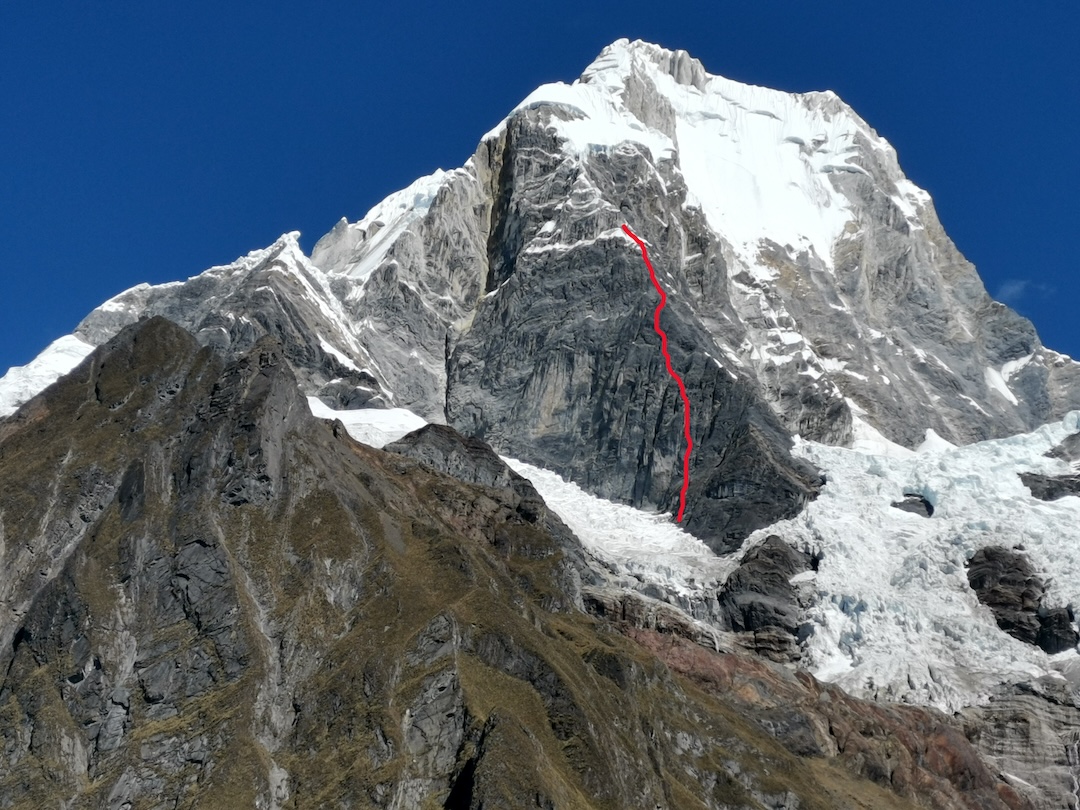
In 2023, Dani Arnold and I visited the great Cordillera Huayhuash to check out the possibilities for a new route on the east face of Nevado Yerupajá (6,634m). Almost nothing came out as planned, but we did a lot of good climbing on vertical limestone and felt very welcome in this beautiful country.
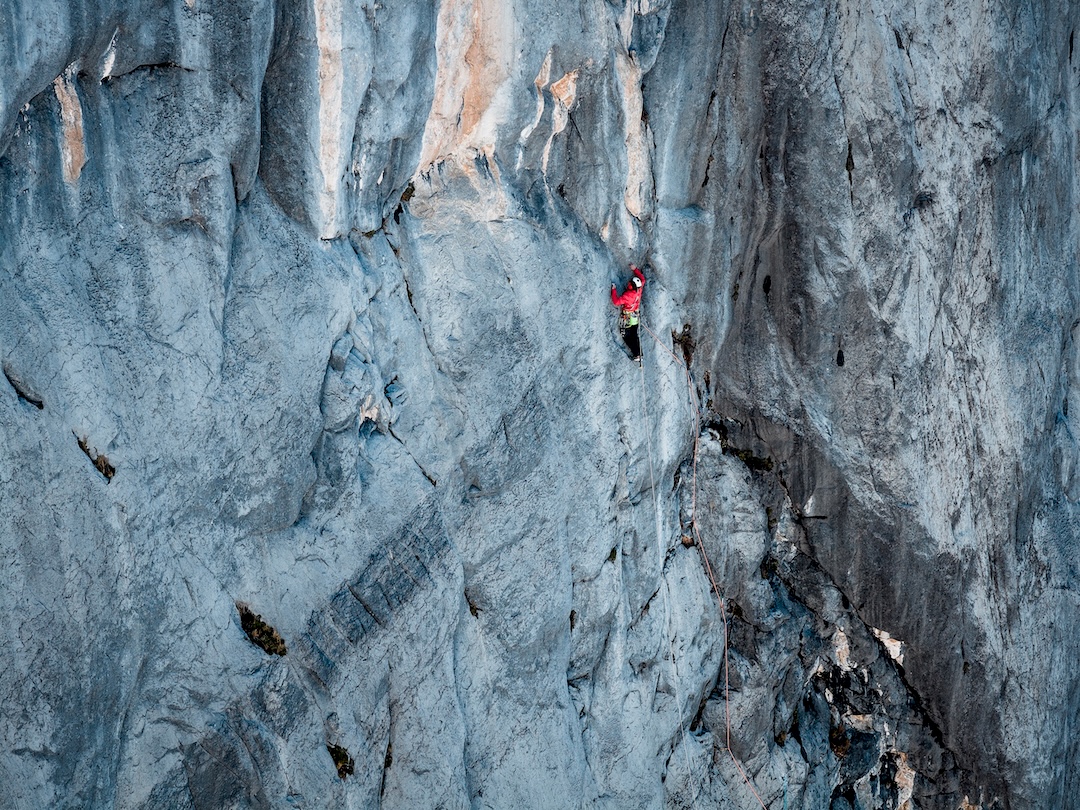
On July 21, 2023, in a single push, we completed 20 pitches on excellent limestone through the right side of the 600-meter lower east face. We placed no bolts or other fixed gear for protection—just cams and nuts; we left belay and rappel anchors in situ with pitons, bolts, or nuts.
We camped above the rock face at 5,850 meters, and from there we hoped to reach the summit via the east spur, following the 1969 Majerl-Wurm route. However, the way to the summit was in very desolate condition after years of minimal snowfall in the Huayhuash. In our opinion, there was no way to continue safely, and we decided to head down. [The left side of the lower east face was climbed in early August 2025 by a Catalan trio who continued to Yerupajá’s summit and traversed the mountain.] Before leaving base camp, we climbed a beautiful limestone route nearby: Estrella (250m, 5.12a).
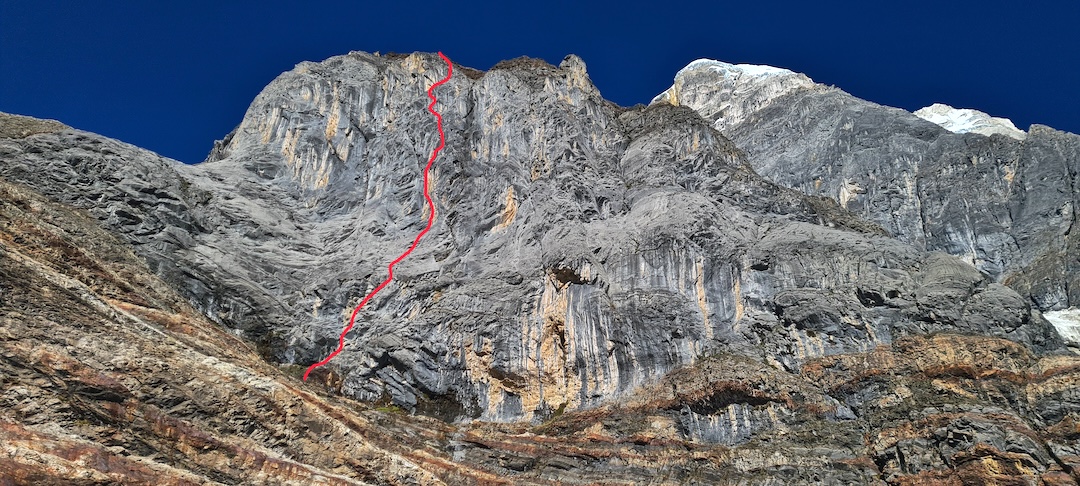
We then visited the base camp for Jirishanca (6,125m) and spotted a possible line between the Italian route (Suerte, 2003) and the French route (Tambo, Churros y Amigos, 2003) on the southeast face. Like these two routes, the new line would join the Egger-Jungmeier route (1957) on the east buttress—the first ascent of the mountain—at about 5,700 meters. We hoped to continue up that route to the summit.
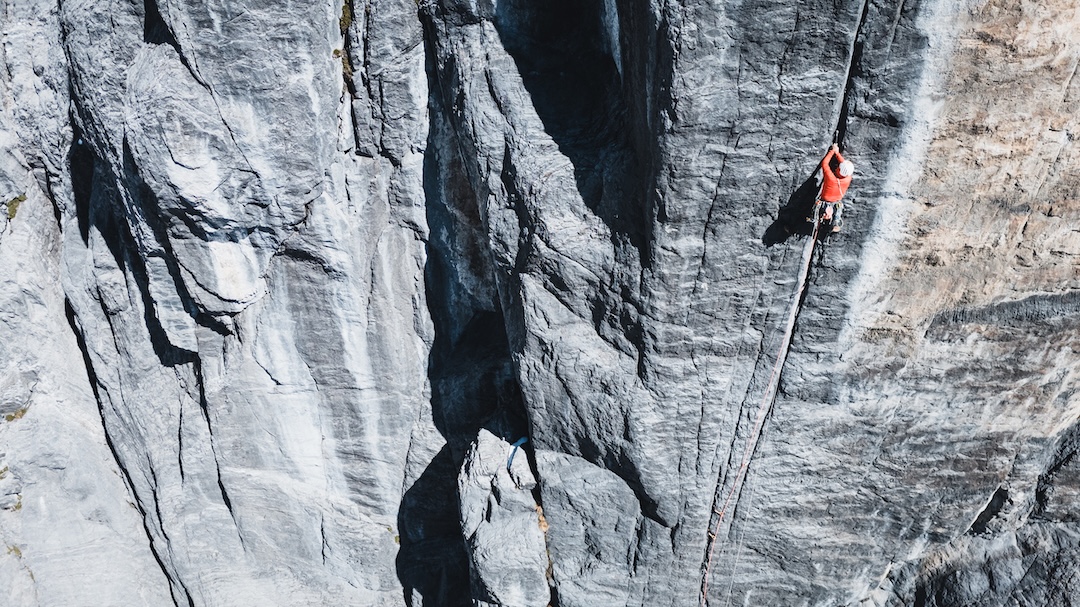
With this line in mind, we returned to Peru in 2025, this time accompanied by Simon Gietl, as climbing in a team of three is much safer. After one week of acclimatization in Huaraz, we reached Jirishanca base camp in the first week of July. We then spent some days opening pitches on the featureless limestone of the lower wall, reminiscent of the Marmolada in the Dolomites. We planned to fix gear—pitons, bolts, and nuts—for the belays but protect the climbing only with cams and nuts. In the end, we placed just one protection bolt, on the seventh pitch.
After establishing the lower part, we set out for a final push on July 13. In two days, we climbed 25 pitches and set our second bivy at the junction with the Egger-Jungmeier route. Early on the morning of July 15, we continued up the mixed ridge for about 300 meters, and at 9:15 a.m. we reached a snow mushroom on top of the east face at 6,028 meters.
Naturally, we would have loved to continue to the top of Jirishanca, but after climbing more than 1,000 meters, we were confronted with unconsolidated snow along the final ridge, and for us the risk seemed too high to continue. Even without reaching the summit, we had a great time establishing Kolibri (UIAA VIII A2), a long climb on a fantastic wall.
—Alexander Huber, Germany
Media Gallery