
Uplifted: The Evolution of a Climbing Life
By Sonnie Trotter
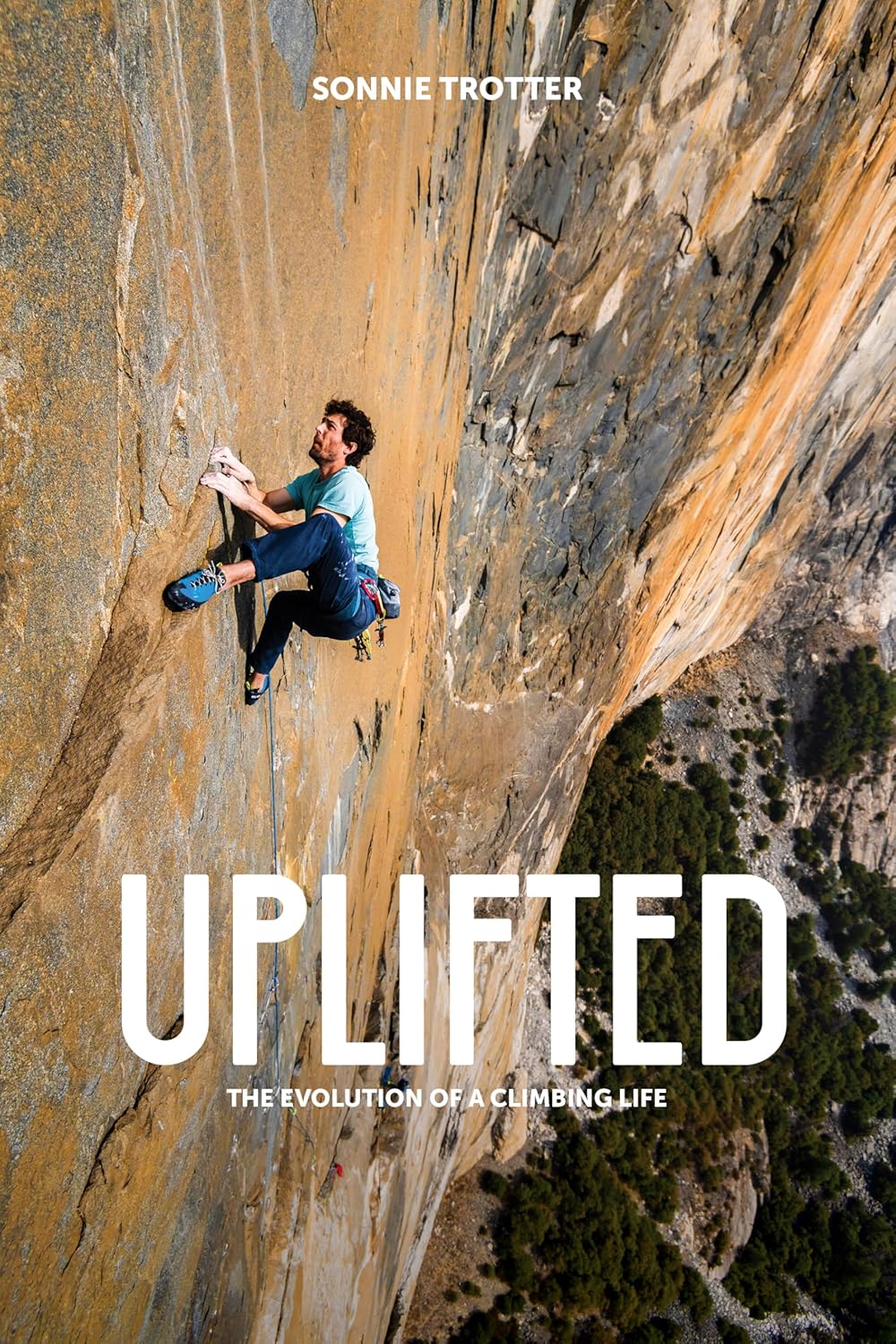 Uplifted: The Evolution of a Climbing Life. By Sonnie Trotter (Patagonia Books).
“Embracing the unknown is a great way to start,” writes Sonnie Trotter in the dedication of Uplifted. In a series of stories from the fringes, infused with strong images, the Canadian climber Trotter aims to show anyone searching for a life beyond the ordinary a snapshot of what that life could look like.
Uplifted comes at a time when climbing needs more campfire stories. The book’s 18 chapters, each offering independent 15- to 20-minute reads, chronicle Trotter’s life as a climber, starting with his introduction to the sport and proceeding through his most notable ascents, his adventures in the mountains, and his life balancing a wife, kids, and an obsession for rocks. The stories, like those tales told around a campfire, truly reflect the climbing life, which is adventure, a spartan life, epics, relationships, and moving forward.
Throughout the book, Trotter downplays his abilities, believing he’s just a regular climber who’s climbed for a lot of years. (After all, haven’t most people climbed 5,000 days in their lives?) Though this belies his accomplishments, Trotter’s modest attitude makes his stories relatable. Whether it’s the first ascent of Cobra Crack (5.14b) at Squamish, freeing Pineapple Express on El Capitan in a day, or doing Canada’s Rocky Mountain Trilogy (5.14 routes on Castle Mountain, Mt. Louis, and Yamnuska), Trotter makes the case that, no matter the objective, the value is really in the time with friends, being outside, and satisfying that impulsive, spontaneous urge for adventure.
For Trotter, as an angsty teenager in ripped jeans and with a penchant for Nirvana’s “Smells Like Teen Spirit,” the climbing life called to his rebellious nature, and he eschewed school for the crag. While out on the road, he failed to contact his family for a week or more, so his parents called every police station and climbing gym across North America to track him down. Eventually they caught up with him at a gym in Colorado. Trotter’s description of counting pennies to make trips last longer, of investing in a blackjack machine to pay for dinners at the Virgin River Gorge, and of doing anything to climb longer speaks to the obsession of climbers.
Later in life, he met Lydia, a climber in Squamish, who changed his life. “Were I bolder man, I might have asked her to marry me right then and there, but instead I said ‘Hi’ and tried to smile,” Trotter writes of meeting her. The pair bonded, eventually marrying. Their escapades traveling in a small trailer across North America, showing their children a wild life and letting them explore climbing on their own terms, display a style of parenting that lets children have supported freedom—a relatable system to climbers who seek boldness while tethered to safety. These times shape not only his children but also Trotter himself, as he sees in his kids what his life growing up was like.
Though light in presentation, the stories in Uplifted show depth in their subject matter, displaying the range of experiences that paint the canvas of a climbing life. These campfire stories provide a welcome glimpse into a world of rock.
—James Lucas