

Thirty Below: The Harrowing and Heroic Story of the First All-Women's Ascent of Denali | Mountaineering Women: Climbing Through History
By Cassidy Randall | By Joanna Croston
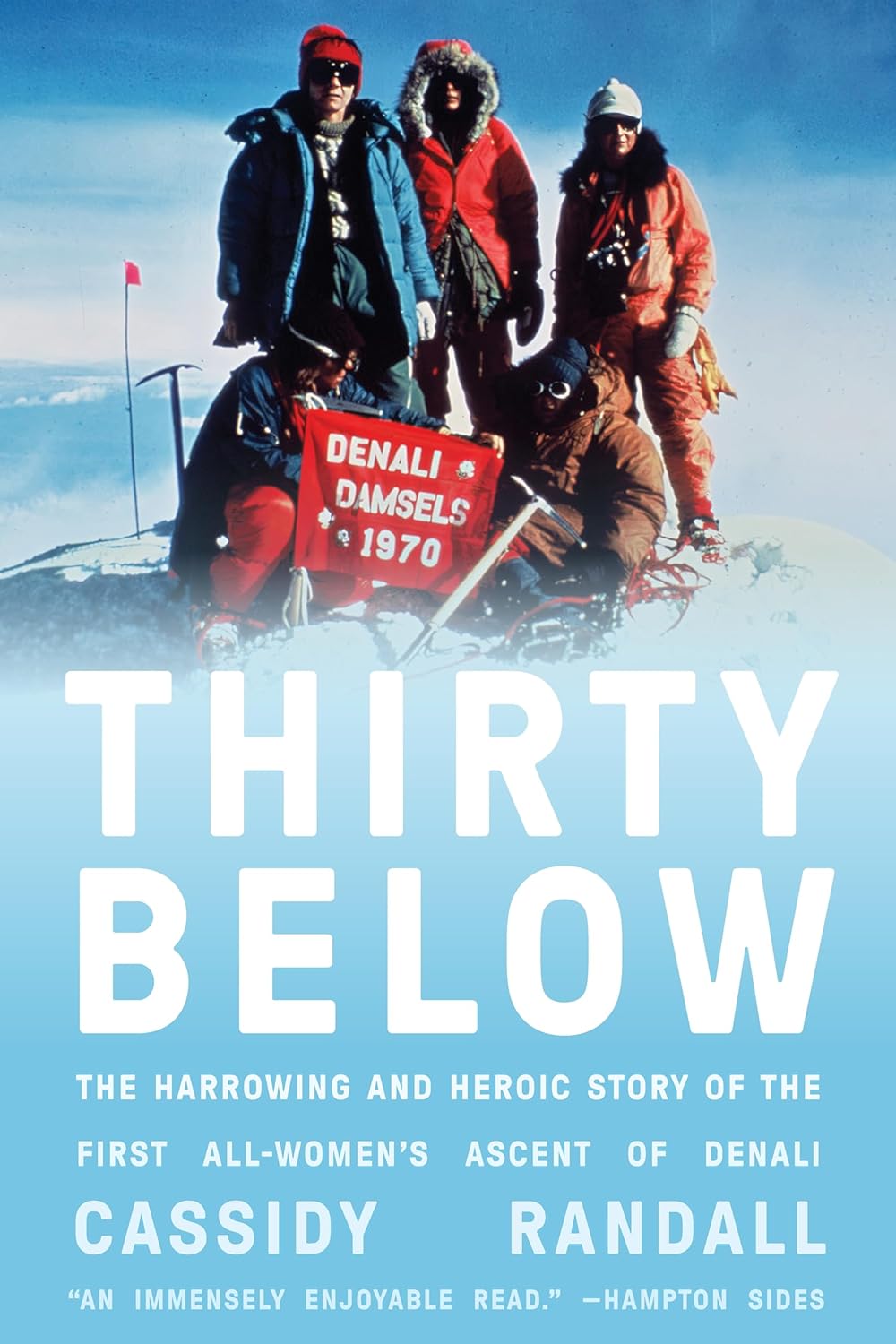 Thirty Below: The Harrowing and Heroic Story of the First All-Women's Ascent of Denali. By Cassidy Randall (Henry N. Abrams).
Mountaineering Women: Climbing Through History. By Joanna Croston (Thames and Hudson).
For a long time, a particular archetype predominated in many Western mountaineering tales: sheer, pyramidal summits surmounted by haggard figures of square-jawed men focused on making the next, weary footfall in deep snow or finding their way up a spindrift-swept wall. On summits, they planted flags and, their hero’s journey over, returned with transcendent epiphanies and gripping tales.
When a woman sought to enter this rarefied realm, for some men it seemed to vanish: In 1929, Étienne Bruhl famously quipped that the Grépon had “disappeared” from the Alps after Alice Damesme and Miriam Underhill’s first “manless” traverse of its spiny crest. Or a woman climber herself might appear to fade into the mists of history, her accomplishments and revelations downplayed, disputed, forgotten.
If she persisted in seeking acceptance, she might struggle to maintain an impossibly delicate balance, as if navigating a narrow, double-corniced ridge. If she appeared too “feminine,” men might judge her as too weak for the harrowing demands of high altitudes. But if she resembled a “masculine” hero, they might call her foolhardy, selfish, full of hubris. Male mountaineers might confront her with ostensibly unsolvable paradoxes—like the one a guide presented to Arlene Blum in 1969: “There are no real women climbers…. Women either aren’t good climbers or they aren’t real women.”
But what happens when women cultivate their own mountains of the mind, instead, defining for themselves what it means to be a woman and a climber? Illusions of any singular, dominant narrative might break into countless shards, reflecting glimpses of visions and experiences as unfettered, varied, and mysterious as human imaginations.
These dreams drifted through my mind while I read Cassidy Randall’s Thirty Below: The Harrowing and Heroic Story of the First All-Women’s Ascent of Denali and Joanna Croston’s Mountaineering Women: Climbing Through History—part of a groundswell of recent books by and about women climbers. Such counternarratives point toward something more revolutionary than increased representation. They are calls for transfiguration.
In Thirty Below, Randall excels at describing the convoluted gender politics of the 1970s, more labyrinthine than any icefall, that women expedition members had to cross. Grieving the death of her husband on an all-male expedition to Dhaulagiri, Grace Hoeman longed to organize an all-female ascent of Denali to demonstrate that women were fully capable of high-altitude climbing and that their increased presence on high peaks could make mountaineering safer and better for all people.
By depicting Hoeman and the rest of her “Denali Damsels”—Arlene Blum, Margaret Clark, Dana Isherwood, Margaret Young, and Faye Kerr—as real, “complicated” human beings, Randall shows how much male-defined narratives of mountaineering still threatened to confine them and how intensely they fought to break free. Randall’s portrait of Hoeman is especially poignant: a woman who felt forced to hide her true self, striving to suppress any possible vulnerabilities to fit into what still seemed a man’s world. But Randall also evokes moments of sheer lightness, such as the evening when the Denali Damsels set down their heavy loads and felt as if they were floating, unburdened, through a dreamworld of falling crystals and luminous snow. Glimpses appear of alternative metaphors when Clark rejects common symbols of “conquests” and “assaults”—she envisions climbers, instead, as “guest[s], present only because nature and its volatile conditions allowed it.”
Like many early women’s climbs, the Denali Damsels’ outstanding 1970 ascent received relatively little attention. Still, its effects rippled outward, joining other women’s mountaineering and political successes in the 1970s that became a current too powerful to be ignored. Yet, here, Randall makes another important observation: While narratives often end with summit triumphs, more daunting challenges remain “on the downhill side” to transform those moments into lasting societal change.
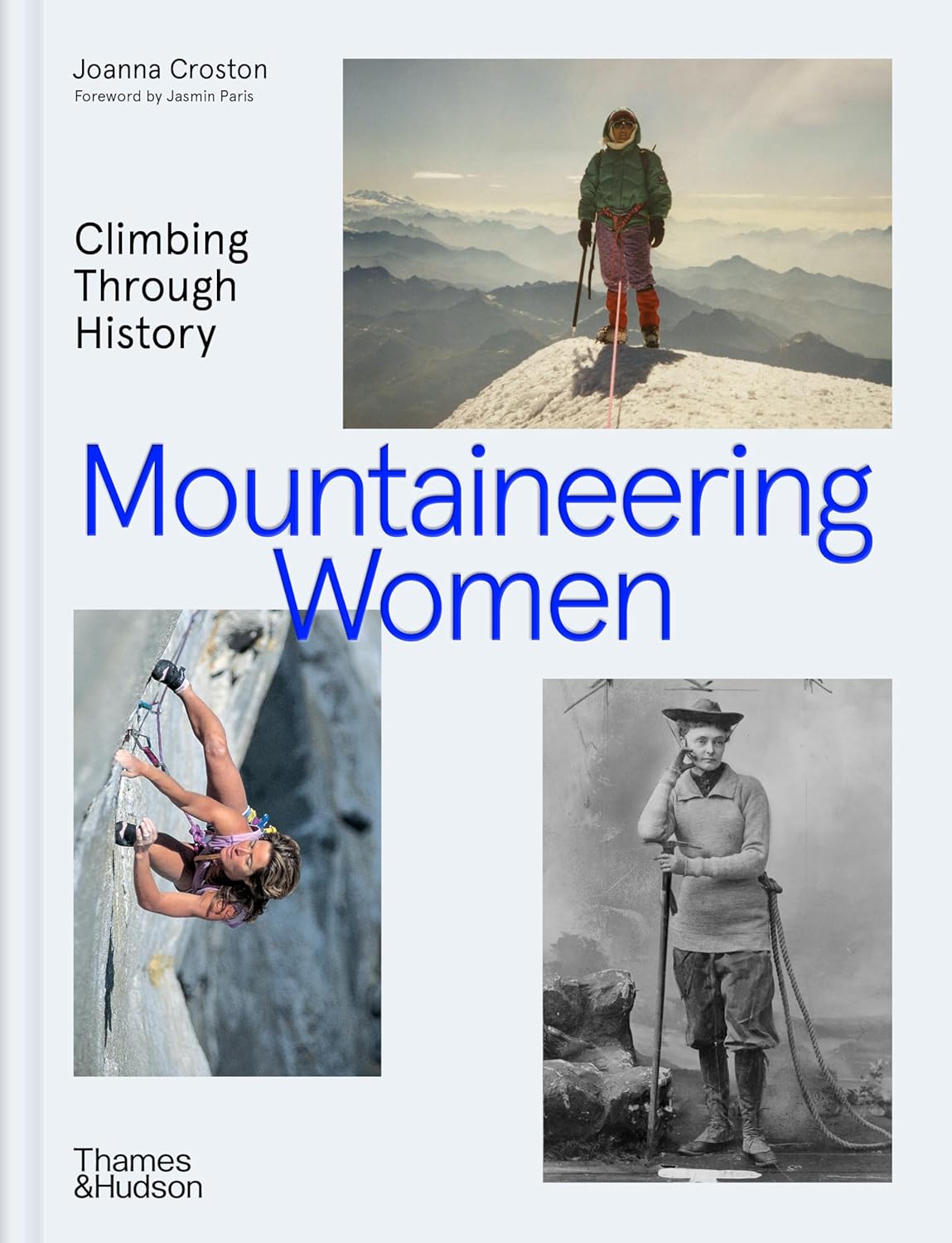 More than 55 years after the first all-women’s climb of Denali, when Joanna Croston presented Mountaineering Women at the 2025 Banff Mountain Book Festival, an audience member asked a haunting question: “We are in a moment when women’s rights are taking a step backward. How do we step forward again?”
It seemed fitting that Croston urged her listeners, “Don’t ban books.” As the U.S. government attempts to erase histories of women and other marginalized people from national parks, it has become even more urgent to restore their legacies in the outdoors, as symbols of aspiration and achievement. Croston’s book provides an abundance of remarkable figures: women who shattered the glass ceiling on the world’s highest peaks, who made groundbreaking first ascents in isolated ranges, and who forged places for themselves in the largely male guiding field.
Some of these women dare to speak openly of struggles with self-esteem, fear, depression, or grief. But they also transform this sense of universal human vulnerability into an ethos to meet our ecological crises—in which mountaineering is not merely a matter of dominion, sport, or recreation, but a way to enhance collective empathy and responsibility toward all living and nonliving beings. As Ashima Shiraishi asks: What might we learn from older, non-Western mountaineering cultures to reconnect more deeply with the earth and to allow climbing to “circle back to being an activity rooted in ritual and meaning”?
Even within women’s climbing histories, there have been exclusions, as Nandini Purandare points out in her introduction to Mountaineering Women: Many books have focused on Western women “who self-identified as ‘climbers,’” leaving out earlier, more diverse traditions of female ascent. Behind stories of less-celebrated indigenous women—such as Pasang Lhamu Sherpa, the first Nepali female mountaineer to summit Chomolungma (Everest)—there are even lesser-known protagonists, such as Ani Daku Sherpa, who carried loads during the 1953 first ascent of the peak, as well as countless Himalayan herdswomen who attained high altitudes with their animals and children, long before any foreign mountaineers arrived.
Imagining future histories, Purandare hopes “that someday, the female climbers who have charted new routes in less familiar areas are recognized alongside the ones represented in this book.” To add to her wish list, I’d love to see more tales of African women mountaineers, including Pascal Ndumunye, the first female ascensionist and one of the first Samburu climbers of Kenya’s sacred Ol Donyo Sapashe, and Shalom Maholo, an author of new rock routes in Malawi, along with many more.
If we still need books specifically about women mountaineers, it’s partly because of how much remains unwritten. But it’s also because of the intense creativity that arises from the margins, an ability to see beyond entrenched formulas. When we think of women’s climbs as mountaineering history, not just as women’s history, we find ourselves re-examining the meaning of the pursuit and its genre, exploring mountains of the mind far beyond the dreams of men.
—Katie Ives