
Gulba, Southwest Pillar, Pferderennen02
Georgia, Central Caucasus
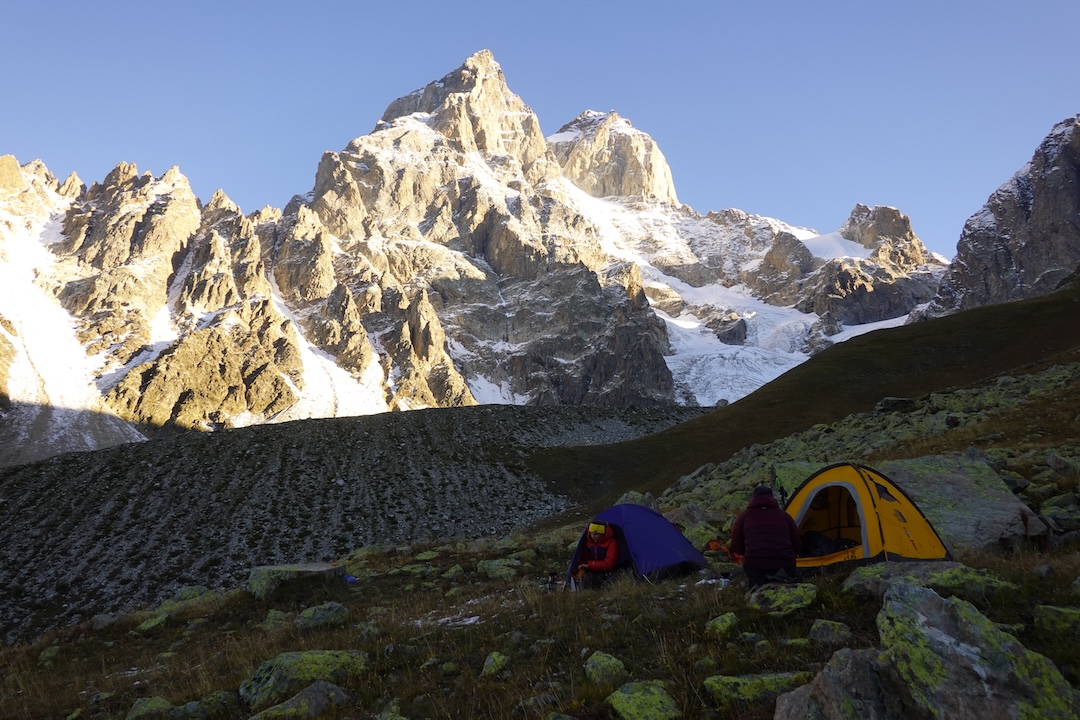
In September 2025, Elena Barbist, Elena Prem, Hannah Rabl, Jana Scheiring, and I, along with team leader Babsi Vigl, traveled to Georgia for the final expedition of the Austrian Naturfreunde Alpinkader women’s program. During our last week, the forecast promised four days of sun, so we decided to go for some rock climbing on Gulba (3,725m), a neighbor of Ushba.
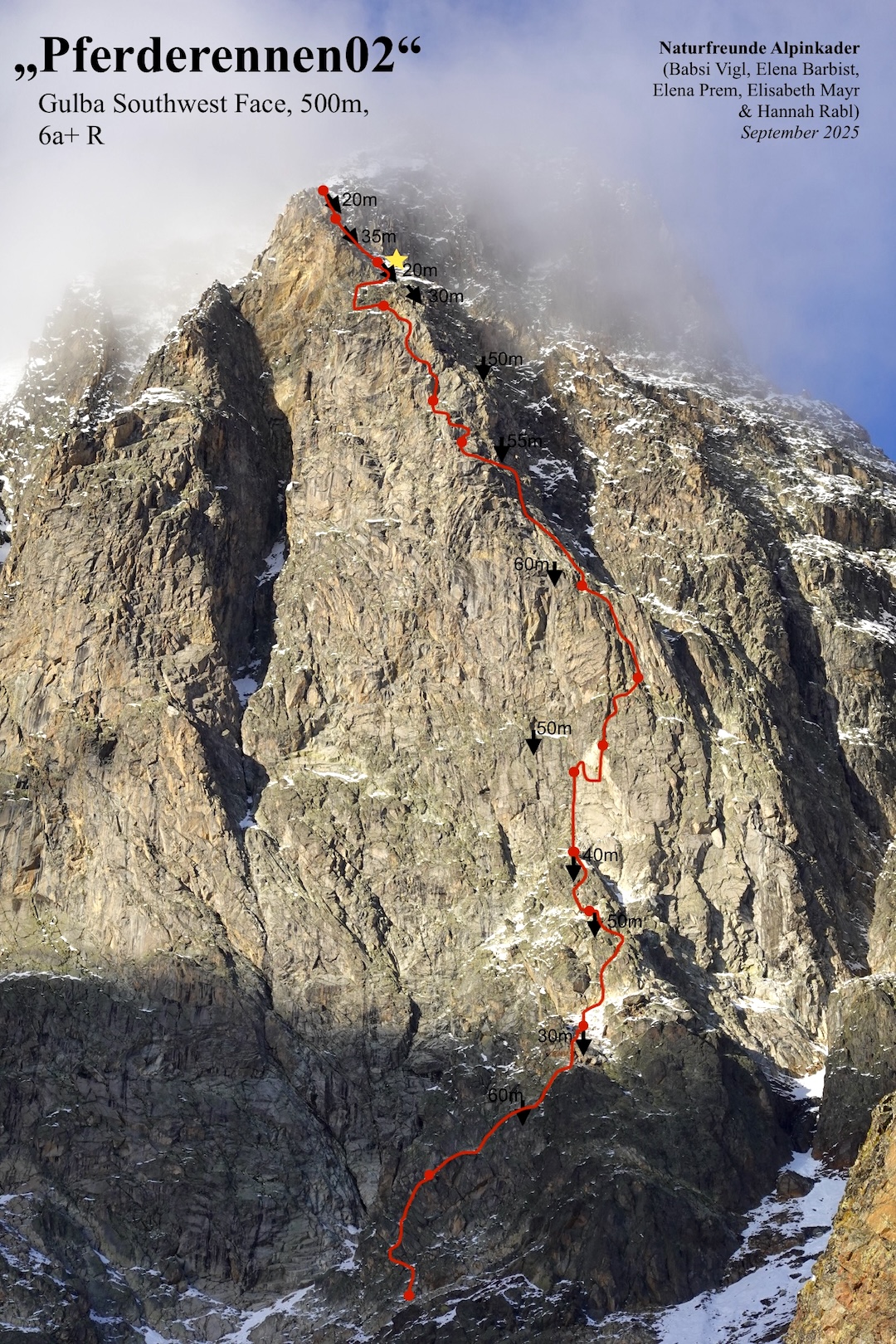
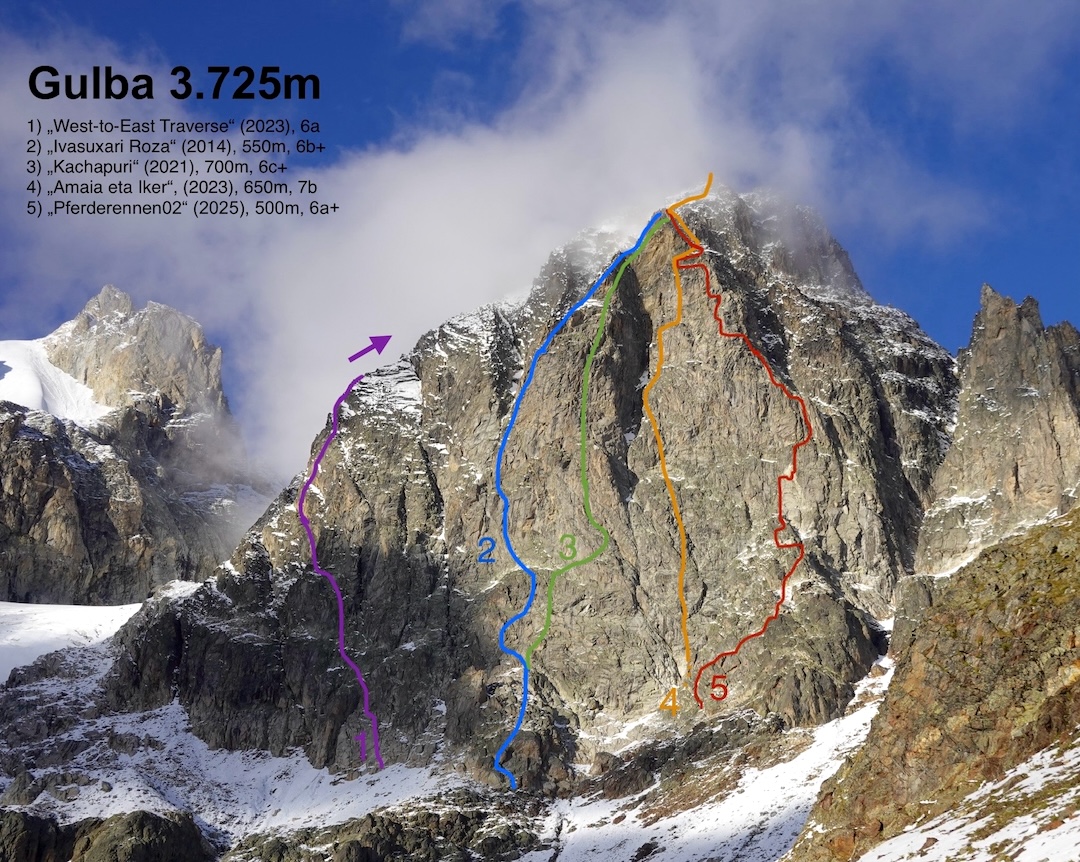
Four routes had been established on the southwest face, which is divided into two pillars. After scouting the wall, we decided to attempt a new route on the right-hand pillar.
On the first day, September 23, we climbed the easier lower wall and cached our gear for a push the next day. Starting at 3,220 meters, the five pitches of this lower wall ran through granite blocks in UIAA IV terrain. We deposited our gear, rappelled down (without fixing any ropes), and headed back to base camp.
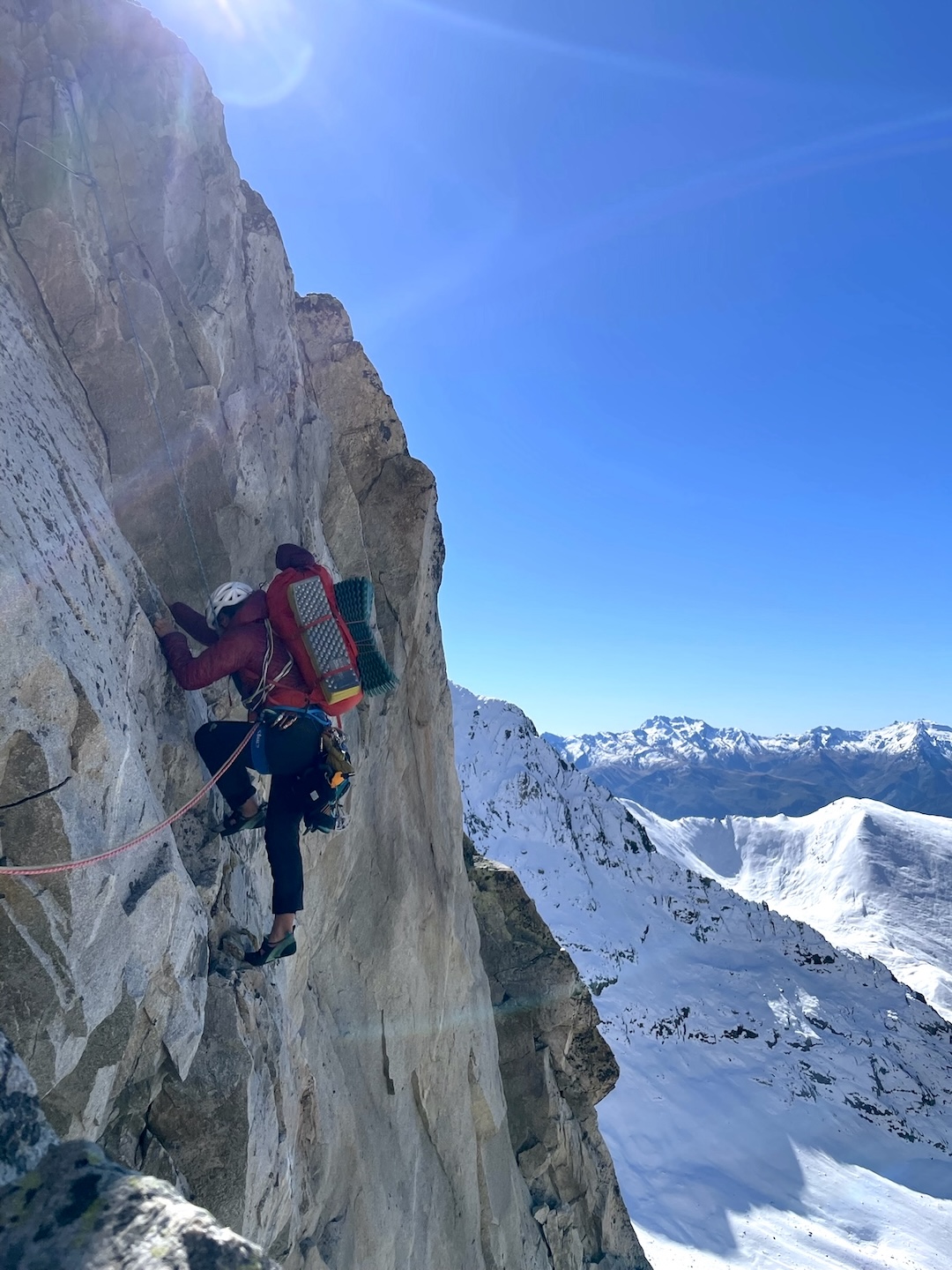
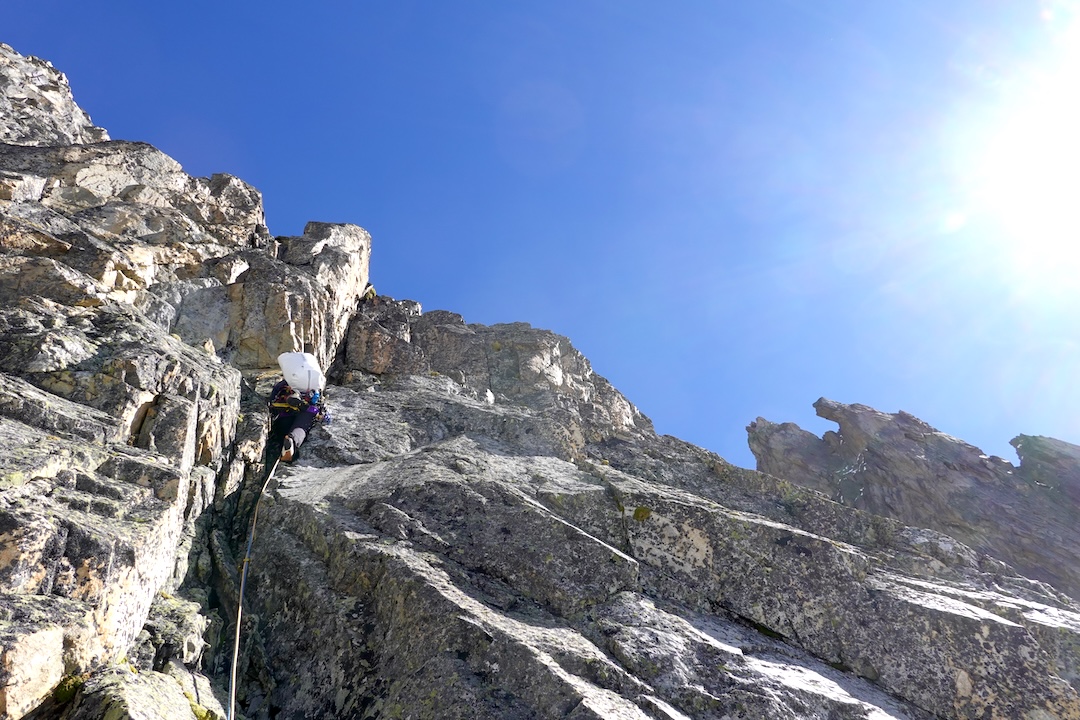
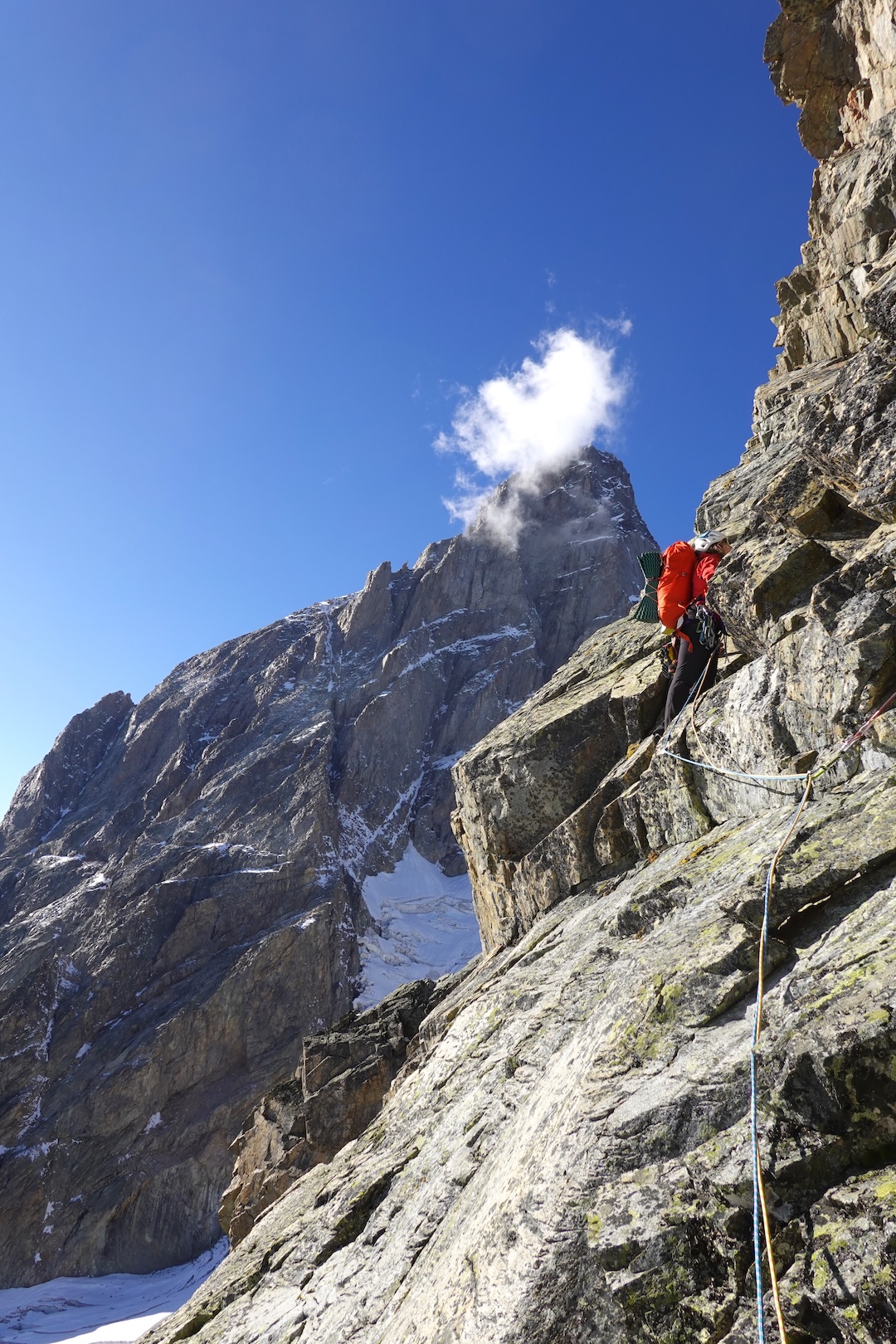
The next morning, four of us—Elena Barbist, Babsi, Hannah, and I—started early. When the sun reached the wall, we regained our previous high point and passed a worrying rockfall scar via an easier-than-expected traverse, then followed the crest of the ridge bordering the right side of the pillar. The climbing was beautiful, well protectable, and sustained around V to VI. After three pitches, the ridge became too steep to follow directly, so we moved left and climbed two exposed, sparsely protected rope lengths to a small grotto. From there, a slippery traverse led back to the ridge. We soon reached an ideal bivouac spot on a narrow ledge, with snow for water.
Waking with the sun on the next day, we climbed the last meters to the top of the pillar. The 500-meter route had gone at 6a+ R. We called it Pferderennen02.
Previous ascents of Gulba finished by traversing over the summit and descending along the south ridge, then down a snow couloir prone to rockfall. Given recently fallen snow near the top of the mountain and our large group size, we had planned instead to skip the summit and rappel from the top of the pillar. In this way, we were able to establish a safer and more direct rappel route for future teams. From the base, we hiked down to base camp and returned to Mestia the same afternoon.
We carried two 60m half ropes, a small selection of pitons and a hammer, three medium Peckers, a double set of cams from 0.2 to 3 plus one number 4, and micro-cams. Other than our rappel anchors, no fixed gear was left on the route.
—Elisabeth Mayr, Austria
Media Gallery