Chegem Peak, Forostyan Route, All-Female Ascent
Russia, Central Caucasus
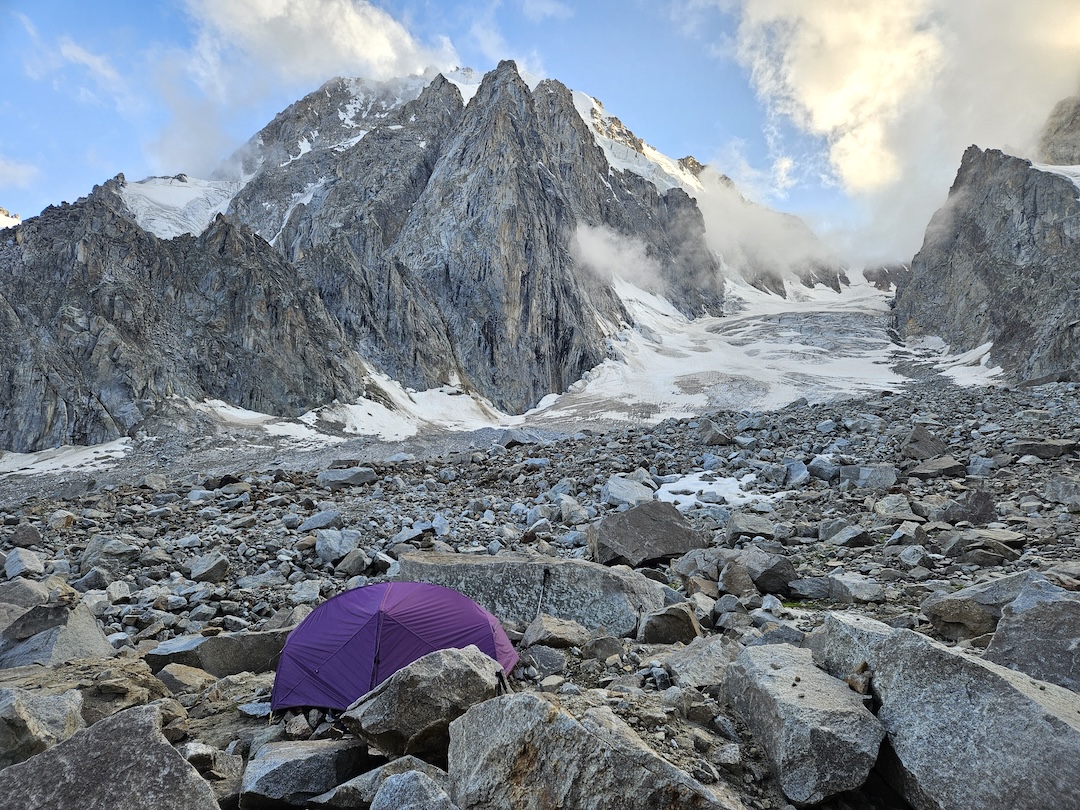
The Chegem Gorge lies in the Central Caucasus of Kabardino-Balkaria, Russia. The group includes Chegem Peak (4,351m) and neighboring Dzhaylyk (4,424m), separated by Donkin Pass. Dzhaylyk is the highest peak in this local cluster, while Chegem is distinguished by a prominent, steep rock buttress forming its northeast aspect.
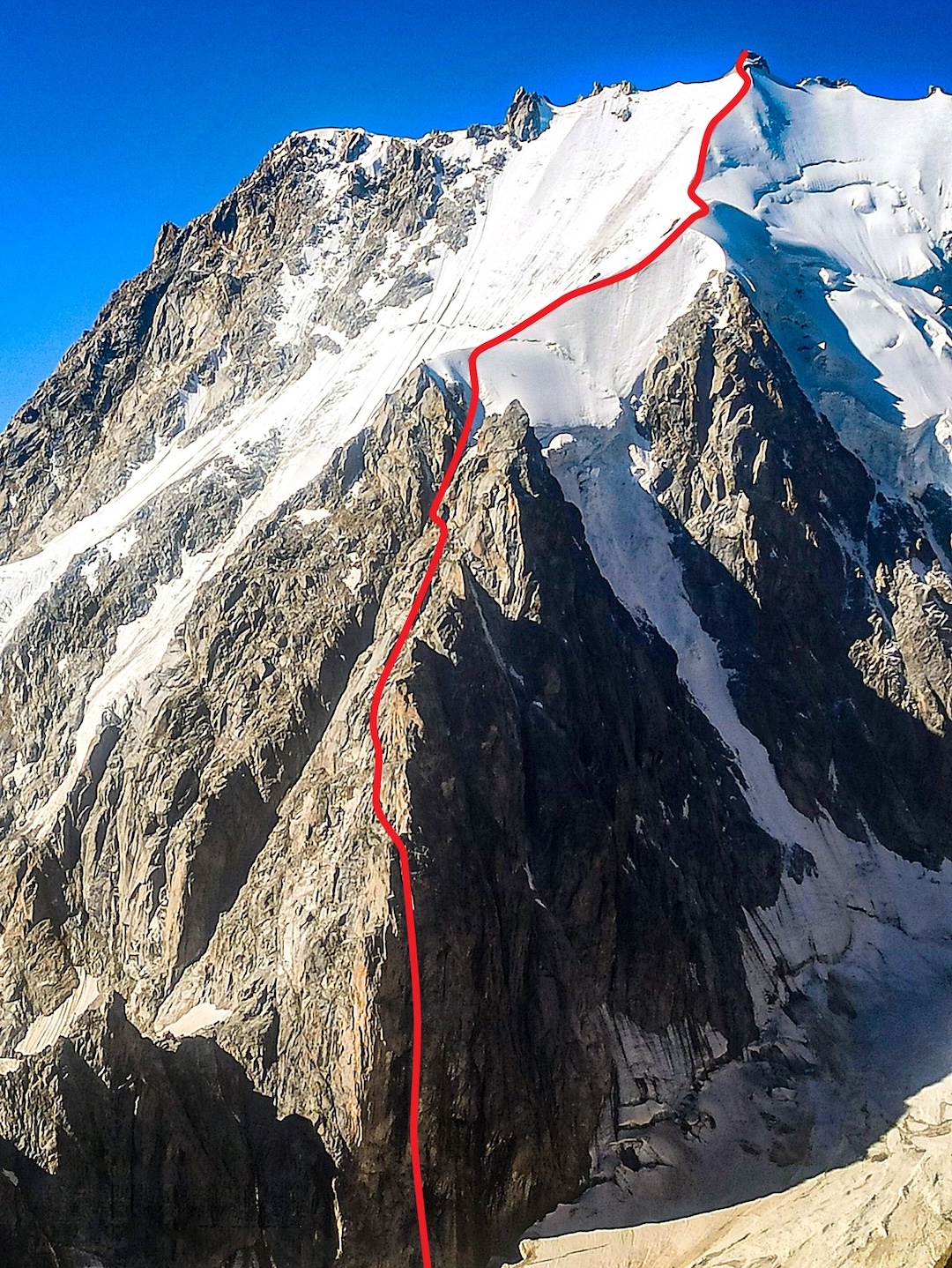
From July 30 to August 3, 2024, Inna Kravchenko, Tatyana Shchekinova, and I climbed the Forostyan Route (6A, 1977) on the northeast buttress of Chegem Peak (4,351m, 43.234392N, 42.900189E), which rises above Chegem Gorge, north of the main Caucasus divide. The route gains 900 meters, with 1,700 meters of climbing, and is predominantly steep rock, including 200 meters of 6a (French) and 230 meters of aid (A1–2). A snow and ice ridge above the buttress leads to the summit. Aid climbing was concentrated on the first five pitches of the rock bastion; above this the route was climbed free.
On July 30, we spent ten hours fixing the initial rock wall, then thunderstorms forced us to stay in our tents the following day. We started again on August 1 and bivouacked first on a large ledge at the top of the rock bastion, where there was no water or snow, and again on the notch below the snow and ice ridge.
We reached the summit at noon on August 3 and descended the east ridge to the Chegem Glacier, returning to base camp at 1 p.m. on August 4. This was the first ascent of the Forostyan Route by an all-female team.
Climbing activity in this area has been steady but not intensive compared to more famous Caucasus centers such as Bezengi. The technical routes on Chegem are concentrated on the rock bastion and include two Russian 5B routes and three 6A routes, plus one line reported as not classified. The Forostyan Route has historically been considered a relatively safe objective for its grade due to the monolithic character of the main wall.
—Irina Vasilieva, Russia
Media Gallery