
Christopher S. Wren, 1936–2026
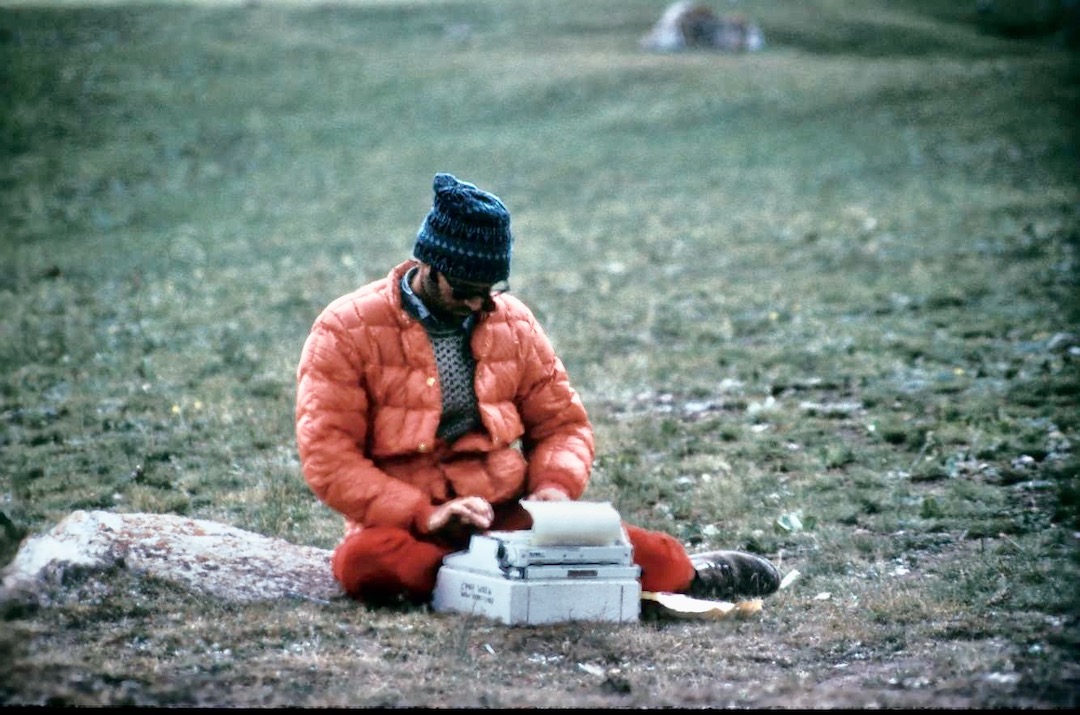
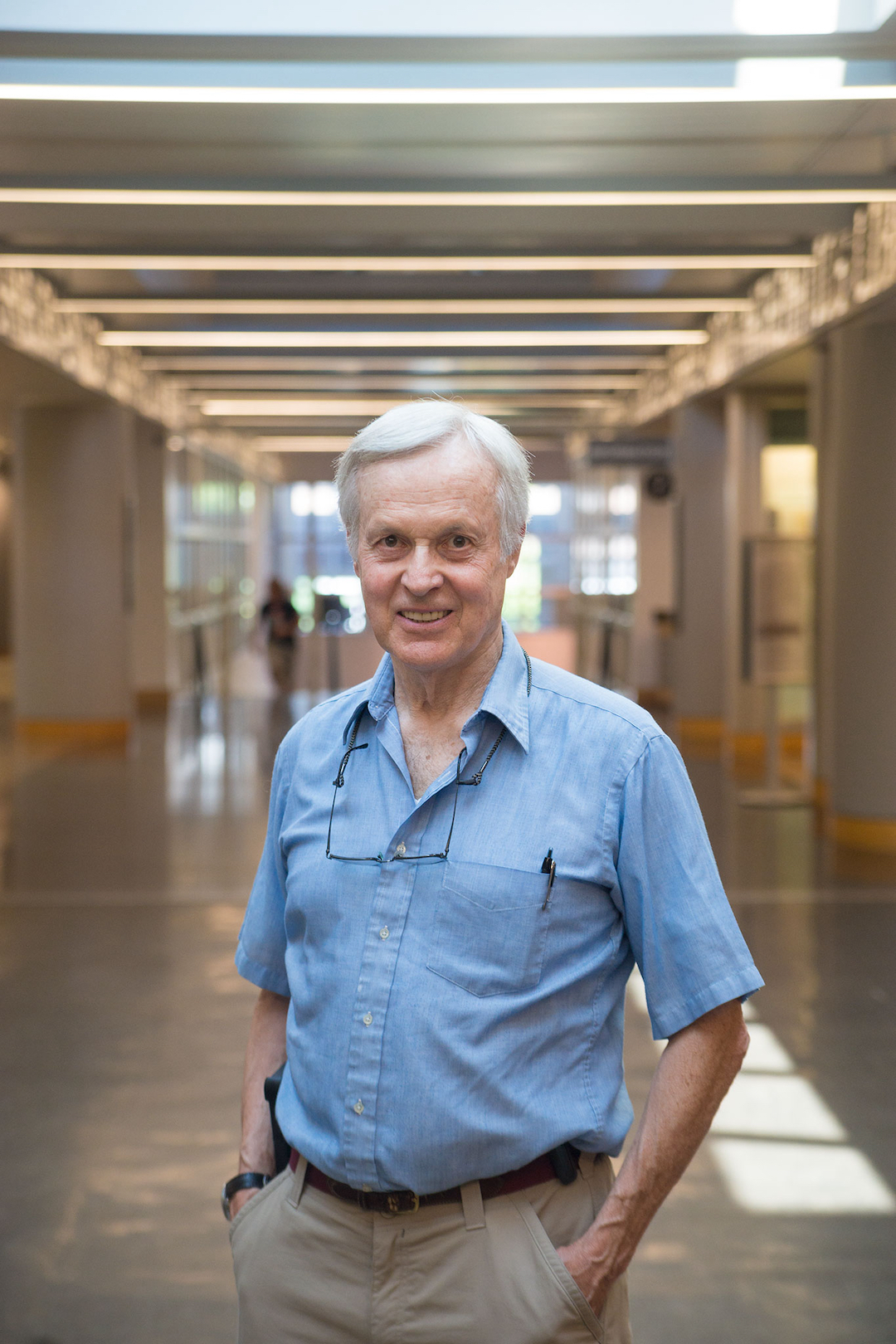
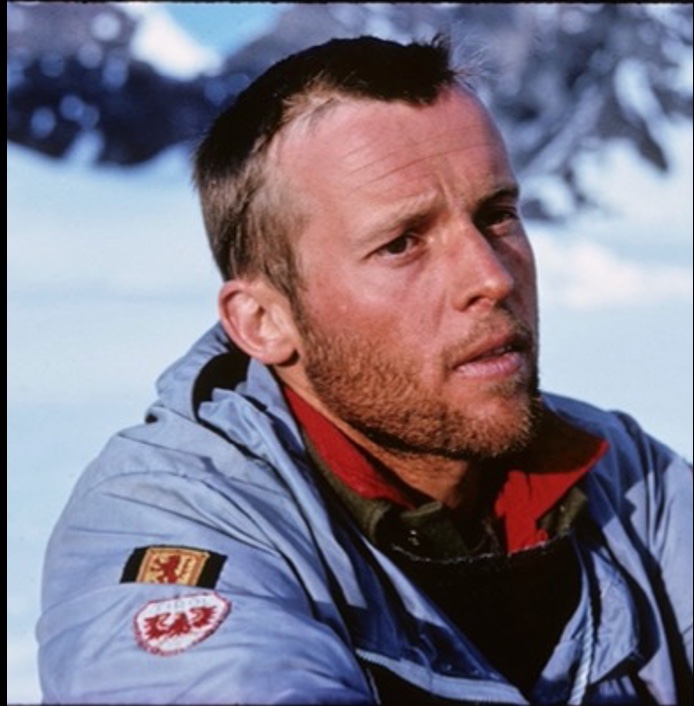
Christopher S. Wren, New York Times bureau chief in Moscow, Cairo, Beijing, Ottawa, and Johannesburg; foreign correspondent who covered major events such as Anwar Sadat’s 1977 visit to Israel, and wars in Africa and the Balkans; and an expeditionary mountaineer who brought accurate historical accounts to the lay readership, passed away in his home in Vermont on February 15, 2026, at 89. He was the author or co-author of nine books, a special forces veteran, a storyteller, and modest to a fault.
Chris began building his rock climbing skills with the Dartmouth Mountaineering Club in New Hampshire, climbing Bartlett Tower on campus and at the region’s Orford and Owl’s Head cliffs while majoring in English. Enrolled in a public speaking course, he once ended a speech on mountaineering by rappelling out of the classroom’s third-floor window.
Following his 1957 graduation from Dartmouth (magna cum laude), he was a Rotary Foundation fellow at the University of Edinburgh, where he studied Russian and joined the Mountaineering Club members in exploring the cliffs and mountains of Scotland and Wales. Subsequently, he enlisted in the army, was stationed in South Korea, and trained as a paratrooper with the Green Berets in Fort Bragg, North Carolina.
After obtaining a master’s degree from Columbia Journalism School in 1961, Chris joined Look magazine, where he was to remain for a decade, covering the civil-rights movement and war in Vietnam. In 1964, he married Jaqueline Braxton, a teaching assistant at St. Thomas Church and a Smith College graduate with a degree in theology from Oxford University in England.
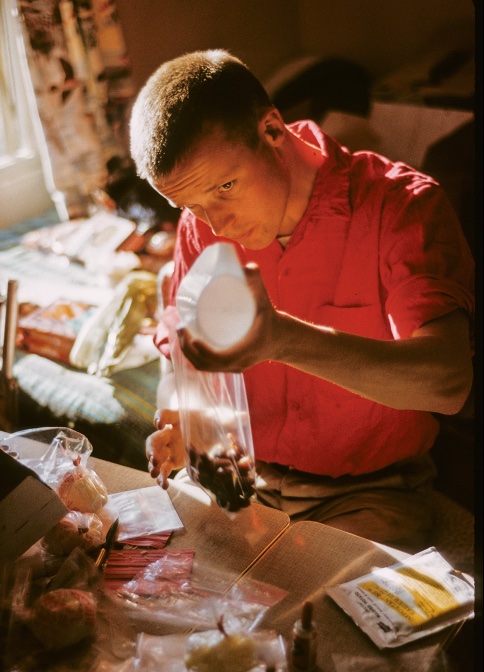
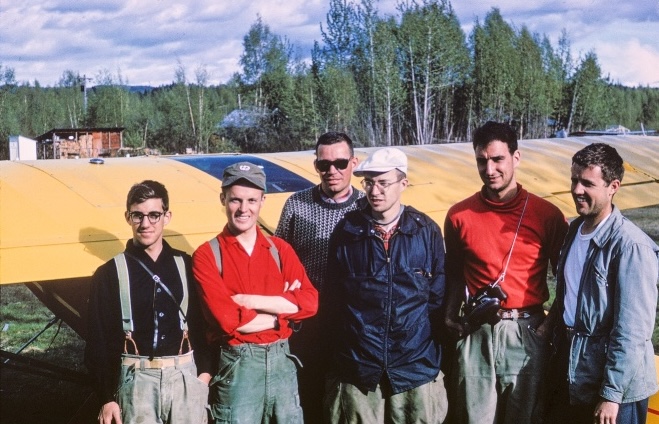
I rock climbed with Chris at Dartmouth and had a mountaineering adventure with him during the first ascent of Denali’s Southeast Spur in June 1962 (see AAJ 1963). A photo-rich account of our climb became his first major article for Look. Descending a steep and icy slope, Chris fell into a crevasse, his fall arrested by Charley Hollister’s belay. As Chris emerged from the crevasse, thankfully unharmed, he shouted up to Charley, “Tell me, pretty maid, are there any more at home like you?”
Chris was a fine songwriter, guitarist, and banjo player. Johnny Cash bought and performed two of his songs: “Jesus Was a Carpenter” and “Gospel Road.” Chris wrote the following song for our lecture on the Southeast Spur ascent at the 1962 annual AAC meeting:
"Out on the great SE Spur of Denali,
That’s where our adventure commences and ends,
That’s where I lost my Bedayn carabiner,
To a party of climbers I thought were my friends.It was on the way down,
Rappelling the arrow a cornice of snow.
That’s where I dropped my Bedayn carabiner,
Five thousand feet to the glacier below.
It bounced from the Ruth over to the Kahiltna,
And kept on rebounding right out of the park.
Into the forest and down the Susitna,
It landed in Talkeetna before it was dark.
Consuming the last of the beer in Talkeetna,
Was a party of climbers both hearty and strong.
They waited ten days for a change in the weather,
Then took my Bedayn carabiner along.
They say it's still there on the heights of Denali,
On some grand new route that has yet to be done.
So, if you should go won’t you please look around you,
And bring my Bedayn carabiner back home!
So goodbye, so long, and farewell, to that great SE Spur.”
Chris continued his distinguished 40-year career as a journalist at Newsweek (1971–1973) and the New York Times (1973–2001).
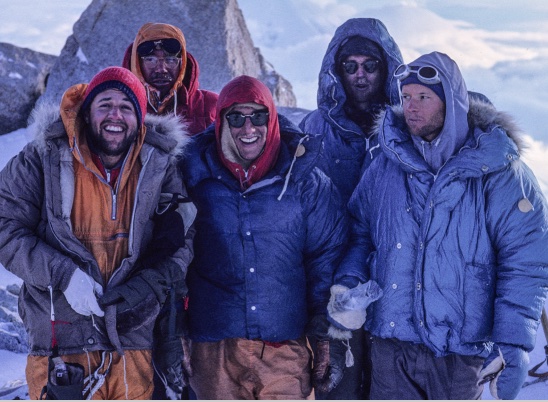
While in Moscow for the Times, he joined and covered the AAC-sponsored 1974 USA-USSR Pamirs expedition. A fierce storm trapped eight highly experienced Russian female mountaineers on the summit of 23,400-foot Lenin Peak. Personnel at base camp learned of their sad fate from radio contact with their dying leader. When the storm cleared, Chris, Jock Glidden, and Allen Steck approached the peak’s summit. As Chris later wrote:
“All of us were still unaware of the tragedy above.
“At the base of the snow face soaring several hundred feet to the summit, we came across the frozen body of the leader of the Soviet team. She lay so peacefully across the packed snow that at first we assumed she was resting.
“When we realized that she was dead, we called the base camp…[and] were asked about the fate of the seven other women.
“Shaken, we began climbing the face one by one.”
Soviet authorities had kept the women’s deaths secret until Chris’s exclusive story appeared on the Times front page.
Among Chris’s books, my favorite is Walking to Vermont, his account of bidding farewell to the Times newsroom in midtown Manhattan and hiking 400 miles along the Appalachian and Long Trails to his new home in Fairlee, Vermont. The strenuous challenges of his trip became as much emotional as physical. He describes losing his way in a suburban thicket of million-dollar mansions, dodging speeding motorists, seeking serenity at a convent, camping in a stranger's backyard, sweating up and down mountains, and at one point landing in a hospital emergency room.
Struggling under the weight of a 50-pound pack, he opined, “We might grow less addicted to stuff if everything we bought had to be carried on our backs.” The book includes vivid reminiscences of risks taken, sometimes at gunpoint, during his years reporting from Russia, China, the Middle East, Southeast Asia, South America, and Africa.
The book is an intensely personal story, candid and often downright hilarious. He loses track of time, waking with the sun, stopping to eat when hunger gnaws, and camping under starry skies. For all the self-inflicted hardship, he reports, “In fact, I felt pretty good.”
In retirement, Chris wrote other books, including Those Turbulent Sons of Freedom: Ethan Allen's Green Mountain Boys and the American Revolution; taught writing as an adjunct professor at Dartmouth; and continued alpine skiing in Colorado and cross-country skiing on a trail he maintained with the help of neighbors on his Vermont property.
His good company is missed by all who knew him. Farewell to a gentle polymath.
—Samuel C. Silverstein, M.D.
Media Gallery